Thermoaesthetics: Life in Terms of the Nonliving

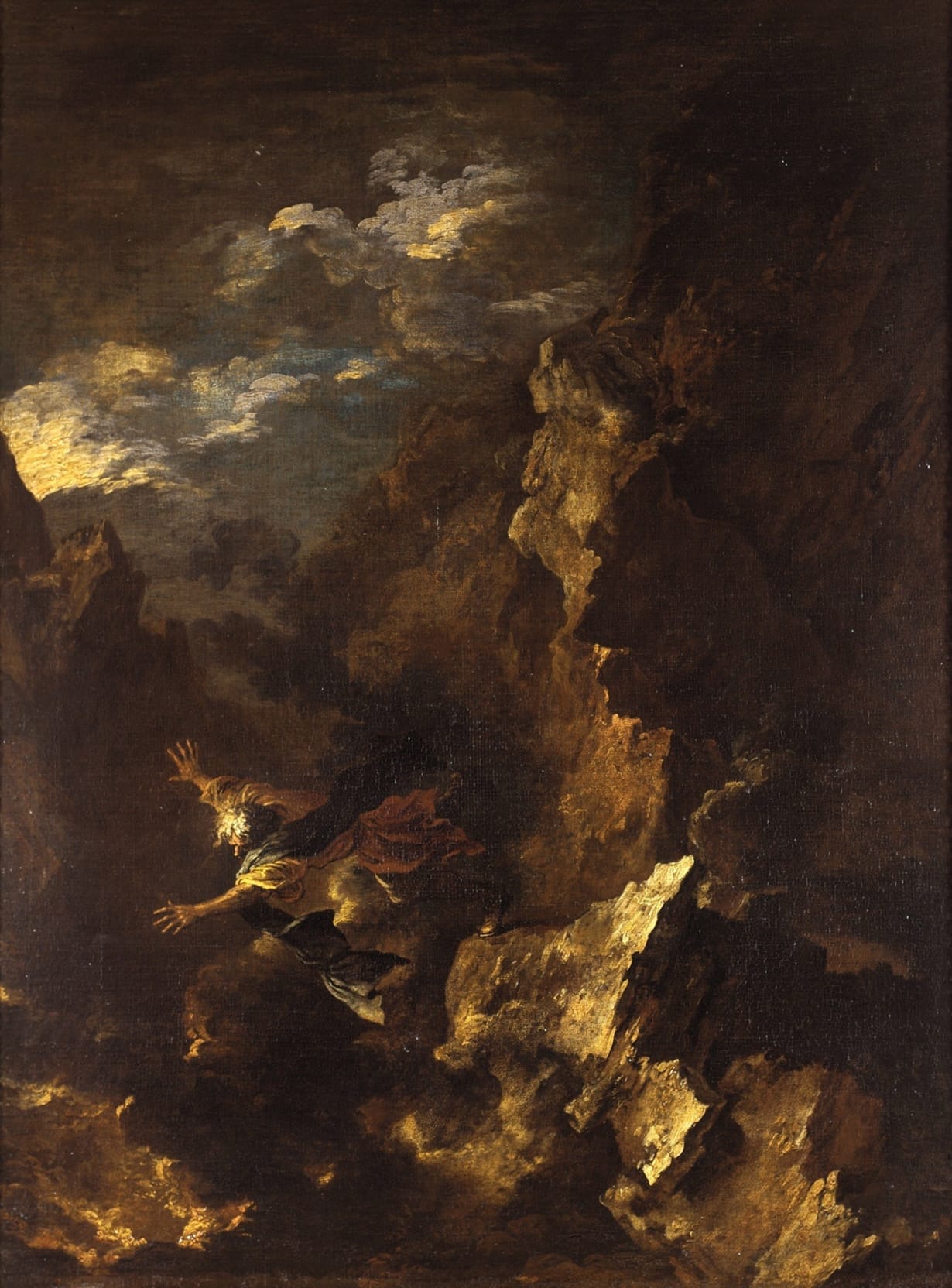
© 2023-2025 Andrew Hodgson. Edited by Lisa Anthony and Margaret Krous. The idea that our sense of beauty is related to physical conditions in the brain was first proposed and demonstrated, to my knowledge, by Esther Leslie in Liquid Crystals: The Science and Art of a Fluid Form.
For it is by earth that we see earth,
by water water,
By aether divine aether,
and by fire destructive fire,
And fondness by fondness,
and strife by baleful strife.
— Empedocles (Montanari and Montana 2022)
Contents
- The Magical-Looking Water of Tsalal Island
- Aesthetic Mixtures of Fluidity and Solidness
- Liquid Crystals
- Fluidity and Solidness
- Thesis and Predictions
- Dualities and Mixtures
- Aesthetic Indifference
- Beauty
- Complexity
- Categories of the Mind
- Brain Heat
- Dynamism and Stasis
- Mixtures of Order and Shape
- Disruptions of Roundness
- Mixtures of Direction
- Brightness and Color
- Appendix 1: Lists of Monoaesthetic Mixtures
- Appendix 2: Mixtures of Qualities from List 4
- Appendix 3: Mixtures of Qualities from Lists 4 and 5
- Appendix 4: Associations
- References and Further Reading
The Magical-Looking Water of Tsalal Island
Another reason was, that the incidents to be narrated were of a nature so positively marvellous, that, unsupported as my assertions must necessarily be . . ., I could only hope for belief among my family, and those of my friends who have had reason, through life, to put faith in my veracity—the probability being that the public at large would regard what I should put forth as merely an impudent and ingenious fiction.
— A.G. Pym (Poe 1838)
The following account of the water flowing in the streams of Tsalal Island, from Edgar Allan Poe’s The Narrative of Arthur Gordon Pym of Nantucket (1838), is claimed by Encyclopedia Britannica (Mahan and Widom 2024) to be “perhaps the first description of a liquid crystal,” a complex physical state of matter that sets life apart from the nonliving, facilitates the operation of the animal brain and sensory systems, allows the existence of consciousness, and will eventually be shown to provide an unexpectedly simple and retrospectively obvious explanation for a considerable portion of what we don’t currently understand in areas such as evolutionary biology, psychology, linguistics, mythology and aesthetics.
Arthur Gordon Pym, initially a stowaway on a whaling ship, ends up on an expedition to the South Pole after various unexpected events at sea. Although the novel starts out as a realistic adventure story, and claims in a sense to be a true account, it becomes increasingly fantastic as Pym travels south. At about the eighty-fourth parallel, with “the sea being of an extraordinarily dark colour,” the crew comes across an archipelago and travel inland with some of the inhabitants of an island named Tsalal, pronounced with a “prolonged hissing sound.” Along the way they discover the trees are nothing like any they’ve seen before, the rocks are “novel” in their mass and color, and the people are “the most wicked, hypocritical, vindictive, bloodthirsty, and altogether fiendish race of men upon the face of the globe,” but the strangest thing is the “singular,” “magical-looking,” liquid crystal-like water flowing through its streams:
I am at a loss to give a distinct idea of the nature of this liquid, and cannot do so without many words. Although it flowed with rapidity in all declivities where common water would do so, yet never, except when falling in a cascade, had it the customary appearance of limpidity. It was, nevertheless, in point of fact, as perfectly limpid as any limestone water in existence, the difference being only in appearance. At first sight, and especially in cases where little declivity was found, it bore resemblance, as regards consistency, to a thick infusion of gum Arabic in common water. But this was only the least remarkable of its extraordinary qualities. It was not colourless, nor was it of any one uniform colour — presenting to the eye as it flowed every possible shade of purple, like the hues of a changeable silk. … Upon collecting a basinful, and allowing it to settle thoroughly, we perceived that the whole mass of liquid was made up of a number of distinct veins, each of a distinct hue; that these veins did not commingle; and that their cohesion was perfect in the regard to their own particle among themselves, and imperfect in regard to the neighboring veins. Upon passing the blade of a knife athwart the veins, the water closed over it immediately, as with us, and also, in withdrawing it, all traces of the passage of the knife were instantly obliterated. If, however, the blade was passed down accurately between the two veins, a perfect separation was effected, which the power of cohesion did not immediately rectify. The phenomena of this water formed the first definite link in that vast chain of apparent miracles with which I was destined to be at length encircled.
According to King (1969), liquid crystals, specifically of the “cholesteric” or “chiral nematic” variety, were first described by the Austrian botanist Friedrich Reinitzer in 1888, and given the name by Otto Lehmann in 1889, half a century after Poe’s book was published, in 1838, making it impossible for him to have given the first description. There is, however, a way for Poe to have done so indirectly. Plasma membranes, a major component of all cells, including most relevantly neurons, are physically liquid crystalline. The brain is therefore isomorphic, in this sense, with Tsalal Island water.
The simplest way to understand Poe’s apparent clairvoyance is probably an aesthetic bias in favor of perceptual fluidity coupled with solidness, as opposed either total fluidity or total solidness, which arises directly, as a mostly harmless side effect, from the special condition of the brain with respect to states of matter. The same bias would happen to explain why we find fluid~solid mixtures so frequently in poetry going back to its invention, in idiomatic and metaphorical language worldwide, and in the mythology of all cultures.
The hypothesis is thus a three-part system of cause and effect: from brain liquid crystallinity (softness) to fluid~solid mixture bias in the mind to the outwardly observable result of a fluid~solid aesthetic effect. The bias would be universal to humans, and in fact all animals with brains and sensory abilities sufficient to distinguish a fluid from a sold, because brain softness is universal.
Fluidity, by comparison to its direct opposite solidness, is the same thing as dynamism and disorder, at least on small scales. Nature doesn’t necessarily make the distinction the way we do. Likewise, on small scales solidness is the same as stasis and order. Therefore, it might be expected that the same three-part scheme of cause and aesthetic effect applies to the dualities dynamic~static and disorder~order. These would also be universal, by the same logic.
The water of Tsalal is, in many ways, more complex, lifelike and brain-like than normal water. Its complexity is evident in terms of description length, as Poe himself points out. It’s separated over short intervals into more and less viscous sections, with an overall consistency in between that of a normal fluid and solid. It’s both “perfect” and “imperfect” at the same time, both clear and many changing versions of the color purple. It somehow flows rapidly while also being thick like gum arabic, or acacia tree sap, and has the life-like property of recovering its structure, somewhat, after being disturbed in particular ways. Any of these properties could contribute to the reason Poe’s magical water is so often given as the original liquid crystal description (Dunmur and Sluckin 2014): “These days, liquid crystal scientists like to speculate that Poe, through some remarkable insight, had imagined the liquid crystals of the future.”
Britannica probably got the idea from Kelker’s “History of Liquid Crystals” (1973) or an article called “Cholesterics Already Described in 1838!” by Stegemeyer and Kelker in the journal Liquid Crystals Today (1991), in which the authors ask: “Can anybody answer the question where Edgar Allan Poe received information about cholesterics? Or was he a clairvoyant?” The answer typically given is that Poe must have observed semi-solidified blood outside the body in American slaughterhouses (Petrov 1999), which would have been similar to the water of Tsalal because: “In its usual state within the human body, blood is an ordinary disordered isotropic fluid. The disklike shape of red blood cells, however, favours liquid crystallinity at certain concentrations and temperatures” (Mahan and Widom 2024).
Arguably, the complexity of Poe’s magical water goes beyond what might be expected in a description of partially coagulated blood in buckets at a slaughterhouse, and if he had that experience it hardly follows he would choose to apply it to the water on an imaginary island in a future story. Regardless of where Poe got the idea of a semisolid stream, the real mystery is why he found it amusing and thought others would as well.
Tsalal Island water is not, by far, the first time something with a mixture of liquid and crystalline characteristics has appeared in creative literature.
Fluidity mixed with solidness, where it can be expressed, is one of the most obvious and ancient aesthetic themes, along with mixtures of other thermophysical opposites, especially motion with stillness and disorder with order.
He strongly advised me, among others, to prepare at once a full account of what I had seen and undergone, and trust to the shrewdness and common sense of the public—insisting, with great plausibility, that however roughly, as regards mere authorship, my book should be got up, its very uncouthness, if there were any, would give it all the better chance of being received as truth.
— A.G. Pym (Poe 1838)
Creation Stories
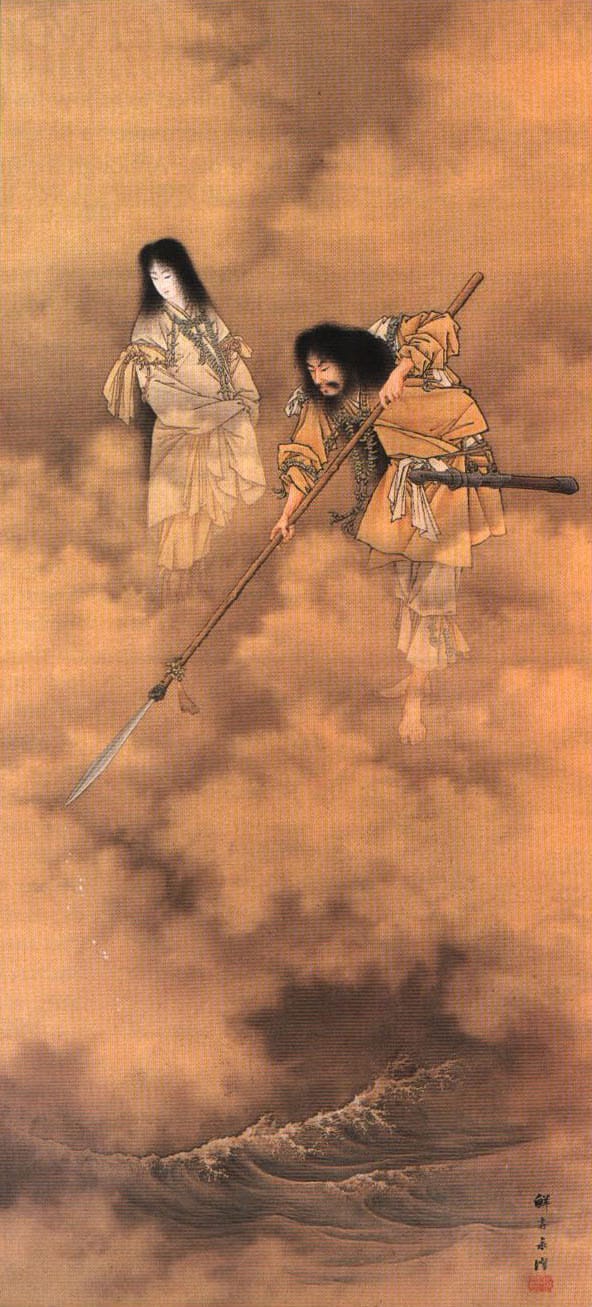
In the Greek myth of Deucalion and Pyrrha, when they’re the only people left on Earth after floating in a chest to survive after Zeus sends a flood because he’s mad at King Lycaon of Arcadia for killing a boy as a sacrifice, the Oracle of Themis tells the couple they can repopulate the world if they “Depart from the temple with head veiled and garments unbound, and cast behind you the bones of your mother” (Bulfinch 1979). Knowing the Earth was their mother, they picked up rocks and threw them backward over their shoulders:
They veilded their faces, unbound their garments, and picked up stones, and cast them behind them. The stones (wonderful to relate) began to grow soft, and assume shape. By degrees, they put on a rude resemblance to the human form, like a block half-finished in the hands of the sculptor. The moisture and slime that were about them became flesh; the stony part became bones; the veins remained veins, retaining their name, only changing their use. Those thrown by the hand the of the man became men, and those by the woman became women.
Mythology is filled with examples of an appreciation for the fact that the physical situation of life is special, somewhere between hard and soft, movement and stillness, permanence and change, and that it’s complicated with respect to matter in nonliving phases. Empedocles insisted fire, air, water and earth were engaged in an eternal cycle of transition between a relatively singular, orderly, compact cosmic sphere dominated by the attractive force of love and an opposite, chaotic, spirally cosmic expanse generated by the repulsive force of strife, with living things arising repeatedly throughout the cycle in periods between the extremes, when love and strife are in balance and the elements mix together in relatively equal proportions.
In the ancient Chinese text Classic of Mountains and Seas the gods Fuxi and Nüwa create people from clay, animating it with the energy of divinity. Clay is also used in Babylonian, Hindu, Polynesian, Laotian, Māori, Incan, Mayan, Korean, Vietnamese and many other creation myths around the world, according to Wikipedia (“Creation of Life from Clay” 2023). The Zoroastrian god Ahura Mazda used mud. The Sumerian god Anki used clay and blood. The Mongolian god Ulgen used clay floating on water. In Bornean myth the constituents are clay and sound. Prometheus uses clay to make human-shaped figures and the Goddess Athena brings them to life with her breath. In Genesis people are made from dust and, again, an injection of breath. The reason for such a large number of cultures imagining almost the same scenario is that soft materials are closer to life in their texture than pure solids and fluids, which was apparent to the people inventing the myths and passing them on. Notably, it’s not only homogeneously soft things that we imagine being closer to life than pure fluids or solids; it’s also heterogeneous interactions between a fluid and a solid, such as water and a stone or breath and wood.
Fluid and solid qualities are commonly applied to the formation of the world as a whole in addition to that of people. Initially, they might be indistinct, requiring separation by a god or cosmic force, or cycle between interaction and independence, even though there’s no particular observable reason to imagine the world being different in these respects than it is as we see it today. Ovid (2006) describes the world prior to creation in terms of paradoxical mixtures of fluids and solids in the opening of Metamorphoses:
Unfirm the earth, with water mix’d and air;
Opaque the air; unfluid were the waves.
Together clash’d the elements confus’d:
Cold strove with heat, and moisture drought oppos’d;
Light, heavy, hard, and soft, in combat join’d.
Opposites being joined in combat or clashed together in confusion are reminiscent of the account of Norse creation from Snorri Sturluson (1907). The world begins with complex interactions between solids, fluids, heat, coldness, fire, ice, melting, solidification, motion and stasis in a primordial void called Ginnungagap:
That part of Ginnungagap… that lies towards the north was thus filled with heavy masses of gelid vapour and ice, whilst everywhere within were whirlwinds and fleeting mists. But the southern part of Ginnungagap was lighted by the sparks and flakes that flew into it from Muspellheim. Thus… whilst freezing cold and gathering gloom proceeded from Niflheim, that part of Ginnungagap looking towards Muspellheim was filled with glowing radiancy, the intervening space remaining calm and light as wind-still air. And when the heated blast met the gelid vapour it melted it into drops, and, by the might of him who sent the heat, these drops quickened into life, and took a human semblance.
The being with a human semblance is Ymer, ancestor to the jötunn, rivals to the gods, who themselves form from his sweat while he sleeps. Ymer is said to persist on the milk of a cow, Audhumbla, who also formed from molten drops. Another being, named Búri, emerges from salty rime as it’s consumed by Audhumbla. Búri fathers Borr, who marries Bestla, daughter of the jötunn Bölþorn, and they have three sons named Odin, Vile and Ve. The brothers slaughter Ymer, flooding the world with blood and killing all the jötunn except for Bergelmer, who survives in a wooden vessel. Then they drag Ymer’s body to the center of Ginnungagap and make the world using his blood for seas and lakes, his flesh for earth, bones for rocks, teeth and jaw for stones and pebbles. They raise his skull over the earth to make the dome of the heavens and throw his brains in the sky to make the “melancholy clouds.” Finally, with the world ready for people, Odin and his brothers add the breath of life to two pieces of driftwood on the shore, making the first humans, Ask and Embla.
As with Ymer, stories in which a creator is broken up into parts of the world often distribute the material of the body in a sensible way, accounting for similarities between the state of the part and that of the divine being from which it’s made. Solid body parts become solid parts of the earth like rocks and trees. Liquid parts become liquids like streams and rivers, and intermediately situated, fleshy parts, those which are not quite solid and not quite fluid, are often used to make living things.
This is the case with the Chinese god Pangu, who lives inside a chaotic cosmic egg where the forces of Yin are mixed with the complementary and contradictory forces of Yang: hot with cold, sky with earth, light with dark, chaos with order, stillness with movement and male with female. Pangu emerges from the egg and proceeds, for 18,000 years, to divide the elements as he expands to lift the sky and separate it from the earth. Eventually, his arms and legs turned into the directions, his eyeballs the sun and moon and his breath the clouds and wind. His teeth and bones turned into rocks and minerals, sweat became dew, hair became grass, flesh became soil and the rivers were made of his blood. Animals are the fleas that were on his body.
In the creation myth of the North American Okanagan Tribe, from an area spanning parts of present-day Washington State and British Columbia, Old One makes Earth Woman by stretching and rolling an earth-like dough (Leeming 2010). Her hair accounted for trees and plants. The soil was her body; the stones were her bones and her breath the wind. Old One blew on small parts of her to make the animals, and humans were constructed from red clay.
Metamorphoses goes on to say that fish, terrestrial animals and birds were allotted to their respected habitats by the supreme creator, who then molded man from parts of heaven, earth, ether, warmth, moisture, fire and form:
Form’d from an heavenly seed; or new-shap’d earth
Late from celestial ether torn, and still
Congenial warmth retaining, moisten’d felt,
Prometheus’ fire, and moulded took the form
Of him all-potent.
Life’s intermediate physics is also implicit in various transformations throughout Ovid’s poem, with characters turning into both liquids and solids. Perseus turns men to stone with the head of Medusa. Atlas turns into a mountain; Arethusa into a stream. Niobé becomes rigid marble flowing forever with tears, and Cyane melts into spring water:
You would have seen her members beginning to soften,
Her bones and her fingertips starting to lose their old firmness;
Her slenderest parts were the first to be turned to fluid:
Her feet, her legs, her sea-dark tresses, her fingers (for the parts with least flesh turn into liquid most quickly);
and after these; her shoulders and back and her bosom
and flanks completely vanished in trickling liquid;
and lastly the living blood in her veins is replaced by springwater and nothing more remains that you could have seized on.
For the Abenaki people of the areas now called New England and Quebec, the creator, Tabaldak, made men and women out of stone (Haviland et al. 2013), but Tabaldak was disappointed because the hearts of the people were cold and hard, so he broke them up into the rocks that occupy the area today. He then created the Abenaki again, this time successfully using (somewhat softer) living wood, and, like trees, they were rooted in the earth and would dance when moved by the wind.
It’s common for creation to unfold in such stages, with a number of attempts that fail because the material employed is too hard or too soft, before the right consistency is achieved. Disappointed by the lack of devotion they receive from the nonhuman animals they create, the Kʼicheʼ Mayan gods decide to make people, hoping they will be more religious, forming them from mud in the initial attempt:
So then comes the building and working with earth and mud. They made a body, but it didn’t look good to them. It was just separating, just crumbling, just loosening, just softening, just disintegrating, and just dissolving. Its head wouldn’t turn, either. Its face was just lopsided, its face was just twisted. It couldn’t look around. It talked at first, but senselessly. It was quickly dissolving in the water.
Next, they try carving humans from wood, only to find them equally unholy and nonviable, this time for opposite reasons:
They were talking at first but their faces were dry. They were not yet developed in the legs and arms. They had no blood, no lymph. They had no sweat, no fat. Their complexions were dry, their faces were crusty. They flailed their legs and arms, their bodies were deformed.
Proper people eventually come together by adding water for blood to the flesh of yellow and white corn meal, a mixture that’s softer than wood and harder than mud, but first the gods take out the wooden version of people using a flood, rebellious pets and homicidally angry cooking utensils, exemplifying the widespread aesthetic themes of inanimate objects coming alive and the destruction of solids:
They were pounded down to the bones and tendons, smashed and pulverized even to the bones. Their faces were smashed because they were incompetent before their mother and their father, the Heart of the Sky, named Hurricane. The earth was blackened because of this; the black rainstorm began, rain all day and rain all night. Into their houses came the animals, small and great. Their faces were crushed by things of wood and stone. Everything spoke: their water jars, their tortilla griddles, their plates, their cooking pots, their dogs, their grinding stones, each and every thing crushed their faces.
Few stories could match the one told by the Spokane Tribe of Eastern Washington concerning the physical diversity of ingredients that go into the people-making process (Brown and Ruby 1981):
Because he was lonesome, Coyote, after several failures, made Spokane man. In his first failure, he molded a man of pitch, who melted. He tried clay, but the rains washed the clay man away. He sculpted a man out of hot rock; it cracked. He wove a man of reeds; but this man caught fire and burned. Coyote then mixed all these elements together and — adding berries, smoke, and fire — created Spokane man. With these same elements, he created Spokane woman, and Amotkan, the Creator, gave her life.
Notably, in the third attempt to make stable people the source isn’t just a rock, but a hot rock, as though heat makes a solid a little closer to being alive. Elsewhere in the story of Spokane creation, when Coyote and the other animals come together and take turns ascending a pole, a man is made from a piece of rock loosened by thunder, and the rock is red, suggesting a connection between redness and heat and that a bright solid is conceptually closer to being alive than a dark one.
Aesthetic Mixtures of Fluidity and Solidness
Somewhere, what with all these clouds, and all this air, There must be a rare name, somewhere… How do you like “Cloud-Cuckoo-Land”?
— Aristophanes, Birds (Bartlett 2022)
In The Poetic Edda & The Prose Edda, Saemund Sigfusson and Snorri Sturluson (2019) explain how the dead warriors Odin collects, the Einheriar, get by in Valhall, the hall of the slain, while they wait to be released and fight in the battle of Ragnarök. They eat the flesh of a repeatedly resurrected, cornucopia-like porky beast named Sæhrímnir every day, and drink mead provided by the goat Heidrûn, who produces enough for at least 432,000 soldiers from the nourishment he gets from munching on the branches of the tree Lærâd, which grows on the top of the hall:
Five hundred doors, and forty eke, I think, are in Valhall. Eight hundred Einheriar will at once from each door go when they issue with the wolf to fight.
Five hundred floors, and forty eke, I think, has Bilskirnir with its windings. Of all the roofed houses that I know, is my son’s the greatest.
Heidrûn the goat is called, that stands o’er Odin’s hall, and bites from Lærâd’s branches. He a bowl shall fill with the bright mead; that drink shall never fail.
This is nothing, however, compared to the amount of water that drips, from the solid horns of the magical stag Eikthyrnir, who feeds on Lærâd along with Heidrûn, into the “bubbling boiling spring” Hvergelmir, from which all waters rise and 20 rivers flow around the “dwelling wind” of gods:
Eikthyrnir the hart is called, that stands o’er Odin’s hall, and bites from Lærâd’s branches; from his horns fall drops into Hvergelmir, whence all waters rise:
Sid and Vid, Soekin and Eikin, Svöl and Gunnthrô, Fiörm and Fimbulthul, Rin and Rennandi, Gipul and Göpul, Gömul and Geirvimul: they round the gods’ dwelling wind. Thyn and Vin, Thöll and Höll, Grâd and Gunnthorin.
Fluid~solid mixtures have been admired for centuries throughout the world in the form of decorative water fountains. Some ornamental fountains consist of little more than water dripping onto and flowing over a rock. The theme carries over to religious realms, as in Christian reliquaries with holes and pathways through which water or oil are poured to flow over the bones of dead saints. In addition to directly coupling an actual fluid with structural solidness, we tend to carve static fluidity into stone and shape metal into spirals and swirls otherwise seen in actual fluids and sexually selected traits. The upper portions or capitals of Greek and Roman architectural columns of the Ionic, Corinthian and Composite orders are decorated in a fluid-like way, and the same effect is seen architecturally in staircases, roofs, gates, railings, stained-glass windows and solid artifacts like pottery, cups, suits of armor, swords, shields, helmets, belt buckles, medals, rings and coins. Spirals and wavey forms are also prominent in ancient cave art from around the world.
Also, consider the paintings that resulted from a survey conducted by the artists Vitaly Komar and Alex Melamid, reflecting average public opinion about artistic preferences in several countries. Almost every country tested appears to have chosen a painting with a solid, rocky cliff, outcrop or stretch of land taking up about half the space, on the left, and water and sky taking up the rest, on the right. Somehow, Dennis Dutton in his book The Art Instinct: Beauty, Pleasure, & Human Evolution (2010) interpreted these paintings as evidence for his hypothesis that humans evolved our appreciation for such landscape paintings in the context of differential survival while living in the African savannah. In his book, Dutton does his best, in contradiction to Darwin’s original conception of our sense of beauty, to reduce it to a result of early humans without a sufficient attraction to a landscape with a clear view and climbable trees being picked off by lions, during a tiny fraction of our evolutionary history, but the paintings are mixtures of fluidity and solidness, with very little resemblance to the flat, mountain-less, waterless savannah landscape of our distant ancestors.
Fluid~Solid in Poetry
I have seen a medicine
That’s able to breathe life into a stone,
Quicken a rock, and make you dance canary
With spritely fire and motion.
— Shakespeare, All’s Well That Ends Well (2022)
Shakespeare mixes fluidity with solidness in the above quote, the former represented by breath and the latter by an animated stone. Lafeu, the character who speaks the lines, doesn’t really mean to blow on a stone or give one any medicine. Of all the ways he could make the same point, that the medicine is special and strong, Shakespeare chose a mixture of fluidity with solidness. This makes the lines a little more amusing, since rocks don’t actually absorb fluids, move around or take drugs. In general, Shakespeare is mixing the same opposites that Poe did when he conceived of the water on Tsalal Island, and for the same reason.
There’s rarely a need to talk of fluids interacting intricately with solids in order to be informative in human affairs, and no particular reason to imagine doing so would be advantageous, yet we reference and enjoy this mixture of simple opposites obsessively in art, mythology, architecture, design, literature, poetry and everyday language. It occurs far more often than would be expected unless the concept of a fluid tends to produce in the artistic mind that of a solid and vice versa.
Dunmur (2021) gives examples of the specific expression “liquid crystal” being used in poetry going back to the Renaissance. Petrarch (1304–1374) used the term, according to the translation of Elliot (1993), in “Il Canzoniere”:
The morning songs of birds on their sad themes [song~sad]
at daybreak fill the dene with echoing calls, [bright/disorder/many/high pitch~down/in]
and there’s the sigh as liquid crystals fall, [fluid~solid]
pouring in brisk and chilly shining streams. [fluid/bright~down/cold]
Later, Luis de Góngora (1561–1627) used it in “Las Soledades”:
Next day the eye of morning sees [bright~round]
pretended groves made of untruthful trees,
avenues that the farming of their town
has walled with liquid crystals and not stone. [fluid~solid]
By expanding the idea of fluidity juxtaposed with solidness to include predictably related concepts, such as earth mixed with water, dry with wet or hard with soft, one can see a pattern throughout poetry so extensive and obvious that no one can doubt the presence of a universal tendency for it to be produced repeatedly in the creative mind, or a fluid~solid aesthetic reflex like that proposed by Leslie (2016).
The following quote from Shakespeare’s Antony and Cleopatra (2022) is another example of the artistic use of the mixture:
Sometimes we see a cloud that’s dragonish;
A vapour sometime like a bear or lion,
A tower’d citadel, a pendent rock,
A forked mountain, or blue promontory. [up~dark]
So is this, from As You Like It:
This life is most jolly.
Freeze, freeze, thou bitter sky,
That dost not bite so nigh
As benefits forgot;
Though thou the waters warp,
Thy sting is not so sharp.
And this from Richard II:
Too good to be so and too bad to live,
Since the more fair and crystal is the sky,
The uglier seem the clouds that in it fly.
Of the nine uses of the word “liquid” found throughout all of Shakespeare’s writing on Open Source Shakespeare, four (~44%) exemplify the same pattern of fluidity mixed with solidness, a high proportion if one assumes such references should tend to occur randomly in relation to each other, and there are many more.
From A Midsummer Night’s Dream:
Her silver visage in the watery glass,
Decking with liquid pearl the bladed grass.
Richard III:
The liquid drops of tears that you have shed
Shall come again, transform’d to orient pearl.
Sonnet 5:
Then, were not summer’s distillation left,
A liquid prisoner pent in walls of glass,
Beauty’s effect with beauty were bereft.
Troilus and Cressida:
The strong-ribb’d bark through liquid mountains cut,
Bounding between the two moist elements,
Like Perseus’ horse: where’s then the saucy boat.
Out of the four times Shakespeare uses the word “solid” throughout his writing, three (75%) are coupled with some form of fluidity, either water or melting.
Hamlet:
O that this too too solid flesh would melt,
Thaw, and resolve itself into a dew!
Henry IV:
Make mountains level, and the continent,
Weary of solid firmness, melt itself
Into the sea; and other times to see
The beachy girdle of the ocean.
Troilus and Cressida:
And, hark, what discord follows! each thing meets
In mere oppugnancy: the bounded waters
Should lift their bosoms higher than the shores
And make a sop of all this solid globe:
Strength should be lord of imbecility.
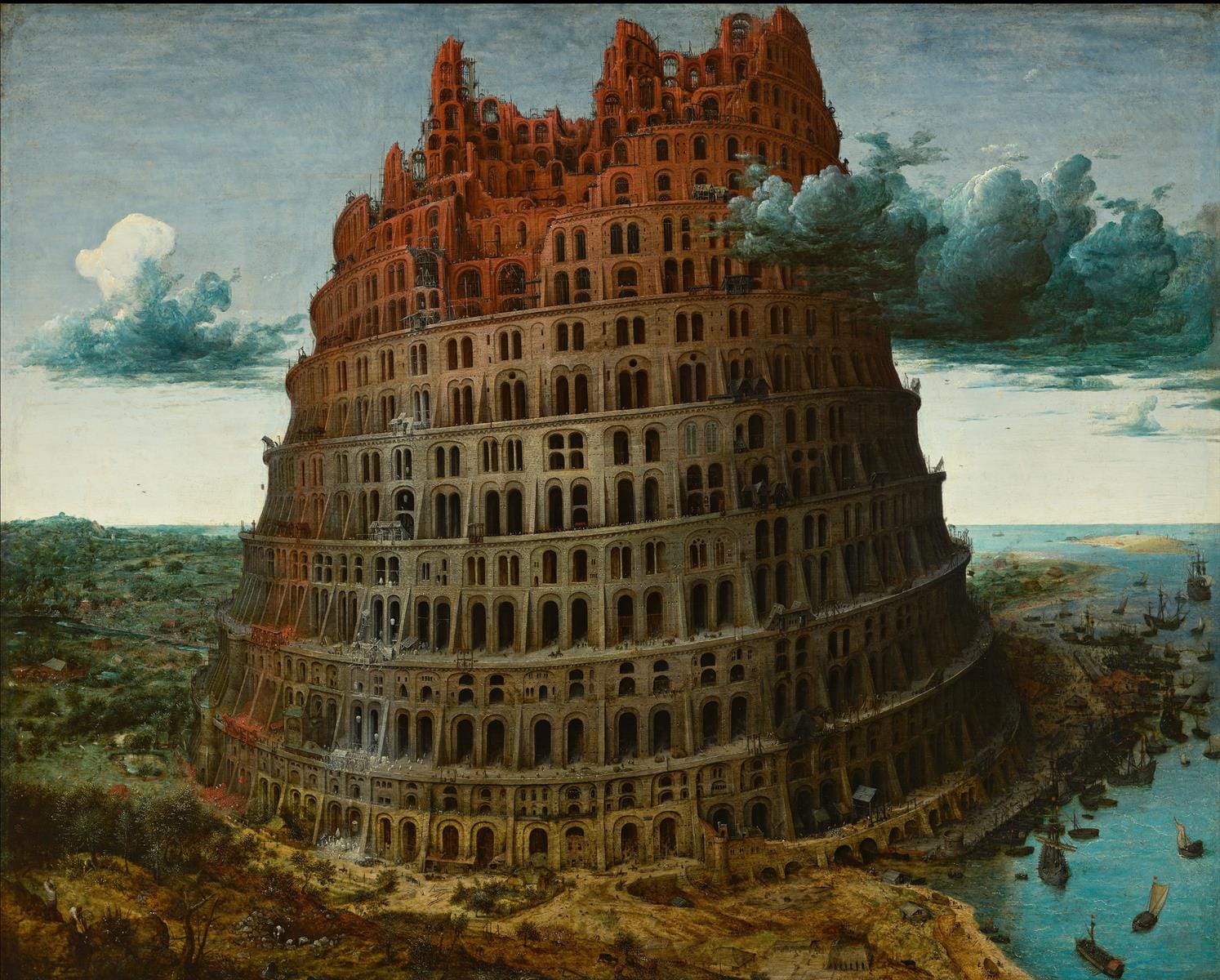
The opening picture, Bruegel’s 1563 painting of the Tower of Babel, is like the lines of Shakespeare in that the Tower is a solid surrounded by fluid water and clouds, with the clouds nearly penetrating some of its many entrances in the upper floors, like breath entering a stone. In Edvard Munch’s famous painting “The Scream” the solid wooden walkway in the lower portion of the painting contrasts with the dark fluidity into which the person on the bridge looks to be melting away. The background of Leonardo da Vinci’s “Mona Lisa” is one of blue fluidity intermingling with red solidness, and a very improbable scene for a subject to be sitting in front of.
In sampling the most famous poetry, according to a Google search, clear examples of fluid~solid occur at an extremely high rate. In “Red, Red Rose,” by Robert Burns, “luve” is like a melody that will last until the “seas gang dry” and “the rocks melt wi’ the sun.” In Robert Frost’s “Birches” the trees are loaded with ice in the sun after the rain as a colorful rising breeze cracks and crazes their enamel and the warmth of the sun makes them shed crystal shells. In “Harlem” by Langston Hughes, the deferred dream “dries up like a raisin in the sun,” crusts and sugars over “like a syrupy sweet” or explodes. Gilgamesh is called “a raging flood-wave who destroys even walls of stone” (Kovacs 1989). The never-brewed liquor comes from “tankards scooped in pearl” in Emily Dickinson’s “I Taste a Liquor Never Brewed” and the inns are molten blue. In William Carlos Williams 1923 poem “The Red Wheelbarrow,” the simplest of those that come up in a Google search for “famous poems,” the only components, aside from white chickens, are a solid red wheelbarrow and liquid water:
so much depends
upon
a red wheel
barrow
glazed with rain
water
beside the white
chickens
Perhaps the ultimate example of the use of this mixture in poetry comes from T. S. Eliot’s “The Waste Land,” where it’s used 14 times in 29 consecutive lines from a section of the poem in its fifth part, “What the Thunder Said”:
Here is no water but only rock
Rock and no water and the sandy road
The road winding above among the mountains
Which are mountains of rock without water
If there were water we should stop and drink
Amongst the rock one cannot stop or think
Sweat is dry and feet are in the sand
If there were only water amongst the rock
Dead mountain mouth of carious teeth that cannot spit
Here one can neither stand nor lie nor sit
There is not even silence in the mountains
But dry sterile thunder without rain
There is not even solitude in the mountains
But red sullen faces sneer and snarl
From doors of mudcracked houses
If there were water
And no rock
If there were rock
And also water
And water
A spring
A pool among the rock
If there were the sound of water only
Not the cicada
And dry grass singing
But sound of water over a rock
Where the hermit-thrush sings in the pine trees
Drip drop drip drop drop drop drop
But there is no water
Fluid~Solid in Language
People mountain, people sea.
— Chinese idiom, meaning “crowded”
Fluidity is mixed with solidness throughout the English language, especially in poetry, but also in popular expressions such as those listed below, in which references to blood, water, air, the sky, clouds, melting, boiling, smoke, wind, breath, blowing and the like are assumed to represent fluidity, while metals, minerals, stones, rocks, earth, land, wood, trees, mountains, bones, nails, teeth, hardness and similar objects are treated as references to solidness. Some of the expressions are labeled in parentheses with the opposites they represent.
Fluid~solid (46): blood and iron, a diamond in the sky, every cloud has a silver lining, a melting pot, castles in the air, wet your beak, a watched pot never boils, a well-oiled machine, hard liquor, a stiff drink, a stiff breeze, a hard rain, not my cup of tea, like getting blood from a stone, blood diamond, it makes my blood curdle, a smoking gun, a tempest in a teapot, sweating bullets, smoke and mirrors, raining pitchforks, ride hard and put away wet, soaked to the bone, bleed me dry, gravy train, the same fire that melts the butter hardens the egg, bread and butter, a greasy spoon, god’s bloody nails (divine/fluid~solid), spill out into the streets (fluid/out~in/solid), before the ink was dry, from soup to nuts, like a cow peeing on a flat rock, piss on your chips, happy as a clam in butter sauce, milking me dry, scrape the poison from the bones, the land of milk and honey, blowhard cloud-cuckoo-land.
As idioms, the expressions don’t contain their own meaning, or descriptions of what they actually describe. The meaning has to be provided to anyone hearing them for the first time. For instance, there’s nothing hard about a “hard” or “stiff” drink, a “stiff breeze” or a “hard rain.”
In some cases it’s possible to guess the actual meaning of an idiom because it corresponds closely to the figurative meaning, as in “getting blood from a stone” or “burning the midnight oil,” but this doesn’t explain why we choose to communicate the concepts of impossibility and staying up late in these particular ways rather than using words that would do the job more directly and efficiently. This raises the question of why such expressions exist, and the simplest answer is that we find them amusing, just as the simplest answer for the existence of song, dance and flowers is that animals find them attractive. Popular expressions that don’t make sense in terms of efficient communication can be thought of as little poems, or jokes, that we insert into language to make it more agreeable. They present the same problem in linguistics that nonfunctional, impractical, amusing features of animals present in evolutionary biology.
The Fluidity of Learning and Solidness of Knowledge
Obstinate and mindless
Block of Stone,
Lying here
On this green moss,
Oblivious of rain and dew,
Immune to frost and snow.
How many times has this garden
Flourished and Decayed!
How often have these flowers and trees
Bloomed and Faded!
Just ask old Mr. Stone —
He remembers it all!
— Zheng Banqiao (1693–1765, see Tzu 2019)
Popular expressions containing references to fluidity, solidness and other primitive perceptual qualities can be used to predict physical processes going on in the animal brain. They show, for instance, that learning is a fluid process and knowing is like a solid. Linguistically, and therefore psychologically, learning, novelty, lies and fantasy are more like heat, disorder, motion, upwardness, outwardness and length, while knowledge, truth and reality are colder, orderly, still, down, inward and round.
That fantasy is elevated excitement-wise above reality is detectable in how we use the words “unreal,” “unbelievable” and “fantastic” to mark exciting moments or perceptual events even though the events inciting such exclamations are perfectly believable, just unexpected. Surprisingly many of the phrases we use regularly and collectively to describe learning, or changes in the material of the brain, directly implicate the specific, simple qualities heat, fluidity and disorder in the process. All languages most likely use references to these and the other more exciting qualities in list 1 as indications of learning, more often so, at least, than their opposites in list 2, which are thought of and spoken about on average as psychological relatives of knowledge, certainty and reality. Various expressions implying a relation between learning, wondering, mystery, the unknown and heat, fluidity, disorder, light, speed, high-pitch and the directions up and out are given below, along with expressions that imply a relation between list 2 qualities and knowledge.
Learning (31): burning question (hot/inquiry), blown away (fluid/out/learn), stirring news (fluid/dynamic/new), the foggiest idea (fluid/unknown), hate to break it to you (disorder/learn), breaking news (disorder/novel), what’s cracking (disorder/inquiry), what’s shaking (dynamic/inquiry), crash course (disorder/learn), see how things shake out (dynamic/out/learn), bright idea (bright/learn), bring to light (bright/learn), shed light on (out/bright/learn), it dawned on me (bright/learn), air of mystery (fluid/mystery), news flash (novel/bright), get up to speed (up/dynamic/learn~in), the run-down (dynamic/learn~down), the buzz (high-pitch/new), a little bird told me (high-pitch/learn), find out (out/learn), figure out (out/learn~order), far out (out/learn/exciting), expand your mind (out/learn), it’s up in the air (up/fluid/unknown), explode the myth (out/learn), the answer is blowing in the wind (fluid/mystery~in) and perhaps the “Dark Ages” (darkness/lack of learning) and “Enlightenment” (brightness/learning).
Knowledge (19): true as steel (true/solid), cold hard facts (cold/solid/reality), it’s not set in stone (not solid/not certain), airtight (certain/enclosed fluid), firm belief, (solid/certain), the fact of the matter (solid/reality), a matter of fact (solid/reality), hard evidence (solid/reality), a firm grasp on (solid /in/knowledge), well-grounded (solid/reality), on solid ground (solid/solid/knowledge), wisdom tooth (knowledge/solid), crystallized intelligence (solid/knowledge), crystal clear (solid/certain), I can feel it in my bones (solid/knowledge), confirm (solid/certain).
Expressions such as “one cannot love and be wise,” “crazy stupid love” and “punch drunk love” are of interest because they suggest we think of the excitement of passion as opposite to knowledge, as if it’s mentally chaotic. Other phrases probably follow the same theme of strong emotions being a kind of opposite to knowing something for sure. Given the abundance of phrases such as those listed above, it’s difficult to escape the conclusion that we’ve always known, unconsciously, that knowledge is a kind of small-scale solidification of material in the brain.
Lying, deceitfulness and concepts of being fake or unreal appear to fall on the mental side of more excitement along with learning and novelty. These are heat- and fluid-like in “snake oil,” “full of hot air,” “airy fairy,” “carry fire in one hand and water in the other,” “pants on fire,” “blowing smoke,” “gasbag,” “smoke and mirrors,” “greasing palms” and “lie like you breath.” Lies and unreality are disorderly in “bend the truth,” bright in “little white lie,” dynamic in “pull a fast one,” “you really had me going” and “a hustle,” high-pitched in “crying wolf,” upward in “a tall tale,” outward in “a stretch,” “a stretch of the imagination” and “far out,” spiky in “backstabbing” and “sharp practice,” long in “hair-brained,” “feed me a line” and “pulling your leg,” and multiple in “five-finger discount” and “crooked as a barrel of fishhooks.”
Notably, the list contains several references to bodily extremity, long and more multitudinous body parts such as hair, hands, legs and fingers as opposed to central, solid, inward or singular features like hearts, bones, guts, teeth or mouths, which themselves have more to do with knowledge and reality. Longer, spikier, less round and more exciting animals like snakes, weasels, foxes, wolves and cats should be more common in language about lying or trickery than their rounder, less dynamic or spiky relatives like cows, elephants, bears, owls, pigs and horses, to which on average stereotypes of knowledge or reality should be attached. Lies and exciting features should go together in culture and art as well as language, like the way, in Carlo Collodi’s The Adventures of Pinocchio, Pinocchio’s nose becomes longer the more he tells lies. In Aesop’s “The Boy Who Cried Wolf” high-pitch and multiplicity combine with lying to reinforce the idea that the Peter got what he deserved.
Generally, words we use for simple shapes, symmetry, evenness, straightness, flatness, regularity and the like are also used in language of knowledge, truth and reality, as in a right angle and being right, a true surface and truth, rulers and rules, figures and figuring, straight lines and straight thinking, or squares and squaring with reality. We consistently use ideas of order and also stillness, darkness, downwardness, inwardness, depth and holes, which are otherwise associated with solidness and roundness, as depictions of knowledge and reality. This can be seen in the expressions below, which are followed in parentheses by the associations they imply.
Knowledge idioms (34): Get my thoughts in order (thinking/order), it doesn’t square or line up (not orderly/not real), back to square one (square/singular/what we know for sure), trying to get it straight (order/almost know), information (in/shape/knowledge), clarity (order/certainty), in the know (in/know), deep understanding (down/knowledge), depth of knowledge (down/knowledge), fill me in (many~in/knowledge), let it sink in (in/down/knowledge), what it comes down to (in/down/reality), double down (down/down/sure), tripling down (down/down/down/sure), food for thought (in/thinking), deep dive (down/in/knowledge), holy cow (in/cow/realization), holy crap (in/solid/realization), in a nutshell (in/solid/container/knowledge), heart of the matter (in/reality), get it down pat (in/down/know well), you don’t have to keep rubbing it in (in/in/I already know), hard to swallow (not in/not real), I can’t fathom (not down/unreal), true blue (reality/bluer colors), instill (in/static/knowledge), a still tongue makes a wise head (static/knowledge), rest assured (static/certain), what it boils down to (boiling~down/real), whistle past the graveyard (high-pitch/lack of knowledge), understand (down/knowledge), get to the bottom of (down/knowledge), down to Earth (down/real), I gathered that (inward/knowledge).
Mixtures of Form
From bodies various form'd, mutative shapes.
— Ovid, Metamorphoses (2006)
The idea of form and its psychological relatives, such as "making," being a "thing," being "built," "building," having "shape," having "figure," or being "it," are consistently coupled with exciting perceptual and conceptual qualities in idiomatic language, as shown by the lists below, which indicate that form belongs to a mental category of lower excitement.
Form~hot (11): It makes my blood boil, making me hot under the collar, make it hot for, make sparks fly, one swallow does not make a summer, soft fire makes sweet malt, it's a hell of a thing, build a fire under, just for the hell of it, is it hot enough for you, damn it to blue blazes, it burns me up.
Form~fluid (21): make waves, make a splash, make it rain, makes my blood boil, when life gives you lemons make lemonade, make my mouth water, can't make a lick of sense out of, makes my head swim, you can lead a horse to water but you can't make it drink, in the swim of things, make things gel, wash a few things out, building up a head of steam, lick into shape, it's a wash, that blows, it blows, blow it off, call it a wash, don't sweat it, when it rains it pours, it's a crying shame.
Form~dynamic (31): make haste, make a move on, every move you make, make a living, makes my head spin, make a dash, make a fast buck, make a go of it, make a run for it, make all the running, make a play for, make strides, make dry bones live, make quick work of, make it snappy, makeshift, run a make on, makes the world go round, make a fresh start, the finer things in life, got a good thing going, got one thing going for you, the best things in life are free, in the swing of things, see how things play out, whip into shape, go figure, got it going on, it's time to go, as it turns out, as if it's going out of style, go it alone.
Form~disorder (22): make or break, make a break for it, make it or break it, make a clean break, make a crack, make a mess, make strange with, make love not war, make mincemeat of, make a change, you can't make an omelet without breaking some eggs, great haste makes great waste, stranger things have happened, a mind is a terrible thing to waste, take a crack at it, not all it's cracked up to be, if you break it you bought it, it's just crazy enough to work, crushing it, crack it, cracking it, break it down, if it ain't broke don't fix it.
Form~bright (8): make hay while the sun shines, make my day, make a day of it, first thing in the morning, Rome wasn't built in a day, call it a day, see it in a new light.
Form~up (36): makeup, make it up to you, you can't make this stuff up, make up your mind, my mind is made up, get a makeover, make an uproar, make up ground, make up for lost time, make the dust fly, make the fur fly, a match made in heaven, step things up, take things up a notch, spice things up, add up to the same thing, thing are looking up, building up to, building castles in the air, built from the ground up, tip-top shape, you better shape up, shaping up to be, figure up, fuck it up, screw it up, it's all uphill from here, it's an uphill battle, chalk it up to, cough it up, do it up brown, had it up to here, ham it up, hand it over, jack it up, living it up.
Form~out (39): make out, making out, make out like a bandit, make a pitch, make way, make an all-out effort, make away with, make like a tree and leave, make an exit, the way things turned out, see how things play out, overdo things, out of shape, all bent out of shape, throw some shapes, figure it out, work it out, as it turns out, get away from it all, I'm over it, it's all over, as far as that goes, that's as far as it goes, as it turns out, as if it's going out of style, out of it, put it off, blow it off, box it out, it'll be over soon, in it for the long haul, cut it out, doggone it, spell it out, duke it out, far from it, I'm going to lose it, have it out, explain it away.
Form~loudness/high-pitch (11): make an uproar, make a fuss, make a laughingstock of, make a bee-line for, an empty vessel makes the most noise, bang it out, it doesn't ring a bell, yell it from the rooftops, all that jazz, get a bang out of it, whoop it up.
Form~long (5): make a long story short, make a long arm for, the finer things in life, things are getting hairy.
Form~multiplicity (22): two wrongs don't make a right, it takes two to tangle, make it a double, make a fortune, all things to all people, teach you a thing or two, all good things, any number of things, bad things come in threes, he who begins many things finishes but few, too much of a good thing, of all things, a million and one things to do, add up to the same thing, all things considered, this that or the other thing, all shapes and sizes, any way shape or form, it's all good, it's too much, it's all I need, that says it all.
The Softness Effect
I scarcely closed my eyes all night long. Goodness knows what was in my bed. I lay upon something hard, so that I am black and blue all over. It is quite dreadful!
— H.C. Anderson, The Princess and the Pea (Scudder 1909)
Animals probably like the texture of soft things such as breasts and tongues because we have similarly soft brains. There's nothing soft, or very little softness to speak of anywhere in the universe except on Earth, where life transforms fluids and solids into the liquid crystalline material that makes us up. Living things absorb environmental fluids and deconstruct the crystalline structure of solids, incorporating matter into an intermediate, fleshy condition with special capacities like moving around without falling apart, perceiving the environment and expressing preferences. The softness of life is rarely addressed in science and philosophy, perhaps because it's so familiar. We usually treat it as unimportant despite the fact that it's more fundamental than most of life's other properties, none of which would be possible without it, evolution included.
An animal's body is made of material spanning a range of physical states, from fully crystalline to fully fluid and everything in between. Brains are right in the middle, with maximum softness. The most extensively liquid crystalline or softest part of the body is simultaneously the most sentient. This consistency of the brain apparently causes an automatic preference for soft things and the evolution of correspondingly soft sexual characteristics.
Biology today doesn't have an explanation for kissing, making out, foreplay and much of the business of sex other than the transfer of genetic material. Breasts, lips, tongues and hips are soft parts of bodies we like to engage with for amusement. Other animals have similar features, some of which appear only during the breeding season. Outside the body there are many likely, monoaesthetic examples of the softness effect in culture such as stuffed animals, chewing gum, ice cream, various foods, flower petals, clay and Play-Doh.
Fluidity and Excitement
Fluidity is essential to certain elements of behaviors related to strong emotions among terrestrial animals such as crying, kissing and spitting. It’s also related in language to high arousal, anger, sexuality, and to energy and excitement in general, as shown by the following idioms, in which fluidity is represented by such things as wind, air, steam, breath and storms.
Fluidity/excitement (56): get a second wind, shower with praise, walking on air, gaining steam, souped-up, cream of the crop, take the wind out of your sails, open the floodgates, blow out of proportion, have a gas, make a splash, stir things up a little, gushing, blow it out of the water, waiting with bated breath, cooking with gas, all gas and gaiters, weak sauce, outpouring, pleased as punch, and the calm before the storm, stir up trouble, cause a stir, boil over, spitting mad, spiting fire, cast aspersions (sprinkling water), blow off steam, blood was boiling, blood in the water, fuming, huffing and puffing, fan the flames, simmer down, for crying out loud, come hell or high water, have a meltdown, sow the wind and reap the whirlwind, mix like oil and water, stewing, mad as a wet hen, don’t make waves, add fuel to the fire, where there’s smoke there’s fire, turbulent times, trouble is brewing, take a licking, steam your beam, foaming at the mouth, drooling over, steamy, juicy, smoke-show, take my breath away, sleazy, blow air with the bellows (a Spanish idiom for sex).
In China, the phrase “deep water and scorching fire” is used to describe terror and suffering. “A drop of water doesn’t leak” means a situation that is completely under control. “Jiayou,” literally meaning “add oil” in Mandarin, according to Wikipedia, is a ubiquitous expression meaning good luck. “Christ,” often used in anger, is derived from a word meaning anointed or rubbed with oily fluid. “Don’t cry over spilled milk,” referencing two fluids and disorder, seems to reflect the idea that fluidity and disorder are more problematic in perception than reality. “No sweat” is similar, meaning no anger and the absence of a liquid. “A tempest in a teapot” illustrates the same idea, that fluidity is conceptually exciting, saying the reason for excitement is like a fluid, but not to worry, the fluid is contained in a small, harmless solid object.
Liquid Crystals
Liquid crystals stand between the isotropic liquid and the strongly organized solid state, life stands between complete disorder, which is death, and complete rigidity, which is death again.
— Dervichian (Repula 2022)
For we must needs die, and are as water spilt on the ground, which cannot be gathered up again.
— The Bible, 2 Samuel 14:14
The aspect of molecular pattern which seems to have been most underestimated in the consideration of biological phenomena is that found in liquid crystals.
— Joseph Needham, 1950 (Brown and Wolken 1979)
Organisms are exceptional in that the matter making up the living parts of our bodies is in an intermediate, liquid crystalline physical condition. This is probably the most primitive, universal, exclusive and essential property of life, so no one should be surprised at the prospect that being in this condition would have consequences, especially those related to aspects of biology that don’t already make sense in terms of current evolutionary theory.
Liquid crystal properties are more difficult to describe than those of a solid or fluid. Matter in this condition persists as a mixture between physical opposites, in a situation of simultaneous motion and stasis, fluidity and rigidness, disorder and geometric order, freedom and confinement and so on. Liquid crystals also go by other names: “mesophases,” and “ordered fluids,” with the latter term acknowledging that geometric order is related to solidness and opposed to fluidity in a liquid crystal, although we wouldn’t usually think of order and fluidity as opposites. They could just as legitimately be called disordered solids, flowing solids, chaotic crystals or geometric liquids. Like so many things we find amusing, liquid crystal phases are inherently complicated and contradictory (Brown and Wolken 1979):
The term “liquid crystals” is at once intriguing and confusing. While it appears self-contradictory, the designation is really an attempt to describe the properties of a particular state of matter. The liquid crystalline phase is, in fact, distinguished from both the liquid and solid phases of matter by first-order phase transitions. It mixes the properties of both the liquid and solid forms and is intermediate between the two. For example, liquid crystals combine a kind of long-range order (in the sense of a solid) with the ability to form droplets and to pour (in the sense of water like liquids). The combination of properties yields new properties that are found in neither solids nor liquids.
Brown goes on to say “the role of liquid crystals in living systems appears to be very important.” Many scientists have recognized this, although fewer than might be expected given the likelihood that such a fundamental biological property would have evolutionary and psychological effects. It’s been suggested many times over the last 150 years that life and liquid crystals are closely related. Lawrence J. King (1969) quotes Joseph Needham’s Biochemistry and Morphogenesis, published in 1942:
Living systems actually are liquid crystals, or, it would be more correct to say, the paracrystalline state undoubtedly exists in living cells…. most of the protein, fat and myelinic substance of the cell probably exists in these states, but this is only directly visible when all the molecules are oriented in enormous swarms in one direction, as in muscle fibrils. … This state seems the most suited to biological functions, as it combines the fluidity and diffusability of liquids while preserving the possibilities of internal structure characteristic of crystalline solids.
The lack of interest among biologists in liquid crystallinity might be compared to something like chemists dismissing electrons as a largely irrelevant curiosity, or cosmologists deciding gravity might be important somehow, but not worth incorporating into models of the universe. For instance, one could spend a lifetime trying to figure out why we die, consulting relevant ideas in genetics, biochemistry, physiology and evolutionary biology without encountering a physical interpretation of the problem, or coming to any coherent conclusion, while simply recognizing that life represents a physical transformation away from the usual fluid and solid conditions of the nonliving world, and therefore an unsustainable, temporary state, immediately suggests an answer: we gradually solidify, liquefy, vaporize and/or sublime.
Goodby (1998) opens his article on life and liquid crystals by saying molecules in living systems “invariably exhibit both thermotropic and/or lyotropic liquid crystalline properties,” meaning they’re dependent on temperature and/or concentration in a solvent such as water to remain in a liquid crystalline state. This seems certain to be related to the importance of temperature and water as ecological factors on large scales.
Ho et al. (1996) describe organisms as “polyphasic liquid crystals,” with many intermediate physical states existing together in a body:
Liquid crystals in organisms include the amphiphilic lipids of cellular membranes, the DNA in chromosomes, all proteins, especially cytoskeletal proteins, muscle proteins, collagens and proteoglycans of connective tissues. These adopt a multiplicity of mesophases that may be crucial for biological structure and function at all levels of organization from processing metabolites in the cell to pattern determination in development, and the coordinated locomotion of whole organisms.
Important biomolecules that have liquid crystalline properties include myosin, hemoglobin and trypsin, DNA, RNA (Stewart 1967), chitin (Clark 1928, Brown and Wolken 1979), collagen, cellulose, elastin, spongin, fibrin, muscle proteins (Clark 1928), phosphatidylethanolamine, phosphatidylcholine (lecithin), phosphatidylserine and amyloid (Corrigan et al. 2006). Lyotropic mesophases, liquid crystal phases that depend on a solvent, in contrast to thermotropic liquid crystals, which depend on temperature, are likely essential to, at least, the organization of certain components of chromatin (Leforestier et al. 2001), muscle, collagen, reticulin, adrenal cells, ovaries, other tissues and plant viruses (Stewart 1967). Liquid crystalline cholesterol and cholesterol esters are important in the opossum tapetum lucidum, a mirror-like structure at the back of the retina. Such substances are sensitive to small changes in strain, presence of vapors and temperature and are, therefore, probably functional in many other animal sensory organs (Stewart 1967).
The notion of simple phenomena like flow, order, disorder, motion and their opposites governing our state of mind is reminiscent of early philosophers holding the view, with great conviction, that in the apparently inanimate there must be a certain, small amount of life and consciousness. More recently, Rinne (1930) has argued that liquid crystallinity fills the gaps that seem to separate us from the nonliving:
It is customary to draw the boundary between living organic and inorganic matter so that crystals represent the highest form of inorganic material and low organisms form the beginning of the organic world, with a definite and deep physiological gap between the two categories. In my opinion, this gap does not exist, since the sperms, which are undoubtedly living, are at the same time liquid crystals.
Based on the importance of lyotropic liquid crystalline phases of matter in contemporary organismal structure and function, Stewart (1967) says the origin of life likely coincided with the development of complex mesophases. Or, more specifically, that aggregations of amphiphiles, water solvent and ions could have spontaneously developed into stable, but mobile, complex liquid crystalline structures given appropriate conditions of concentration and temperature, which likely existed in many places in the waters of the early Earth.
Membranes could have been the first liquid crystalline structures in living systems, but there’s reason to believe it originated earlier along with genetic material. Short segments of DNA self-assemble into several liquid crystalline phases (Nakata et al. 2007, University of Colorado 2007). While it had already been known that DNA exhibits liquid crystallinity, recent research shows that the assembling segments can be as short as six bases. They tend to stick together end to end, forming aggregates that behave like longer molecules of DNA, which then form a liquid crystal. This only happens if base pairs match up. While complementary DNA segments form liquid crystals; non-complementary segments do not, meaning that complementary strands in the early stages of chemical evolution would tend to collect and self-organize into liquid crystalline droplets. According to Clark (1928):
In essence, the liquid crystal phase condensation selects the appropriate molecular components, and with the right chemistry would evolve larger molecules tuned to stabilize the liquid crystal phase. If this is correct, the linear polymer shape of DNA itself is a vestige of formation by liquid crystal order.
Phase separations could provide a mechanism for concentration of carbon, as well as selection of certain types of molecules over others. The ones that are selected in this way may often be those that are common in living systems. Selection by phase separation could also be a partial explanation for the chirality of biomolecules. Molecules related to cholesterol, because of their chirality, organize into liquid crystals with a natural pulse when situated within a temperature gradient (Cladis et al. 1991). This is termed “breathing mode,” and Cladis says it’s “sort of like the heartbeat turning on” (Peterson 1995). Regardless of the role liquid crystallinity played in the origin of life, it was clearly an essential feature from the beginning, and has been throughout the entirety of evolutionary history, playing a role on every scale within organisms.
See Esther Leslie’s chapter “Flowing Crystals” (2016) for a more comprehensive review of the history of ideas on how life and liquid crystals relate, with discussions of the work of Joseph Needham, Otto Lehmann and Ernst Haeckel. Leslie’s book, to my knowledge, is unprecedented in suggesting and presenting strong evidence for a causal link between preferences, beauty and liquid crystallinity in the brain. As Darwin pointed out, in order to explain the widespread correspondence between preferences for song, dance and ornamental patterns across many, otherwise very different species, we need something that’s true of all brains, and liquid crystallinity fulfills this requirement.
Thermal Variation in the Brain
The extremely soft and liquid crystalline nature of matter in the brain allows it to cycle between a higher temperature and therefore more fluid, disordered, dynamic, expansive and conscious condition, during the day for instance, and an unconscious, colder and inevitably more solid, orderly, static and compact condition, such as at night when we sleep. Throughout sleep the brain also cycles thermally, through a hotter, dreaming, rapid and random eye movement phase and a colder, slower, dreamless phase with steadier and more orderly eyes. Thermophysical variation also seems to play a role in emotion and behavior, with temperature spikes corresponding to anger and sex, for instance.
Knowing that, for whatever reason, the brains of animals have evolved to alternate between approaches to fluidity and solidness in so many contexts, it’s not unthinkable that the brain would also fluctuate as such in response to more and less exciting stimuli in general. Any stimulus that activates neurons, causing them to “fire,” will result in an increase in brain temperature and a temporary change away from a relatively crystalline state in the direction of a liquid state, with removal of the stimulus or the introduction of a less exciting one corresponding to the opposite transformation, toward crystallinity.
The fact that extremes of the given thermal opposites are detrimental to the structure, integrity and operation of the brain is probably related to the way we find the same extremes undesirable psychologically. We prefer experiences that mirror the physical situation of neurological material, with moderate degrees of order, disorder, stillness, motion, fluidity and solidness. One implication of this perspective is physical mental representation, the idea that we recognize outward disorder by way of disorder in the brain, heat by way of heat, fluidity by fluidity, solidness by solidness, geometric order by neurological order and so on, as claimed by Empedocles long ago, and recently by Esther Leslie (2016).
Aesthetic Reflex
Leslie (2016) describes the resemblance between physical complexity in the brain and mixtures of fluid qualities with those of solidness in culture. She says something strangely close to what Empedocles said 2,500 years ago, that we somehow understand perceptual fluidity (water, aether), solidness (earth) and beauty (fondness) in terms of similar qualities internally. She proposes a kind of aesthetic reflex between opposites, so that experiencing too much fluidity makes us crave solidness and vice versa:
What if a mode of thought were in intimate connection with phases of matter,… What if the hard form that is crystal, in periods of its prevalence, produced thought that is crystalline? What if an abundance of liquid made thought fluid, or if its absence made thinking desirous of fluidity to combat its parchedness?
This is based on the effectiveness of comparisons between liquid crystal properties and the structure of language, aesthetic material and large-scale social patterns:
Does anything connect the world of liquid crystals’ discovery to the stop-starting rhythm of animation, invented in the same moment, or to the jerkiness of proletarian revolution, which comes only haltingly, … What are the connections between liquid crystals, those in the laboratory and in our devices, and in us, in our bodies and in our thoughts?
It’s not only that fluid thoughts cause solid thoughts and vice versa. It’s also that fluid qualities such as dynamism and chaos cause a desire for stasis and order, and stasis and order for dynamism and chaos. This could be taken to suggest the action of a reflexive, elastic-like mechanism in the structure of the brain, likely a physical one given that the qualities involved are those related to thermophysical variation in matter, especially matter in a liquid crystalline condition. Extremes of other perceptual dualities have the same reflexive tendency. Too much heat makes us desire cold and vice versa. Too much brightness causes a desire for darkness, darkness for light, loudness for quiet and silence for sound, high and low pitch for each other, redder and bluer colors for each other, and more and less exciting things for their opposites in general.
Consciousness
Consciousness is probably related to neurological liquid crystallinity. Luzatti and Husson (1962) studied a phospholipid in tissue samples from the human brain and found that it exhibited two liquid crystalline phases, one lamellar and one hexagonal, meaning small-scale brain structure includes stripe-like alternating layers and geometric shapes. They say that lipoprotein conditions in the brain itself are probably not far from a phase transition between liquid crystal and coagel (hydrated crystal), determined by temperature, concentration, or electric potential parameters, and that this may prove important to the regulation of substances in brain cells. They point out it might not be coincidental that the phase transition temperature is so close to normal body temperature.
Brains are especially central, soft and complex by comparison to other body parts and other things in the universe when it comes to physical states of matter. Consciousness seems to be concentrated in the area of the body with maximum liquid crystallinity, which may or may not be reason enough to believe the two are related or that one causes the other, but another reason to think so is that consciousness must be based on something true of the brains of all animals.
R. K. Mishra published a paper in the Indian Journal of Psychiatry (1965) proposing that the liquid crystallinity of the brain is involved in perception, memory, thinking, original thought and dreams. Mishra writes of solid structures made up of plates and fibers creating long-distance repetitive order throughout a liquid matrix within the brain, of freedom versus confinement and restraint of molecules, phases with variable amounts of order, and lattices being reshaped in “lattice alterations” from one to another thermodynamic equilibrium, ultimately suggesting the structure of liquid crystals will explain consciousness itself:
In this scheme of things consciousness is an emergent property of the liquid crystal, which need be no more mysterious than the ‘wateryness’ of water or the ‘colour’ associated with a wavelength.
Recently proposed phase transition-based models of cognition demonstrate the value of analogies between liquid crystals and the nature of the brain and mind. Cocchi et al. (2017), in accounting for the observation that “correlations between behaviour and neuronal activity have been documented at almost every scale of analysis,” suggest that “criticality in the brain,” or a balance involving randomness, order, fluidity, structure, and fast and slow flow, plays an essential role in how the mind works:
Mathematicians and physicists have developed a considerable armoury of analytic tools to address multi-scale dynamics in a host of physical, biological and chemical systems (Bak et al., 1987). Chief amongst these is the notion of criticality, an umbrella term that denotes the behaviour of a system perched between order (such as slow, laminar fluid flow) and disorder such as the turbulence of a fast-flowing fluid, (Shih et al., 2015). A critical system shows scale-free fluctuations that stretch from the smallest to the largest scale, and which may spontaneously jump between different spatiotemporal patterns. Despite their apparent random nature, the fluctuations in these systems are highly structured, obeying deep physical principles that show commonality from one system to the other (so-called universality).
The authors say psychological disorders probably correspond to physical transitions in the matter of the brain away from a critical state of fluidity mixed with order: “…brain disorders, as diverse as epilepsy, encephalopathy, bipolar disorder and schizophrenia may correspond to excursions from such an optimal critical point.”
Such models, which appear to be an effective way of understanding scale-free activity and mental disorders, illustrate the presence of complexity and contradiction in the brain with respect to simple physical opposites, and can probably explain a lot of other psychological phenomena as well. They imply an elastic-like resistance, in place to avoid excursions from an average, intermediate consistency, keeping brains in a range where they operate properly. Too much motion must be countered by a reflexive increase in stasis, too much stasis by motion, disorder by order and vice versa, providing a potential mechanism for aesthetic reflex.
The liquid crystal/mind analogy, which is more than an analogy, applies to all conscious animals. If the characteristics of liquid crystals do prove to be essential to such things as memory, thinking, originality and consciousness then it would be reasonable to suspect they also play a role in aesthetic preferences.
Fluidity and Solidness
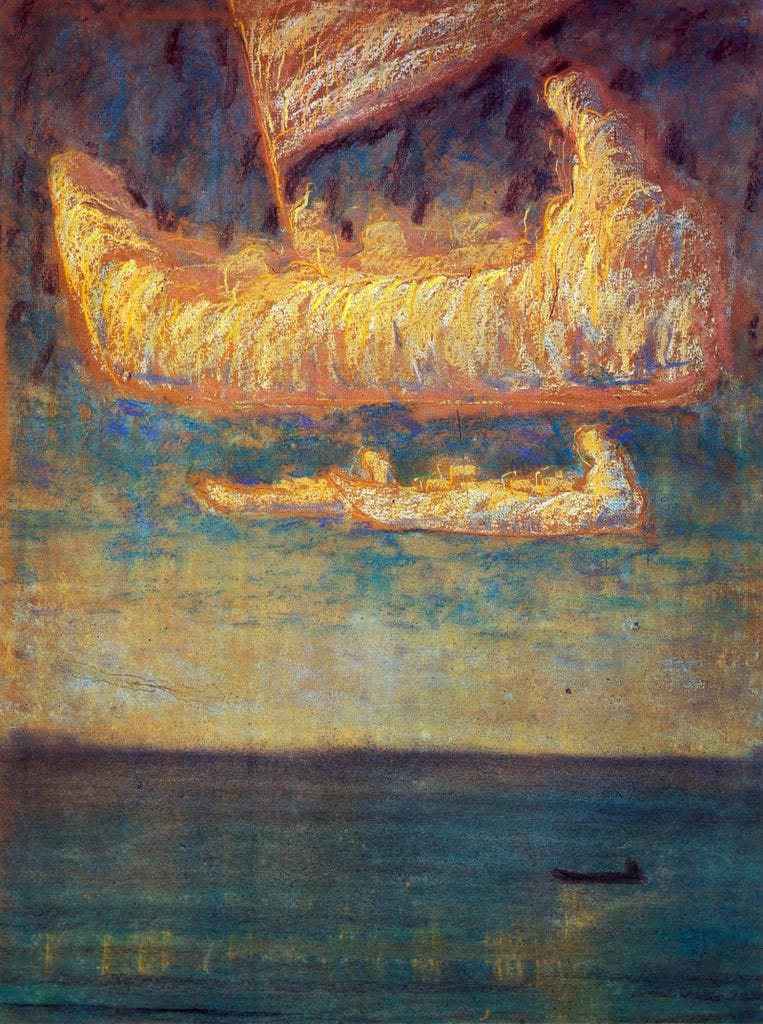
And before the throne there was a sea of glass like unto crystal: and in the midst of the throne, and round about the throne, were four beasts full of eyes before and behind.
— The Bible, Revelation 4:6
Through history and prehistory, people have had an immediate understanding of the difference between a liquid and a solid, without needing scientists to explain the difference to them.
— Dennis Dutton, The Art Instinct: Beauty, Pleasure, & Human Evolution (2010)
It was found here that various brain regions differ markedly in their membrane lipid viscosity.
— Heron et al. (1980)
Thesis and Predictions
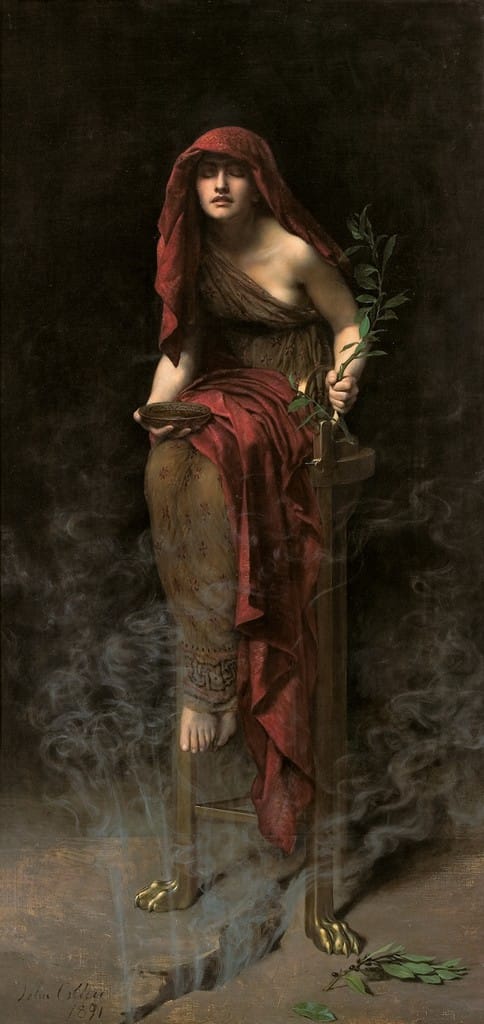
Aesthetic phenomena are usually made up of complex, contradictory mixtures of differentially exciting qualities or concepts, particularly those from the opposite ends of evolutionarily primitive perceptual dimensions or dualities. Arranging these opposites in pairs with respect to the level of arousal they convey produces a set of contrary or “mixed” structures that correspond to essential features of music, song, dance, art, poetry, mythology, language, humor, games, hallucinations, dreams and a surprising proportion of the overall content in animal communication, behavior, coloration and shape, creating a pattern that can only be understood in terms of similar, universal complexity in the animal brain, evidently that related to its soft, liquid crystalline physical condition.
Support for the following predictions, which are testable, for the most part, through experiments or observational studies, represents support for the given thesis, from which they were derived. Arguments based on parsimony, probability and a preponderance of evidence can be made in their favor. Some appear to be true based on the results of studies that have already been carried out (e.g., crossmodal correspondences). Others predict patterns we already know to exist, without necessarily knowing why (e.g., song, dance, Thayer’s law, Gloger’s rule). Links in the predictions lead to sections with a discussion and examples or to collections of relevant photos on Pinterest. Parenthetical references cite related research for further information, not necessarily that which provides support for the given prediction or the overall thesis.
- More exciting things: Perceptual heat, fluidity, dynamism, speed, disorder, brightness, warm colors (red, orange, yellow), sound, loudness, high pitch, upwardness, outwardness, length, spikiness, large size, large numbers of things and novelty (list 1 qualities) are more exciting to observers psychologically, neurologically and physically than their opposites. The experience of these qualities increases brain temperature more than that of less exciting things.
- Less exciting things: Perceptual coldness, solidness, stasis, slowness, order, darkness, cool colors (green, blue, purple), silence, quietness, low pitch, downwardness, inwardness, roundness, small size, small numbers of things and familiarity (list 2 qualities) are less exciting to observers than their opposites (those given in prediction 1). The experience of these qualities increases brain temperature less than that of more exciting things, if at all. Sleep, at the low excitement extreme of animal arousal, is correlated with low brain temperature.
- Excitement lists:
- Mental categories: Humans and other animals automatically associate more exciting things (list 1) with each other in an unconscious category of the mind (mental category 1), and less exciting things (list 2) with each other in an opposite mental category (2). Phenomena in the same category feel like each other unconsciously, which itself is because they involve similar changes in the neurological excitement, temperature and therefore thermophysical characteristics of the brain. Support for the reality of mental categories can be found in psychological literature on conceptual metaphor, cross-modal correspondences and synesthesia.
- Aesthetic mixtures: Pairing any quality listed in prediction 1 with any quality listed in prediction 2 generates the structure of a contradictory juxtaposition of differentially exciting qualities, referred to here as a “mixture,” which happens to also be the structure of a common theme or pattern found throughout aesthetic material, to the extent that mixtures make up a large portion of what animals find amusing. The experience of a mixture increases brain temperature moderately, less than that of a combination of more exciting things and more than that of a combination of less exciting things.
- Aesthetic indifference: The mixtures in prediction 4 effectively predict aesthetic structure regardless of whether they’re made up of direct opposites (e.g., bright~dark, up~down, fluid~solid) or indirect opposites (e.g., up~dark, bright~down, fluid~dark, fluid~down, bright~solid, up~solid). This can be demonstrated by lists of monoaesthetic mixtures such as those in Appendix 1.
- Sensory aesthetics: Breaking aesthetic material down into its most basic perceptual components, those given in predictions 1 and 2, for example, reveals the high frequency with which it tends to be made up, sequentially or simultaneously, of mixtures of qualities in mental category 1 with those in category 2. Such mixtures occur less frequently in non-aesthetic perceptual material.
- Aesthetics: Beauty, preferences and aesthetic phenomena are usually explained as side effects of either common experiences (in humans), as the direct result of differential survival in populations of ancestors, or as indirect bias/effect pairs that coevolve by chance and/or because they provide indications of genetic survival ability in the context of mate choice. These explanations are usually incorrect. Sensory bias theory, proposed by Charles Darwin, which argues that preexisting sensory system structure serving unrelated purposes gives rise incidentally to preferences that then happen to select for aesthetic phenomena, is the closest hypothesis to thermoaesthetics.
- Other mixtures: Common aesthetic mixtures also result from the pairing of more recently derived and/or specific opposites such as happy versus sad, life versus death, divine versus mortal, male versus female and others (see list 4). Indifference applies to these mixtures just as it does to those made up of relatively primitive, more general opposites, such that for example there’s some amount of aesthetic value in the juxtaposition of death not just with life (the undead, the afterlife) but with humor (tragicomedy), divinity (deicide) and masculinity (androcide, patricide), more so at least than there is in the combination of death with sadness, mortality and femininity.
- Universal biases: Mixtures of perceptual opposites are selected for due to universal preferences with structures that match those of the mixtures, both through mate choice in animals generally and in culture by way of universal human inclinations.
- Preexistence: Animals are born with a preexisting ability to understand the difference between the pairs of opposites given in predictions 1 and 2, and with a set of related predilections for mixtures of the these and other opposites.
- Monoaesthetics: All the specific aesthetic instances of a particular mixture are caused by a single, universal bias in the animal brain favoring that mixture, with the bias having originated prior to the species expressing it.
- Aesthetic reflex and physical mental representation: Stimuli we recognize as exciting increase physical excitement in the brain, along with its temperature, fluidity, molecular motion and disorder, inducing an elastic-like response and a corresponding psychological desire for opposite, less exciting stimuli, and vice versa. This elasticity is the basis of animal preferences that don't make sense in an adaptive context, and it relies on the densely liquid crystallinity physical state of the brain.
- Preference evolution and brain softness: Brains evolve to be soft, or liquid crystalline, because being in this condition allows for and facilitates consciousness, sensation and cognition, increasing biological fitness but also, incidentally, introducing biases that select for perceptual moderation and juxtaposition between qualities at opposite ends of the perceptual dimensions defined by sensory abilities. These biases are proximally nonadaptive, but not detrimental enough to be selected against to the point of being eliminated.
- Temperature and emotion: Otherwise nonsensical popular expressions show that angriness, sexual arousal and other simple types of excitement are related to higher temperature, fluidity, motion and disorder in the mind and brain. Oppositely, low excitement emotions such as indifference and sadness can be shown through linguistic evidence to relate to relative coldness, solidness, stasis and order.
- Physical realities from psychology: Facts regarding the nature of matter can be discerned from universal psychological associations, regardless of the fact that a person wouldn't necessarily know or care to do so. One could have predicted, for instance, that heat, dynamism and disorder are somehow related in nature based on the fact that we associate them universally with each other, with intense emotions, and with psychological excitement in general. If we were not aware of the way colors are arranged in rainbows, or in sunlight split by a prism, the order of the colors could be determined indirectly using the hue-heat effect because red looks slightly warmer than yellow, yellow looks warmer than green and so on.
- Linguistic mixtures: Communication is largely made up of mixtures, or references to perceptual and conceptual phenomena from opposite ends of a spectrum of excitement. This applies to idioms, many of which have an aesthetic origin, to the music-like linguistic alternation between sound and silence and higher and lower pitch in language, and to other alternating or simultaneous references to the mental opposites given in predictions 1 and 2. A random sample of popular expressions or lines of famous poems will contain examples of the predicted mixtures at high rates.
- Mixtures of musicality: Animal vocalizations evolve to fit biases favoring auditory mixtures of sound with silence, high pitch with low pitch and regularity with randomness, especially under selection by mate choice. This is evident throughout the musical vocalizations of insects, birds, whales, mice, humans and numerous other animals, meaning the biases are independent of brain and body size and form, taxonomic history, and all the other differences between animals with the capacity to hear and sing a song.
- Mixtures of dance: In dances, by contrast to normal, non-aesthetic activities, animals tend to increase the motion and disorder of the darker, lower, central and inward parts of their bodies more than the brighter, upper, outward and distal parts. These effects, which have the structure of mixtures as defined above, can be seen cross culturally in human dances and interspecifically in animal courtship rituals. As with musicality, differences between animals are irrelevant to the existence of the biases and their effects.
- Mythical mixtures: The structure of mythical material is largely a reflection of human biases that favor differentially exciting juxtapositions of perceptual and conceptual opposites, such as gods versus death.
- Learning and knowledge: Popular expressions show that, in the brain, learning is a fluid process and knowledge is like a solid. Learning, novelty, lies and fantasy are automatically thought of as being similar to heat, disorder, motion, upwardness, outwardness and length, while knowledge, truth and reality are thought of as being colder, orderly, still, down, inward and round.
- Form is boring: Concepts having to do with form are mixed in aesthetic material with those related to excitement, indicating that form belongs to a mental category of less exciting things.
- Time is boring: Concepts having to do with time are mixed in aesthetic material with those related to excitement, indicating that time belongs to a mental category of less exciting things.
- Coloration patterns: Sexual selection causes the evolution of widespread patterns in the shape and coloration of animals, regardless of other differences between species. The more dorsal, anterior, distal, protrusive, elongated and dynamic parts of animals tend to evolve through mate choice to be darker, cooler colors, and relatively ventral, posterior, inward, round and static parts evolve to be brighter, warmer colors. Resulting from the same process, darker and bluer sections of color on bodies tend to take on more fluid-like, disordered, spiky and fragmented appearances than brighter and redder patches, which become relatively orderly, round, smooth and singular.
- Thayer’s law: Despite its current interpretation as a cryptic survival adaptation, Thayer’s law is actually a sexually selected effect resulting from universal biases for upward (dorsal) darkness and downward (ventral) brightness.
- Gloger’s rule: Animals tend to prefer brighter and warmer colors in colder environments and darker and cooler colors in hotter environments, choosing mates accordingly, and these biases are largely responsible for the ecogeographic effect known as Gloger’s rule.
- Bouba Kiki: The bouba/kiki effect (see Köhler 1970) can be interpreted as a universal association of high pitch (kiki) with spikiness and low pitch (bouba) with roundness. This makes phenomena in which high pitch is coupled with roundness or low pitch with spikiness relatively complicated, contradictory and amusing.
- Roundness disruption effect: Animals are universally biased to appreciate disruptions of roundness, or the application of more exciting qualities to round things. This bias is responsible for the decoration of round body parts with long, flowing features, such as long hair in humans, and for the way round objects are used in games and sports.
- Oblong effect: The oblong, slightly spiky shape of eggs, decorative ocelli, flower petals and other aesthetically selected things is a reflection of a corresponding, universal bias in the animal brain for the mixtures long~round and spiky~round. This is a special case of the more general roundness disruption effect.
- Out~in effect in bodies: Animals find the outward parts of each other's bodies to be more exciting than the inward parts. A preference for mixtures of out and in causes sexual selection favoring bodies that exhibit complex juxtapositions of these qualities. This is why the inward parts of bodies such as mouths, noses and ears tend to be coupled with features expressing outwardness. Inward parts are also coupled with other exciting qualities such as brightness, redness, length and spikiness.
- Proximity disruption effect: References to relatively exciting perceptual qualities increase between individuals as we approach each other more closely. This also applies to other animals. Proximity disruption is a special case of the inwardness disruption effect.
- Physical lateralization: Due to differences in plasma membranes, probably in part to differences resulting from lipid (e.g. sphingomyelin) concentration, the left side of the brain is slightly more solid than the right, which is slightly more fluid, resulting in a preference for more exciting qualities to be situated on the right side of the visual field and less exciting qualities on the left.
- REM and brain heat: Rapid, random eye movements during sleep result from increased heat in the brain during this sleep phase, and represent an outward, large-scale behavior caused by thermal conditions in neurons.
- Softness effect: Animals are amused by soft bodily features and objects because they reflect the soft physical consistency as the brain.
- Personality types: Extroverts, by comparison to introverts, are more tolerant of or amused by more exciting perceptual phenomena, while introverts are more tolerant of or amused by less exciting phenomena. This is due to physical differences in the extrovert versus introvert brain, the former being less excited physically by default than the latter.
- Gender mixtures: Females are more likely to be coupled with fluidity, dynamism, disorder and other exciting qualities in aesthetic material than males, who are more likely to be coupled with solidness, stasis, order and other less exciting qualities.
Dualities and Mixtures
The unlike is joined together, and from differences results the most beautiful harmony, and all things take place by strife.
— Heraclitus (Campbell 2008)
The amusing perceptual material animal preferences give rise to through aesthetic selection can be organized in accordance with the dualistic structure of the most primitive opposites recognized by sensory systems. Bright versus dark, for instance, is one of the earliest dualities in the brain and at the same time one of the most popular juxtapositions in poetry, scripture, myth, art, decoration and animal coloration. Animals generally prefer experiences made up of patterns or sequences of intricately interspersed sound with silence, high pitch with low pitch, roundness with length, warm colors with cool colors, motion with stasis, disorder with order, fluidity with solidness, up with down and out with in.
Having determined a set of perceptual dualities that must have originated early in the evolutionary history of animals, one can take samples of aesthetic things of any kind, ask if they have the same basic structure as the dualities and sort them accordingly to construct lists (see Appendix 1) that reveal a universal interest in sensory contradiction. The structure of aesthetic phenomena fits that of the dualities so frequently that no one can reasonably doubt beauty has an explanation, that it’s related to preferences originating with the senses, and that the responsible mechanism has something to do with moderate degrees of arousal.
The given auditory opposites are mixed in language, poetry and especially music, including instrumental and vocal songs in humans and thousands of other species. Motion, stasis and the given directional opposites are mixed in stories, movies, popular expressions, myths, games, sports and dances, with the latter, like songs and music, being admired and performed by a wide variety of species with little else in common, psychologically or otherwise.
Order is mixed with disorder in music, dance, art, decoration, language, gestures, stories, games, sports, myths and humor. The shape of the ubiquitous ornamental ocellus pattern in animals mixes roundness with length, and often, subtly, with spikiness, another opposite to roundness, as do flowers, flower petals, eggs, fruits, nuts, eyes, heads, other animal body parts and many additional, evidently aesthetic phenomena throughout the biological world and human culture.
Dualities between primitive opposites appear in a suspiciously wide variety of contexts, frequently with qualities from one end of each duality, such as brightness, redness and fluidity, or those at the other such as darkness, blueness and solidness, being grouped together as if they’re connected in the mind by default. Females are somewhat more inclined to appreciate and display qualities at opposite ends of primitive perceptual dimensions than males. A similar arrangement of qualities across categories is characteristic of extroverts versus introverts in personality type theory (see the section Excitement and Eysenck’s Mechanism of Personality).
Emotionally, we assign certain qualities to happiness and their opposites to sadness. The same ones we associate with happiness are applied to humor, which are the same as those we apply to danger, anger, desire, uppers, fantasy and lies, while their opposites describe safety, calmness, downers, soberness, sadness, seriousness, safety, reality and the truth.
Various philosophical, mythological and religious dualities from around the world have almost the same categorical structure as those that delineate gender, personality, emotion and primitive sensory systems, some of which are listed below.
Cultural dualities: Yin versus Yang in China, Marduk (order) versus Tiamat (chaos) in Mesopotamia, Maat (order) versus Isfet (chaos) in Egypt, Ahura Mazda versus Angra Mainyu or asha (truth and order) versus druj (deceit and chaos) in Iran, Indra (order) versus Vritra (chaos) as well as Buddha (calm) versus Mara (chaos) and the Middle Way between dualistic extremes in India, the angel of righteousness versus the angel of evil in the Shepherd of Hermas, the shoulder angel (good) versus shoulder devil (evil) convention, Heraclitus’ unity of opposites and the cosmic cycle of Empedocles in Greek philosophy, Aroe (form, stasis, order) versus Bope (flux, dynamism, disorder) in the social structure of the Bororo of Brazil (Maybury-Lewis 1889), the “cyclical oscillation of polar yet complementary opposites” (Maffie 2024) of teotl in Aztec philosophy, Claude Lévi-Strauss’ theory of binary contrast or binary opposition.
The great chain of being, a popular concept throughout history going back at least to ancient Greece, might be thought of as a vertical spectrum with phenomena representing qualities at one end of primitive dualities at the top and those from the other end at the bottom. Gods and angels, being highest in the chain, are said to be pure spirit, or nonmaterial, like a fluid. Minerals, at the bottom, are purely material and solid. Humans, in between, are a mixture of these conditions, said to be partly spirit and partly matter, or both semi-fluid and semi-solid. Aliveness, or dynamism, increases with height in the great chain, from the nonliving to the living to the immortal. Elevation increases as well, in that gods and angels are usually positioned mythologically above humans and the earth, occasionally descending for reasons such as delivering a message directly to humanity, getting revenge or retrieving someone from hell. The qualities of phenomena toward the top are generally on the more exciting side of sensory dualities, while phenomena toward the bottom exhibit qualities from the other, less exciting side. It’s more exciting to be immortal than lifeless, all powerful than inconsequential, and located in the heavens than in the ground.
In mythology it often happens that primitive opposites weren’t always separate. They split from each other during creation. Bright and dark, order and chaos, fluid and solid are initially indistinct, cosmologically, just as they actually would have been to an animal prior to the evolution of the senses that allow us to tell them apart, and they split into dualities through the efforts of an original deity or some other cosmic force. While cosmological opposite separation might seem like a natural thing to believe in, it isn’t actually that easy to imagine the observations people could have made to give them the impression that some of the opposites most commonly involved in such schemes wouldn’t have always been distinct, as they are now in our nonliving surroundings.
More and Less Exciting Things
What, was he sad, or merry?
Like to the time o’ the year between the extremes
Of hot and cold, he was nor sad nor merry.
— Shakespeare, Antony and Cleopatra (2022)
Heat, fluidity, motion, speed, disorder, brightness, the so-called “warmer” colors red, orange and yellow, sound, loudness, high pitch, upwardness, outwardness, spikiness, length, large size, large numbers of things and novelty tend to be more exciting to animals than their opposites coldness, solidness, stasis, slowness, order, darkness, the “cooler” colors purple, blue and green, silence, quietness, low pitch, downwardness, inwardness, roundness, small size, small numbers of things and familiarity. These qualities, listed below, are examples of a large set of opposites that we appear to understand and appreciate in part by way of differential excitement, ultimately through small differences in how they influence brain temperature.
More exciting things (list 1): heat, fluidity, dynamism, speed, disorder, brightness, warm colors, sound, loudness, high pitch, upwardness, outwardness, length, spikiness, large size, multiplicity, novelty.
Less exciting things (list 2): coldness, solidness, stasis, slowness, order, darkness, cool colors, silence, quietness, low pitch, downwardness, inwardness, shortness, roundness, small size, small numbers, familiarity.
Mixtures (list 3): hot~cold, fluid~solid, dynamic~static, fast~slow, disorder~order, bright~dark, warm color (red, orange, yellow)~cool color (green, blue, purple), sound~silence, loud~quiet, high pitch~low pitch, up~down, out~in, long~round, spiky~round, big~small, more~less, novel~familiar.
Mixtures can be seen in idioms, famous poetry, lyrics, scripture, psalms, proverbs, slang, clichés, nursery rhymes, fables, chants, euphemisms, greetings, riddles, mottos, epitaphs, epithets, kennings, koans, slogans, the names of songs, albums, bands, books, companies, products or any other aesthetic material in which references to phenomena exhibiting animal sensory opposites can occur in pairs or sequences and immediately find examples of mixtures of qualities from opposite ends of perceptual dimensions.
Mixtures are also prominent in the contents of hallucinations and in descriptions of dreams, for instance those available on Dreambank, meaning the brain generates mixtures on its own, unconsciously, coupling fluids with solids, up with down, long with round and so on even when it’s not receiving input or being used. It’s also typical, in a dream, for indirectly opposite qualities such as darkness and disorder, upwardness and roundness or fluidity and inwardness to occur in juxtaposition, evidence for a kind of indifference regarding qualities in the same excitement category.
In the rest of the text tildes (~) indicate aesthetic mixtures (list 3), or that the qualities involved are differentially exciting opposites, while slashes (/) or equal signs (=) indicate associations or combinations of qualities in the same psychological category of more or less excitement (list 1 or 2). Fluid~solid, disorder~order, up~down and out~in are mixtures, for example, while fluid/disorder, fluid/up, fluid/out, solid/order, solid/down and solid/in are combinations. More specifically, with regard to popular expressions, “the land of milk and honey” (fluid~solid), “a diamond in the rough” (disorder~order), “bottoms up” (up~down) and “day in and day out” (out~in) are mixtures, while “break into tears” (fluid/disorder), “hell or high water” (fluid/up), “pissed off” (fluid/out), “a clean slate” (solid/order), “rock bottom” (solid/down) and “come on hard” (solid/in) are combinations.
Mixture Direction
(1) Colorless green ideas sleep furiously,
(2) Furiously sleep ideas green colorless.
— Noam Chomsky, Syntactic Structures (1957)
The structure of a mixture can be written with either the more or less exciting quality first, as in hot~cold versus cold~hot or long~short versus short~long. Most of those in the following sections start with the supposedly more exciting quality, although some are written to match the order of occurrence in the aesthetic phenomena they describe.
It’s possible that reversing a mixture will alter its likability and excitingness. Fire~ice might be more intuitive or congruent and exciting than ice~fire, for instance, and ice~fire more surprising, contradictory and moderately exciting, because the initial elements of a sequence automatically come off as more exciting than subsequent elements.
Mixtures in general might show a slight bias on average to fit a preference for excitement going up or down in an experience over time. People might prefer the most surprising or uplifting part of a story, the high-pitched part of a word or the punchline of a joke to happen at its end rather than its beginning, for example.
Other Mixtures
While the above-given dualities are of interest because they happen to be fundamental and common, there are many more, mostly relatively derived dualities that have similar aesthetic value, and which also seem to be made up of components we think of as opposites with respect to excitement:
Other mixtures (list 4): evil~good, life~death, divine~mortal, soul~body, happy~sad, angry~content, passionate~indifferent, fantasy~reality, forward~backward, front~back, dominant~submissive, formless~form, free~confined, open~closed, light~heavy, thin~thick, rough~smooth, future~past, lies~truth, question~answer, rare~common, unknown~known, beginning~ending, expansion~contraction, everywhere~nowhere, first~last, win~lose, yes~no, affirmation~negation, you~me, enemy~friend.
Some of these can be thought of as derivatives of more basic dualities. Evil~good might sometimes be interpreted as a specific relative of disorder~order, life~death of dynamic~static and form~formless of solid~fluid. Some could probably be included in list 3 as primitive opposites. Our understanding of light versus heavy and rough versus smooth, for example, might go back as far as or beyond that of spiky versus round. Others, like lies versus the truth and winning versus losing, are clearly more recent conceptions.
These opposites behave the same way as those listed previously, so that anything on the exciting side (written first in each duality) can be coupled with anything on the less exciting side to generate the structure of a common aesthetic theme. Evil versus good and life versus death are derived dualities that have always been popular as juxtapositions in myths and stories, evil and life being more exciting than goodness and death. Ideas of the “good life” and the “evil dead,” therefore, have aesthetic appeal through contradiction that the “good dead” and “evil life” do not. We counter the unpleasantness of death by mixing it with life, but also with brightness, redness, fluidity, upwardness, outwardness, evil and divinity, and the unpleasantness of evil with goodness, but also death, darkness, solidness, downwardness and inwardness.
Conceptual Relatives
Each of the given perceptual opposites or aesthetic qualities has a number of conceptual relatives. Solidness is essentially the same as hardness, and it’s related in the mind to earth, land, rock, stone, metal, wood, teeth and bone. Fluidity relates to flow, flowers, water, rivers, streams, oceans, smoke, air, clouds, spirals, spirits, souls, ghosts, tears, saliva, breath and blood. Heat relates to the sun, spring, summer and fire, dynamism to wakefulness and life, stasis to sleep, calmness and death, brightness to mornings and day, darkness to twilight and night, high pitch to screaming and singing, low pitch to drums and thunder, spikiness to sharpness, horns, claws, fangs and crosses, roundness to eyes, heads, babies and the moon, length to fingers, tails and snakes, upwardness to being high, the tops of things, ascent, lifting, climbing, being above and heaven, downwardness to lowness, being on the bottom, descent, sinking, falling, dropping, being below and hell, and so on.
Simple geometric shapes, symmetry, straightness, regularity, form, patterns, rules, laws, being right, and, somewhat surprisingly, all types of roundness (spheres, circles, points, spots, dots) are related to the idea of order in the mind, while chaos, crookedness, brokenness, cracks, craziness, asymmetry, disarray, irregularity, the unexpected, strangeness, missing, being wrong, spikiness and length are conventionally disorderly.
We think of something far away or leaving us as outward and something close or coming toward us as inward. The central section of a scene or object is related to inwardness in the mind, while peripheral parts are thought of as outward. We assign inwardness to containers and anything with an inward dimension, such as houses, caves, bags, hats and ships. Behaviors in which something from the outside world enters the body, like breathing in or eating, are also inward, while the expulsion of something from the body is understood as outward. Inwardness applies to our hearts and brains, and entrances to the body, and outwardness to bodily extensions or protrusions such as hands, fingers, feet, noses, hair, wings and tails. Some of the conceptual relatives corresponding to what seem to be especially prominent and fundamentally opposite perceptual qualities are given for reference below.
Higher Excitement
Heat: blistering, burning, burning, fiery, fire, flame, heat, scorch, scorching, spark, summer, sun, warm, fluidity: air, blood, blow, blowing, breath, breathe, flood, flow, ghost, kiss, kissing, lake, melt, melted, melting, milk, ocean, rain, saliva, sea, slime, smoke, soul, spiral, spit, sprit, sweat, tears, wind, water, wave, wet; dynamism: alter, awake, dance, fast, go, haste, hasty, hurry, jerk, move, play, quaking, quick, ran, rapid, run, rush, shake, shaky, speed, speedy, spin, spun, swift, waking; disorder: asymmetric, break, broken, chaos, crack, cracking, crazy, crush, destroy, destruction, impure, incorrect, madness, miss, rip, rough, skew, strange, tear, tilted; brightness: color, fire, fireworks, flame, gold, light, lit, shine, shining, shiny, silver, star, sun, sunny; warmer colors: blush, crimson, orange, red, scarlet, white, yellow; loudness/high pitch: scream, screech, alarm, yell, yelling, whistle, sirens, singing, treble; upwardness: above, fly, heaven, high, over, over, sky, top; outwardness: away, beyond, cast, far, fringe, give, giving, hair, hand, project, push, scatter, tail, throw, wing; long/Spiky: dagger, hair, knife, long, sharp, spear, spike, spiky; large size: big, giant, huge, massive, sizable, super, grow, growing; many: a lot, bunch, crowd, many, too much, all, full, more, everything, always, swarm; novel: new, surprise, unexpected.
Lower Excitement
Coldness: chill, cool, freeze, freezing, frozen, ice, moon, snow, winter; solidness: bone, compact, concrete, dense, firm, hard, horn, land, nail, rigid, rock, shell, spine, stiff, stone, sturdy, teeth, tough, tree, wood; stasis: calm, dead, death, die, pause, sleep, slow, stable, steady, stop; order: balanced, equal, even, pure, regular, settle, settled, shape, square, stable, steady, straight; darkness: azure, black, gloom, night, shadow, shade; cool colors: blue, green, lavender, purple; quietness/low pitch: silence, silent, whisper, drums, thunder, bass; downwardness: below, collapse, depth, ditch, fall, falling, low, plummet, sink, sinking, under, valley, below; inwardness: hole, come, confined, contained, enter, get, near, trap, trapped, heart, entrance, enter, mouth, door; roundness: around, circle, eye, head, point, sphere, pupils, ball, short, dots; small size: diminish, little, mini, tiny, babies, shrinking, less; few: alone, none, one, single, zero, less, never; familiar: normal, common, cliché, routine, old.
Inverse Mixtures
Any mixture can be inverted by changing each of its constituent qualities to its opposite. Due to aesthetic indifference, this always results in another mixture, although the inverse of a pair of direct opposites is identical to the original, aside from a change in mixture direction. The inverse of dynamic~static is static~dynamic, which is essentially the same, but the inverse of dynamic~down is static~up, which is very different. The inverse of evil~good is good~evil, almost the same, except that people might like the phrase “good and evil” a little more than “evil and good.” Inverting up~good, which would describe God in comparison to the Devil, gives evil~down, a description of the Devil in comparison to God.
It’s typical for both a mixture and its inverse to describe aesthetic phenomena (and corresponding biases), although there’s no traditional theoretical reason to expect this. For instance, biases corresponding to the structures up~dark and bright~down apparently add together in generating selection for vertical color differentiation in visual animals, causing the evolution of darker hues in the upper part of the body and brighter hues below, with the pressure in favor of the overall pattern being stronger than what either bias would contribute by itself. It could even be that there are four forces at work in this case: the favorable biases up~dark and bright~down, along with those of aversion for the combinations up/bright and dark/down.
The mixture bright~round (with brightness including warmer colors) describes the shape of decorative coloration in animals, and so does its inverse long~dark (dark including cooler colors). Here again there are most likely four forces at work, attraction in mate choice for the given mixtures and aversions for the combinations bright/long and dark/round. This has lead, apparently, to brighter and warmer coloration of the head, thorax or abdomen and darker and cooler coloration of the legs and antennae in many insects, and in part to a prominent pattern observable in birds in which the central, rounder body is brighter and/or warmer in color than the longer, thinner wings.
Aesthetic Indifference
Neither the sun nor death can be looked at with a steady eye.
— François Duc de La Rochefoucauld, 1613-1680 (Bartlett 2022)
Strangely, any mixture of perceptual qualities from opposite psychological excitement categories results in a duality with a structure descriptive of aesthetic phenomena, not only those involving direct opposites. This works for Somov's painting, contrasting death with the humor of a harlequin, rather than the direct opposites life and death or humor and seriousness. It also works for the quote from Rochefoucauld, opposing death to the sun instead of life and the sun to death instead of darkness. The quote is amusing because it’s true, and because of the extreme contrast and differential excitement between the phenomena it refers to. There’s also the suggestion of dynamic stasis, and of dynamic roundness, in an unsteady eye.
One can randomly choose any quality on the more exciting side, from list 1 for instance, juxtapose it with anything on the less exciting side, such as a quality from list 2, observe aesthetic material in which the mixture might be conveyed and find that it occurs at an unexpectedly high rate. Mixing the seven qualities hot, fluid, disorder, bright, dynamic, upward and outward in all possible ways with their opposites results in the set of 49 mixtures given below. Seven of these are direct opposites, and therefore possible to learn from the outside world, while 42, the majority, are indirect, or unlearnable, and yet they happen to be almost equally important aesthetically as direct opposites, as anyone who looks for them will find. For simplicity, the “warmer” colors red, orange and yellow can be thought of as types of brightness, and the “cooler” colors purple, blue and green as types of darkness, so that, for instance, anything black and white, red and blue or yellow and green exemplifies the mixture bright~dark (the contrast effect). Roundness can be thought of as a type of order, and spikiness and length as types of disorder, justified based on the symmetry versus relative asymmetry of the former compared to the later. Directly opposite qualities are marked with asterisks.
Direct and indirect aesthetic mixtures (list 5): hot~cold*, hot~solid, hot~order, hot~dark, hot~static, hot~down, hot~in, fluid~cold, fluid~solid*, fluid~order, fluid~dark, fluid~static, fluid~down, fluid~in, dynamic~cold, dynamic~solid, dynamic~static*, dynamic~order, dynamic~dark, dynamic~down, dynamic~in, disorder~cold, disorder~solid, disorder~order*, disorder~dark, disorder~static, disorder~down, disorder~in, bright~cold, bright~solid, bright~order, bright~dark*, bright~static, bright~down, bright~in, up~cold, up~solid, up~order, up~dark, up~static, up~down*, up~in, out~cold, out~solid, out~order, out~dark, out~static, out~down, out~in.*
List 5 doesn’t include mixtures of sound (pitch and volume), size (big and small), multiplicity (many or few) or novelty. Including these qualities, and treating color as a separate variable from brightness and round~long/spiky as a separate dimension from order~disorder generates a list of 289 mixtures (see Appendix 2, list A2), more than it’s convenient to consider at a time, although all of them probably correspond to biases and aesthetic phenomena. Examples of mixtures of sound, size and multiplicity are given throughout the text and in Appendix 1, and roundness is discussed in its own section.
Longer Mixture Lists
There’s nothing necessarily comprehensive or exclusive about list 5, except that it incorporates several of the most fundamental sensory opposites. Other lists of the same kind can also be expected to predict the structure of aesthetic material, including those made up of more recently derived pairs of opposites such as evil~good, body~soul, spiritual~material, living~nonliving, fantasy~reality or divine~mortal, and corresponding indirect mixtures (e.g., evil~dark, divine~static, good~god, good~life, good~spirits, good~soul, evil~dead, god~dead, soul~dead).
Juxtaposing more exciting qualities (before a tilde) from list 5 and list 4 with less exciting qualities (after a tilde) results in large sets (>2,025) of mixtures (see Appendix 3, list A3), of which lists 5, 4 and A2 are sections. Mixing more exciting qualities from lists 5 and 4 and their conceptual relatives with the given less exciting qualities and their own conceptual relatives results, at least, in 28,077 mixtures, and these can be viewed in the spreadsheet Thermoaesthetic Mixtures.
Monoaesthetics and Mixture Lists
riverrun, past Eve and Adam’s, from swerve of shore to bend of bay, brings us by a commodius vicus of recirculation back to Howth Castle and Environs.
— James Joyce, first (and last) lines of Finnegans Wake
See Appendix 1: Monoaesthetic Mixtures for a catalog of over 150 lists containing thousands of examples of aesthetic phenomena that match the structure of perceptual and conceptual mixtures such as those in lists 3, 4 and 5, including, among other aesthetic things, popular expressions, the names of characters, poems, books, paintings, songs, albums, bands and movies, the contents of stories such as myths, folklore and fairy tales, the motion and form of objects and players in games and sports, the contents of artwork, dreams and hallucinations, and the shape, color and orientation of sexually selected traits in animals.
Each list is preceded by a general structure, in bold, that matches the relatively specific structure of the examples. “The quick and the dead,” for instance, with the specific structure quick~dead, is one of a large number of popular idiomatic expressions with the more general structure dynamic~static. “Going steady,” with a different specific structure than “quick and dead” but the same general structure, is monoaesthetic with both, with the expressions “fast asleep,” “suspended animation,” “hurry up and wait,” “it's a waiting game,” “the unmoved mover” and “playing dead,” and with the titles of the poems by Emily Dickinson "A Death blow is a Life blow to Some," "The Stimulus, beyond the Grave," "She died at play," "We do not play on Graves" and "Because I could not stop for Death.” In the later poem, in the fifth line, haste is juxtaposed to slowness, and the seventh line mixes labor with leisure (mixtures are shown in brackets):
Because I could not stop for Death – [dynamic~death]
He kindly stopped for me – [male~death]
The Carriage held but just Ourselves –
And Immortality. [immortal~few]
We slowly drove – He knew no haste [fast~slow]
And I had put away
My labor and my leisure too, [dynamic~static]
For His Civility –
We passed the School, where Children strove
At Recess – in the Ring – [dynamic~round]
We passed the Fields of Gazing Grain –
We passed the Setting Sun – [bright~down]
Or rather – He passed Us –
The Dews drew quivering and Chill – [fluid/dynamic~cold]
For only Gossamer, my Gown –
My Tippet – only Tulle –
We paused before a House that seemed
A Swelling of the Ground – [big~solid]
The Roof was scarcely visible –
The Cornice – in the Ground – [up~down]
Since then – 'tis Centuries – and yet
Feels shorter than the Day [bright~short]
I first surmised the Horses' Heads
Were toward Eternity –
Every line of “A Death blow is a Life blow to Some” mixes death with life (dynamism with stasis):
A Death blow is a Life blow to Some [static~dynamic]
Who till they died, did not alive become —[static~dynamic]
Who had they lived, had died but when [dynamic~static]
They died, Vitality begun. [static~dynamic]
In “She died at play,” the girl becomes a softly strolling ghost:
She died at play, [static~dynamic]
Gambolled away
Her lease of spotted hours,
Then sank as gaily as a Turn [dynamic~down]
Upon a Couch of flowers.
Her ghost strolled softly o'er the hill [dynamic~slow/dead]
Yesterday, and Today,
Her vestments as the silver fleece—
Her countenance as spray.
The mixture can also be found in philosophical statements, such as Saint Augustine’s line in The City of God (Bartlett 2022):
Our time for this life is nothing other than a race to death.
Due to an unconscious association between dynamism and disorder, replacing the former with the later in the direct duality dynamic~static leads to another popular mixture: disorder~static, which explains expressions with the specific structure disorder~sleep such as “no rest for the wicked,” “get up on the wrong side of the bed,” “strange bedfellows,” “couldn't lie straight in bed” and “sleeping rough.”
All the phenomena listed after a given aesthetic structure in the Appendix are assumed to be monoaesthetic, meaning they came into existence as the result of the same universal bias in the animal mind, with the bias having the same structure as the outward aesthetic structure of the items listed, although the structure of the bias is inward and psychological. The mixture of hot and cold in the expression “a cold day in hell” satisfies a human bias favoring such juxtapositions, and so does the title “Fire and Ice.” Although the phrase and the title originated independently, they have a single cause. It’s desirable to offset coldness with heat or heat with coldness in aesthetic affairs, just as it’s always been desirable for living things to do so physically for comfort and survival. The bias has been in place since the capacity to tell hot from cold evolved, and centered on moderate temperature.
In Appendix 1 the more exciting quality in a particular duality or mixture is usually given to the left of a tilde, and the less exciting quality to the right, as in “hot~cold,” “fast~slow” or “evil~good,” with the number of expressions matching each structure indicated in parentheses. Nonlinguistic cultural and biological examples, given in the later portion of each list, are also preceded by the number found, parenthetically, setting them apart from the popular expressions. This is shown below for the mixtures hot~cold (thermal), up~down (directional), many~few (multiplicity), many~in and many~round, the later two being indirect mixtures, the popularity of which supports the idea of aesthetic indifference, and that small numbers, roundness and inwardness are associated in the mind.
The lists show there are at least six popular expressions that mix the opposites hot and cold, and at least 53 cultural examples of the mixture that can be collected with little effort. There are at least 24 expressions mixing up with down, some of which are single words (overlay, layover, eavesdropping), and 50 aesthetic cultural instances of the mixture. Many~few features in 33 or more expressions, with 42 cultural examples, and so on. Some of the lists refer to the number of fictional books, films, songs, albums or other aesthetic phenomena with names that fit the mixtures given on Wikipedia disambiguation or “topics referred to by the same term” pages, which serve as a convenient way to get a sense of popularity. Some are followed by paintings, photos, song lyrics, lines of poetry, popular quotes or dream descriptions containing instances of the same mixture, and these are counted as additional instances of nonlinguistic examples. Links in the headings of the lists lead to visual examples of the mixture, mostly of animals that express it as a sexually selected trait.
Hot~cold (7): a cold day in hell, cold hands warm heart, hot and cold, blow hot and cold, a snowball's chance in hell, feed a cold starve a fever, freezer burn, (53): Dante's half-frozen devil, A Song of Ice and Fire by George R. R. Martin, "Fire and Ice" by Robert Frost, Red Hot Ice by Frank Kane, Cold Fire by Dean Koontz, Cold Fire by Tamora Pierce, "Cold Fire" by Rush, the hot and cold game, the cold fire breathing Japanese chicken monster Basan, Wikipedia lists 6 books, 8 films, 3 games, 6 albums and 9 songs names "Fire and Ice," four films with the name Hot Ice, 11 songs named "Hot and Cold" and a racehorse named "Frozen Fire."
Up~down (23): jumping up and down, look someone up and down, searched high and low, as above so below, bottoms up, it's a rollercoaster, upside down, hangover, hung up on, have a hang up, top down, the over under, are you picking up what I'm laying down, overlay, crestfallen, layover, layup, laid up, fall over, eavesdropping, move heaven and earth, high floor low ceiling, cork high and bottle deep, (50): dances, Icarus, Phaethon, Yo-yo's, rollercoasters, jumping on beds, trampolines, swinging, baby bouncers, teeter totters, roller coasters, dribbling in basketball, Skyfall (Bond film), "A Pit - but Heaven over it," "Cocoon above! Cocoon below," "Not any higher stands the Grave," "So much of Heaven has gone from Earth," "The Fact that Earth is Heaven," "The Pile of Years is not so high," "The Sky is low - the Clouds are mean," "Who has not found the Heaven - below" and "I rose - because He sank" by Emily Dickinson, Wikipedia lists three films, five albums, 20 songs and an arcade game named “Up and Down.”
He [Jacob] dreamed, and behold a ladder set up on the earth, and the top of it reached to heaven: and behold the angels of God ascending and descending on it.
—The Bible, Genesis 28:12
Many~few (33): e pluribus unum, much ado about nothing, much less, less is more, double or nothing, all rolled into one, all in one, once and for all, first of all, all for one and one for all, seen one seen them all, all dressed up and nowhere to go, come one come all, a bit much, nothing much, a whole lot of nothing, one too many, every once in a while, every single time, I'll try anything once, two's company and three's a crowd, second to none, one in a million, two sides of the same coin, give them an inch and they'll take a mile, all and some, all kinds of one, all the one, one card short of a full deck (humorous), one brick short of a load (humorous), one over the eight, be all brawn and no brains, (42): 100 Years of Solitude by Gabriel Garcia Marquez, "All things swept sole away," "Not any more to be lacked," "One and One - are One," "One Anguish - in a Crowd," "One Life of so much Consequence!" and "Her Losses make our Gains ashamed" by Emily Dickinson, Much Ado About Nothing by Shakespeare, the Mexican fairy tale "God Gives a Hundred for One," Wikipedia lists four films, four albums and 25 songs named “One in a Million.”
All the people arose as one man.
—The Bible, The First Book of Samuel 20:8 (Bartlett 2022)
Many~in (39): I'm all in, insomuch as, winner takes all, double take, keep it 100, too much information, come one come all, come again, it's all in your head, as much as I need a hole in the head, not much in the way of, forever hold your peace, altogether, in all honesty, all in all, I'm all ears, get a second wind, one in a million, goody two shoes, all hat and no cattle, a mouth full, an ear full, all duck and no dinner, all mouth and no trousers, all hat and no cattle, as full as a boot, full of holes, wear many hats, gain interest, crowd-puller, in your heart of hearts, six pack, (53): pots of gold, treasure chests, the cornucopia, the seven bowls, the quiver with infinite arrows Akshaya Tunir, the second coming, bags of Halloween candy, Noah's Ark, the "4,000 holes" in the Beatles song "A Day in the Life," Bringing It All Back Home (Bob Dylan album), A Million Open Doors by John Barnes, Thebes of the Hundred Gates by Robert Silverberg, Hundred-Gated Thebes, Hekatompylos (translation "one hundred gates," "The Heart has many Doors" by Emily Dickinson, the ceremonial dwile flonking mantra "pot pot pot," the Noble Eightfold Path, Wikipedia lists four books, two films, 13 television episodes, 9 albums and 8 songs named “All In.”
Many~round (21): many moons, all around, full circle, we keep going around and around (dynamic~round/round), an eye for an eye, see eye to eye, the third eye, four-eyes, all eyes on, more than meets the eye, go head to head, point by point, don't put all your eggs in one basket, have a lot on the ball, ten a penny, a dime a dozen, a third wheel, a fifth wheel, behind the eight ball, all my eye, (18): Argus Panoptes, Cerberus, eye multiplication, head multiplication, the Olympic Rings, polka dots, billiards, marbles, checkers, Christmas tree ornaments, coin collections, poker chips, cookies, gum ball machines, spots in animals generally, the “many eye” yokai Mokumokuren, "My Eye is fuller than my vase" by Emily Dickinson,
Swapping out the list 2 quality of low numbers (few) in the mixture many~few for that of the list 2 quality of roundness generates the related mixture many~round. One can see from the monoaesthetic mixture lists above that there are nearly as many examples of popular, idiomatic expressions fitting the indirect mixture many~round (21) as there are matching the direct mixture many~few (33), and even more for the indirect mixture of multiplicity with direction many~in (53), demonstrating the importance of aesthetic indifference and the association of roundness, small numbers and inwardness in a mental category.
The expressions were not collected through random sampling or in a systematic way, and the lists are far from comprehensive. Nevertheless, they probably reflect to some extent the actual numbers of such phrases.
Cultural examples of mixtures outnumber those of popular expressions, probably because an expression can be used over and over and will still be thought of as singular, while each name or title is counted as unique.
In any case, the fact that mixtures appear repeatedly in purely aesthetic cultural contexts points to an aesthetic origin for those occurring in linguistic contexts. The fact that “One in a Million” has been used at least 25 times by different artists as the name of a song, explicitly for amusement rather than information, is reason to believe our normal use of the phrase in conversation is also for our amusement. Other phrases with a similar meaning such as “a diamond in the rough,” mixing order with disorder, and “few and far between” mixing small numbers with large distances, are also more amusing than informative.
“One in a Million” is a member of a large group of idioms known as adynata, which characterize something as improbable to the point of near impossibility, that also tend to have the structure of aesthetic mixtures:
Adynata: when Hell freezes over (hot~cold/solid), when the sky falls (up~down), don’t hold your breath (fluid~in), like squeezing blood from a stone, (fluid~solid), when pigs fly (up~round), when two Sundays come together (bright~in), a needle in a haystack (spiky~in).
Each adynaton can be found in a list with several expressions having the same structure in Appendix 1, along with numerous monoaesthetic cultural examples that indicate we use the phrase for amusement. For instance, per Wikipedia, falling skies feature in the names of 13 songs, three albums, eight books or novels, a book series, three films including and the James Bond movie “Skyfall.” The idea is also immortalized by Chicken Licken in the European folktale Henny Penny.
Monoaesthetic Parsimony
William Whewell, in his 1840 synthesis The Philosophy of the Inductive Sciences, was the first to speak of consilience, literally a “jumping together” of knowledge by the linking of facts and fact-based theory across disciplines to create a common groundwork of explanation. He said, “The Consilience of Inductions takes place when an Induction, obtained from one class of facts, coincides with Induction, obtained from another different class. This Consilience is a test of the truth of the Theory in which it occurs.
—Edward O. Wilson, Consilience (1999)
Because all the instances of a particular mixture can be put in a group and thought of as effects of a single, causal bias, monoaesthetics represents a massive reduction in the number of independent events that would be necessary to explain the existence of aesthetic things. Aesthetic indifference, meanwhile, works in the opposite direction by allowing for a great deal of diversity, since mixtures are derived from any possible pair of oppositely exciting things.
A single bias for the mixture bright~dark can be considered responsible for every instance of mate choice-based contrasting bright and dark coloration (e.g., black and white), rather than each case having its own, independent cause, and the same bias in humans can be applied to ornamental bright and dark colors in culture. This extends to mixtures of warmer and cooler colors: red with blue, yellow with green, orange with purple and so on. Contrasting coloration in culture goes back beyond the human ability to paint or color things, because it’s always been possible to collect objects that mix opposite colors from the environment, some of which express the mixture because they evolved monoaesthetically, to fit the same bias for contrast in a distantly related species (e.g., bird feathers, flowers).
All instances of the musical element of mixed higher and lower pitch can be considered the consequence of a single bias for the mixture, and the same goes for sound versus silence. Monoaesthetics explains why we recognize and enjoy the songs of birds even though they didn’t evolve for our sake. Songs in general, biologically or culturally, evolve to satisfy biases for mixtures of primitive auditory opposites that exist in all animals. The same sort of argument applies to dance, with motion, stillness, speed, slowness, roundness, length, spikiness, order, disorder, regularity, randomness, outwardness, inwardness, upwardness, downwardness, left, right, familiarity and novelty among the qualities being juxtaposed.
Ultimately, aesthetic things as a whole tend to be monoaesthetic with each other by way of an extremely general structure: more exciting~less exciting. The situation seems to come close to what Whewell says in the opening quote about consilience, a pattern of corresponding cause and effect explanations in different areas of inquiry. Although it’s difficult to calculate the significance of any particular number of consilient effects, if Whewell is right that the more expansive the pattern is the more reason we have to believe in the validity of the explanations, it’s very likely, given the number of independent examples collected in Appendix 1, that there’s good reason to think of beauty in terms of thermophysical opposites in the brain, which is the theory in which monoaesthetic consilience occurs, or the hypothesis that leads one to predict and test whether aesthetic phenomena can be organized as they are in the Appendix.
Thermal Indifference
As temperature changes in matter, especially within the uniquely narrow thermal window of an animal brain, qualities related physically to fluidity increase or decrease together, and solid qualities do the same in the opposite direction. Within a cell, neuron or brain, every possible pair of fluid versus solid qualities constitutes a pair of opposites, a phenomenon that could be termed thermal indifference. In a brain, fluidity is as opposite to stasis and order as it is to solidness. Dynamism is as opposite to solidness and order as it is to stasis. Disorder opposes solidness and stasis in addition to order, and this goes for any other reasonable fluid and solid attributes such as freedom versus contraction or expansion versus confinement. Thermal indifference can be depicted by a set of dualities between direct and indirect opposites related to temperature variation such as the following.
Thermal indifference: fluid~solid, fluid~static, fluid~order, dynamic~static, dynamic~solid, dynamic~order, disorder~order, disorder~solid, disorder~static.
Direct opposites, in italics, might be observed as such in the outside world, and could therefore be learned through experience, but animals understand them as fundamentally different at birth. The other dualities listed are indirect, and can’t be as easily learned from the environment because the qualities making them up don’t consistently appear to us as opposites in nature.
That we appreciate these and other unobservable dualities despite a lack of environmental cues from which to conceive of them almost certainly means the mechanism of consciousness is partially thermal and related to liquid crystallinity. The qualities that participate in aesthetic mixtures exhibit the same kind of indifference, and all of the given thermal dualities happen to describe the structure of aesthetic phenomena, an extremely unlikely coincidence that implies a connection between physical conditions in the brain and our sense of beauty, as Leslie (2016) has proposed.
Thermal Dualities
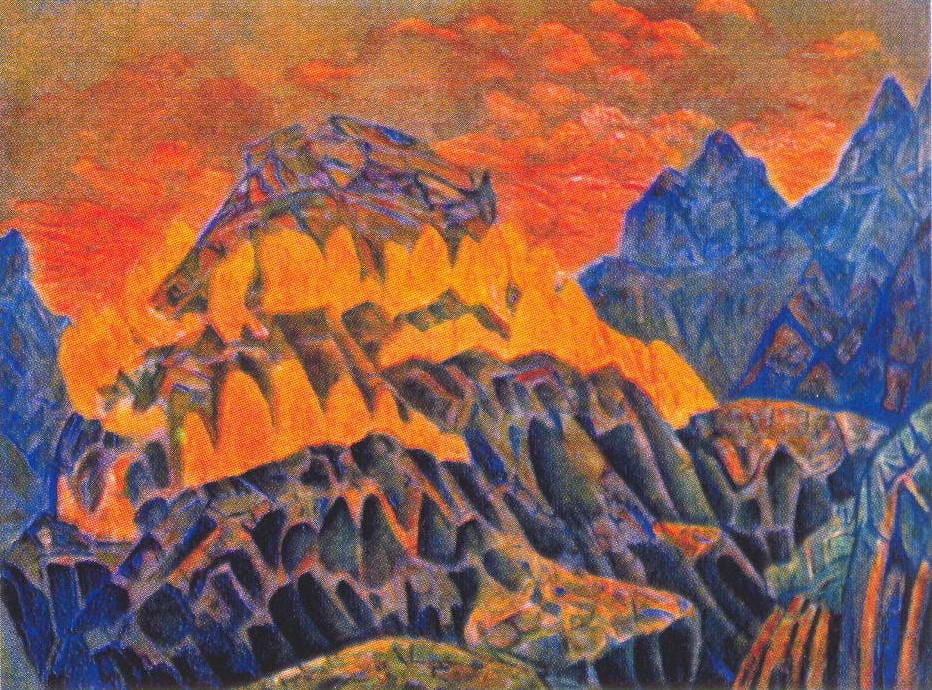
A good sherris-sack hath a two-fold operation in it. It ascends me into the brain; dries me there the foolish and dull and crudy vapours which environ it; apprehensive, quick, forgetive, full of nimble, fiery, and delectable shapes; which delivered o'er to the voice, the which is the birth, becomes excellent wit. The second your excellent sherris is the warming of the blood; which cold and settled, left the liver white and pale, which is the badge of pusillanimity and cowardice; but the sherris warms and makes it course from the inwards to the parts extremes.
— Shakespeare, Henry IV (2022)
I can resist everything except temptation.
— Oscar Wilde, Lady Windermere’s Fan, A Play About a Good Woman
Perceptual dualities can be put into categories based on their status as auditory, visual, directional or other types of sensations. Directional dimensions that animals understand include up~down, out~in, front~back and left~right, for instance, and auditory stimuli include sound~silence, loud~quiet, high pitch~low pitch, regular~random and novel~familiar. Surprisingly, it’s possible to make such a sensory group out of the thermophysical opposites fluid~solid, dynamic~static, disorder~order and other dualities made up of qualities that vary in matter with changes in temperature, and these are recurring themes in seemingly every aesthetic realm where they can be expressed, suggesting a link between physics and beauty.
The more exciting components of each thermal duality form a group of qualities (hot, fluid, dynamic, disorder) that we conventionally associate with and apply to exciting things, and their opposites make up a contrary group (cold, solid, static, order) with the opposite connotations. Animals generally tend to express or communicate more fluidity and dynamic and disorderly motion as we become more excited. The same goes for the non-thermal qualities sound, loudness, high pitch, upwardness and outwardness, and this happens both in the form of gestures and in auditory communication. As soon as humans were equipped with the symbolism of language we started referring to exciting concepts or experiences as hotter, wetter, faster, crazier, brighter, sharper, higher and more outward than what we find less exciting.
One could use either the structure of aesthetic material or patterns of association in language involving thermal qualities to describe the way matter changes on small scales as its temperature fluctuates, and not only the way heat corresponds to greater kinetic energy, but also increased disorder, fluidity, freedom of movement and expansion, or that coldness corresponds to geometric order, solidness, containment and contraction.
It might be argued that we learn to connect heat with motion by observing patterns of each other’s behavior. Since it’s warmer during the day, perhaps we think of heat as dynamic and dynamism as hot because we ourselves and others are more active when it’s warmer, so we say things like “feverishly,” “a blistering pace,” “a hot clip” and “hot-foot it” to mean fast, or “dead heat,” denoting a close race, or “in hot pursuit” and “hot on the heals,” meaning to chase, despite the fact that heat is not observably present in speed or motion. Oppositely, it might be thought that we call calmness and stasis cold, although it’s really not, in “chill out,” “cool it,” “a cool head” or “freeze,” because it’s cooler at night, when we relax and sleep. This argument breaks down, however, when it’s applied more widely. It doesn’t explain, for example, why we think of anger, sex, violence, redder colors, popularity and spiciness as hot.
We probably associate primitive perceptual qualities not because we observe correlations between them in the environment, but rather because they’re inevitably associated in the matter of the brain itself. Hot and cold would have been perceptible opposites long before the evolution of vision, hearing, taste or almost any other sensory ability, and the difference could only have been discerned through some system capable of measuring the degree of small-scale excitement in matter, like a thermometer. Our use of thermal terminology in such a wide variety of unrelated contexts might be explained as a consequence of similarities in the mechanisms by which we distinguish opposites in general, with sensations of heat, brightness, redness, loudness, high pitch, anger and sex all being alike, neurologically, in that they induce higher brain temperatures in an observer than their opposites.
Hue Heat
The sensation of heat is unconsciously opposite not only to coldness, but also to the sensation of the color blue, while red feels like an opposite to both blueness and coldness. This is well-established by studies with temperature and color as variables, known as hue heat experiments. Hue heat is one of several results in psychology that demonstrate how we recognize imperceivable dualities, or consider certain qualities to be opposites even though we shouldn’t think of them as such based on experience, and how it can influence our behavior (Bellia et al. 2019):
The Hue Heat Hypothesis (HHH) is based on the idea that light and colours of the environment can affect thermal perception and influence thermal comfort. Specifically, it states that, when spectral power distribution of light reaching an observer’s eye is characterized by long wavelengths in the visible spectrum, the space is perceived as warmer; conversely, when small wavelengths are predominant, the space is perceived as cooler.
People will hold a hot blue vessel longer than a hot red one and a cold red vessel longer than a cold blue one (Ziat et al. 2016). Blue coloration counteracts or moderates heat, and red counteracts coldness, meaning hot and blue are indirect opposites in the mind even though we wouldn’t learn this from normal experience, where it’s not true in any perceivable way. It’s only true in the mind and the substance of the brain. The same goes for cold and red. It’s been found that red light decreases cold pain thresholds and increases the perceived loudness of louder sounds, or increases sensitivity to higher temperature and sound volume (Landgrebe et al. 2008), and that people feel warmer observing orange than blue (Matsubara 2004, Chinazzo et al. 2017) and in yellow light than blue light (Albers et al. 2015): “Subjects tend to have slightly warmer thermal sensations in yellow light and slightly colder sensations in blue light.” Such studies show we associate the warmer colors red, orange and yellow with each other in a category that is, in a thermal sense, opposite to cooler colors like green, blue, purple and black.
Adding blue to heat or heat to blue creates a perceptual mixture with a sort of moderation, familiarity and interesting complexity that red heat and blue coldness don’t convey. More generally, with cooler colors and black grouped together under the term “dark” and warmer colors and white under “bright,” we favor the mixtures hot~dark and bright~cold over the perceptual or psychological combinations hot/bright and cold/dark. This isn’t just true in an experimental, contact time or latency-based context, but also in poetry, language, fictional stories and mythology, and Gloger’s rule can be interpreted to demonstrate that animals in colder environments prefer more brightly-colored mates while hotter species prefer darker mates.
A simple reason for the hue heat effect is that red, orange and yellow light excite and therefore heat the visual sensory system and brain slightly more than blue light. Assuming that this heat corresponds to some extent with psychological excitement in animals can explain the widespread use of warm colors for warning purposes, and why they so often evolve to characterize courtship signals and sex organs. There’s plenty of empirical evidence that darker colors like blue are universally related to sadness and redder colors are happier and more provocative, as Clarke and Costall confirmed (2008):
Consistent with the claim by Levy (1984) that cool colors sedate and warm colors provoke active feelings; the present study also found that ‘warm’ colors such as red, orange, and yellow did evoke the more active emotions (by ‘active emotions’ I refer to Levy’s (1984) use of this term when speaking of emotions or feelings that involve physical arousal, and by the use of ‘passive’ those that sedate).
Sounds probably feel louder when a person is perceiving red because both redness and loudness increase brain temperature, reinforcing each other to produce an overall less pleasant experience than coldness mixed with loudness or quietness mixed with heat would produce. Most likely, switching one or more quality in the combination hot/loud/bright to its opposite in a perceptual field decreases the brain temperature and excitement felt by an observer, while inverting qualities in the combination cold/quiet/dark would increase excitement from a lower point.
It’s predictable that animals have a preference for darker and bluer motion, chaos and fluidity and an aversion for brighter and redder versions of exciting qualities, and that there are corresponding unconscious associations: hot/red/motion/disorder/fluid and cold/blue/stasis/order/solid, with the qualities in each group combining to reinforce each other by way of their common influence on the temperature of the observing animal’s brain. People should be more tolerant or interested in visual brightness and disorder, for instance, when it’s cold or blue than when it’s red or hot, and poetry, myths and dreams should incorporate mixtures such as blue~fluid and bright~solid at high rates. Other perceptual dimensions can be added to this scheme, high and low pitch, up and down or out and in, for example, and the same predictions apply, such that high-pitched downwardness and inward brightness are amusing and common in aesthetic phenomena, and so on.
Beauty
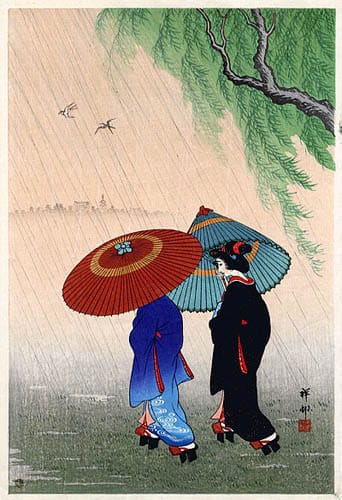
Or shall we seek our answer, rather, in some psychological theory, like many of the most distinguished nineteenth-century ethnologists—Bastian, for instance, Tylor, and Frazer—attributing such cross-cultural accords to “the effect,” as Frazer put it, “of similar causes acting alike on the similar constitution of the human mind in different countries and under different skies”? Do such images, that is to say, take form naturally in the psyche? Can they be assumed and even expected to appear spontaneously, in dreams, in visions, in mythological figurations, any place on earth, wherever man has made his home?
— Campbell, The Flight of the Wild Gander (1987)
Well did Aristotle say that virtues in contrast to vices are judicious means between contrary extremes. But the principle holds much more generally than even Aristotle saw. It applies, for example, in aesthetic matters. Beauty, too, is a mean. It is not the opposite to ugliness. Ugliness is an incongruity, a disorder, a jolt; but the sheer absence of incongruity and disorder is not beauty. Rather, beauty and all aesthetic value is what, in the words of Kurt Sachs the musicologist, ‘lies between the fatal extremes of mechanism and chaos.’ By ‘mechanism’, understand a too strict and unrelenting orderliness, and by ‘chaos’, a sheer lack of order. In the first case there is too little surprise, sense of tension, or interest in how things may come out; in the second case there are no definite expectations to be met with pleased surprise or to awaken any desire to experience the outcome. With mechanism we are merely bored, with chaos merely confused. In neither way does the sense of beauty arise.
— Charles Hartshorne, Wisdom as Moderation: A Philosophy of the Middle Way (1987)
The existence of beauty itself doesn’t need an explanation. It exists because we select for it while ignoring or rejecting what we judge to be relatively unexceptional or displeasing. The mystery is why we find some experiences more desirable, or at least tolerable, than others, why we so often agree about what they are, with each other and other animals, and what it is about the structure of aesthetic things that makes us like them. Aesthetics is primarily concerned with the source and persistence of psychological biases such as those for music over noise, dance over normal movement, flowers over leaves, colorful patterns over colorless invariance and generally with the existence of a common set of biases for attractive things, rather than the things themselves.
Darwin didn’t suggest that ornaments, songs and dances evolve because they indicate obscure, beneficial hereditary advantages, or that they come about through random, incomprehensible genetic feedback loops. He said they evolve in response to widespread preferences for similar stimuli in many different kinds of animals, through an aesthetic system of bias and effect (1871):
On the other hand, I willingly admit that a great number of male animals, as all our most gorgeous birds, some fishes, reptiles, and mammals, and a host of magnificently coloured butterflies, have been rendered beautiful for beauty’s sake. But this has been effected through sexual selection, that is, by the more beautiful males having been continually preferred by the females, and not for the delight of man. So it is with the music of birds. We may infer from all this that a nearly similar taste for beautiful colours and for musical sounds runs through a large part of the animal kingdom.
Song, dance, flowers and magnificent coloration are all related by the absence of a survival-based explanation, by beauty, and by the complexity of contradiction with respect to perceptual opposites. In Darwin’s view, something about the “common constitution” of the nervous system must be responsible (1888):
How the sense of beauty in its simplest form — that is, the reception of a peculiar kind of pleasure from certain colours, forms and sounds — was first developed in the mind of man and of the lower animals, is a very obscure subject. The same sort of difficulty is presented if we enquire how it is that certain flavours and odours give pleasure, and others displeasure. Habit in all these cases appears to have come to a certain extent into play; but there must be some fundamental cause in the constitution of the nervous system in each species.
What’s needed in order to account for similar preferences in so many species, from the “lower” animals to “man,” is something that’s the same about the brains of insects, fishes, reptiles, birds and mammals, ruling out factors like brain size, body size, intelligence, encephalization quotient, ecology or recent evolutionary history, leaving few potential common factors to consider, one of them being the physical complexity of plasma membranes in neurons, that which makes a brain thoroughly soft by comparison to other body parts and nonliving matter. Complexity of this kind in the brain hasn’t received much attention, perhaps because it’s assumed to be an unimportant by-product of other properties. Instead, it appears to be essential to sensation, consciousness and preferences, so that a brain works more like a highly sensitive thermometer than a computer, with more emotionally exciting perceptual qualities corresponding to a greater increase in brain temperature than less exciting qualities.
In ancient Greece the word “aesthetic” meant the experience of a perception or feeling. Now, of course, it means beautiful or the study of beauty. The transition, connecting the senses with attractiveness, is comparable to the contemporary situation of “sensation” and “sensational,” or the word “like,” meaning both “similar to” and “attracted to,” or the meanings of “taste,” and the concept that art imitates life and vice versa. Empedocles’ claim that we see “fondness by fondness” also fits the idea that there’s a correspondence between beauty and the structure of the mind. If the correspondence is real, in some way, it would be as though we already knew it, collectively, and inadvertently constructed language to reflect the fact.
The present, thermoaesthetic perspective is a departure from mainstream views in that the unconscious biases responsible for beauty are assumed to have come into existence during the process of sensory system evolution, always in advance of their effects, as opposed to arising repeatedly in unlikely coevolutionary interactions between the sexes with unrealistic connections to survival. For instance, an appreciation for patterns of brightness mixed with darkness arose with sensitivity to light and dark and remained in place throughout the evolution of animals. That for contrasting colors and rainbows arose with color sensitivity and persisted despite the diversity that makes animal species different otherwise. Those for complex alternating patterns of sound with silence and dynamism with stasis go back to the ability to hear and detect motion. All the things that seem to be beautiful are treated here as though they actually are, as consequences of aesthetic decisions, rather than accidents or features with functional purposes we can’t figure out. This is an extreme version of the sensory bias hypothesis of aesthetic preference evolution, expanding the idea to encompass a range of nonadaptive preferences that must exist in order to account for amusing traits and cultural phenomena with the same lack of a reasonable adaptive explanation.
Sensory Bias
What an odd thing it is to see an entire species — billions of people — playing with, listening to, meaningless tonal patterns, occupied and preoccupied for much of their time by what they call ‘music.’
— Oliver Sacks, Musicophilia (2008)
For beneath the first depth, namely that of the earliest civilizations — which are but the foreground of the long backward reach of the prehistory of our race — there rest the centuries, millenniums, indeed the centuries of millenniums of primitive man, the mighty hunter, the more primitive root-and-bug collector, back for more than half a million years. And there is a third depth, even deeper, and darker, below that, below the ultimate horizon of humanity. For we shall find the ritual dance among the birds, the fish, the apes and the bees.
— Joseph Campbell, The Masks of God: Primitive Mythology (2020)
Currently popular scientific approaches to beauty don’t address its structure, and they ignore the problem of its persistence and consistency across widely unrelated species. The most prevalent perspective regarding music, dance and elaborate shapes and coloration maintains that they evolve to demonstrate a good body or good genes, somehow more reliably than other attributes, indirectly benefiting a mate with a coevolving preference for the trait by allowing them to capture and pass on the genetic goodness to their own offspring. Such approaches don’t explain the complexity of sexually selected traits, or why, of all the things animals could do to prove themselves, and the vast number of more direct vitality-determining biases that could evolve, countless numbers of varied species have relentlessly converged on the particular scenario of preferring a complicated song, dance, shape or pattern.
We shouldn’t think of this convergence as somehow inevitable, that songs for instance represent such a large subset of the possible vocalizations an animal can make that the event of evolving to sing is hard to avoid statistically, any more than we think it’s inevitable a large proportion of human cultures would resort to singing instead of talking as a means of relaying relevant information simply because we’ve run out of more direct alternatives. The same argument applies to other aesthetic phenomena. They come about entirely because we select for them over less desirable stimuli, not because they’re inevitable or likely as members of a limited set of possibilities.
The second most popular scientific explanation for beauty and preferences, also a coevolutionary approach that doesn’t address the consistency, complexity or persistence of aesthetic traits is Fisherian runaway sexual selection (Fisher 1930, O’Donald 1967, Lande 1981, Kirkpatrick 1982), in which preference/trait pairs result from mathematically conceivable genetic feedback loops for no particular reason, or “beauty happens,” as Prum puts it in The Evolution of Beauty (2018), which otherwise argues against good genes as a realistic mechanism. Fisher’s model assumes an initial period in which a trait favored slightly by natural selection also randomly happens to be favored by certain mates, causing genes for the trait and those for the preference to increasingly occur together in succeeding generations. The preference and trait reinforce each other in a positive feedback loop, and the process continues until sexual selection for the trait and natural selection against it are in balance. The sequence of steps involved and the number of times they would need to play out independently but somehow lead to similar results across species makes this an extremely unlikely scheme compared to good genes, and especially compared to the idea that preferences simply exist by default.
The sensory bias model of sexual selection is a recently developed (West-Eberhard 1979, 1984; Ryan 1990, Ryan and Keddy-Hector 1992, Basolo 1996), relatively simple and intuitive alternative to good genes and Fisherian runaway. It predicts that side effects arise in the process of sensory system and brain evolution, causing preferences that generate selection for matching traits despite potentially reducing survival, arguably circling back, after more than 100 years of science, to Darwin’s original thinking (1896):
When male animals utter sounds in order to please females, they would naturally employ those which are sweet to the ears of the species; and it appears that the same sounds are often pleasing to widely different animals, owing to the similairty of their nervous systems, as we ourselves percieve in the singing of birds and even in the chirping of certain tree-frogs giving us pleasure.
Sensory bias can be distinguished from other models in that the preference for a trait evolves prior to and in a different context than the trait preferred, non-coevolutionarily. Such biases could be originally adaptive, evolving through direct selection, by improving prey detection ability for instance, or they could be “hidden,” in that they’re an incidental by-product with no original or current fitness-related function (see Ryan 1990, Enquist and Arak 1993, Endler and Basolo 1998, Arnqvist 2006). That organisms so widely separated taxonomically, ecologically and neurologically as humans, in every culture, whales (Payne and McVay 1971), bats (Behr and Helversen 2004), mice (Holy and Guo 2005), frogs (Searcy and Andersson 1986), about 5,000 species of birds (Hartshorne 1973), numerous different types of insects and other animals have an apparent preference for complex, song-like auditory stimuli strongly suggests the involvement of common elements in sensory systems, and it’s difficult to imagine so many different populations and species being subject to a common ecological factor that could possibly drive direct, adaptive selection leading all of them to a desire for song.
Wallin (1991) proposes sensory bias as the mechanism responsible for the evolution of singing behavior, pointing out the “dynamic dichotomy in music is similar to that which characterizes organismal systems,” and a “morphodynamic isomorphism” between the form of music and that of the brain, music’s physiological substrate. Sensory bias appears to have played a role in the evolution of “courtship trembling” behavior in Neumania papillator water mites (Proctor 1991, 1992), complex mating calls in the Tungara frog Physalaemus pustulosus (Ryan and Rand 1990), complex swords in swordtail fishes (Basolo 1990, 1995, 1996), long, flowing tails in widowbirds (Pryke and Andersson 2002), orange spots in the guppy Poecilia reticulata (Rodd et al. 2002), song structure in Costa’s hummingbird Calypte costae (Clark and Feo 2009), song repertoires in birds (Collins 1999), nuptial food gifts in insects (Sakaluk 2000), egg-spots in Cichlids (Egger et al. 2011), mud pillar (Christy 1995) and sand hood (Christy 2003) building in the fiddler crabs Uca beebei and Uca musica, red pelage and skin colors in primates (Fernandez and Morris 2007), pollinator attraction in orchids (Schiestl and Cozzolino 2008), Anoline lizard head bobbing patterns (Fleishman 1992) and mate color preferences in birds (Møller and Erritzøe 2010). Preferences for entirely novel signals, like red leg bands in zebra finches Taeniopygia guttata (Burley et al. 1982), white crests in finches (Burley and Symanski 1998) and gene transfer-induced red color in zebrafish (Owen et al. 2012) indicate that preferences can exist independently of favored traits.
There’s no reason to believe other animals have strange, unidentifiable but somehow functional reasons for performing and enjoying songs and dances, particularly when we know that for us the reason is only the pleasure we take in experiencing the patterns that make them up. The problem with assuming independent origins of preferences for song in many different singing animals might be illustrated by the absurdity of the idea that unique preferences for the behavior had to evolve separately in every human culture rather than being in place to begin with, especially given the lack of a function for human song (Darwin 1871):
As neither the enjoyment nor the capacity of producing musical notes are faculties of the least use to man in reference to his daily habits of life, they must be ranked amongst the most mysterious with which he is endowed.
The 300 distinct notes and 66 types of songs of the winter wren Troglodytes troglodytes (Kroodsma 1980), or the 58 elements, 15 separate behaviors and 10 plumate ornaments distinguished by Scholes (2006) in the dance of Carola’s parotia (Parotia carolae) represent behaviors that are undeniably more complicated than what would suffice for the purpose of conveying a signal of condition. Unless we assume the songs of wrens came into existence fully formed, without increasing in complexity over time, these birds have been amused by every shorter, simpler evolutionary version of the song in addition to the current one. Parotias must have been impressed by every historical parotia dance, and by every new element as it was added, at the same time consistently rejecting potential mates who didn’t perform movements approaching the extremely complicated sequence currently in use. The existence of such traits is much easier to understand with a general preference for complexity in place prior to and throughout their evolution.
Humans have no adaptive business being so affectionate about flowers, given that we don’t get food from or pollinate any of them naturally. One common theoretical approach in such cases is to trace the origin of a currently inexplicable trait, an attraction to flowers in this case, back to a common ancestor with a species that does have a reason to express it. For humans, an attraction to flowers would seem to go back at least beyond our most recent common ancestor with the many species of nectar-feeding, flower-pollinating birds, or prior to the split between mammals and reptiles, around 300 million years, probably before the first flowers existed. Notably, human interaction with flowers isn’t restricted to those produced by plants. We paint abstract versions of them on objects and canvases, carve or mold them into architecture, stitch them into clothing and tattoo them on our bodies, an indication that animals enjoy the shape in general, not only in the practical, ecological context of foraging.
To explain why insects and birds share a preference for flowers one would predict it was present in the brains of the ancestors of both groups, going back over 500 million years, to a time long before flowers, which, according to Sauquet et al. (2017), appeared somewhere between 140 and 250 million years ago. Preferences for song and dance, judging by their effects, in the courtship of both insects and birds, for instance, probably go back to the same early times, persisting with no regard for the taxonomic distance between species, across massive discrepancies in body size, brain size and ecology, suggesting that every animal has some capacity to understand and admire them by default, as a consequence of universal, inevitable aspects of sensory system structure.
The proposition that every singing species of bird evolved an inclination for musical sounds independently is hardly different from proposing that every species of bird separately evolved the ability to fly, except that in the first case there’s no practical reason for them to do so, and therefore even less reason to believe it happened more than once. There are obvious benefits to flying. It seems very likely that doing so has allowed birds to be, according to Darwin, the second most aesthetic type of animal, and it’s very unlikely to be a coincidence that birds and humans also have in common such an unusual degree of freedom from ecological limitations related to resource availability, predation and unsuitable environmental conditions. This isn’t to say animals don’t evolve the tendency to be attracted to a specific flowering plant, or to enjoy the particular type of singing or dancing of their own species more than others; it’s that they do so in the context of preexisting, ever-present biases for these types of stimuli.
Even if we did historically pollinate a particular flower, for some hardly imaginable, naturally selected purpose, this would only explain our attraction to that kind of flower, not most or all of them. This problem applies in general because so many flowers are pollinated by multiple animal species, which themselves pollinate multiple kinds of flowers. Assuming animals like flowers to begin with helps explain the success angiosperms have had in using floral shapes to exploit us. If humans had a history, evolutionarily, of performing a song or dance in a courtship display to compete for mates, traditional thinking would only explain the enticement of whatever particular song we were singing or dance we were doing, not the massive variety of those we’ve created, and no obvious advantage would accrue to a population expanding the use of song or dance outside the context of sex into that of religion, patriotism, ceremony, celebration and general entertainment.
Musical patterns apparently flow through the animal brain from the auditory cortex to the motor areas, translating outwardly into alternating body shapes and actions with the same, semi-predictable, simultaneously regular and random (disorder~order) structure as the music, as though the substance of the brain is offering little resistance. That humans relate dance to music and integrate the two phenomena in practice shows we have an automatic, unconscious way of recognizing some degree of aesthetic overlap or equivalence between them, probably because they have similar effects on the brain.
There’s a growing list of animals that dance to human music, meaning the equivalence is likely recognized universally. Cotton-top tamarin monkeys respond emotionally to human music rendered in a tamarin style (Snowdon and Teie 2010), and research shows that harbor seals (Verga et al. 2022), cockatoos (Patel et al. 2009), rats (Ito et al. 2022) and chimpanzees (Hattori and Tomonaga 2020) enjoy dancing to human music. In these cases, animals that shouldn’t understand and care about music, or dance, or know that the two are related, unconsciously understand all three things, undermining coevolutionary arguments and supporting a universal sensory bias perspective.
Animals will also dance spontaneously, without a musical cue, in response to the sight of another dancing animal. Campbell (2020) gives an account of chimpanzees playing and joining a group dance featuring spinning in place, forming flowing chains of spinning individuals and trotting with synchronized, asymmetric steps in circles around a pole:
Tschengo and another chimpanzee named Grande invented a game of spinning round and round like dervishes, which was then taken up by all the rest. “Any game of two together,” Dr. Köhler writes, ‘was apt to turn into his “spinning-top” play, which appeared to express a climax of friendly and amicable joie de vivre. The resemblance to a human dance became truly striking when the rotations were rapid, or when Tschengo, for instance, stretched her arms out horizontally as she spun round. Tschengo and Chica — whose favorite fashion during 1916 was this “spinning” — sometimes combined a forward movement with the rotations, and so they revolved slowly round their own axes and along the playground. The whole group of chimpanzees sometimes combined in more elaborate motion patterns. For instance, two would wrestle and tumble near post; soon their movements would become more regular and tend to describe a circle round the post as a center. One after another, the rest of the group approach, join the two, and finally march in an orderly fashion round and round the post. The character of their movements changes; they no longer walk, they trot, and as a rule with special emphasis on one foot, while the other steps lightly, thus a rough approximate rhythm develops, and they tend to “keep time” with one another….’ “It seems to me extraordinary,” Köhler concludes, “that there should arise quite spontaneously, among chimpanzees, anything that so strongly suggests the dancing of some primitive tribes.
Like us, although they have no reason to do so, or to find it amusing, chimps are equipped psychologically with both the desire to dance and the knowledge of how it’s done. Due to the existence of music and dance throughout the animal world, it’s predictable that sensory systems and brains embody an understanding of the qualities and dualities involved automatically, perceive them as opposites and find the idea of mixing them together in intricate patterns intriguing.
Mythology has the same problem with aesthetic themes recurring in widely unrelated cultures and stories that evolutionary biology has with certain themes (song, dance, contrasting colors, ornamental ocelli, long flowing tails) turning up in widely unrelated species, and, probably, the same kind of solution in the form of universal preexisting biases in sensory systems. As a potential way to understand common features of human psychology and resulting patterns in mythology, Campbell brought up the subject of sensory bias long before it was popular, in Primitive Mythology, 1959, the first volume of The Masks of God series, citing an experiment by Adolf Portmann (1953) with the grayling butterfly, Eumenis semele, which showed that males pursue artificially darkened females “in preference even to the darkest female of the species,” early empirical evidence that animals have preferences for versions of each other that don’t exist in nature:
A new and very promising approach is opened, however, when it [mythology] is viewed in the light of biological psychology as a function of the human nervous system, precisely homologous to the innate and learned sign stimuli that release and direct the energies of nature — of which our brain itself is but the most amazing flower.
Universality
On the whole, birds appear to be the most aesthetic of all animals, excepting of course man, and they have nearly the same taste for the beautiful as we have.
— Charles Darwin (see Prum 2017)
To say tastes are unique, that they can’t be accounted for, or that beauty is “only in the eye of the beholder,” is a way of saying beauty and taste are random and dismissing the massive overlap of agreement about what’s likable and about what isn’t. An extreme version of this view depicts a scenario in which one person has no idea what any other person will like or dislike, so that every time one of us happens to come up with and create something others find beautiful it’s a fortunate accident. In reality, on the contrary, we know almost exactly what kinds of things we can say or do in any situation to be charming, repulsive, or something in between, and this wouldn’t be possible without a shared set of inclinations, or a “common sense.” Similarly, artists can make art using their own sense of beauty because of how closely it tends to correspond with that of their audience. To some extent, our feelings about stimuli must be the same due to common elements of sensory systems, as Edmund Burke (2005) pointed out in A Philosophical Inquiry Into the Origin of Our Ideas of the Sublime and Beautiful, 1757:
We do and we must suppose, that as the conformation of their organs are nearly or altogether the same in all men, so the manner of perceiving external objects is in all men the same, or with little difference. We are satisfied that what appears to be light to one eye, appears light to another; that what seems sweet to one palate, is sweet to another; that what is dark and bitter to this man, is likewise dark and bitter to that; and we conclude in the same manner of great and little, hard and soft, hot and cold, rough and smooth; and indeed of all the natural qualities and affections of bodies. If we suffer ourselves to imagine, that their senses present to different men different images of things, this sceptical proceeding will make every sort of reasoning on every subject vain and frivolous, even that sceptical reasoning itself which had persuaded us to entertain a doubt concerning the agreement of our perceptions. But as there will be little doubt that bodies present similar images to the whole species, it must necessarily be allowed, that the pleasures and the pains which every object excites in one man, it must raise in all mankind, whilst it operates naturally, simply, and by its proper powers only: for if we deny this, we must imagine that the same cause, operating in the same manner, and on subjects of the same kind, will produce different effects; which would be highly absurd.
In the current context a single bias is taken to be responsible for all the independent instances of a given aesthetic effect, regardless of whether it was created culturally or evolved by mate choice. This has the advantage of agreeing with conventional thinking and the terminology already in place due to our collective understanding of aesthetic things. For instance, we think of birds as singing real songs and dancing real dances, when they do so, calling their behavior by the same name as our own versions of the same conduct. The differences are not enough, apparently, to cause us to think of them in different terms. To some extent, we know we’re hearing a song because sound, loudness, high notes and surprising variation are punctuated over short periods by silence, quietness, lower-pitched notes and predictable repetition. Relative simplicity regarding these qualities tends to characterize less amusing, less intricate, nonmusical communication. All of what we refer to as dancing in birds, fish, spiders and others, which can be as simple as expressing a little extra motion or asymmetry in the central, lower or posterior areas of the body, is understood as dancing just as real as our own, and in all cases there must be something about the brain that allows an animal to distinguish it from other types of motion.
Flowers must differ visually from leaves in some essential way that allows them to be recognized as such and admired by people and pollinators, and the brains of all species that admire flowers must have features that facilitate the admiration. The areas of the brain responsible for flower evolution are biased to select for complexity to the extent that the flowering part of a plant is complicated, visually, relative to its leaves and stems. The name “flower” itself, alluding to flow, is a clue to how we recognize them and how they seduce us.
The rule of discernibility applies to all conventionally aesthetic things. Jokes are somehow distinct from serious statements. Poetry sounds different than prose. Playing feels different from working. Myths and stories differ from everyday life. In each case, some process occurring in the part of the brain responsible for judging its appeal tells us whether we like it or not, and it’s predictable that the process is somehow the same every time from the fact that we conventionally put what we like together in a group, calling it “aesthetic,” for instance. There must be specific, determinable features that differentiate what we like from comparable but less interesting events. To the extent that aesthetic things are more perceptually complicated than the non-aesthetic contents of our experience, we automatically recognize complexity and select for it over simplicity.
Evolution
Animals are less unique psychologically than we thought, and consequently more alike in our appearances and behavior. Universal sensory biases often predate and take precedence as causal factors over selection in favor of functional traits. The scientific community has been proposing, embracing and rejecting survival-based hypotheses for the origins of beauty since the 1870s, when Darwin said that adaptation in the usual sense didn't apply.
There are probably many examples of primitive sensory biases reinforcing selection for survival. If animals tend to choose as mates those who exhibit relatively elevated round features such as eyes and heads and it also happens to be advantageous for individuals to view their surroundings from an elevated position, then the aesthetic pressure exerted on mates by a bias with the structure up~round might contribute indirectly to survival.
A preference might be appropriated, amplified or otherwise modified as a trait it selects for becomes valuable functionally. If all animals express a bias causing them to be amused by the destruction of solid objects, for the mixture disorder~solid, which is abundantly evident in humans and indicated by the behavior of numerous other species, the bias would have simplified the process by which, for instance, various birds evolved to peck at the bark of trees and find insects for food. A similar case can be made for burrowing, the advantage in this case arising from having a safe place to hide. More specific instances might be the way certain birds (gulls, crows, vultures) will fly up and drop a shelled animal or a bone to the ground to break it open for a meal, or the foraging behavior of parrotfish, anteaters or polar bears.
Genetic change doesn't need to come into play for an incidental bias to pay off, a possible example being that for long inwardness (long~in) leading chimpanzees to insert the stems of plants into holes in ant nests, a behavior that happens to pay off when the ants inside climb onto the stems.
It's easy to think of ways that a trait could be advantageous, and best to be cautious in accepting that it serves a non-aesthetic purpose. Walking upright seems like an obvious adaptation for avoiding predators or the threat of snakes and other ground-dwelling poisonous animals, but one would expect to see more terrestrial species other than humans evolving an upright posture under these circumstances if it usually makes a significant difference. It's just as easy to imagine disadvantages: increased exposure to predators and prey, or the drawbacks of falling, and an animal could have it both ways, standing up to look out for danger and walking on four legs otherwise.
Being able to imagine a possible, even perfectly reasonable cause for a trait doesn't necessarily constitute evidence in its favor, and many of the causes we imagine don't hold up. Having long hair on our heads to stay warm, for instance, makes absolutely no sense in light of the fact that we evolved to be naked almost everywhere else, and given that the transformation happened in a region of Africa where, according to Passey et al. (2010), the temperature has been around 30 degrees Celsius and hotter for the last four million years.
Thousands of species are endowed with extremely similar, long, fluid-like, posterior and downward features, purely for decoration. Long human hair can hardly be a completely thermoregulatory exception to such a massive aesthetic pattern. Even if it keeps us slightly warmer there's no realistic scenario in which people with longer hair experienced a significant edge in conditions cold enough to kill a person otherwise. Humans don't behave as though we have hair to keep warm; we treat like it a decoration. The idea of something round or inward coupled with something long or outward being amusing is built into the word "decoration" itself.
Recently, scientists have suggested the purpose of human hair is to keep us cool (Lasisi et al. 2023), exactly the opposite of the usual perspective, and of what it's supposed to do in other mammals. One of the many problems with this idea, that hair prevents radiation from the sun from reaching the scalp, is that there would have needed to be a large number of people without hair dying from unobstructed thermal radiation-induced hyperthermia, and a lot of people dying for having hair any shorter than the current length. There would have needed to be sufficient variation in the trait. Another is that babies managed to survive while adults were presumably dying in large numbers for lack of long hair. The baby problem, of course, applies to the heat retention hypothesis as well.
Sexual dimorphism can indicate when a trait has evolved by mate choice, but when it's the same in both sexes we can't effectively assume it's adaptive instead. This is particularly true when the trait is dimorphic in some species and not so in others. Both sexes are equipped with tusks in African elephants, but only males express them in Asian elephants. The assumption, then, should be that tusks evolved sexually regardless of whether they contribute to survival, initially at least, in response to the bias spiky~solid. It's probably true that tusks and horns in general are an effect of this preference, occasionally ending up with secondary purposes aiding survival. Spiky solid features are like songs, dances, ocelli or the contrast effect because they evolve repeatedly in large numbers of unrelated species, with no dependence on variation between them with regard to the brain or ecology. The biases out~in and spiky~round might also play a role when spiky ornaments are located in the vicinity of inward and round features, which is typical.
The current thesis gives something of a direction to evolution, outside of progress toward increased survival ability, in that individuals within populations can be expected to become more attractive to each other over time, not just in general but in terms of particular mixtures. Brightly-colored animals should evolve by mate choice to express contrasting, darker colors as well. Animals that produce only high-pitched sounds should evolve the ability to also produce lower sounds. Rounder parts should get brighter and redder, longer parts darker, inward parts should take on outward aspects, upward ones round aspects and so on.
Complexity
The same kind of complexity that exists in the brain on small scales appears on large scales in the structure of aesthetic things.
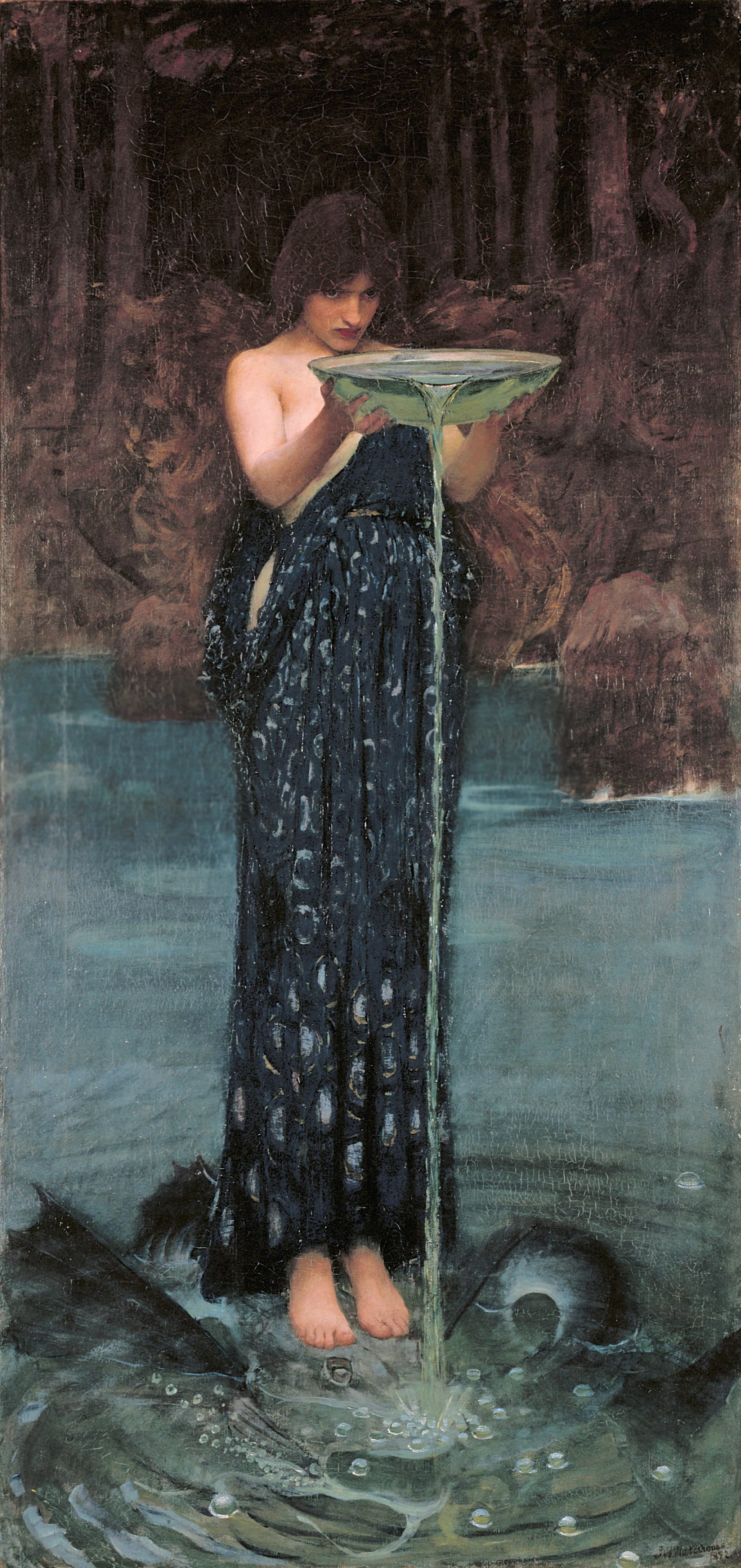
When works of art deviate from the mean of order — disorder toward the extreme of disorder, we may call them ugly, grotesque, and the like. When they deviate toward the extreme or order, we may call them tidy or ‘neat’ (as this word was used by the generation before the latest one), but not beautiful. At the limit of either direction of deviation from the mean, all aesthetic value lapses, and we turn to something else.
— Charles Hartshorne, Wisdom as Moderation: A Philosophy of the Middle Way (1987)
Complexity in the current context doesn’t mean the absence of order, or that something is made up of many different interacting parts, as it might mean elsewhere. Regarding order and chaos, the meaning of complexity is any mixture of the two, as opposed to only one or the other, whether it be in a song, dance, visual scene, myth, story, joke, name, popular expression, philosophical concept, hallucination, dream or as a physical condition in the animal brain.
Regarding temperature, complexity means a mixture of hot and cold, or of any two things we know to be thermal opposites. Chromatic complexity is defined as a visual or conceptual interaction between bright and dark, black and white, red and blue, green and yellow or other contrasting colors. Directional complexity means both up and down, out and in, front and back or left and right. Kinetic complexity is a juxtaposition of moving and staying still, speed and slowness, or more specific conceptual relatives of these qualities such as living and nonliving. Complex shapes are those mixing symmetric roundness or simple geometry with asymmetry, length and/or spikiness, like a flower, a fruit, an ocellus, an egg or a cross that’s longer in one direction than the others. Physical complexity means both fluid and solid, liquid and crystalline, or being materially soft like a living thing or brain as opposed to having the texture of the mineral, liquid or vaporous states of the nonliving.
Each pair of qualities in list 3 can be thought of in at least three ways: (1) as a primitive duality in the mind that animals use to survive and reproduce, (2) as a mixture, in the sense that it incorporates opposites, and (3) as an essential ingredient in aesthetic phenomena, occurring surprisingly often in any material under sufficient selection to be attractive. All three perspectives are tied together by mixed opposition, a type of complexity we might expect to find in sensory systems as an inevitable property. There’s nothing inevitable, though, based on current evolutionary theory, about the inclusion of mixtures in aesthetic things. They could have any structure, no consistent structure at all, or be avoided altogether with no negative consequences regarding survival. There’s no need for animals to sing songs, let alone songs in which the auditory qualities in lists 1 and 2 are intricately juxtaposed, or to dance, especially in ways that mix the given dualities of motion and direction.
List 1 and 2 qualities are special because they involve extremely primitive sensory abilities, those we use to comprehend temperature, texture, motion, light, color, sound, shape and direction. They can be experienced by all animals with appropriate sensory systems. Mammals, birds, reptiles, fish, arthropods, mollusks and others, even our most distant animal relatives, probably think of them as opposites just as we do. It’s not hard to imagine these abilities having side effects in the form of biases that persist despite being adaptively neutral, or even detrimental but negligibly so compared to the benefits of seeing and hearing, knowing the difference between wet and dry, between motion and stasis, night and day, sound and silence, long and round, up and down, out and in and so on.
It’s not certain that an animal will benefit from an understanding of a signal in which qualities from the extremes of independent perceptual dimensions are put together. Does it matter, for instance, whether or not we understand inward fluidity as distinct from outward fluidity? It could be argued that it matters a lot, because inward fluidity is essential to breathing, drinking and sex, but also that the understanding predated all of these functions. For humans at least, sex involves various types of unnecessary inward fluidity, along with entirely unnecessary, intricate, dance-like mixtures of motion with stasis, sound with silence, up with down, out with in and so on. Is there any point to an animal being able to identify the difference between a pattern of upward darkness and downward brightness versus the reverse, downward darkness and upward brightness? The ability would hardly seem to be of any use, and yet it’s clear, from Thayer’s law (1896), that animals are generally aware of the difference and inclined to favor the former configuration.
The process by which sensory systems evolve might take advantage of the fact that the action of a stimulus at one perceptual extreme tends to be more exciting physically to matter than that at the other, especially when its opposite is defined by the absence of signal. Under such circumstances, it would be efficient for an organism to distinguish a pair of opposites by differences in the amount of small-scale excitement they transmit naturally to a membrane, cell, tissue or brain. Heat naturally excites matter more than coldness, light more than darkness and sound more than silence, so it would be improbable for the mechanism by which life tells the difference between these things to work in such a way that darkness was indicated by a state of greater neurological excitement than brightness, silence more than sound or coldness more than heat.
A preference might be expected to evolve along with the capacity to tell the difference between a pair of opposites. There would be little point in having a sense of color if our feelings about and responses to redness were no different from those to blue or green, or a sense of pitch if we felt the same way whether it’s high, low or in between. If certain biases do evolve in connection with the ability to distinguish stimuli, the centers of corresponding perceptual dimensions might be a suitable place for them to be focused, in which case we would avoid extremes and favor moderation, choosing, for example, to experience pitch that’s not too high or low, sounds that aren’t too loud or quiet, shapes that are in between long and round, movements in between fast and slow and so on.
Evolution doesn’t tend to produce in the animal mind an understanding of survival of the fittest, natural selection, or life and death. No animal breathes, drinks, sleeps, wakes up, evades predators, sings, dances, chases prey and eats them or chooses a mate and mates with them while thinking about survival, passing its genes along or having offspring. Instead, we do what we like, and avoid what we don’t. Natural selection leads to useful mental dualities and adjusts how we feel about their components, rather than providing an understanding of why we should care. It shapes our preferences so we like what keeps us alive and reproducing more than what doesn’t, and not as efficiently as it should. Something else is going on as well, which is why Darwin devised the concept of sexual selection (1871), saying that various common aspects of animal shapes, coloration patterns, sounds and movements evolved to be amusing in response to a general desire for beauty.
The way we experience perceptual opposites and the dimensions they define is complicated in that we navigate between extremes. A description of the situation is more involved than that of a desire for only more of something or only less. Animals don’t exclusively prefer higher temperatures, brighter lights, redder colors, longer shapes, higher pitch or louder sounds while rejecting their opposites or vice versa. Instead, we prefer moderation and subtle fluctuations between stimuli from opposite ends of perceptual dimensions.
Metaphysics
So it is that existence and non-existence give birth the one to (the idea of) the other; that difficulty and ease produce the one (the idea of) the other; that length and shortness fashion out the one the figure of the other; that (the ideas of) height and lowness arise from the contrast of the one with the other; that the musical notes and tones become harmonious through the relation of one with another; and that being before and behind give the idea of one following another.
— Laozi, Tao Te Ching (1995)
Complex interaction of opposites is an essential feature in various popular historical and contemporary concepts, perhaps the most famous being Yin and Yang, a “constant, interactive balance” in the “coherent fabric of nature and mind” (Wang 2023) between qualities such as dark versus bright, cold versus hot, stillness versus action and order versus chaos. Interactive opposition also appears, arguably, in the ideas of “everything in moderation” and “nothing in excess” (said to be inscribed on the Temple of Apollo), the Buddhist “Middle Way,” the separation of opposites from Apeiron in the cosmogony of Anaximander, the balance of “love” and “strife” in the cosmic cycle of Empedocles and the balance between Dionysus, god of wine, pleasure, irrationality and chaos versus Apollo, god of purity, reason and order described in Nietzsche’s The Birth of Tragedy Out of the Spirit of Music (1995). Nietzsche’s title, incidentally, is a mixture of the sadness or unexcitingness of tragedy with references to qualities on the more exciting side: outwardness, fluidity (spirit), sound and high pitch (music), in addition to the contrast between tragedy and the joyous event of birth.
The Indian concept of Yoga proposes that what we perceive generates a reproduction of itself in the matter of the brain, made possible by the fact that its substance can easily be altered with respect to certain physical qualities. In The Masks of God, Volume 2: Oriental Mythology, Joseph Campbell (2014) translates the definition of the art of Yoga from Patañjali’s Yoga Sūtra, line 1.2, as “the (intentional) stopping of the spontaneous activity of the mind stuff,” implying the brain is in constant motion. Bongiovanni (2018), with “Union” being the meaning of the word “Yoga,” translates the same line a little differently: “Union is restraining the thought-streams of the mind,” as if the motion in the brain is like a fluid. Campbell adds volatility, ripples, brokenness, speed and outwardness to the dynamism and fluidity used to describe the mind’s unstoppable motion:
The archaic psychological theory implied in the definition holds that within the gross matter of the brain and body there is an extremely volatile subtle substance, continually active, which assumes the forms of everything presented to it by the senses, and that by virtue of the transformations of this subtle matter we become aware of the forms, sounds, tastes, odors, and pressures of the outer world. Furthermore, the mind is in a continuous ripple of transformation — and with such force that if one should try without yogic training to hold it to a single image or idea for as long, say, as a minute, almost immediately it would be seen to have already broken from the point and run off into associated, even remote, streams of thought and feeling. The first aim of yoga, therefore, is to gain control of this spontaneous flow, slow it down, and bring it to a stop.
Mental representation appears to have validity in the context of differential excitement. While a strict interpretation in which observations are perfectly reconstructed mentally is unrealistic, so is the complete absence of some correspondence between stimuli and how we understand them. Brightness, an exciting phenomenon in the environment, at least compared to darkness, probably translates into neurological activity and therefore physical excitement in the brain. Sound does the same relative to silence, and presumably more so with increases in volume and pitch. To some extent, the fundamental level of excitement in a stimulus is represented by a similar degree of neurological, physical and psychological excitement.
That there’s something subtle and volatile about the brain is undeniable, with this usually being thought to emerge from its complex chemistry, electricity, and/or its numbers of cells and connections, but the contents of language and the analogies we use to describe our minds are usually physical, involving fluidity, motion, disorder, solidness, stillness and geometric shapes, as in the following mind analogy used to explain Yoga, from Campbell (2014):
The analogy is given of the surface of a pond blown by a wind. The images reflected on such a surface are broken, fragmentary, and continually flickering. But if the wind should cease and the surface become still — nirvāṇa: “beyond or without (nir-) the wind (vāṇa)” — we should behold, not broken images, but the perfectly formed reflection of the whole sky, the trees along the shore, the quiet depths of the pond itself, its lovely sandy bottom, and the fish. We should then see that all the broken images, formerly only fleetingly perceived, were actually but fragments of these true and steady forms, now clearly and steadily beheld. And we should have at our command thereafter both the possibility of stilling the pond, to enjoy the fundamental form, and that of letting the winds blow and waters ripple, for the enjoyment of the play (līlā) of the transformations.
To the extent that something fleeting, disordered, fragmented or flickering is more exciting than something steady, clear, perfectly formed and quiet, the analogy is a mixture of more and less exciting things. The suggestion is implicit that the qualities of the excited pond — rippling fluidity, fleetingness, brokenness, fragmentation, flickering and transformation — are more fun than the perfection, quietness, form, truth and steadiness of a still pond, and Campbell adds that the ability to experience both is ideal.
Aristotle says in Metaphysics (1908) that a certain school of “the so-called Pythagoreans” believed the world was composed of ten pairs of opposites, strangely similar to those that differentiate Yin from Yang:
Other members of this same school say there are ten principles, which they arrange in two columns of cognates — limit and unlimited, odd and even, one and plurality, right and left, male and female, resting and moving, straight and curved, light and darkness, good and bad, square and oblong. In this way Alcmaeon of Croton seems also to have conceived the matter, and either he got this view from them or they got it from him; for he expressed himself similarly to them. For he says most human affairs go in pairs, meaning not definite contrarieties such as the Pythagoreans speak of, but any chance contrarieties, e.g. white and black, sweet and bitter, good and bad, great and small. He threw out indefinite suggestions about the other contrarieties, but the Pythagoreans declared both how many and which their contrarieties are.
Alcmaeon is credited with the discovery that the mind resides in the brain, rather than the heart or somewhere else, and the partially true observation that our eyes are filled with fire and water (Huffman 2021). He proposed that “the majority of human things come in pairs” and created an early version of humorism theory: “the equality (isonomia) of the powers (wet, dry, cold, hot, bitter, sweet, etc.) maintains health” while “monarchy among them produces disease.” The idea isn’t just that too much heat, coldness, wetness or dryness is unhealthy. It’s also that they need to be present in moderate amounts and intricately mixed together to sustain life. This is in accordance with the present definition of complexity, and with the thesis to the extent that the idea has aesthetic value and hot and wet are more exciting than cold and dry. Much of what Alcmaeon said happens to be true as a statement about the special physical situation of life, or how we survive by avoiding both freezing into a solid and melting into a fluid.
The mind being in the brain raises the question of what makes a brain such a suitable substrate for consciousness. Most likely, its condition of extreme physical softness in comparison to other organs and tissues, and other matter, has something to do with how it works. If the complexity of a material is measured by how intimately it mixes fluidity with solidness, the brain is the most complex organ in the body and object in the known universe.
There are probably direct connections between this softness and a brain’s ability to sense stimuli, process information and make decisions. It matters a lot for other body parts to be in a particular physical phase. Blood, bones and teeth didn’t evolve to be liquid and crystalline for no reason. Hearts and other muscles wouldn’t be capable of alternating between relatively relaxed and tense conditions if not for their intermediate and adjustable consistency. Why, then, would we expect that the physical state of the brain is an inconsequential side effect that plays no role in its functionality? It would be more reasonable to imagine brain softness itself having side effects, perhaps in the form of certain otherwise inexplicable, widespread predilections. The argument also applies to life as a whole. It’s liquid crystalline, rather than liquid or crystalline, and accordingly complicated, with a wide range of both adaptive and nonadaptive consequences, probably including thermoregulation, the need for liquid water and death.
While everything else in the local universe can only change physically in one direction or the other, either into a fluid or a solid, depending on its temperature, life can do both. Robert Frost highlights this in his poem “Fire and Ice,” where he also connects fire to hate and desire, as though it obviously represents these emotions, and the coldness of ice their opposites. He calls death by ice “destruction,” even though burning would be a more destructive way to die than freezing, resulting in an interesting contradiction, an aesthetic effect with the specific structure destruction~ice and the general structure disorder~cold/solid. Overall, the poem expresses in aesthetic form the same idea that Alcmaeon was saying we should consider philosophically, that we can either freeze or melt:
Some say the world will end in fire,
Some say in ice.
From what I’ve tasted of desire
I hold with those who favor fire.
But if it had to perish twice,
I think I know enough of hate
To know that for destruction ice
Is also great
And would suffice.
In the Pythagorean duality system, pairs of opposites are said to be arranged in a table with qualities in the same column supposedly being associated psychologically, all of those on one side being “good,” for instance, compared to those on the other, all of which are relatively “bad.” The Pythagorean table is distinctive in early Greek philosophy because, like Yin versus Yang, it includes the duality disorder~order (Huffman 2019):
Opposites played a large role in most Presocratic philosophical systems. The Pythagoreans who posited the table of opposites differed from other early Greek philosophers not only in the normative view of the opposites but also by including strikingly abstract pairs such as straight and crooked and odd and even, in contrast to the more concrete opposites such as hot and cold, which are typical elsewhere in early Greek philosophy.
Straightness, squareness, limitation, stillness, lack of change, singularity, light and right are aligned on the good side for the Pythagoreans, while crookedness, length, freedom, motion, multiplicity, dark and left are supposedly bad. In the practical world, bad things are almost always unwelcome, and we favor the good. Aesthetically, though, bad things are accepted and indispensable; they happen all the time in the interest of providing a contrast to the occurrence of good things. Eliminating them would leave us with a lack of interesting narratives for stories, myths, folklore, literature, plays, movies and so on. Without evil character’s, heroes would have no one to kill. Without an element of disorder art and decoration would be boring, jokes wouldn’t be funny, and music and dance would be almost impossible. In an aesthetic context, neither quality in a pair of opposites is dominant, or necessarily superior. Both are valuable, and almost equally so. One of them, however, in this case evil, disorder, chaos or badness, by whatever name, is fundamentally more exciting than the other, what we might call goodness, order, rightness or peace.
Many other things we normally try to avoid nevertheless play an essential role in aesthetic phenomena. Death and confinement, for example, appear in popular stories at high rates even though in reality we prefer almost exclusively to be alive and free. In these cases we favor qualities on the more exciting side, in contrast to our negative feelings about chaos and evil. Thus, aesthetically, neither higher nor lower excitement is universally “better.” In traditional psychological terms, having a positive valence, or degree of attractiveness, is not consistently the same as being arousing or unarousing, and negative valence isn’t equivalent to high or low arousal either.
In the Americas, despite being separated from Greek and Chinese philosophy by thousands of cultural years and living on the far side of the planet, the Aztecs (Mexica) also saw the world in terms of fundamental, interactive opposites. They believed in what James Maffie (2023) describes as a “single, dynamic, vivifying, eternally self-generating and self-regenerating sacred power, energy or force,” strangely similar to Sanskrit têjas, which they called “teotl”:
Teotl’s process presents itself in multiple aspects, preeminent among which is duality. This duality takes the form of the endless opposition of contrary yet mutually interdependent and mutually complementary polarities which divide, alternately dominate, and explain the diversity, movement, and momentary arrangement of the universe. These include: being and not-being, order and disorder, life and death, light and darkness, masculine and feminine, dry and wet, hot and cold, and active and passive. Life and death, for example, are mutually arising, interdependent, and complementary aspects of one and the same process. Life contains the seed of death; death, the fertile, energizing seed of life. The artists of Tlatilco and Oaxaca, for example, presented this duality artistically by fashioning a split-faced mask, one-half alive, one-half skull-like (see Markman and Markman 1989:90). The masks are intentionally ambiguous. Skulls simultaneously symbolize death and life, since life springs from the bones of the dead. Flesh simultaneously symbolizes life and death, since death arises from the flesh of the living. The faces are thus neither-alive-nor-dead-yet-both-alive-and-dead all at once.
Life versus the nonliving, in contrast to the ambiguity in teotl, and regardless of a human desire to think otherwise, doesn’t particularly defy metaphysical classification. Being alive is pretty clearly delineated from being dead. The former doesn’t, very much, “spring from the bones” of the later, and live flesh isn’t exactly an unquestionable symbol of death. In other cases, it’s best to accept that there’s a complex middle ground between being only one thing and being two, an indefinite realm where reality almost defies our categories, but they still partially apply, with opposites that are simultaneously conflicting and cooperative.
We don’t have to like that living versus nonliving is a proper duality, or to respect it as such in art and myth. Nothing stops us from creating amusing exceptions like the “neither-alive-nor-dead-yet-both-alive-and-dead all at once” masks of the Aztecs, artificially creating what Maffie calls “dialectical polar monisms.” The similarly ambiguous arrangement between Yin and Yang qualities has been called “dualistic monism.” Here, the phenomenon is simply called a “mixture,” assuming, of course, that one of the participating opposites is, on average, more exciting to the brain and mind than the other.
Ghosts, zombies, vampires, and the rest of the undead are further examples of how the duality of living versus nonliving can be partially broken so that dualistic monism applies. So are immortal beings who die, or have a small, mortalizing defect like the heal of Achilles, or Baldr only being susceptible to a sprig of mistletoe, and the countless gods and characters who die and then come back to life, including Innana in her trip to the ancient Mesopotamian underworld, Odin when he sacrifices himself in the world tree Yggdrasil, and Christ in the crucifixion and resurrection.
Hel, ruler of Hel and daughter of Loki in Norse mythology, is said to be half flesh-colored and half blue, and therefore was probably thought of as both dead and alive at the same time (Crawford 2015, 2018), just like the Aztec masks. It’s a simple detail that makes her more complicated and interesting than she would be otherwise. Dante’s Satan, like Hel, is only half alive in that his lower body is frozen. The circles of hell in Dante’s Inferno overall are reminiscent of Frost’s poem “Fire and Ice,” with punishments ranging from burning in the fiery molten river Phlegethon to being forever trapped in ice. Either way, a person needs to remain alive in some sense, although they’ve supposedly died, in order to experience any kind of hell or other afterlife.
The idea of a partially broken duality is perhaps most evident in the physics of life, where thermal opposites are caught up in the ultimate dualistic monism, dialectical polar monality, unity of opposites, liquid crystal or mixture of more and less exciting things. The answer to whether life is fluid or solid, for instance, is not that we’re failing to recognize bodies are actually one or the other, or that life is definitely neither and beyond such metaphysical classification. Life is best described as fluid, solid, both and neither all at once, and this is true of other thermal dualities as well: hot~cold, dynamic~static, disorder~order, all of which are also surprisingly prevalent in philosophical lists of opposites, and unexpectedly likely to be juxtaposed in aesthetic phenomena.
While an appreciation for mixtures of thermal opposites is reflected in the structure of any society, these are particularly clear in what Maybury-Lewis (1989) says about the Bororo of Brazil:
The Bororo… have an all-pervasive dual organization that is at once cosmic, symbolic, and social (see Crocker 1985). It is expressed through the two major classes of spirits that exist in Bororo cosmology: the Aroe and Bope. The Aroe are associated with essence and pure form, as opposed to the Bope who are associated with process and flux. The Aroe are thus static, where the Bope are dynamic. The Aroe are associated with order, the Bope with disorder. The Aroe are comparatively sterile, as compared to the Bope who are associated with both creativity and destruction. The Aroe are rather distant, whereas the Bope are immediate and their influence is both sought and felt.
Fluid qualities (flux, dynamism, disorder) are associated with each other in a mental category, those of the Bope spirits, and solid qualities (form, stasis, order) are grouped together in the concept of the Aroe. The creation of such categories implies associations between those qualities in the same group, and consequently a degree of opposition between qualities we don’t normally think of as being opposed, such as destruction versus stasis or motion versus form.
Scientists would have to agree the spirit classes are a suspiciously good description of a liquid crystal, despite having been created by people with no direct knowledge of mesophases or small-scale physics. The same opposites are involved, and arranged appropriately with respect to how they vary thermally. To the extent that flux, dynamism and disorder are perceptually more exciting than form, stasis and order, the Bororo system is a mixture of more and less exciting things. It’s difficult to imagine such a system evolving in the absence of a universal reflex-like preference for a balance between the opposites they apply to their spirits.
Physically, fluid~solid is usually a definitive duality. Few opposites are as clearly demarcated in nature as fluidity versus solidness, or liquid versus crystalline, with the process by which something in one of these states changes into the other normally happening suddenly, at a very specific temperature, assuming invariable pressure. It follows, because matter in a fluid state is disordered and dynamic while that in a solid state is ordered and static, that disorder~order, dynamic~static and other thermal opposites are also definitively dualistic in the nonliving. At the same time, however, within living things, especially for brains, these are partly distinct and partly indistinguishable, making bodies and brains impossible to categorize in a dualistic or monistic framework. A brain has the same metaphysical ambiguity as the Aztec masks, being neither-fluid-nor-solid-yet-both-fluid-and-solid all at once, and the same structure as Bororo society, mixing the same qualities into monistic dualities that the Aroe and Bope spirits do.
Complexity, as it’s defined here, has thus been recognized and valued for a long time from various otherwise diverse perspectives, by cultures all over the world, since the origins of philosophy, mythology and social structure, continuously so throughout history to the present day, likely because we find it intuitive and amusing, but also because it describes a basic biological reality.
Philosophy
And they framed the mouth, having teeth and tongue, and lips, with a view to the necessary and the good; for food is a necessity, and the river of speech is the best of rivers. Still, the head could not be left a bare globe of bone on account of the extremes of heat and cold, nor be allowed to become dull and senseless by an overgrowth of flesh. Wherefore it was covered by a peel or skin which met and grew by the help of cerebral humour. The diversity of the sutures was caused by the struggle of the food against the courses of the soul. The skin of the head was pierced by fire, and out of the punctures came forth a moisture, part liquid, and part of a skinny nature, which was hardened by the pressure of the external cold and became hair.
— Plato, Timaeus (2015)
The fact that hardness and softness vary throughout a body was recognized by Aristotle. As he put it in On the Parts of Animals (1882): “Of the homogeneous parts of animals, some are soft and fluid, others hard and solid; and of the former some are fluid permanently, others only so long as they are in the living body.” He thought animal bodies must have diverse properties in this regard to give rise to their diverse functions:
Animals, then, are composed of homogeneous parts, and are also composed of heterogeneous parts. The former, however, exist for the sake of the latter. For the active functions and operations of the body are carried on by these; that is, by the heterogeneous parts, such as the eye, the nostril, the whole face, the fingers, the hand, and the whole arm. But inasmuch as there is a great variety in the functions and motions not only of aggregate animals but also of the individual organs, it is necessary that the substances out of which these are composed shall present a diversity of properties. For some purposes softness is advantageous, for others hardness; some parts must be capable of extension, others of flexion. Such properties, then, are distributed separately to the different homogeneous parts, one being soft another hard, one fluid another solid, one viscous another brittle; whereas each of the heterogeneous parts presents a combination of multifarious properties.
The most vital body parts were thus understood in Aristotles’ time to be a mixture of fluidity and solidness. He used Empedocles’ physical system and assigned some of the classical elements and forces (fluidity, solidness and temperature) special significance in contributing to the structure of life:
Now there are three degrees of composition; and of these the first in order, as all will allow, is composition out of what some call the elements, such as earth, air, water, fire. Perhaps, however, it would be more accurate to say composition out of the elementary forces; nor indeed out of all of these, but out of a limited number of them, as defined in previous treatises. For fluid and solid, hot and cold, form the material of all composite bodies; and all other differences are secondary to these, such differences, that is, as heaviness or lightness, density or rarity, roughness or smoothness, and any other such properties of matter as there may be.
A body’s status in terms of hot versus cold and solid versus fluid is considered a major determinant of its structure. The balance of these is said to be responsible, in part, for sleep, health and aging, as well as long hair:
No animal has so much hair on the head as man. This, in the first place, is the necessary result of the fluid character of his brain, and of the presence of so many sutures in his skull. For wherever there is the most fluid and the most heat, there also must necessarily occur the greatest outgrowth.
Aristotle seems to have been convinced that heat, fluidity, length and outwardness are all related, implying an opposite relation between coldness, solidness and inwardness. Although he appreciated the physical complexity of parts of animals that incorporate mixtures of these opposites, such as the face with its variously harder and softer, more and less wet and dry and extensible and contractable elements, he wasn’t as fond of those in which the same opposites are integrated so thoroughly they can hardly be distinguished, such as the brain, which he called a cold, bloodless, excrement-resembling concoction of earth and water not connected to the rest of the body or the senses, assigning it the function of moderating the heat of the heart and soul and holding the body in the perfect balance, referring in places to its superabundant fluidity and in others to its solidness, as though the brain is particularly difficult to place in one or the other category.
Galen of Pergamon, the famous doctor and philosopher, in Works on Human Nature: Mixtures, De Temperamentis, said that earth, air, water and fire are pure representatives of the fundamental qualities hot, cold, wet and dry, but that in animals these qualities always occur as “mixtures.” No animal is as dry as earth, cold as ice, wet as water or hot as fire, although, according to Galen, “ants are dry as animals, while worms are wet; then again, among worms, some are wetter, either just wetter for a worm, or by comparison with some particular worm.” Dogs are wetter than ants or bees, he says, and humans are wetter than dogs. All things can be quantitatively compared by way of the four fundamental qualities (Galen et al. 1997):
Now, since the median in any genus — but especially in that of substance as a whole — consists in a mixing together of the extremes, our conception and identification of it must also come about from the same starting-point. Conceptually the matter is very simple. We begin with the hottest of all perceptible things, fire, say, or violently boiling water, and draw a line from that down to the coldest substance we know, ice, say, or snow; and we mark this line exactly in the middle. This will give us the point of good proportion conceptually — that which is equidistant from each of the extremes. We may also create it physically, by mixing equal amounts of ice and boiling water. For that which is made from a mixture of both of these will be equidistant from the two extremes of burning and of dying of cold. It is thus a simple matter, by getting hold of this mixture, to have an example of the median state of all substance with regard to the opposition of hot and cold. One may then remember this, and use it as a yardstick against which to measure everything else.
Galen’s “point of good proportion” between physical extremes is a pretty good description of a liquid crystal for the second century, 1700 years before they were discovered. The reason, of course, is that he was describing the state of living things, which is one of liquid crystallinity. More recently, the British physician and theologian Peter Mark Roget said, in Animal and Vegetable Physiology (1836):
The animal as well as the vegetable fabric is necessarily composed of a union of solid and fluid parts. Every animal texture appears to be formed from matter that was originally in a fluid state; the particles of which they are composed having been brought together and afterwards concreting by a process, which may, by a metaphor borrowed from physical science, be termed crystallization. Many of those animals, indeed, which occupy the lowest rank in the series, such as Medusae, approach nearly to the fluid state; appearing like a soft and transparent jelly, which, by spontaneous decomposition after death, or by the application of heat, is resolved almost wholly into a limpid watery fluid.
Organisms can vary in average consistency, but some amount of fluidity is always necessary and so is some solidness. This must be true as well within brains, between those of individual animals and from one area to another internally. The left hemisphere, for instance, is probably more solid on average than the right. Sphingomyelin, a lipid that stabilizes and increases the order and rigidness of membranes, is about 30% more abundant on the left (Pediconi and Barrantes 1990):
Phospholipid content and 32P-incorporation have been studied in individual rat cerebral hemispheres. The total phospholipid content was 44.9 +/- 0.9 and 47.9 +/- 1.3 mumol lipid P/100 mg protein for the right and left hemispheres respectively. Individually, only sphingomyelin was significantly (about 30%) higher in the left hemisphere.
The right hemisphere, then, is somewhat more fluid, dynamic and chaotic than the left, with the right being connected to the opposite, left side of the body and visual field, and the left to the right. These differences are probably responsible for an unconscious psychological tendency to associate the right side with order and the left with disorder, along with a slight, contradictory, aesthetic tendency to prefer list 1 qualities on the right side of the visual field and list 2 qualities on the left. This would explain, for example, the tendency for babies to be held with the head to the left in mammals (humans, walruses, flying foxes, see Giljov et al. 2018), why flags and products are more often colored or oriented to be brighter on the right and darker on the left, and why an unhatched chick orients its head so its right eye is exposed to light that penetrates the eggshell while its left eye is hidden in the dark against its chest (Güntürkün 2005, Ocklenburg and Güntürkün 2012):
Avian embryos consistently keep their head turned such that the right eye is close to the egg shell and the left eye is occluded by the body (Kuo, 1932). Since breeding birds regularly turn their eggs and intermittently leave the nest, eggs are frequently exposed to light which traverses the egg shell and primarily stimulates the right eye (Buschmann et al., 2006).
Ernst Haeckel, in The Wonders of Life (1904), addresses the “chief physical property,” or “peculiar thickness and consistency” of living matter:
The physicist distinguishes three conditions of inorganic matter — solid, fluid, and gaseous. Active living protoplasm cannot strictly be described as either fluid or solid in the physical sense. It presents an intermediate stage between the two which is best described as viscous; it is best compared to a cold jelly or solution of glue. The cause of this softness is the quantity of water contained in the living matter, which generally amounts to half of its volume and weight. The water is distributed between the plasma molecules, or the ultimate particles of living matter, in much the same way as it is in the crystals of salts, but with the important difference that it is very variable in quantity in the plasm. On this depends the capacity for absorption or imbibition in the plasm, and the mobility of its molecules, which is very important for the performance of the vital actions.
The American naturalist John Burroughs addressed the issue of solidness and fluidity in organisms in a chapter called “The Living Wave” of his book The Breath of Life (1915):
It is a significant fact that the four chief elements which in various combinations make up living bodies are by their extreme mobility well suited to their purpose. Three of these are gaseous; only the carbon is solid. This renders them facile and adaptive in the ever-changing conditions of organic evolution. The solid carbon forms the vessel in which the precious essence of life is carried. Without carbon we should evaporate or flow away and escape. Much of the oxygen and hydrogen enters into living bodies as water; nine tenths of the human body is water; a little nitrogen and a few mineral salts make up the rest. So that our like in its final elements is little more than a stream of water holding in solution carbonaceous and other matter and flowing, forever flowing, a stream of fluid and solid matter plus something else that scientific analysis cannot reach — some force or principle that combines and organizes these elements into the living body. If a man could be reduced instantly into his constituent elements we should see a pail or two of turbid fluid that would flow down the bank and soon be lost in the soil. That which gives us our form and stability and prevents us from slowly spilling down the slope at all times is the mysterious vital principle of force which knits and marries these unstable elements together and raises up a mobile but more or less stable form out of the world of fluids.
Thus, we have it on the authority of Empedocles, Aristotle, Galen, Roget, Reinitzer, Lehmann, Haeckel, Burroughs and others that life is a complex mixture of fluidity with solidness. Consequently, life is a complex mixture of fluid and solid characteristics such as motion, stasis, form, formlessness, disorder, order, randomness and regularity. Recently the sciences of chemistry, physics, biology and complex systems are approaching this same conclusion, all from different directions. Being in this special condition is probably as consequential for psychology, behavior and preferences as any other characteristic of life, with the potential to expose and answer questions we’ve never thought to ask.
Complexity Theory
Parallels can be drawn between the present thesis and contemporary ideas in complexity theory used to model living systems like the “edge of chaos” (see Lewin 1999) and class four cellular automata. Wolfram (2002) categorizes one-dimensional cellular automata into four distinct classes. Class one, the simplest, tend to collapse rapidly into an infinite fixed state, or an orderly, repetitious pattern. Class two are less regular, developing a slightly more intricate pattern than class one and then repeating the pattern forever. Class three are very random, sometimes running more than a million time steps with no detectable structure, analogous to chaotic systems. The fourth class is special. They were described last, hence the name, but behaviorally they belong between classes two and three.
Class four automata show a mixture of order and randomness that often leads to great complexity, corresponding to the edge of chaos in dynamical systems. Christopher Langton has pointed out that class one and two automata can be taken to correspond to the physical solid state, class three to the fluid state and class four to a phase transition between them (Waldrop 1992). Under certain sets of rules they yield attractive, complex patterns of order and chaos that resemble those on the surfaces of animals (Wolfram 2002). Recent research (Manukyan et al. 2017) on the “quasi-hexagonal lattice,” “green and black labyrinthine pattern of skin colour” in occelated lizards has shown that “cellular automata are not merely abstract computational systems, but can directly correspond to processes generated by biological evolution.”
Categories of the Mind
When the people of the world all know beauty as beauty,
There arises the recognition of ugliness.
When they all know the good as good,
There arises the recognition of evil.
—Lao-tzu, The Way of Lao-tzu (Bartlett 2022)
Humans sort more and less exciting things into consistent, conventional mental categories and unconsciously associate those in each category with each other. More exciting, list 1 qualities belong to mental category 1 and less exciting, list 2 qualities belong to mental category 2.
Evidence for this can be seen in the way we use the primitive perceptual opposites here proposed to be essential ingredients in the structure of aesthetic phenomena to communicate about matters with which they have no consistent external connection. Disorder is used, for instance, to describe excitement, fun, speed, sudden change, abnormality, erratic behavior, novelty, lies, disobedience, anger, sex, drugs, intoxication and humor.
Trends in how we apply primitive perceptual qualities beyond their primary meanings reveal associations that exist by default, at birth, due to the structure of brains and how they operate, rather than as a result of observations we make that could cause the trends in question indirectly.
We call anger, violence, sex, redness and spices hot, and lack of emotion, sadness, indifference, unconsciousness, reality and bluer colors cold, even though these things aren't hot or cold in any perceivable way. This is likely to be a result of automatic associations that exist because our sense of temperature, perhaps the first sense to evolve, is not fully differentiated, subconsciously, from the senses that evolved later.
Associations between what seem like fully distinct qualities to the conscious mind, brightness and disorder for example, or darkness and order, are exposed by large-scale linguistic patterns such as the idea of the “break of day” or “crack of dawn,” and the sun going down as “the evening.” An association between darkness and downwardness is apparent in the expression “nightfall,” and that between upwardness and brightness in “lit up.” Heat and brightness are upward in “spring,” and coldness and darkness are downward in “the fall.” This happens, apparently, through a kind of universal unconscious synesthesia, itself resulting from similarities in the way consciously independent information is handled in the brain. The feeling we get from darkness is like the feeling we get from coldness, order and downwardness, while brightness feels somewhat warmer, more disorderly and upward.
Although they’re unconscious, the associations are reflected and thus observable in a range of cultural patterns, with perhaps the clearest evidence in language, probably because languages have the versatility to reference anything we can imagine. This is in contrast to gestures, which are restricted to visual cues. There’s no way for an animal to deliberately express the idea of hotness without a word, or a gesture specifically designed for the purpose, and thus no way to determine non-invasively that there’s a correspondence between brain heat and excitement without an abstract system of communication, even if the correspondence has always existed.
Languages reveal psychological information because they evolve to fit preexisting biases, themselves having evolved with sensory systems, the mind and the substance of brains, either adaptively or as side effects of adaptive features. Mental categories ultimately have a physical basis, so if we didn’t already know that thermal qualities are related to each other in nature, inevitably increasing and decreasing together with temperature fluctuations, the fact would nevertheless be discernible from the structure of conventional human communication.
The same thermal qualities that increase in the brain according to its temperature, or level of physical excitation, including fluidity, speed and disorder, increase in behavior and language when we engage in more exciting situations or speak about exciting topics, and decrease or turn to their opposites in less exciting circumstances.
Many other qualities, those with no immediately obvious relationship to the physics of temperature, such as redness, upwardness, outwardness and spikiness, also tend to increase in the vocalizations and behavior of animals in accordance with levels of arousal, and decrease as we calm down. Although they’re superficially non-thermal, there must be a reason we associate them with heat, with each other, and with excitement in general.
Connections between anger, hate, sex and conceptual heat are well established. Neuroscience has demonstrated those between the same emotions and real, physical heat in the brain, for humans and other species. The novel proposition here is that the psychological and neurological results are not independent, that heat, anger and sex are inevitably associated because they feel the same, to a significant extent, more so than they feel like coldness, which seems to be calm because there’s a significant overlap between our feelings about lower temperature and tranquility. The situation could be compared to a kind of universal, unconscious synesthesia, such that loudness feels a little like a bright color, a low-pitched tone feels downward, a cooler color feels slightly cold, speed seems redder than slowness, darkness is inward and heavy compared to brightness, which is “lighter” and outward, and so on.
Excitement and Eysenck's Mechanism of Personality
Eysenck's theory of introvert versus extrovert behavior and arousal can be used to determine the relative excitingness of various primitive perceptual opposites.
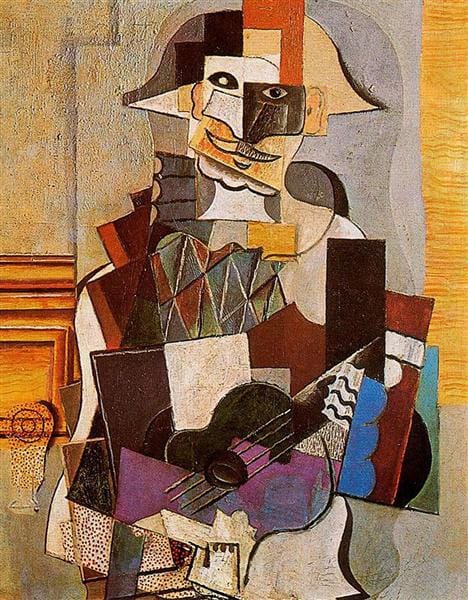
Currently, there are few studies directly assessing the relationship between extraversion and the cortical arousal system in the context of varying stimulations but data available so far are remarkably consistent with Eysenck's model.
— Mitchell and Kumari (2016)
According to Hans Jürgen Eysenck's arousal-based mechanism of personality type (1952, 1963), extroverts have lower inherent activity in the brain, and they compensate for the resulting lack of excitement they feel by favoring more arousing experiences and stimuli, while introverts, with higher inherent brain activity, compensate by favoring lower arousal. There's an important aesthetic component to this idea in that the distinction between types, which were first proposed by Carl Jung in Psychologische Typen (1923), is based on the fact that they have slightly different preferences with respect to certain primitive perceptual opposites.
One might think, initially, that extroverted behavior is the result of a higher default arousal level, and the opposite for introverted behavior, that it's a reflection of relative tranquillity in the brain. Instead, the theory has the same property of contradiction that occurs generally in aesthetic phenomena: low arousal is countered by high arousal and vice versa. It's also conveniently aligned with the idea of aesthetic reflex, that opposite qualities induce a desire for each other. Too much noise, for instance, seems to increase the appeal of silence, or motion of stasis, brightness of darkness, outwardness of inwardness and so on, such that satisfying patterns can be created by alternating instances of these and other opposite qualities.
Eysenck's mechanism appears to support a physical version of mental representation, in that outward, perceptually exciting things translate into (are represented by) comparable neurological excitement in the substance of the brain, with less exciting things translating into less excitement, maybe none in the total absence of a stimulus (darkness, silence). This means the brain alternates between states of higher and lower temperatures, and therefore thermophysical conditions, in response to various stimuli over short periods of time, in addition to doing so diurnally and as it cycles through the stages of sleep. Thermal variation in the brain is thus a notable biological feature in a number of contexts and over a wide range of timescales, reason to suspect it plays a significant role in how the mind works.
Assuming Eysenck is right, it's implicit that neurological activity increases more in response to perceptual qualities preferred by extroverts than those preferred by introverts, providing a method for sorting stimuli into more and less exciting categories, independently of the linguistics-based method by which the same can be done with less effort.
Extroverts have been found to prefer high chroma (Pazda et al. 2018) and "warmer, more intense" colors (Robinson 1975, Choungourian 1967) when compared to introverts, who prefer "cooler, calmer" colors. By "warm," researchers mean red, orange and yellow; by "cool" they mean green, blue and purple. This is an example of temperature being applied, mysteriously, to qualities that don't actually express heat, coldness or warmth. No color is hotter or colder than any other. Red isn't actually warmer than blue. It's also no more intense, in itself, and blue isn't actually calmer than red. We use these terms of action and temperature to describe colors due to automatic psychological connections. Redness, heat and motion feel somewhat similar to each other, and so do blueness, coldness and stasis.
The results of hue heat experiments (see Ziat 2016) can be interpreted as showing that we unconsciously associate red with higher temperatures and blue with lower temperatures. We already knew this, however. It's built into language and culture, the latter in that red signals heat and blue signals coldness. In this case, at least, language can be used to predict the results of experiments because it reflects unconscious, universal associations. One proposition given in the main story is that this works very generally, that experiments will independently demonstrate associations between idiomatic heat and physical heat in almost all cases. Redness probably makes a person feel slightly hotter, and so do spices, anger, sex, rapid motion and other things we call hot for no apparent reason. What these things have in common is that they excite the brain more than their opposites, or their absence, and this is a much simpler explanation of where the associations come from than the unlikely scenario in which we all learn them from experience and happen to arrive at the same conclusions. In any case, putting extrovert warm color bias together with Eysenck's theory leads to the conclusion that brighter and warmer colors are more arousing to the nervous system than darker and cooler colors, which makes sense given the way we use the former to capture attention. This should also work the other way around. If there's reason to think heat is more exciting than coldness, we should predict extroverts to prefer a slightly hotter environment than introverts.
That extroverts choose outwardness over its opposite inwardness more often than introverts is clear enough from the terminology "extro" and "intro," and from definitions of the personality types. From Oxford Languages, via Google, an extrovert is "an outgoing, overtly expressive person," indicating such a person prefers and engages in more outwardness and dynamism than an introvert, defined as "a shy, reticent person." From Oxford Dictionary, extrovert means "a person who is predominantly focused on external things or social interaction rather than on internal thoughts and feelings" and introvert means "predominantly focused on internal thoughts and feelings rather than on external things or social interaction, often characterized as being quiet or withdrawn."
This serves to highlight the significance of outwardness and inwardness to the mind, that we think of these as fundamental opposites, with outward being more exciting than inward. The aesthetic value of out and in is easily demonstrated. They might be the most commonly juxtaposed directional opposites in aesthetic material, with hundreds of examples in language, poetry, mythology and elsewhere, perhaps because they're easy to make reference to and they matter a great deal to horizontally interacting animals, but also because the idea of out versus in is applied to more than one dimension of perception: near versus far, edge versus center and to shape, describing the inward and outward aspects of an object.
The biological interplay between outwardness and inwardness is a much bigger subject than human personality. In fact, biologists will eventually conclude that a universal interest in inwardness mixed with outwardness is largely responsible for the shapes of animals. Sexual selection in favor of this mixture is the reason that inward parts of the body are so generally coupled with outward features throughout the animal kingdom, and artificially so in humans. This means an understanding of the difference between out and in originated very early in the psychological evolution of animals.
The extreme importance of in and out is reflected in the structure of language, where the qualities appear in expressions such as "entertainment," "interesting," "expression" or "extreme importance." They play a more extensive linguistic role, it seems, than other directional opposites such as up versus down or left versus right. Extroverts probably have biases with regard to all directional dimensions, predictably for upwardness and the left side, which is automatically associated with change, disorder and other higher excitement qualities, including outwardness, as in "came and left."
Extroverts tolerate noise better than introverts (Geen 1984, Standing et al. 1990, Belojevic 2001, Moradi et al. 2019), suggesting noise is more exciting than silence. Again, this is what we would expect on account of the way we use sound, and particularly loudness, to get attention. Noise feels a little hotter, redder, brighter and outward than silence, probably the reason we use "loud" as a term for gaudy coloration, and perhaps for correspondences between words like "yell" and "yellow" or "shout" and "out." Silence feels cooler, darker, bluer and more inward. High pitch can most likely be added as a relative of more exciting qualities, and to the list of qualities extroverts prefer a little more of than introverts.
Most interestingly, at least one study has shown, by a variety of approaches, that extroverts have a detectable preference for fluidity and introverts for solidness (Oishi et al. 2015):
In five studies, we tested the link between personality and geography. We found that mountain-lovers were more introverted than ocean-lovers (Study 1). People preferred the ocean over mountains when they wanted to socialize with others, but they preferred the mountains and the ocean equally when they wanted to decompress alone (Study 2). In Study 3, we replicated the introversion - extraversion differences using pictures of mountains and oceans. Furthermore, this difference was explained in part by extraverts' perception that it would take more work to have fun in the mountains than in the ocean. Extending the first three studies to non-students, we found that residents of mountainous U.S. states were more introverted than residents of flat states (Study 4). In Study 5, we tested the link between introversion and the mountains experimentally by sending participants to a flat, open area or a secluded, wooded area. The terrain did not make people more introverted, but introverts were happier in the secluded area than in the flat/open area, which is consistent with the person - environment fit hypothesis.
Extrovert bias for fluidity means we can think of it as more exciting than solidness. The fact that fluid versus solid appears to constitute a basic pair of opposites in the context of personality theory is reason to consider it a primitive perceptual duality like we do bright versus dark, hot versus cold or dynamic versus static. More reason to do so comes from how commonly aesthetic phenomena in biology (flowers, long hair, ornamental feathers and fins) and human decorations (spirals, dresses, flowers) mimic the essence of a fluid.
Eysenckian personality theory thus allows us to construct lists like the one below, which shows more exciting, extrovert-preferred qualities first, to the left of a tilde, coupled with introvert-preferred qualities, given to the right. Others can be added, tentatively at least, based on the contents of extrovert/introvert questionnaires (Eysenck and Eysenck 1968, 1975) which ask about such things as how many other people someone likes to be around, attending parties, being active and being okay with disorder as opposed to being alone, orderly and moving slowly, such as "Would you be very unhappy if you could not see lots of people most of the time?," "Can you usually let yourself go and enjoy yourself a lot at a lively party?," "Are you slow and unhurried in the way you move?," "Are you bothered by disorder" and "Do you dislike imperfect work." That these questions effectively sort subjects into extroverted and introverted categories implies that many~few, active~inactive and disorder~order are differentially exciting opposites.
Excitement opposites: warm color~cool color, fluid~solid, active~inactive, disorder~order, sound~silence, loud~quiet, out~in, many~few.
See Appendix 1 for thousands of examples of how these and other pairs of primitive perceptual opposites are also juxtaposed in aesthetic material, probably not by coincidence, in that the same neurological properties responsible for personality types seem to be involved in aesthetic decisions. Evidence from various fields can be used to illustrate that heat, length, spikiness, larger size and upwardness are more exciting than their opposites, so it's predictable that experiments will eventually reveal extroverts also tolerate/prefer these qualities slightly more than introverts, who should prove to be more partial to coldness, roundness, smaller size and downwardness.
Regardless of whether someone is an introvert or extrovert, less exciting things should be preferable when the brain is aroused beyond some level, and the preference should shift to more exciting things when the brain is less aroused and below that level. Presenting a person, even an extreme extrovert, with too much sound, action, brightness, fluidity and other excitement will eventually induce a preference for the opposites of these qualities. In reality, of course, people normally fall somewhere in between extreme extroversion and introversion. Most of us probably aren't far from what psychologists call ambiverts, with moderate baseline arousal and preferences.
All of this points to the existence of an optimal arousal point, an ideal excitement level or physical condition in the brain, a Goldilocks-like state of intermediacy that corresponds to feeling satisfied, and this is in line with the Yerkes Dodson law (1908), which states that performance is maximized by moderate levels of arousal. It's also reminiscent of the many philosophical and religious concepts that advocate for moderation.
If this process of approaching an optimal point happens so widely, influencing personality and performance, determining likes and dislikes, and corresponding to satisfaction, perhaps the same sort of process is happening in an aesthetic context, with oppositely exciting stimuli countering the influence of each other to create an amusing effect because they also lead to an optimal, moderate amount of excitement.
To summarize, Eysenck's personality theory mechanism, which has been "remarkably consistent" with data, offers an empirical, fairly indisputable approach to sorting perceptual qualities according to arousal. It also supports other aspects of the idea of thermoaesthetics, in that it involves contradiction and complexity of differentially exciting opposites, mental categories, the ideas of aesthetic reflex and physical mental representation, and also aesthetic indifference, since non-optimal levels of excitement in the brain can evidently be compensated for by any stimulus that pushes it in the optimal direction.
Excitement Expressions
We describe undesirably ordinary or unexciting things as “cold,” “dry” “stale,” “tired,” “slow,” “square,” “ordinary,” “flat,” “drab,” “ho-hum,” “dull” and “boring,” as if they fail to satisfy a need for heat, fluidity, dynamism, disorder, brightness, high pitch, spikiness and outwardness, despite the lack of an outwardly observable reason to do so. The pattern shows how we automatically associate list 1 qualities with excitement, as do phrases such as those given below. Several of these refer to multiple qualities from the list, making them thermoaesthetic combinations, and these are followed by their structures in parentheses. Others, also followed by descriptions of their structures, contain a reference to a list 2 quality, making them mixtures.
Higher Excitement
Heat: fired up (hot/up), burning with desire, five alarm fire (many/loud/hot/bright), fever pitch, light a fire under (bright/hot~down), fluidity: floating on air (up/fluid), walking on air, it’s a gas, frothing at the mouth (fluid/in), causing a stir, dynamism: hyperbole, raring to go, happy-go-lucky, disorder: not all it’s cracked up to be (negation~many/disorder/up), go hog wild, brightness: tickled pink, paint the town red, bright-eyed and bushy-tailed (bright~round~out/long), upwardness: all worked up (many~order~up), on top of the world, overblown (up/fluid), over the moon (up~round), flying high (up/up), above all (up/many), jumping for joy, loudness/high pitch: with bells on, a bee in your bonnet (high pitch/dynamic~in), buzzing, throw a hissy fit (out/high pitch), outwardness: beyond your wildest dreams (out/disorder), like a dog with two tails (many/long), on cloud nine (fluid/many), in seventh heaven (many/up).
References to thermal qualities are prominent in the list, most likely not because they consistently correspond to excitement in our observations of the outside world, but because of general psychological overlap between all the qualities in list 1.
The way we attach the word “over” to words such as “overstimulated,” “overzealous” and “overheated” as an indication of high excitement also shows the connection between upwardness and high arousal. The word “excite” itself combines “ex,” meaning “out” and “up” with “cite” which goes back to “citare” and “ciere” in Latin, meaning to set in motion or stir up. Expressions such as “outburst” and other “ex” words (exhilarate, excessive, exacerbate) connect excitement and outwardness. As might be expected, idioms related to lower excitement, given below, are typically made up of references to the qualities in list 2.
Lower Excitement
Coldness: cool your jets (cold~dynamic), cool it, cool as a cucumber, keep your cool (in/cold), cool down (cold/down), chill, chill out cold~out), chillax, play it cool (dynamic~cold), take a cold shower (in/cold~fluid), solidness: dry, like watching paint dry (fluid~solid), bored stiff, stasis: stay calm, stay cool (static/cold), bored to death, buzzkill (high pitch~static), order: even-keeled, downwardness:, settle down (down/down), calm down, wind down, simmer down, inwardness: reel it in, pull it together (in/in), keep it together (in/in), cool and collected (cold/in), get a grip (in/in), get ahold of yourself (in/in), keep a cool head (in/cold/round), take a chill pill (in/cold), take it with a grain of salt (in/singular/small/solid).
Excitement
Using the term “excitement” in the present context has the advantage that it’s descriptive of stimuli and related levels of physical stimulation in the brain at the same time. A bright light, loud sound or rapidly moving object is an exciting stimulus that most likely activates relevant neurons and thereby excites matter in the brain more than darkness, silence, or the same object in a motionless state. Calling one category “hot” or “warmer” and the other “cold” or “cooler” is an alternative that avoids misconceptions having to do with the way we might think of more excitement as somehow better than less. Unfortunately, it also avoids the convenience of translation from stimulus to stimulation, and so does the term “arousal,” used in scientific literature, which otherwise has almost the same meaning as thermoaesthetic excitement.
Finding something exciting isn’t the same as liking it, and less excitement, or calmness, is hardly unlikable. In the present context, no value difference is meant to be implied between higher and lower excitement levels. Both can be good or bad depending on the circumstances. In general, we don’t consistently prefer to be excited over being subdued, or vice versa, any more than we always like heat more than coldness or coldness more than heat. Our feelings depend on whether we’re hot or cold to begin with, on the temperature of our surroundings. If it’s hot we like the idea of coldness and we like heat if it’s cold. This holds for other opposites as well. We’d rather live in a world made up of both red and blue things than one in which everything is either red or blue, or one with both sound and silence rather than only one or the other. The same goes for bright and dark, motion and stasis, high and low pitch, disorder and order, freedom and confinement and other primitive perceptual opposites.
Research
Although the origins of universal associations between perceptual qualities is a controversial topic, psychologists have recognized their existence for a long time, referring to them today as “cross-modal correspondences” (Parise and Spence 2013):
This idea dates back to S. S. Stevens (1957), who pointed to the fact that stimulus intensity is coded in the firing rate of neurons: the more intense the stimulus, the higher the rate of neuronal firing. Critically, this appears to hold true for every sensory modality, and hence the cross-modal correspondence between stimulus intensity in different modalities might simply reflect a common response of the brain to stimulus intensity. Such a structural hypothesis for cross-modal correspondences advocates the principle of neural economy (see Anderson 2010), whereby the brain adopts similar mechanisms to process a number of different features from different sensory modalities, which, as a consequence, might end up being associated. Being a by-product of the anatomo-functional features of the human nervous system, such structurally-based dimensional interactions are obviously likely to be universal.
Cavanaugh et al. (2016) put the unconscious psychological relationships between emotions and temperature, weight, light levels, expansiveness and verticality in terms of perceptual dimensions:
Research on language may provide the best support for the notion that perceptual dimensions might differentiate emotions, as researchers have linked the description and expression of emotion to metaphors and metonymies related to perceptual dimensions (e.g., Hoffman, Waggoner, & Palermo, 1991; Lakoff & Johnson, 1980; Ortony & Fainsilber, 1989). To illustrate, Lakoff and Johnson (1980) have noted a metaphorical relationship between anger and the perceptual dimension of temperature, with anger being characterized as ‘hot.’ Waggoner (2010) found that both children and adults agreed that love, hate and anger were described as “hot,” whereas sorrow, fear and shame were described as “cold.” McMullen and Conway (2002) observed that psychotherapy clients describing depression often used metaphors related to weight (I just feel so heavy), darkness (it’s like a black cloud), constriction (I feel trapped) and verticality (I feel so low). To date, however, research has studied relatively few perceptual dimensions and their linkage with emotions.
By asking subjects to match certain perceptual features with arousal, Cavanaugh et al. (2016) found that “the perceptual features of ‘fast’, ‘hot’, ‘lightweight’, ‘loud’, ‘hard’ and ‘up’ correspond with high arousal emotions, whereas ‘slow, ‘cold’, ‘heavy,’ ‘quiet’, ‘soft’ and ‘down’ correspond with low arousal emotions.” These and other opposites, found to be differentially exciting in at least one of the experiments conducted by the authors, are listed below with the first quality given for each dimension being associated with higher arousal than the second.
Differentially exciting opposites: hot~cold, fast~slow, lightweight~heavy, loud~quiet, hard~soft, up~down, thin~thick, sharp~dull, shallow~deep, rough~smooth.
The authors also compared associations of various qualities with excitement versus pride and found that “cloudy,” “wavy” and “airy” were matched with excitement and their opposites “clear,” “straight” and “dense” with pride, suggesting that fluidity is more exciting than solidness even though hardness was otherwise judged to be more arousing than softness. In any case, the results generally support the idea that the opposites in list 3 are differentially exciting.
Homonyms
If in fact there are unconscious associations between qualities in the same mental category of perceptual excitement, one might expect to find that certain words share the meaning of several qualities from one side or the other.
The word “spring” appears to be an example of this. It can mean the season of increasing heat and brightness, upward movement, sudden movement or flowing water (hot/bright/up/dynamic/fluid). The meanings of “tear,” disregarding slightly different pronunciations, include fast, disordered and liquid (dynamic/disorder/fluid). The word “spike” can mean a sudden, dynamic change, a numerical increase or a sharp object, and the idea that high pitch is spiky is implied by the phrase “ear-piercing” and confirmed by the use of the word “sharp” to mean high pitch in music (dynamic/multiple/spiky/high pitch). The word “hyper,” currently meaning fast, used to mean “over, beyond, overmuch, above measure” (Harper 2023). The word “play” has connections to motion, music, fun, jokes, fantasy, nonsense and sex, all of which, it could be argued, are on the more exciting side.
Heat, fire, power, fluidity, light, color, energy, passion and sex are associated in a single word (têjas) in ancient Sanskrit, according to Carl Jung in Psychology of the Unconscious (2011):
The idea of the Sanskrit têjas suggests the fundamental significance of the libido for the conception of the world in general. I am indebted to Dr. Abegg, in Zurich, a thorough Sanskrit scholar, for the compilation of the eight meanings of this word.
Têjas signifies:
1 Sharpness, cutting edge. 2. Fire, splendor, light, glow, heat. 3. Healthy appearance, beauty. 4. The fiery and color-producing power of the human organism (thought to be in the bile). 5. Power, energy, vital force. 6. Passionate nature. 7. Mental, also magic, strength; influence, position, dignity. 8. Sperma.
Based on têjas and other evidence Jung says we think of sex and heat together unconsciously, along with fire, light and god:
But now we might venture a conjecture, which is already apparent, and which soon will be proven thoroughly, viz., the following chain of associations: the singer — the singing morning stars — the God of tone — the Creator — the God of Light — (of the sun) — (of the fire) — and of love.
The links of this chain are proven by the material, with the exception of sun and fire, which I put in parentheses, but which, however, will be proven through what follows in the further course of the analysis. All of these expressions, with one exception, belong to erotic speech. (‘My God, star, light; my sun, fire of love, fiery love,’ etc.)
The expressions apply as much to angry as erotic speech, and could be more generally thought of as exciting speech. One can add spikiness to Jung’s list of associations, based on têjas meaning “sharpness,” and assume “power,” “force” and “energy” to be conceptual relatives of dynamism, and “the singer” to indicate sound and high pitch. Each quality can then be coupled with its opposite to compile the following list, which incorporates several of the sensory dualities or mixtures in lists 3 and 4.
Têjas dualities: hot~cold, fluid~solid, dynamic~static, living~dead, bright~dark, colorful~colorless, sound~silence, high pitch~low pitch, spiky~round, divine~mortal, passion~indifference.
The various meanings of a single word can thus be used to produce sets of qualities that describe primitive sensory dualities, as well as more derived dualities, with the opposites happening to be arranged into more (before the tilde) and less (after the tilde) exciting categories.
It’s predictable that the experience of a têjas-related quality or concept, sex and gods included, involves a measurably greater increase in brain temperature than its absence or the experience of its non-têjas opposite, all else being equal. A thermal mechanism is a simpler and less controversial explanation than Freudian libido suppression for the coincident use of similar expressions and qualities to describe violence, sex and divinity. It also probably explains why Freud and Jung thought of the libido as a fluid (Jung et al. 2011):
The chief source of the history of the analytic conception of libido is Freud’s ‘Three Contributions to the Sexual Theory.’ There the term libido is conceived by him in the original narrow sense of sexual impulse, sexual need. Experience forces us to the assumption of a capacity for displacement of the libido, because functions or localisations of non-sexual force are undoubtedly capable of taking up a certain amount of libidinous sexual impetus, a libidinous afflux. Functions or objects could, therefore, obtain sexual value, which under normal circumstances really have nothing to do with sexuality. From this fact results the Freudian comparison of the libido with a stream, which is divisible, which can be dammed up, which overflows into branches, and so on.
Interestingly, Jung suggests there’s a kind of alternation between outward and inward flow regarding the workings of libido and the opposing objects of its frustration:
Just as the normal libido is comparable to a steady stream which pours its waters broadly into the world of reality, so the resistance, dynamically considered, is comparable, not so much to a rock rearing up in the river bed which is flooded over or surrounded by the stream, as to a backward flow towards the source. A part of the soul desires the outer object; another part, however, harks back to the subjective world, where the airy and fragile palaces of phantasy beckon.
Sp Words
Certain letters or letter combinations tend to be used in the names of certain types of phenomena. Words with the letters s and p are used for fluids, for instance: “splash,” “spill,” “spray,” “splatter,” “spout,” “spit,” “spirit,” “spirits,”“splurge,” “spurt,” “spew,” “spritz,” “sputter,” “perspire,” “inspire,” “aspirate,” “spa” and “wisp.” They’re also found in words related to other list 1 qualities, as with heat or warmth in “spring,” “spice” and “spark,” dynamism in “speed, “sprint,” “spin” and “sport,” disorder in “sporadic,” “spiral,” “spasm,” “spaz,” “spar,” “a spat” and “spoiled,” brightness in “sparkle,” spikiness or length in “spiky,” “spire,” “spear,” “spade” and “spaghetti,” outward in “spread,” “spend,” “sprung,” “span,” “sprawl” and “disperse” and excitement itself in “spirited” or “splendid.”
While it’s long been suspected that “sp” has some psychological relationship to the perception of moving liquids, or “the discharge of liquid in a more or less haphazard manner” (see Weisler and Milekic 2000), it seems clear that these letters are related to excitement more generally, including high pitch in the sense that the sound of “sp” is especially high. That the word “spiral” also begins with these letters is a clue that we think of the spiral as fluid-like.
Degrees of Relative Excitement
It could be useful to assign a positive or negative value, most simply either 1 or -1, to each quality in a perceptual pattern and add them together to estimate the degree to which the pattern should, hypothetically, excite an observer or influence temperature in the brain. Such values and their sum could be called “degrees,” abbreviated in units as “deg,” with positive values corresponding to more excitement, negative values to less and intermediate amounts to mixtures, aesthetic complexity and attractiveness.
This system isn’t meant to imply that brain temperature is altered by 1 degree in response to list 1 qualities or by -1 in response to list 2 qualities. Seeing red probably results in a greater increase in brain temperature than seeing blue, for instance, but not, of course, in an increase of exactly two degrees or any amount corresponding to a particular integer. Biological and cultural patterns can be used to predict relative changes in brain temperature in response to various perceptions, not the absolute quantity of degrees of change, although these can presumably be measured in practice, compared and discovered to either support or oppose the thesis.
If a quality can be shown to be more exciting than what we would typically think of as its opposite, it has positive degrees of excitement regardless of how we feel about it otherwise. Units of degrees reflect excitement levels, not our opinions about whether something is good or bad. Both gods and devils, being divine, would be assigned a positive degree even though most people would normally call the later negative. Anger, also, which we would normally call a negative emotion, has a positive deg because it’s an exciting experience, regardless of how much we like it.
Any mixture (defined as a juxtaposition of differentially exciting perceptual opposites) involving only two qualities would have zero total degrees of excitement (deg=0). Any combination of two qualities from the exciting side, both with 1 degree, will have 1+1=2 degrees overall. Combinations of two less exciting things would be doubly unexciting, deg=-2. Many phenomena exhibit more than one quality simultaneously. A rock is both solid and static (-2 deg). The sun is hot, bright, yellow, upward and round (1+1+1+1–1=3 deg), making it more exciting than a rock by about 5 degrees. The moon is upward, solid, sometimes bright, other times dark, sometimes spiky and other times round (1–1+1–1+1–1=0), or complicated and moderately exciting by comparison to the sun or a rock. An animal is static and dynamic, fast and slow, noisy and quiet, long and round, inward and outward and so on, making it an unusually complex mixture.
This system is an oversimplification in that the actual amount of excitement felt by an observer varies between qualities. The color yellow, although it’s assigned a value of 1, the same as red, should in reality be somewhat less exciting, green more so than blue, and so on with other colors, green actually being close to neutrality. The excitement attached to qualities perceived with different sensory systems or subsystems in the same modality can’t really be equivalent. Outwardness might be more exciting than upwardness, downward less so than inward or vice versa. In fact, there’s plenty of linguistic evidence to conclude visual qualities are generally more exciting than auditory ones, which themselves are more exciting than olfactory ones.
Various species appear to have evolved to exploit the fact that brains combine the effects of more exciting qualities, using bright and redder coloration, length, spikiness, high pitch, large numbers and other list 1 qualities to discourage predators, the frightening experience of a swarm of bees or a long, hissing, spitting snake being examples. Employing these qualities would be a convenient evolutionary strategy because it should work to some extent on any adversary, as a result of universality.
Humans tend to make references to the same frightening qualities when we’re angry. As phrases about anger from “sources across the web,” Google lists the top five as “fuming” (hot/fluid=2), “ballistic” (dynamic/up/out=3), “red” (redness=1), “drive someone crazy” (dynamic/disorder=2) and “blow a fuse” (disorder/hot=2). “Blow your top,” “fly off the handle” and “pissed off” are also in the list, with the respective structures disorder/up=2, up/out=2 and fluid/bright/out=3.
Notably, multiplication of less exciting things increases their excitement. This would explain why, in animals with sexually selected spots, the spots are usually dark, black or blue, rather and bright, red or yellow, and why the cultural, fictional multiplication of eyes and heads is so common, as well as traditional religious expressions that repeatedly mention inwardness like “Holy of Holies,” “Holiest of Holies” or the chant of the four beasts that go around with God in the Bible:
Revelation 4:8 And the four beasts had each of them six wings about him; and they were full of eyes within: and they rest not day and night, saying, Holy, holy, holy, LORD God Almighty, which was, and is, and is to come.
A red (deg=1) and blue (deg=-1) phenomenon (1–1=0) is intermediate, neutral and complicated excitement-wise relative to a red and yellow (deg=1+1=2) or blue and purple (deg=-1–1=-2) object. A black (-1) and white (+1) pattern, like that of a zebra, the zebra swallowtail butterfly, a zebra finch, a penguin, orcas, pandas, soccer balls or the Yin Yang symbol is more complicated than a purely black (-1) or white (1) one. A song mixing high and low pitch (1–1=0) and sound with silence (1–1=0) is intermediate relative to a sequence of uninterrupted high-pitched noise (+2), low-pitched noise (-1) or silence (-1). Distortion (+1) of a perfect geometric grid (-1) results in a pattern with an intermediate degree of excitement, 1–1=0, and so on. Reshaping a perfectly round or spherical shape to be somewhat elongated or spiky results in a more neutral and complex experience for the observer, which is almost certainly why eggs, flower petals and ornamental ocelli are this way (see the section Disruptions of Roundness). Reshaping it further, into an extremely long or spiky form, makes it exciting beyond what animals prefer.
Due to aesthetic indifference, any higher degree quality or concept can interact aesthetically with any lower degree quality or concept, not only its direct opposite. The mixtures long~round and red~round are both 0 degree structures, and so is long~dark, while long redness is more exciting (2 deg) and dark roundness is less so (-2 deg). As a result, sexually selected patterns throughout the animal kingdom are characterized by the former structures. Up~dark and down~bright are zero degree structures while down/dark and up/bright are offset from zero by 1 degree, and thus animals are overwhelmingly likely to be darker dorsally and brighter ventrally (see the section Painted by Nature).
It’s common for a single, given aesthetic pattern, such as a poem, to incorporate alternating references to more and less exciting phenomena, creating an amusing rhythm that adds up to 0 or nearly 0 total degrees. Consider the famous quote from Shakespeare’s Romeo and Juliet (2022):
Why, then, O brawling love! O loving hate!
O any thing, of nothing first create! [anything~nothing (deg=1–1=0)]
O heavy lightness! serious vanity! [light~heavy (deg=1–1=0)]
Mis-shapen chaos of well-seeming forms! [disorder/disorder~good/order, deg=1+1–1–1=0]
Feather of lead, bright smoke, cold fire, [hot/bright/fluid/light~cold/heavy (deg=1+1+1–1–1=1)]
sick health!
Still-waking sleep, that is not what it is! [dynamic~static/static (deg=1–1–1=-1)
This love feel I, that feel no love in this.
Dost thou not laugh?
Three of the nine lines have 0 degrees of excitement, one line has 1 degree and one has -1, resulting in deg=0 overall. These aren’t necessarily all the mixtures present. Hate could be more exciting than love, health more than sickness, vanity more than seriousness, brawling, hate and love more than “O” and laughter and love more than negation in “not laugh” and “no love.” Adding these mixtures still results in 0 total degrees for the lines. It’s worth mentioning that Shakespeare is listing contradictory opposites here, and that many of the opposites he chose are those from list 3.
Time is Boring
What a devil hast thou to do with the time of the day? Unless hours were cups of sack and minutes capons and clocks the tongues of bawds and dials the signs of leaping-houses and the blessed sun himself a fair hot wench in flame-coloured taffeta, I see no reason why thou shouldst be so superfluous to demand the time of the day.
— Shakespeare, Henry IV (2022)
It’s not necessary for a concept or quality to be part of a duality or have a perceptual opposite in order for it to be thought of universally as belonging to a mental category of more or less excitement. Time is useful in demonstrating this, although it’s only one of many examples. Idiomatic expressions indicate we find time to be an un-arousing concept, in need of association with exciting things to make it more entertaining.
For whatever reason, perhaps because it’s not directly perceivable, or maybe because we think of it as being divided into an infinite series of perfectly regular intervals, time is evidently unexciting psychologically, similar to coldness, solidness, stasis, order, darkness, downwardness, inwardness, low pitch, small numbers of things, roundness, familiarity, knowledge and concepts of form, qualities that are mixed with their perceptual opposites, from list 1, in hundreds of idiomatic expressions. The fact that time is mixed with list 1 qualities as well, as demonstrated below, indicates it resides in a lower-excitement mental category by default. This goes for time itself, but also its conceptual relatives like minutes, hours, months, years, moments and clocks.
Heat (6): hot times, a hell of a time, a devil of a time, burn some clock, in the heat of the moment, you should know a man seven years before you stir his fire; fluidity (6): air time, the mists of time, the flow of time, time and tide wait for no one, watershed moment, beer o’clock; dynamism and speed (17): it’s go time, a race against time, fast times, run out of time, run time, time is running out, turn back time, have the time of your life, what a time to be alive, playtime, life is short and time is swift, time marches on, living on borrowed time, time to move on, rush hour, going a mile a minute, run down the clock, years running, time waits for no one; disorder (6): a time warp, a rough time, a ticking timebomb, time to waste, a waste of time, time’s a wasting; brightness (6): wouldn’t give you the time of day, one day at a time, the darkest hour is just before the dawn, the shining hour, moment in the sun, the golden years; upwardness (11): time’s up, upon a time, time flies, an all-time high, make up for lost time, bang-up time, it’s high time, high old time, top of the hour, up to the minute, leap year; outwardness (7): out of time, take a time out, time out of mind, time off, march out of time, free time, while away the time; length (3): a long time coming, long time no see, it’s been a long time; high-pitch and loudness (2): a laugh a minute, ring in the new year; multiplicity (16): all the time in the world, third time’s a charm, three-time loser, for the hundredth time!, for the umpteenth time!, a stitch in time saves nine, the greatest of all time, at all times, many’s the time, time after time, at the eleventh hour, at all hours, there aren’t enough hours in the day, fifteen minutes of fame, never in a million years, keep a thing for seven years and you’ll find a use for it, seven-year itch.
Time’s boringness is fairly obvious without an examination of how it occurs linguistically. Artists, writers of fiction and poets have a habit of messing with time, like melting clocks (fluid~clock) in the artwork of Salvador Dalí, winged clock and hourglass symbols (upward~time) throughout history, cuckoo clocks, themes of time travel, time warps, wormholes, flashbacks, flash-forwards, time reversal and multiple timelines in stories.
According to Wikipedia, the expression “time flies,” which mixes time with exciting dynamism and upwardness, originated in the Latin poem Georgics by Virgil, which was probably published in the year 29 BC (“Tempus fugit” 2023). Virgil’s words were “fugit inreparabile tempus,” meaning “it escapes, irretrievable time,” which might be closer to the mixture outward~time than to dynamic/up~time. Project Guttenberg (2023) translates the line as “Fast flies meanwhile the irreparable hour.” In any case, Virgil must have liked the sound of it, and thought other people would too. The fact that it thrived for two thousand years, throughout the evolution of language, and that it remains extremely popular today must mean he was right. Searching Wikipedia for “time flies” brings up 17 instances of its use in modern entertainment, including the names of two films, seven musical albums, five popular songs and a comic book series.
Brain Heat
Although it is known that relatively large increases in local brain temperature can occur during behaviour and in response to various novel, stressful and emotionally arousing environmental stimuli, the source of this heat is not clearly established. To clarify this issue, we monitored the temperature in three brain structures (dorsal and ventral striatum, cerebellum) and in arterial blood at the level of the abdominal aorta in freely moving rats exposed to several environmental challenges ranging from traditional stressors to simple sensory stimuli (cage change, tail pinch, exposure to another male rat, a female rat, a mouse or an unexpected sound). We found that brain temperature was consistently higher than arterial blood temperature, and that brain temperature increased prior to, and to a greater extent than, the increase in blood temperature evoked by each test challenge. Thus, the local metabolic consequences of widely correlated neural activity appear to be the primary source of increases in brain temperature and a driving force behind the associated changes in body temperature.
—Kiyatkin et al. (2002)
Cerebral cortical temperature was monitored in cats during sleep and wakefulness and in response to a conditioned stimulus. The temperature measure is a sensitive indicator of the behavioral state of the animal. Brain temperature increases in the aroused state and decreases in "slow wave" sleep. An increase in brain temperature occurs to a conditioned stimulus.
—Hull et al. (1965), "Brain Temperature and Arousal"
Heat and Excitement
Nay, I'll come: if I lose a scruple of this sport,
let me be boiled to death with melancholy.
— Shakespeare, Twelfth Night (2022)
The various non-thermal things we call hot, such as anger, desire and danger, have very little, if anything, in common other than the fact that they're all relatively exciting. It's probably not a coincidence that "temper," "temperamental," "tempting," "temptation" and "temptress" are all versions of the word "temperature," or that "spicy" means "hot" and also exciting, as in "spice it up." Other expressions make the connection as well:
Heat/excitement (34): hot-tempered, don't tempt me, temper tantrum, hothead, fired up, furious, spitting fire, in hot water, heated argument, a hotbed, a hotspot, inflammatory, things are heating up, playing with fire, inflame the situation, conflagration, blow a fuse, a short fuse, in the hot seat, burning with rage, burning desire, making sparks, have the hots for, in heat, hot stuff, torrid romance, a hot date, a flame, a smoke show, the heat of passion, five-alarm fire, hot damn, hot diggity dog, the heat is on.
In no case is there any heat, fire, burning, flaming, smoke or other heat-related quality actually present in the phenomena to which we apply the expressions. Each expression can be thought of as providing its own evidence that heat is unconsciously associated with excitement. Brain heat, a purely physical phenomenon, seems to somehow be responsible for our tendency to mention it in contexts of anger and arousal.
Assuming it's always been possible to discern that excitement and heat are related psychologically from idioms and poetry, linguistics has always been capable of predicting the results of contemporary brain temperature studies. Some of the given expressions are notable because they couple heat with something unexpected, as with a bed in "hotbed," a head in "hothead," a seat in "hot seat," inwardness in "in heat" and digging in "hot diggity dog." Some are of interest because they refer to fluids and fluidity, as in flames, water, steam, spit, blood and smoke, in addition to heat.
Lower temperature, less excitement, and lack of interaction being related in the mind is apparent in the origin and popularity of expressions such as "chill out," "take a chill pill," "cold-hearted," "stone-cold," "simmer down," "freeze someone out" and "frigid." Some of these refer to solidness, inwardness and downwardness, which, like coldness, we feel the need to mention in depressing situations, even though they don't actually apply in the observable world. Moderate, desirable social interactions are accordingly assigned a moderate temperature: "even-tempered," "warmhearted," "warming up to," "a warm welcome" and "a thaw in relations." Expressions of friendliness as nonexistent warmth can be thought of as reflections of the fact that, from our perspective, physical warmth is agreeable while heat and coldness are not.
Similar expressions should be common in all languages. "Emit smoke from seven orifices" is a Chinese idiom, for instance, strangely similar to "steam coming out of the ears" in English, meaning to be extremely angry. It's predictable based on the association of qualities in list 1 with excitement that linguistic studies will converge on the realization that all languages, cultures and humans are likely to describe anger as hot, fluid and disorderly. According to Tien (2022):
Recent research shows that metaphors and metonymies of anger in Indo-European languages have striking similarities with few variations. The English and Hungarian languages share significant similarities in metaphors of anger (Kovecses 2000, 2005). One minor difference is that while English makes use of the whole body for metaphors, Hungarian has 'head' as a container that can hold the hot liquid in the metaphor Anger is a hot fluid in a container. Soriano (2003) investigated the metaphorical models of anger in English and Spanish[.] … She found that there are considerable commonalities in the cognitive model of anger in both tongues. … both English and Spanish conceptualize the effects of anger on the person as 'boiling' or 'burning'. Nonetheless, further elaborations show that Spanish people make use of 'get fried' linguistic expression as compared to the 'stew' manifestation in English due to the cultural preferences in cooking culture. Conceptual metaphors of anger were also contrastively analyzed in English, French, and Greek discourses based on the comparable corpora in psychology, psychiatry, and psychotherapy (Constantinou 2014). She found that the three languages share the conceptual metaphors Anger is a hot fluid in a container, Anger is fire, Anger is insanity, and Anger is an opponent in a struggle. … A comparative study of English and Persian (Abbasvandi & Maghsoudi 2013), which is a more distant language than the aforementioned tongues and cultures, also indicates a tendency in universal features of anger metaphors. Both languages have common conceptual metaphors of anger as Anger as a fluid, Anger as heat/fire, Anger as an opponent, and Anger as insanity.
Shakespeare relates fire, fumes and smoke to the passion of love, along with the brightness of sparkles, the fluidity of the sea and tears and the disorder of madness in Romeo and Juliet (2022):
Love is a smoke raised with the fume of sighs;
Being purged, a fire sparkling in lovers' eyes;
Being vexed, a sea nourish'd with lover's tears:
What is it else? A madness most discreet.
He repeatedly associates heat and fluidity with anger, violence and arousal throughout his writing, saying, for example, in Troilus and Cressida:
Now, youthful Troilus, do not these high strains
Of divination in our sister work
Some touches of remorse? or is your blood
So madly hot that no discourse of reason,
Nor fear of bad success in a bad cause.
And:
He eats nothing but doves, love, and that breeds hot blood, and hot blood begets hot thoughts, or hot thoughts beget hot deeds, and hot deeds is love.
From As You Like It:
In my youth I never did apply
Hot and rebellious liquors in my blood.
Henry IV:
No more, no more: worse than the sun in March,
This praise doth nourish agues. Let them come:
They come like sacrifices in their trim,
And to the fire-eyed maid of smoky war
All hot and bleeding will we offer them.
Comedy of Errors:
My mistress made it one upon my cheek
She is so hot because the meat is cold
The phenomenon goes back at least to the times of the Iliad, where Homer compares the anger of Hector to fire (Pope 2004):
On other works though Troy with fury fall,
And pour her armies o'er our batter'd wall:
There Greece has strength: but this, this part o'erthrown,
Her strength were vain; I dread for you alone:
Here Hector rages like the force of fire,
Vaunts of his gods, and calls high Jove his sire:
If yet some heavenly power your breast excite,
Breathe in your hearts, and string your arms to fight,
Greece yet may live, her threaten'd fleet maintain:
And Hector's force, and Jove's own aid, be vain.
Dynamism and Stasis
All work and no play makes Jack a dull boy,
All play and no work makes Jack a mere toy.
— An old Proverb (see Simpson 2008)
Slow and steady wins the race.
— Aesop, The Hare and the Tortoise (Bartlett 2022)
Linguistic Dynamism
Languages and cultures evolve in ways that would be inexplicable in the absence of universal, unconscious associations between anger, sex, motion, speed and other list 1 qualities. Dynamism and speed are hot in "feverishly," "a blistering pace," "a hot clip," "hot on your heels," "like hot cakes," "hot-foot it" and "hot pursuit," fluid-like in "run like the wind," "lickety-split" and "get smoked," disorderly in "fast break," "warp speed," "run ragged," "breakneck speed," "haste makes waste" and "on a tear," bright in "a flash" and "rash," both bright and disorderly in "flash crash," bright and fluid in "greased lightning," upward in "overdrive," "top speed," "pick it up" and "step it up," outward in "like it's going out of style," multiple in "on the double," both outward and multiple in "as all get out," fluid and multiple in "get a second wind" and "full steam ahead," fluid and upward in "picking up steam," multiple and disorderly in "full tilt" and "full blast" and both outward and hot in "like a bat out of hell." Speed is angry in "mad rush," "a quick temper," "fast and furious" and "cruising for a bruising," sexual in "dashing," "sex drive" and "racy," and generally exciting in "take a victory lap," "cause a stir," "fever pitch" and "transports of delight."
Cultural Mixtures of Dynamism
Our interest in adding animation to the nonliving is perhaps most easily seen in cross-cultural obsessions with toys, games and sports, which regularly involve the mixtures dynamic~solid and dynamic~static in the sense that inanimate, and/or solid objects are set in motion, often with tools being used to send them on rapid trajectories. One or both of these mixtures can be considered essential in soccer, football, basketball, baseball, hockey, tennis, cricket, golf, bowling, billiards, dice games, pinball, marbles, wind-up toys, coin flipping, spinning tops, snowball fights and stone throwing. In all cases, an otherwise motionless, commonly solid object is animated like a living thing, purely for our amusement.
A similar theme runs through popular literature, folklore and mythology, as in the famous hammer of Thor, the Symplegades or Wandering Rocks, the ichor-powered giant bronze man Talos and other Greek automata, the homicidal dynamic utensils of the Mayans, the flying mortar and spinning house of Baba Yaga, flying saucers, witch's brooms, Santa's sleigh, jacquemarts, puppets, Pinocchio, Frosty the snowman, telekinesis, objects set in motion by The Force in Star Wars and the scenes depicted on the shield of Achilles, made by Hephaestus, in which, according to Homer, various characters are dancing, playing flutes, applauding, driving oxen and dragging away the bodies of those who have fallen in battle (see Cullhed 2014). In Tolkien's The Hobbit (1983), in chapter 4, "Over Hill and Under Hill," Bilbo sees the mountains in the distance playing a game of dynamic solidness and disorder:
When he peeped out in the lightning-flashes, he saw that across the valley the stone-giants were out and were hurling rocks at one another for a game, and catching them, and tossing them down into the darkness where they smashed among the trees far below, or splintered into little bits with a bang.
Aesop's fable "The Tortoise and the Hare" and the mythological race between Atalanta and Hippomenes, stories in which a slower character paradoxically outpaces a faster one, are examples of the mixture fast~slow, which is slightly different from the mixture dynamic~static, or being both stationary in some sense and in motion simultaneously, represented by running in place in a dream, or the way, after Alice runs as fast as she can with the Red Queen in Lewis Carroll's Through the Looking-Glass, she finds they haven't moved at all (2010):
’Well, in OUR country,' said Alice, still panting a little, 'you'd generally get to somewhere else - if you ran very fast for a long time, as we've been doing.' 'A slow sort of country!' said the Queen. 'Now, HERE, you see, it takes all the running YOU can do, to keep in the same place. If you want to get somewhere else, you must run at least twice as fast as that!'
Alice's type of mixture of motion with stasis, accented by the Queen in her strangely accurate remark on the relative speed between countries, is a simultaneous mixture, with motion and stasis happening together. A more subtle instance, in this case with extreme dynamism coupled with extreme stasis, is found in the story of the Greek messenger Pheidippides, who runs hundreds of miles between Marathon, Sparta and Athens (dynamism) to deliver news about a battle in the Persian invasion of Greece, then abruptly collapses and dies (stasis). The authenticity of the episode is mostly irrelevant from an aesthetic perspective; it's the way people appreciated it, passed it down for so many generations and spread it throughout the world that matters, and that it would most likely be less famous if Pheidippides didn't die.
Other Animals
Dynamic stasis and dynamic solidness are so common in human affairs that one might wonder whether other animals are interested in the same things. We know dogs, cats, dolphins, seals, elephants and tigers play with balls and other inanimate objects, and recent research (Kühl et al. 2016, Kalan et al. 2019) shows chimpanzees are very interested in picking up rocks and throwing them on outward trajectories, particularly at tree trunks, and letting them pile up in clusters at the base, a behavior biologists have termed "accumulative stone throwing."
Male penguins are in the habit of seeking out special, smooth pebbles and transporting them back to their nests in their beaks to present to females. Otters throw rocks in the air and catch them for fun. Fish use their mouths to pick up and spit pebbles or sand. Komodo dragons play with "buckets, boxes, old shoes, and balls," stingrays and mormyrid fish engage in the "batting of balls," tadpoles ride on bubbles, "Aquatic Nile soft-shelled turtles will bounce basketballs and floating bottles back and forth" and saltwater crocodiles will play with a basketball on a tether (Burghardt 2015). According to Zylinski (2015):
Octopus dofleini shows a similar sequence of behaviours, but uses its siphon, more typically used for jet-propulsion movement and removal of unwanted objects from its locale, to jet water at moving objects to engage in a playful activity not unlike repeatedly bouncing a ball.
Disruptions of Death
The idea of death is coupled euphemistically with qualities from the more exciting side of primitive perceptual dimensions.
O Unas, you have not gone dead, you have gone alive to sit on the throne of Osiris. Your scepter is in your hand that you may give orders to the living, the handle of your lotus-shaped scepter in your hand. Give orders to those of the Mysterious Sites (the dead)!
— Pyramid Texts of Unas (2002)
When Ishtar heard this,
the furious goddess flew to the skies
Weeping she went before Anu, her father,
shedding her tears before Antu, her mother.
"Father! Gilgamesh keeps insulting me.
He keeps spouting slander about me -
slander about me and insults against me!"
Anu worked his words, saying to Queen Ishtar:
"Ah, but did you not goad King Gilgamesh
into spouting slander about you -
slander about you and insults against you?"
Ishtar worked her words, saying to her father, Anu:
"Father! Give me the Bull of Heaven,
so I can kill Gilgamesh in his home.
"If you do not give me the Bull of Heaven,
I will raze all the houses of the underworld
and open the gates to the land below.
I will raise the dead to eat the living,
- the living will be outnumber by the dead?"
— The Epic of Gilgamesh (Helle 2021)
One of the most widespread examples of the dynamic~static effect in myth and fiction is the specific mixture living~nonliving, as in being alive and dead at the same time, coming back to life after death, alternating between the two or lingering near the point of transition from one into the other.
Andrew George (2017) calls the episode in Gilgamesh given above, written over 3,000 years ago, the "first occasion in human literature where zombies have been brought into play." It's an early instance of the aesthetic mixture living~dead, a specific example of the more general mixture dynamic~static. Anu is concerned enough by the prospect of a zombie apocalypse to lend Ishtar the Bull. Gilgamesh and his best friend Enkidu kill it and tear it apart (disorder~death), however, throwing its right thigh at the Queen, enough for the gods to curse Enkidu, whose death sets Gilgamesh on a quest for eternal life.
He goes on a journey to consult Utnapishtim, "the Faraway," who presents him with an immortality-like challenge to stay awake for six days and seven nights. Gilgamesh sleeps the entire time instead, failing the test, but Utnapishtim tells him of a special plant that will make him young again. After he's retrieved the plant from the bottom of the sea, it's stolen by a snake, who presumably receives its powers instead. The hero is repeatedly faced with the prospect of living forever only to have it taken away, creating an overall pattern of contradiction between life and death, a theme that's repeated in countless stories from the earliest times to the present day.
Cephalophory, in which a saint carries around their own severed head for some time before dying, is a prominent theme in religion with the structure dynamic~static. Wikipedia (2024) lists about 50 prominent cephalophores, and states that there are many more:
Thus, an original, and perhaps the most famous cephalophore is Denis, patron saint of Paris, who, according to the Golden Legend, miraculously preached with his head in his hands while journeying the seven miles from Montmartre to his burying place. Although St Denis is the best known of the saintly head-carriers, there were many others; the folklorist Émile Nourry counted no less than 134 examples of cephalophory in French hagiographic literature alone.
The following poem by Clare Harner, "Immortality" or "Do Not Stand at My Grave and Weep," was first published in the 1934 issue of The Gypsy magazine. Since then it's become extremely famous, regularly being read at funerals and appearing in numerous films, songs, and memorials, including the Chukla Lare Everest Memorial in Nepal dedicated to lost sherpas and climbers (Wikipedia 2023).
Do not stand
By my grave, and weep
I am not there,
I do not sleep -
I am a thousand winds that blow,
I am the diamond glints on snow,
I am the sun on ripened grain,
I am the gentle autumn rain.
As you awake in the morning's hush,
I am the swift, up-flinging rush
Of quiet birds in circled flight,
I am the day transcending night.
Do not stand
By my grave, and cry -
I am not there
I did not die.
The poem's history was recently reviewed in the journal Notes and Queries (Norsworthy 2018):
Since its rediscovery by John Wayne in 1977, the bereavement poem that begins 'Do not stand at [by] my grave and weep' has been variously traced to Hopi and Navajo burial rites, a young British soldier killed in Northern Ireland, a Baltimore housewife, and Anonymous… No matter the author, the poem offers welcome consolation with a restorative glimpse of something deathless and triumphant in the human spirit, poetically figured in the rhythms and beauty of nature…. Nevertheless, these poignant lines (twelve, fourteen, or sixteen in different printed versions) of rhyming verse have emerged as among the most widely beloved in English, and the question of their authorship has correspondingly persisted for some forty years now.
In Harner's poem the static, solid, cold, downward and inarguably unexciting concept of death mixes with the heat and brightness of the sun, morning, day and glint, the fluidity of tears, rain and blowing winds, the dynamism and upwardness of swiftness, rushing up, flying and not sleeping, and even large numbers, with the winds being multiplied by 1,000. Thus, the poem mixes the following exciting qualities with death: heat, fluidity, motion, speed, brightness, upwardness and large numbers of things, a third of the aesthetic qualities in list 1. Five of the six pairs of rhyming words in the poem: weep~sleep, blow~snow, rush~hush, flight~night and cry~die represent list 5 mixtures, specifically fluid~static, fluid~cold, speed~silence, dynamic/upward~dark and fluid/high pitch~static. Rain~grain is the only potential exception, and arguably it matches fluid~solid. There are other mixtures as well: bright~order in "diamond glints," bright~cold in "glints on snow," dynamic~round in "circled flight," bright~quiet in "morning's hush" and bright~dark in "day transcending night."
While it's unusual for a poem the length of "Immortality" to contain this many mixtures, few poems have none, and mixture frequency appears to increase in proportion to a poem's degree of abstractness or surrealism, as it approaches the essence of a hallucination or dream. Harner's poem and others like it can be used to predict the existence of common, nonsensical phrases and cultural practices with the same structure. Death is mixed with excitement or positivity in the expressions "thrilled to death," "laugh myself to death," "death wish," "die happy," "cross my heart and hope to die" and with list 1 qualities generally:
Heat (2): a dead heat, like death warmed over (hot/up~static); fluidity (6): dead in the water, dead air, the kiss of death, a watery grave, the dead spit of, only dead fish go with the flow; dynamism (15): the quick and the dead, ride or die, dead man walking, the walking dead, wake the dead, spinning in the grave, dancing on someone's grave, death spiral, a matter of life and death, live free or die, playing dead, go in for the kill, I'm going to kill you, you can't swing a dead cat without hitting something, the king is dead long live the king, live by the sword die by the sword, wake up and die right; disorder (2): dead broke, die of a broken heart; brightness (3): Day of the Dead, better dead than red, kill the goose that lays the golden egg; high-pitch/sound (7): buzzkill, whistling past the graveyard, die laughing, croak, death rattle; upwardness (5): overkill, over my dead body, raise the dead, pushing up daisies, go belly up, died and gone to heaven; outwardness (7): dead and gone, passed away, beyond the grave, dearly departed, die away, better off dead, a suicide mission; multiplicity (3): death by a thousand cuts, die a thousand deaths, cowards die many times before their deaths.
The sun, daylight and brightness are on the opposite side of death regarding excitement, so it's predictable that such things will be used to counter it euphemistically, as in the name of the Mexican celebration "Day of the Dead" or the practice of adding bright objects to graves. Red pigments have been used to decorate bones or graves going back to the Neanderthals (see Wreschner et al. 1980), a practice that makes a dead body slightly more exciting. Gods and religious symbols, which to some extent can be thought of as antidotes to the unexcitingness of death, tend to be characterized by list 1 qualities such as brightness, upwardness and spikiness. We counter death with sound through the use of music, and with fluidity in the form of flowers, spirits, souls, water burials and names like "Christ," from the Greek "Khristos" meaning "anointed."
Mythological Mixtures of Dynamism
Spiritual literature is an important source of material to be considered in the interest of demonstrating the aesthetic use of mixtures. Gods and heroes are regularly mixed for our amusement in myths and stories with lower excitement qualities, such as the stasis of sleep, death or entrapment. If there’s anyone who doesn’t need a break it’s the gods, and yet, after creating the world, the Christian God takes it easy on the original Sunday, and declares that humans should do the same going forward:
Genesis 2:1 Thus the heavens and the earth were finished, and all the host of them.
2:2 And on the seventh day God ended his work which he had made; and he rested on the seventh day from all his work which he had made.
2:3 And God blessed the seventh day, and sanctified it: because that in it he had rested from all his work which God created and made.
Assuming we think of approaching each other and closeness as inward, which seems undeniable, it can be predicted that references to list 1 qualities will increase with proximity. In biblical theophanies, when God reveals himself visually to a mortal, his approach is absurdly exciting, variously employing rapid motion, brightness, fluidity, chaos, fire, spikiness, monsters and other things, all strangely tempered by the fact that when he ultimately appears he’s usually sitting down, floating in an elaborate throne. In Ezekiel, it comes to pass one day that the heavens open up and God appears, approaching the observer in the form of a large, bright, cloudy whirlwind of infolding fire (hot/fluid/disorder/bright~inward):
Ezekiel 1:4 And I looked, and, behold, a whirlwind came out of the north, a great cloud, and a fire infolding itself, and a brightness was about it, and out of the midst thereof as the colour of amber, out of the midst of the fire.
The Almighty is accompanied by a set of flying, many-faced companions, the “four living creatures,” who sparkle like brass (bright~solid), and have a way of going about in an unexpectedly orderly manner, in straight lines and without tilting (dynamic~order):
1:5 Also out of the midst thereof came the likeness of four living creatures. And this was their appearance; they had the likeness of a man.
1:6 And every one had four faces, and every one had four wings.
1:7 And their feet were straight feet; and the sole of their feet was like the sole of a calf’s foot: and they sparkled like the colour of burnished brass.
1:8 And they had the hands of a man under their wings on their four sides; and they four had their faces and their wings.
1:9 Their wings were joined one to another; they turned not when they went; they went every one straight forward.
1:12 And they went every one straight forward: whither the spirit was to go, they went; and they turned not when they went.
Light like that of burning coals (hot~solid) moves up and down among the creatures, as they fly in and out, running and returning as fast as lightning (out~in):
1:13 As for the likeness of the living creatures, their appearance was like burning coals of fire, and like the appearance of lamps: it went up and down among the living creatures; and the fire was bright, and out of the fire went forth lightning.
1:14 And the living creatures ran and returned as the appearance of a flash of lightning.
The likeness of a terrible crystal (disorder~solid) is stretched over the heads of the creatures, and next to each one there’s a beryl-colored, dreadfully high (up~round) wheel within a wheel covered with eyes (multiple~round) that follows its semi-orderly, intermittently static and dynamic, up and down and out and in motion, because it contains a portion of the creatures spirit:
1:16 The appearance of the wheels and their work was like unto the colour of a beryl: and they four had one likeness: and their appearance and their work was as it were a wheel in the middle of a wheel.
1:17 When they went, they went upon their four sides: and they turned not when they went.
1:18 As for their rings, they were so high that they were dreadful; and their rings were full of eyes round about them four.
1:19 And when the living creatures went, the wheels went by them: and when the living creatures were lifted up from the earth, the wheels were lifted up.
1:20 Whithersoever the spirit was to go, they went, thither was their spirit to go; and the wheels were lifted up over against them: for the spirit of the living creature was in the wheels.
1:21 When those went, these went; and when those stood, these stood; and when those were lifted up from the earth, the wheels were lifted up over against them: for the spirit of the living creature was in the wheels.
1:22 And the likeness of the firmament upon the heads of the living creature was as the colour of the terrible crystal, stretched forth over their heads above.
Later, in Kings, God approaches even more excitingly, with a great storm, the destruction of solid rocks and mountains, an earthquake and a fire, and then speaks to Elijah in a “still small voice” (fluidity/disorder/heat~static/small/quiet):
Kings 19:11 And he said, Go forth, and stand upon the mount before the LORD. And, behold, the LORD passed by, and a great and strong wind rent the mountains, and brake in pieces the rocks before the LORD; but the LORD was not in the wind: and after the wind an earthquake; but the LORD was not in the earthquake:
19:12 And after the earthquake a fire; but the LORD was not in the fire: and after the fire a still small voice.
Mixtures of Order and Shape
A major theme that we see in early dynastic art and predynastic art is the sense of duality, is the sense of order and chaos,… this contrast between the wild and subdued, which we see over and over and over again.
— Emily Teeter, on ancient Egyptian art (2011)
Apollo loved her, and longed to obtain her; and he who gives oracles to all the world was not wise enough to look into his own fortunes. He saw her hair flung loose over her shoulders, and said, "If so charming in disorder, what would it be if arranged?"
— Thomas Bulfinch, Bulfinch's Mythology (2024)
I saw her once
Hop forty paces through the public street;
And having lost her breath, she spoke, and panted,
That she did make defect perfection.
— Shakespeare, Antony and Cleopatra (2022)
The path of the just is as the shining light, that shineth more and more unto the perfect day.
— The Bible, Proverbs 4:18
Chaos is a fundamental element of human culture, recurring throughout stories, movies, games, sports, jokes and rituals. We see it in the form of tricksters, plot twists, monsters, deception, uncertainty, inconsistency and the aesthetic value of brokenness itself. Specific examples include court jesters, fireworks, Halloween costumes, haunted houses, horror movies, Wabi-sabi, Kintsugi, Piñatas, demolition derbies, plate smashing in Greece, glass breaking in Jewish marriage ceremonies, running of the bulls in Spain, hazing, carnivals, Mardi Gras, smashing pumpkins, egging houses, graffiti, Burning Man, mosh pits, breaking in billiards, jigsaw puzzles, the ceremonial breaking of bottles against new ships or buildings, throwing rice, flower petals or bouquets at weddings and throwing caps at graduation ceremonies.
Disorder~order is important in games where the result is made moderately unpredictable, or suspenseful, by dice, cards, spinning wheels or other devices with a large but limited number of potential outcomes. Unlikely outward order is part of the appeal of games in which an object is sent on a trajectory with the goal of hitting a specific target, as in archery, darts, baseball, bowling and golf.
Disorder is essential in the Mother Goose rhymes "The Crooked Sixpence," "Bandy Legs," "London Bridge," "Jack and Jill" and "Humpty Dumpty," and it's a common theme in poetry. Robert Herrick, for instance, saw disorder in women's clothing in "Delight in Disorder" (2008):
A sweet disorder in the dress
Kindles in clothes a wantonness;
A lawn about the shoulders thrown
Into a fine distraction;
An erring lace, which here and there
Enthrals the crimson stomacher;
A cuff neglectful, and thereby
Ribands to flow confusedly;
A winning wave, deserving note,
In the tempestuous petticoat;
A careless shoe-string, in whose tie
I see a wild civility:
Do more bewitch me, than when art
Is too precise in every part.
Spitzer (1961) takes issue with interpreting the poem as a commendation of extreme disorder. He points out that Herrick restricts the disorder to the "sweet" variety, distraction to "fine" distraction, wildness to the civil kind, and that among the waves in the "tempestuous" petticoat, only some are "deserving note," or "winning." Also, the enthralling erring laces are "here and there," not everywhere. In more than one way, the poem demonstrates an apparently general aesthetic principle of disorder in moderation. Spitzer goes on to describe other ways in which Herrick's poem does this. All but one of the rhymes is imperfect, the exception being the last. In the last pair of lines the idea of the beauty of imprecision forms an amusing contrast with the fact that they are the only precisely rhyming lines in the poem.
The quote from M. C. Escher that "we adore chaos because we love to produce order" (Emmer 2007) has the same aesthetic structure as Herrick's poem, and this is a recurring theme in popular short quotes from famous people. According to Carl Jung, in The Archetypes and the Collective Unconscious (1969): "In all chaos there is cosmos, in all disorder a secret order, in all caprice a fixed law, for everything that works is grounded on its opposite." Confucius is credited with saying "Better a diamond with a flaw than a pebble without." The pattern continues in statements from more contemporary scientists and writers. Douglas Hofstadter, in Metamagical Themas: Questing For The Essence Of Mind And Pattern (1993) says that: "It turns out that an eerie type of chaos can lurk just behind a facade of order — and yet, deep inside the chaos lurks an even eerier type of order." George Leonard, on games and life (Kleiser 2005), says:
The best games are not those in which all goes smoothly and steadily toward a certain conclusion, but those in which the outcome is always in doubt. Similarly, the geometry of life is designed to keep us at the point of maximum tension between certainty and uncertainty, order and chaos. Every important call is a close one. We survive and evolve by the skin of our teeth. We really wouldn't want it any other way.
Ian Stewart, in Does God Play Dice? The New Mathematics of Chaos (2002) says:
Mathematicians are beginning to view order and chaos as two distinct manifestations of an underlying determinism. And neither state exists in isolation. The typical system can exist in a variety of states, some ordered, some chaotic. Instead of two opposed polarities, there is a continuous spectrum. As harmony and discord combine in musical beauty, so order and chaos combine in mathematical [and physical] beauty.
Disorder~order is particularly versatile in that it can be included in the structure of both auditory and visual stimuli, the former through time and the latter through space or time. It can occur visually as a semi-regular or semi-geometric pattern, with the elements arranged in a way that comes close to fitting a line or grid, but with imperfect placement. Plaid and similar designs are this way. The paintings of Wassily Kandinsky, Victor Vasarely and Piet Mondrian are filled with examples. Others can be seen on the Pinterest board Disorder~Order.
Stories are typically complex juxtapositions of order and disorder, with one or more characters representing each. Loki, the "doer of good and doer of evil," repeatedly introduces chaos in the world of Norse myth, so that Thor, Odin or others need to clean up the mess, often by forcing Loki himself to fix things, putting the source of both qualities in one character.
Disorder and Order in Language
Nonsense whistles in the flower.
— Chinese Idiom
The front of heaven was full of fiery shapes,
Of burning cressets; and at my birth
The frame and huge foundation of the earth
Shaked like a coward.
— Shakespeare, Henry IV (2022)
Cousin, of many men
I do not bear these crossings. Give me leave
To tell you once again that at my birth
The front of heaven was full of fiery shapes,
The goats ran from the mountains, and the herds
Were strangely clamorous to the frighted fields.
— Shakespeare, Henry IV (2022)
References to nonexistent disorder (cracking, breaking, busting, bending) are strangely common in language, as are references to nonexistent order (straightness, squareness, simple shapes), some of which are listed below. Everyday idiomatic references to disorder have to do with humor, disobedience, motion, insanity, aggression, violence, sex and fantasy, more arousing elements of our experience than boringness, lack of interaction, simplicity, truth, certainty and reality, or the kinds of things we convey with order-related idioms.
Disorder (66): not all it's cracked up to be, you're cracking me up, make a crack, wisecrack, crack a smile, get cracking, crack under pressure, crack the whip, crackpot, a firecracker, take a crack at it, a broken heart, nervous breakdown, break into song, break the rules, break a promise, breakfast, busty, deranged, talk trash, play dirty, dirty language, get dirty, dirtbag, dirty rat, rough you up, read the riot act, I'm messing with you, loose cannon, let's tangle, fly off the handle, blow your top, hellbent, get bent, get all bent out of shape, on a tear, get kinky, junk in the trunk, wet and wild, get nasty, sloppy seconds, have a crush on, bust a nut, screwing, banging, a smash hit, tongue twister, let it rip, bust up, having a blast, you're a crook, get busted, drug bust, shattered dreams, a twisted outlook, just for a twist, with a twist, crash the party, twist the truth, bend the truth, warped, all shook up, shaken up, shake it off, don't twist my arm, in your wildest dreams.
Order (65): on the straight and narrow path, get it straightened out, damn straight, as straight as an arrow, with a straight face, get your priorities straight, straightforward, straight-laced, let's get one thing straight, straight-edged, straight to the point, straighten up, straighten up your act, fly straight from now on, square in the face, square the circle, get squared away, a square deal, back to square one, shipshape, whip into shape, a great figure, how do you figure?, figure it out, not in any way shape or form, walk the line, draw the line, cross the line, get coordinated, levelheaded, level with me, bring into line with, take measures, smooth things over, framework, crystal clear, figure of speech, father figure, figurehead, the bottom line, top of the line, get back on track, guidelines, along those lines, all along the line, clean cut, sort it out, timeline, line of thinking, make arrangements, blockhead, corners of the world, apple-pie order, borderline, on another plane, a line in the sand, draw a line under, level the playing field, flat-footed, fall in line, hold the line, in short order, even the score, now we're even.
One can see the difference in excitement associated with disorder versus order by comparing the lists. Breaking, crushing, busting, smashing, cracking, kinks and crookedness are, on average, more exciting than straightness, shape, cleanness, arrangement, figures, measurement, numbers, levels, flatness and being even.
The phrases are largely nonsensical, as usual for idioms. They reveal that we have a fundamental rather than recently derived sense of order versus disorder. The ability clearly existed prior to the evolution of language, and probably goes back to the origins of the senses with which we distinguish the qualities. It must, at the very least, predate the evolution of the first courtship rituals involving songs and dances, because regularity and randomness are essential to the structure of both. Any singing species must know the difference between a perfectly repetitive sequence of sounds and an opposite, entirely chaotic sequence in order to generate selection that supports the evolution of a song in which the two qualities are intricately juxtaposed, which includes almost every song. The same argument applies to dance, and to mate choice-related characteristics that express orderly, chaotic or intermediately arranged patterns of color or shape.
Like outwardness, upwardness, fluidity, formlessness and dynamism, disorder is coupled with list 2 qualities in language:
Disorder~cold (5): break the ice, Cold War, frozen conflict, crack open a cold one, stone-cold crazy (disorder~cold/solid); disorder~solid (13): break new ground, groundbreaking, earth-shattering, a hard nut to crack, bust a nut, shell shock, meat grinder, breaking up is hard to do, when the shit hits the fan, crazy shit, that's the way the cookie crumbles, I'll break every bone in your body, just busting your chops; disorder~static (7): death spiral, a disaster waiting to happen, no rest for the wicked, get up on the wrong side of the bed, strange bedfellows; disorder~order* (16): mix and match, bad form, rough around the edges, a diamond in the rough (disorder~solid/order), break even, break the rules, blockbuster, method to the madness, flat broke, deterministic chaos, perfect strangers, clean break, a chip off the old block, clearly confused, civil war; disorder~dark (1): night terrors, disorder~down (14): crackdown, have a breakdown, break it down, deep trouble, let the chips fall where they may, downward spiral, drop-kick, drop a bombshell, down and dirty, down in the dumps, scraping the bottom of the barrel, lay waste to, come crashing down, the root of all evil.
Meanwhile, simple shapes and other order-related things tend to interact aesthetically in language with excitement in the form of disorder, motion, upward and outward trajectories and other list 1 qualities:
Hot~order (1): spring cleaning; fluid~order (4): clear the air, rinse and repeat, lick into shape, right as rain; dynamic~order (16): play it straight, play it square, go in peace, go back to square one, steer clear, smooth move, keep calm and carry on, marching orders, level playing field, right quick, game plan, go figure, transfigure, go pear shaped; bright~order (1): right and rosy; high pitch/sound~order (4): loud and clear, clean as a whistle, clear as a bell, perfect pitch; up~order (16): a tall order, clear it up, upright, above the law, fly straight, aim high, measure up, straight as the crow flies, overrule, straight up, straighten up, shape up, clean up, a match made in heaven, high level, it’s not rocket science; out~order (25): out of sorts, out of line, sort it out, off the grid, figure it out, flat out, rule out, peace out, a straight shooter, square shooter, square off, squared away, straight away, block it out, smooth it over, straighten it out, bent out of shape, out of shape, out of the blocks, cleaned out, clean out of, out of control, box it out, knock your block off, the best-laid plans of mice and men oft go astray; big~order (3): a tall order, in great measure, a gentle giant; many~order (2): full-figured, all shapes and sizes.
Music and Song
Most definitions of song in the scientific literature (Broughton 1963, Clark 1990, Payne et al. 1983) incorporate repetition in some way as a fundamental element. Many of them also emphasize the importance of variation, as in Hartshorne's "anti-monotony principle" (1973). The most appropriate definitions are probably those that incorporate both. Wallin (1991), in the preface to his book originating the science of biomusicology, calls song an "incessant fluctuation between periodic and aperiodic events." Thorpe (1961), examining general characteristics of bird-song, mentions maddening monotony as well as anti-monotony, persistent reiteration as well as randomness, repetition and slight variations, and the "general aesthetic principle of unity in variety." Doherty (1984) says that the pulse repetition rate within individual chirps of crickets tends to be stereotyped, but that among chirps themselves the sequence is variable.
The Songs of Humpback Whales
Humpback whale songs emphasize both regularity and variation as part of their allure, weaving them together in intricate patterns. Along with other simple opposites like high and low pitch, continuity and discreteness and sound and silence, auditory order and disorder constitute essential features of songs and music in humans and other singing animals. A sound sequence with perfect regularity or order over time, like an alarm, is not a song, and neither is acoustic chaos like the screaming behavior many animals engage in for purposes of exciting each other, getting attention or to frighten a predator away. Order and disorder interact over time on every scale in whale songs, and, therefore, in the mating decisions whales have been making since they started singing millions of years ago.
Payne and McVay (1971) say whale songs impress one with “almost endless variety,” but that spectrographic analysis reveals “fixed sequences” and repetition with “considerable accuracy.” They broke songs into a hierarchy consisting of sections called units, phrases and themes. Each section tends to change over time (temporal variation), so much so that it may become impossible to relate new sounds back to their progenitors (Mercado 1998). Each also varies between individuals and populations (Cerchio et al. 2001). Units are like notes in human music. They’re aurally continuous with frequencies ranging from 30 Hz to more than 10,000 Hz. Phrases are defined as various distinct patterns of notes, which may contain 2 to 20 or more and last between about 5 and 30 seconds. Themes usually consist of a series of similar phrases. Theme sequences sung repeatedly are considered distinct songs.
Each level of song structure is simultaneously static and dynamic over time. Units may split up into several frequency bands, and length of time between units can change throughout a phrase. Units may be added, deleted or modulated to make up different phrases (Mercado 2003). Phrases can rise or fall in frequency or be modified in range or duration. Their number per theme can vary in successive songs (Payne 1971), and it appears that most phrase types will change over a period of a few months (Cerchio et al. 2001). Themes may differentiate into multiple themes, vary in how phrases within them change, and be left out of songs with different probabilities per theme. Of six themes recorded over a three-month period (Payne and Payne 1985) four were found to be “static,” with phrases remaining the same throughout the theme, and the other two were “shifting,” with phrase type changing progressively. Songs as a whole change continuously, but rate of song change may vary (Darling et al. 2014). Noad et al. (2000) report the evolution of a completely new song over a two-year period.
Mercado et al. (2003) use the term “sound pattern” to refer to “any sound or set of sounds that is consistently repeated within a song session.” They found that some sound patterns recur across populations and can last for decades. Among sound pattern types that ranged in number of units from 2 to 12, however, only two were consistently recorded over a four-year period. All others were modified in terms of the number and characteristics of the units making them up. Consecutive songs in a “song session,” made up of a repeated song, typically differ in duration and repetition of phrases, and sometimes in theme composition (Mercado 2003).
Thus, it’s evident the songs of humpback whales are both stable and dynamic, both repetitious and variable, at every level within the songs themselves (units, phrases, themes, songs, sound patterns and song sessions), over every period of time (days, months, years and longer), and between individuals.
Evidence that humpbacks are singing real songs includes the fact that we’ve agreed to call certain of their vocalizations “songs,” and, as noted by Silber (1986), the fact that communicative vocalizations occur throughout the year but singing is much more common during (or restricted to) the breeding season, also that songs are rhythmic and continuous compared to other types of vocalization, and that, in contrast to other sounds, whales produce songs when they’re alone. The same criteria might be used to separate singing in humans or other animals from nonmusical vocalizations. Human music and song are more closely associated with pleasure and mating than with work, and human singing occurs with relative spontaneity, rather than in direct and immediate response to stimuli.
Green and Marler (1979) distinguish animal sound repertoires into “discrete” and “graded” categories. Discrete repertoires are made up of a set of relatively distinct, stereotyped sounds. Graded repertoires contain sounds with more variation and more continuity between sound types. For most animals repertoires are a mixture of the two (Green and Marler 1979), and discrete repertoires are more useful for long-distance communication than graded repertoires (Mercado 1998). Humpback songs fall into the graded category, meaning they’re not optimal as a communicative device over the long distances of sound travel between whales, further reason to consider them aesthetic and worthy of being termed songs.
Humor
Shall I crack any of those old jokes, master, At which the audience never fail to laugh?
— Aristophanes, Frogs (Bartlett 2022)
Although we tend to think of every humorous event as unique and independent, they must be related because we respond to them automatically and universally with laughter. We don't laugh at just anything, and more often than not we agree about what's humorous, or at least meant to be, so there must be something we all recognize, despite its diversity, making it perceptually and psychologically different from seriousness. Whatever it is that funny things have in common, it's worth noting the nature of laughter implies sudden stimulation in the brain, and that some sort of contradiction is often involved. The word "humor," from Latin meaning "moisture," was used for centuries to describe various fluids, as in the concept of humorism in which behaviors were thought to arise from fluctuation in the levels of four particular types of fluids in the body. This suggests jokes, like "flowers" compared to leaves, come across as fluid-like compared to seriousness, boringness or "dryness." The connection is a clue to how funny things are special. The expression "dry humor," for jokes delivered in a serious tone is another indication we relate them to fluids. "Deadpan," with a meaning similar to "dry humor," referring to the stasis of death and solid inwardness of a pan, reflects that we relate less serious jokes to dynamism and outwardness.
We associate jokes with fluid qualities and those otherwise closely related to excitement, including heat, disorder, speed, upwardness and outwardness, as in "on fire," "sick burn," "broke as a joke," "cracking me up," "wisecrack," "busting up," "bust a gut," "dirty joke," "break out in laughter," "break the ice," "pull a fast one," "a quick wit," "uproarious," "out of control," and "that's going too far." "Breaking the ice," socially, humorously or otherwise, implies something is cold and hard about reality, independently from the common phrase "cold hard truth," and in accordance with fantasy being, oppositely, like heat and fluidity. Consider, also, that we say extreme seriousness is "dead" and "down to earth," or static, downward and solid, tell each other to "shape up" and call overly serious people "squares." Language of humor thus demonstrates universal unconscious associations between fluidity, disorder, speed, and the directions up and out, while that of seriousness demonstrates associations between coldness, solidness, stasis, shape and downwardness.
Funniness seems to represent a moment of departure from seriousness and reality into chaos and fantasy, contradicting associations of qualities within categories of excitement, making average language and interactions more complicated and enjoyable than they would be otherwise. It demonstrates a primitive recognition of and interest in disorder. Similar departures are essential in myths and stories. Steve Martin (Zhang 2023), the American actor and comedian, said of humor that: "Chaos in the midst of chaos isn't funny, but chaos in the midst of order is." Humor, unquestionably an aesthetic phenomenon, is at least sometimes describable as a mixture of conceptual opposites.
Symmetrophobia
Theodore Andrea Cook (1903) devoted a chapter of his work on spirals in nature and art to what he calls "symmetrophobia" and "deliberate error." He mentions the architectural technique of adding subtle curvature or other types of irregularity to various elements of a building in order to make it more appealing to the eye.
Deliberate error of this kind is ancient, to be found, for example, in parts of Temple of Medinet Habou, Egypt, which dates from the New Kingdom period (1550–1069 BC). John Pennethorne noticed asymmetries in the Parthenon in 1837, and in 1851 Francis Cranmer Penrose published Principles of Athenian Architecture, in which, according to Cook, he gives results of measurements showing that neighboring capitals are of different sizes, columns are unevenly spaced, their diameters are different, and they lean toward the center of the building. Vertical lines are not perpendicular to horizontal lines, which are curved and not parallel to each other. All of this is said to have been done deliberately with the purpose of making the building more attractive.
Deliberate error is not only ancient but also widespread (Cook 1903), to be found in Egyptian, Greek, Roman, and Gothic buildings, as well as many old churches, such as St. Ouen in Rouen, Old St. Paul's, previously in London, St. Mark's in Venice, Sant' Ambrogio at Milan and Westminster Abbey, where the lines of the nave bend out near the base, then in, and then back out again.
Occasionally, "the hatred of mathematical exactness" leads engineers to create structures with particularly conspicuous abnormality, as in the columns of Santa Maria della Pieve at Arezzo, Italy. Cook claims the Leaning Tower of Pisa was built to lean deliberately, which seems uncertain, but the question of why we find it fascinating remains, and Capital Gate in The United Arab Emirates is a modern example of a leaning tower that was definitely built to do so.
Disruptions of Roundness
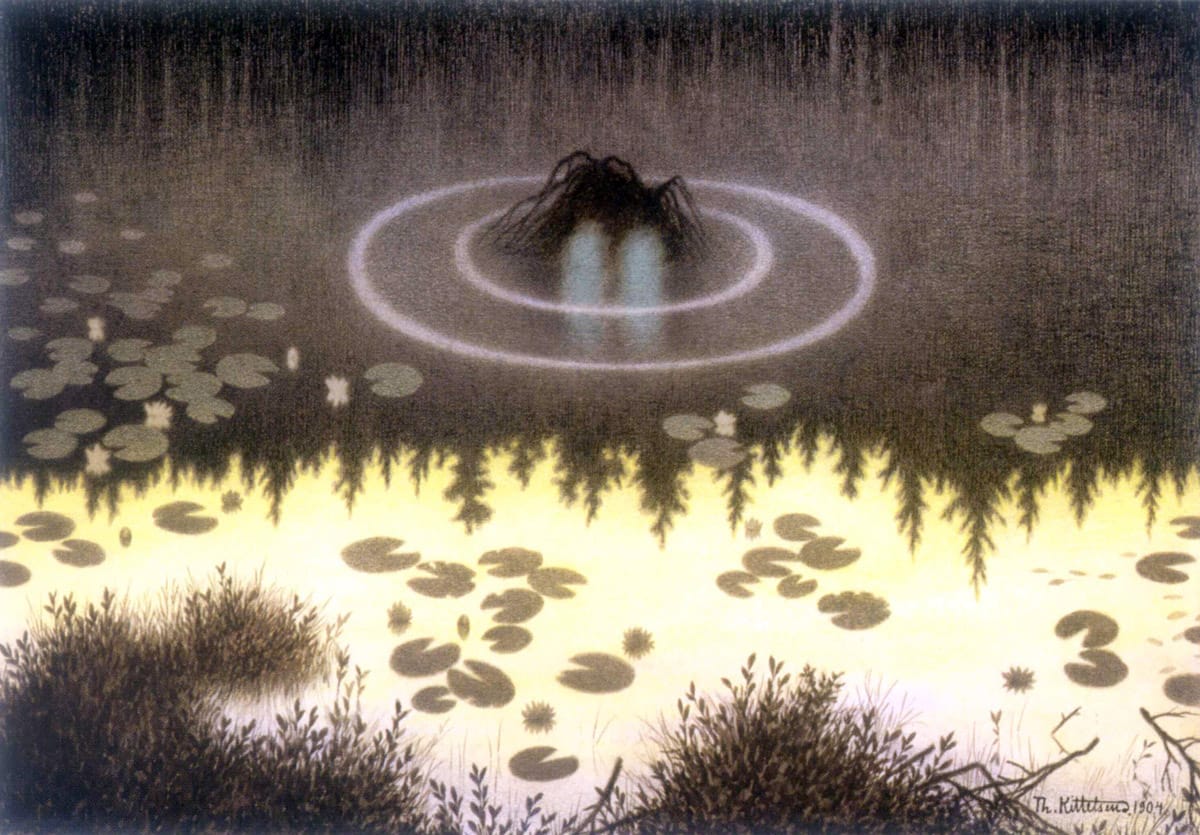
He charged the ranks of the goblins of Mount Gram in the Battle of the Green Fields, and knocked their king Golfimbul's head clean off with a wooden club. It sailed a hundred yards through the air and went down a rabbit-hole, and in this way the battle was won and the game of Golf invented at the same moment.
— Tolkien, The Hobbit (1983)
He turned towards me, and looked into my eyes with two filmy orbs that distilled the rheum of intoxication.
— Edgar Allan Poe, The Cask of Amontillado (2008)
O Bubble blast, how long can'st last?
That always art a breaking,
No sooner blown, but dead and gone,
Ev'n as a word that's speaking.
O whil'st I live, this grace me give,
I doing good may be,
Then death's arrest I shall count best,
because it's thy decree.
— Anne Bradstreet, "Upon a Fit of Sickness, Anno. 1632."
A general bias in sensory systems and brains appears to be responsible for what could be called the roundness disruption effect, a pattern found in phenomena under aesthetic selection throughout the human and animal world in which roundness is mixed amusingly with perceptually and conceptually more exciting things such as brightness, motion, fluidity, divinity or evil. Humans are universally preoccupied with the disruption of spheres, circles, points and other roundness, including that of the body. When we’re presented with objects of such perceptual simplicity we experience an irresistible desire to to make them roll, fly, bounce, shake, break, expand, pulsate, multiply, slam together chaotically or undergo some other type of disruptive transformation, purely for aesthetic satisfaction.
Even though they're not normally available in nature, and we shouldn't be expected to have any particular interest in them, we construct round objects for the purpose of sending them through cycles of up and downwardness, out and inwardness, motion and stillness and order and chaos. This is the case in ball games, which have been played by humans for at least 3,000 years (Wertmann et al. 2020). It's not coincidental that other animals including dogs, cats, tigers, birds, bears, elephants, otters, primates, mice, rats, dolphins and insects have an interest in playing with balls and disrupting various round things like we do ourselves.
Humans appear to agree universally that it’s interesting and worthwhile to engage with spherical objects by throwing, hitting, kicking, and launching them into the distance, often with extra leverage provided by tools such as sticks, bats, clubs, rackets, paddles or mallets, on trajectories to positions upward and/or outward from our own. We also agree that people who do so well should be celebrated, and, it seems, that the object involved should somehow eventually return to a condition of stasis, centrality and containment, such as a hole in the ground, a glove, a net, a basket, a pocket or a triangle in the center of a table.
A short list of games incorporating the disruption of round or nearly round objects includes baseball, basketball, football, tennis, soccer, hockey, volleyball, rugby, dodgeball, cricket, marbles, billiards, bowling, racquetball, water polo, four square, tetherball, discus, archery, darts, target shooting, clay pigeon shooting, flying discs, curling, bocce, croquet, shuffleboard, shot put, go, pinball, kaleidoscopes, checkers, roulette, backgammon, ping pong, the Maya ballgame Pok-ta-Pok, the ancient Greek ballgame Ourania, or “sky ball,” the ancient Chinese game Cuju, and the Iroquois game fireball (Oxendine 1995):
The game of fireball was observed in July 1986 on the Tuscaroro Indian Reservation near Niagara Falls, New York. The game was described by local elders as traditional, having been played frequently on other reservations throughout the Iroquois confederacy.
This game is appropriately named because the playing implement is a ball of fire, that is, burning material that takes approximately twenty minutes to be completely consumed. Although it is roughly the same as soccer, fireball is a nighttime game played in total darkness except for small torches to mark the perimeters of the goals, and the ball itself is burning.
Such activities could, hypothetically, serve some kind of indirect social, physiological, cognition-improving or coordination-building purpose, bringing people together, or helping us to stay healthy and smart, but these are general, contemporary, utilitarian arguments being used for very specific, impractical and improbable human behaviors, and the same results could more easily be accomplished without the involvement of round objects. Explanations like this are used for all kinds of behavior that doesn’t otherwise make sense, no matter how far removed they are from the process of differential survival.
An alternative approach is to assume we simply have an inherent, neurological fondness for the complicated way perceptual features like roundness, upwardness, downwardness, outwardness, inwardness, motion, speed, stasis, disorder, geometry, regularity, randomness and so on interact in a sport or game, in which case there’s no need to ask what the point is. We play with round things simply because we enjoy it, and the real challenge is to understand the structural features and processes going on in the brain that correspond to the experience, which could very well be incidental by-products of sensory abilities that otherwise actually do help to keep us alive. From an evolutionary perspective, the implications of utilitarian arguments for aesthetic phenomena are often far more elaborate and less realistic than the prospect of universal biases in sensory systems.
Our distance ancestors didn’t likely have a major problem with staying healthy due to lack of exercise that resulted in sustained natural selection against individuals with a lack of devotion to the activity of playing with balls, selection which, it must be imagined, somehow managed to occur long before ball games even existed, surely before people crossed into the Western Hemisphere, before the people that did so went their separate way, and before the diversification of humans into different ethnic groups and cultures. Also, if playing a sport was so essential to survival, why are there so many spectators, who are invested but don’t benefit from the activity?
Problems like these also apply to the idea of a social function for sports. One would have to entertain the prospect of some sort of massive, sustained purge by sports fans of non-sports fans that took place either repeatedly, in different parts of the world, or before sports existed. Even if the idea is that the social cohesion caused by being a player and/or fan somehow protected a person from predators, starvation or disease, the process must still have predated the effect. In fact, given the diversity of animals that get satisfaction from playing with round objects, the process must have predated the last common ancestor between humans, dolphins, birds, mollusks and bumblebees (2022):
A variety of animals have been found to interact with and manipulate inanimate objects ‘just for fun’, that is, to play. Most clear examples of object play come from mammals and birds. However, whether insects interact with inanimate objects as a form of play has never been systematically examined. Here, we show that rolling of wooden balls by bumble bees, Bombus terrestris, fulfils behavioural criteria for animal play and is akin to play in other animals. We found that ball rolling (1) did not contribute to immediate survival strategies, (2) was intrinsically rewarding, (3) differed from functional behaviour in form, (4) was repeated but not stereotyped, and (5) was initiated under stress-free conditions. Through the design of the experiment and with the support of behavioural observations, we excluded the possibilities that ball rolling was driven by exploration for food, clutter clearing or mating.
One of the main takeaways from this research is that the brains of insects are more sophisticated than we thought. It could at the same time be pointed out that this makes the brains of larger animals seem somewhat less sophisticated than we presumed. Either way, whatever structures and processes in the brain are the cause of a bias for ball play, they’re common to brains that differ in almost every other imaginable way, membrane consistency being an exception. Ball play, as a simultaneously widespread, mysterious and nonfunctional behavior, belongs in a group with song, dance and elaborate coloration, and probably has a similar explanation.
If roundness disruption bias is universal, it’s predictable that research will continue to reveal additional species that express it. For every addition species, especially in the absence of a connection to function, the evidence in favor of a bias grows. Despite their results, which consistently show no apparent benefit of playing with balls for bees, except for its “hedonic value,” the authors say future research should explore potential advantages:
Further work should explore the possible ultimate advantages of such behaviour, and the ways in which play behaviour might benefit early brain development.
One of the main problems, here again, is that the bias seems to have evolved in the absence of the behavior it favors. Normally, there are no little courts filled with bee-sized balls in the forest available for them to practice their inanimate-object manipulation skills, and it would seem to be better to practice on flowers themselves, rather than a relatively simple, round, solid, remote approximation of a flower that doesn’t offer any nectar or other kind of reward.
Another issue with thinking traditionally about the origin of a proclivity for playing with round objects in sports is that humans engage in the disruption of roundness much more widely. One can see this in the Yin Yang symbol, mandalas, happy faces, balloons, bubbles, crop circles, carousels, juggling, pompoms, coin tossing, burning rings of fire, fire twirling, hula-hoops, eyeliner, crystal balls, gum-balls, bouncy balls, crowns, headdresses, dunce caps, wreaths, birthday cakes, jack-o'-lanterns, smashing pumpkins, Easter eggs, Christmas tree ornaments, Magic 8-Balls, Yoyo's, Mr. Potato Head, bobbleheads, fidget spinners, mobiles for babies, eye-rolling and the "goofballs," "screwballs," "greaseballs," "slimeballs" and "scuzballs" we like to reference even though they don't exist.
Roundness disruption is common in artistic writing and the names of books and characters, as in Elzie Crisler Segar's Popeye (disorder~round), Roald Dahl's James and the Giant Peach (big~round), Judi Barrett's Cloudy with a Chance of Meatballs (fluid~round) and the 1978 movie Attack of the Killer Tomatoes (evil~round).
The incident with Humpty Dumpty (disorder~round/down) is perhaps the most famous example of roundness disruption in nursery rhymes, but hundreds of others can be found as well. Mother Goose's "Tongs" mixes disorder and length with roundness and smallness:
Long legs, crooked thighs,
Little head, and no eyes.
Roundness disruption also occurs in "Cry, Baby":
Cry, baby, cry,
Put your finger in your eye,
And tell your mother it wasn't I.
And in "A Well":
As round as an apple, as deep as a cup,
And all the king's horses can't fill it up.
And "The Man in Our Town":
There was a man in our town,
And he was wondrous wise,
He jumped into a bramble bush,
And scratched out both his eyes;
But when he saw his eyes were out,
With all his might and main,
He jumped into another bush,
And scratched 'em in again.
Pie disruption occurs in "Sing a Song of Sixpence" and "Boy and the Sparrow," pie and plum disruption in "Little Jack Horner" and plate and date disruption in "The Greedy Man."
The Grimm Brothers' "The Frog Prince, or Iron Henry" (2016), the first story in their famous collection of folktales, begins with a golden ball (bright~round) traveling up and down, up and down again, then rolling and rolling before falling in the water (fluid~round):
Once upon a time there was a princess who went out into the forest and sat down at the edge of a cool well. She had a golden ball that was her favorite plaything. She threw it up high and caught it in the air and was delighted by all this. One time the ball flew up very high, and as she stretched out her hand and bent her fingers to catch it again, the ball hit the ground near her and rolled and rolled until it fell right into the water.
This is similar to the rapid, destructive, upward, static, dynamic and downward behavior of the peach in Ronald Dahl's James and the Giant Peach (2007), which ultimately splashes into the water:
But the peach rushed on across the countryside — on and on and on, leaving a trail of destruction in its wake. Cowsheds, stables, pigsties, barns, bungalows, hayricks, anything that got in its way went toppling over like a nine-pin…. These cliffs are the most famous in the whole of England, and they are hundreds of feet high. Below them, the sea is deep and cold and hungry…. and when it reached the edge of the cliff it seemed to leap up into the sky and hang there suspended for a few seconds, still turning over and over in the air… Then it began to fall… Down… Down… Down… Down… Down… SMACK! It hit the water with a colossal splash and sank like a stone.
Roundness disruption tends to arise in animal behavior through sexual selection by mate choice. This is evident in the courtship display of the peacock, in numerous ways, that of the great frigatebird Fregata minor, in the mystery circles of pufferfish, pupil dilation in parrots and the flame bowerbird (Sericulus ardens), in the dances of Carola's parotia Parotia carolae, the greater bird of paradise Lophorina superba and in male jumping spiders, who raise their abdomens into colorful, roughly circular ornaments (up~round), around which they often project and wave their legs to intrigue the female.
The dancing parotia makes himself into a dynamic, vibrating circle, with ridges, as seen from above, and waving projections from his head about the outside of the circle's rim. Other examples of a roundness disruption effect probably include the tail feathers of the Marvelous Spatuletail Loddigesia mirabilis, the spatulate head wires of the Parotias Parotia sefilata, P. carolae, P. berlepschi, P. lawesii, P. helenae, and P. wahnesi, the erectile head plumes of the King of Saxony Bird Paradise Pteridophora alberti, which are scalloped into a few dozen regularly arranged blue "flags," and the lacy crest plumes of the Crowned Pigeons Goura victoria, G. cristata and G. scheepmakeri.
The Dance of the Great Argus Pheasant
Taken together, the elements of the male display add up to a sensory experience of mind-boggling complexity - a throbbing, shimmering hemisphere of three hundred vertically illuminated golden spheres that instantaneously appear suspended in the air against a feathery background tapestry of speckles, dots, and swirls.
— Prum (2017)
The great Argus pheasant (Argusianus argus), who puts on one of the most elaborate courtship performances seen in any animal (Prum 2017), also goes further than perhaps any other in attempting to exploit preferences favoring roundness disruption in mates. The dance includes clear examples of the mixtures dynamic~round, bright~round, multiple~round, long~round, up~round and out~round.
In the so-called frontal-movement display the male encases the female within a dark, partial dome of color and pattern, with eye-like ocelli dispersed over the space of the dome. Like countless instances of aesthetically selected objects and patterns in other animals, the Argus pheasant's ocelli, along with many of the other roundish markings of its feathers, aren't actually round but slightly oblong, often also pointed on one end, and countershading makes them look three-dimensional (Prum 2017):
I refer to these round golden patches as "spheres" because they are exquisitely and subtly counter-shaded, as if by the skillful brush of a painter, to create a stunningly realistic optical illusion of three-dimensional depth. The golden tan at the center of the sphere is outlined from below with a dark, mascara-like smudge, creating the impression of a shadow being cast. On the opposite side of the circle, the golden yellow blends subtly into a bright white crescent that looks like a "specular" highlight - like the shine from the surface of a glossy round apple. As Darwin noted, the color shading on each sphere is precisely oriented so that when the secondary feathers are suspended above and around the female in the giant cone, they produce the startling impression that the golden spheres are three-dimensional objects suspended in space and illuminated from above as if by a shaft of light piercing through the forest canopy.
Prum relates Darwin's observation of how the ocelli of the male Argus are illuminated:
As Darwin noted, the color shading on each sphere is precisely oriented so that when the secondary feathers are suspended above and around the female in the giant cone, they produce the startling impression that the golden spheres are three-dimensional objects suspended in space and illuminated from above as if by a shaft of light piercing through the forest canopy.
The Argus’ display is very similar to that of the peacock despite the fact that it evolved in the wings rather than the tail-covering feathers. Both are upward, outward, and decorated throughout with multiple, dispersed, nearly round shapes surrounded by longer, darker features. Like the peacock, the Argus periodically adds dynamism to the ocelli by rapidly vibrating his wings, creating the illusion that the spheres seen by the female are revolving. Prum quotes William Beebe's A Monograph of the Pheasants:
William Beebe wrote, 'There is no question in my mind that the wonderful colouring, the elaborate ball-and-socket illusion of the ocelli, the rhythmical shivering of the feathers which makes these balls revolve - all are lost, as aesthetic phenomena, upon the nonchalant little hen.'
Beebe, after spending years tracking down, studying, collecting and writing about the pheasants of the world, decided there was nothing to be said about their beauty because he saw a female observing the display and she didn't seem to care. Prum counters this, explaining that it's what we should expect. What Beebe saw in the female was her discriminating between males to find her favorite one, or exercising a sense of beauty:
The female Argus may appear dispassionate as she watches the male's efforts, but it's her coolheaded mating decisions over the course of millions of years that have provided the coevolutionary engine that has culminated in the male Argus's display of hundreds of golden balls shimmering and gyrating in the air.
Roundness Disruption in Poetry
And, as in uffish thought he stood,
The Jabberwock, with eyes of flame,
Came whiffling through the tulgey wood,
And burbled as it came!
— Lewis Carroll, lines from "Jabberwocky"
O heat, dry up my brains! Tears seven times salt
Burn out the sense and virtue of mine eye!
— Shakespeare, Hamlet (2022)
Shall I compare thee to a summer's day?
Thou art more lovely and more temperate.
Rough winds do shake the darling buds of May,
And summer's lease hath all too short a date.
Sometime too hot the eye of heaven shines,
And often is his gold complexion dimmed;
And every fair from fair sometime declines,
By chance, or nature's changing course, untrimmed;
But thy eternal summer shall not fade,
Nor lose possession of that fair thou ow'st,
Nor shall death brag thou wand'rest in his shade,
When in eternal lines to Time thou grow'st.
So long as men can breathe, or eyes can see,
So long lives this, and this gives life to thee.
— Shakespeare, "Sonnet 18" (2022)
Poetry and language, like other aesthetic phenomena, frequently exhibit mixtures of references to roundness with those to the relatively exciting perceptual qualities in list 1. If the roundness disruption effect is defined as the aesthetic juxtaposition of roundness with these simple qualities, then Shakespeare's "Sonnet 18," one of the most admired poems, contains several examples. In the third line, supposedly round buds are shaking dynamically and interacting with the fluid wind, which is a "rough," disorderly kind of wind, and May could be taken to signify heat and brightness. In the fifth line, the eye is bright, too hot and elevated upward into heaven. Eyes reappear in the next to last line, this time together with the fluidity of breathing and also the idea of length, the direct perceptual opposite of roundness.
Patterns of juxtaposition between references to round objects and the given more exciting qualities occur throughout the rest of Shakespeare's writing, and throughout poetry in general. Many of the top results of a Google search for the most famous poems incorporate some type of roundness disruption. In "The Raven" by Edgar Allan Poe, the bird has "fiery" eyes that burn into the soul, and: "all the seeming of a demon's that is dreaming." Poe's other writing provides more examples. From Metzengerstein (2024):
The eyes, before invisible, now wore an energetic and human expression, while they gleamed with a fiery and unusual red; and the distended lips of the apparently enraged horse left in full view his gigantic and disgusting teeth.
From MS Found in a Bottle (2024):
His head was bowed down upon his hands, and he pored, with a fiery unquiet eye, over a paper which I took to be a commission, and which, at all events, bore the signature of a monarch.
From The Black Cat (2024):
Upon its head, with red extended mouth and solitary eye of fire, sat the hideous beast whose craft had seduced me into murder, and whose informing voice had consigned me to the hangman.
In Rudyard Kipling's "If - " everyone is losing their heads in the second line, an example of outward roundness reminiscent of other instances of head disruption in fiction such as that in Lewis Carroll's Alice in Wonderland, along with popular expressions like "head out," "head off" and "head over,” or these lines from Shakespeare's All's Well That Ends Well (2022):
There is no remedy, sir, but you must die: the
general says, you that have so traitorously
discovered the secrets of your army and made such
pestiferous reports of men very nobly held, can
serve the world for no honest use; therefore you
must die. Come, headsman, off with his head.
In "I Wandered Lonely as a Cloud," by William Wordsworth, daffodils are "fluttering and dancing in the breeze," similar to the shaking buds in “Sonnet 18.” In lines from "O Captain! My Captain!" by Walt Whitman, the round (and low-pitched) word/letter "O" is used in contrast to bloody red drops:
But O heart! heart! heart!
O the bleeding drops of red,
Where on the deck my Captain lies,
Fallen cold and dead.
Eyes are associated with hate and air, and rhyme with upwardness, in "Still I Rise" by Maya Angelou:
You may shoot me with your words,
You may cut me with your eyes,
You may kill me with your hatefulness,
But still, like air, I'll rise….
Lines from "Do not go gentle into that good night" by Dylan Thomas provide another instance of the eye disruption effect:
Grave men, near death, who see with blinding sight
Blind eyes could blaze like meteors and be gay,
Rage, rage against the dying of the light….
Fiery, bright or red eyes seem to be one of the most common recurring themes in myth and poetry. In the first section of Lord Byron's "She Walks in Beauty" eyes rhyme with skies, and they’re surrounded by references to brightness:
She walks in beauty, like the night
Of cloudless climes and starry skies;
And all that's best of dark and bright
Meet in her aspect and her eyes:
Thus mellowed to that tender light
Which heaven to gaudy day denies….
The trend continues in William Blake's "The Tyger," where eyes rhyme with skies again:
Tyger! Tyger! burning bright
In the forests of the night,
What immortal hand or eye
Could frame thy fearful symmetry?
In what distant deeps or skies
Burnt the fire of thine eyes?
On what wings dare he aspire?
What the hand, dare sieze the fire?
Thus, within the most famous poems one finds an unexpected amount of roundness disruption, with a surprisingly strong appreciation for that involving eyes and heads. It's clear that the concept of an eye, a head or a round object in the mind of someone engaged in artistic creativity makes them think of and incorporate the given more exciting qualities, in a reflex-like way, which the rest of us then appreciate.
Linguistic Mixtures of Roundness
We are such stuff
As dreams are made on, and our little life
Is rounded with a sleep.
— Shakespeare, The Tempest (2022)
Coupling roundness and its conceptual relatives with any quality from list 1 results in a structure matching that of numerous nonsensical English expressions. Assuming we recognize as relatively round such things as heads, eyes, pupils, spots, points, circles, clocks, the moon, stones, balls and fruit, popular phrases involving roundness disruption include those listed below.
Hot~round (10): the boiling point, hothead, a snowball's chance in hell, great balls of fire, hot as balls, hot potato, a hotspot, firing on all cylinders, hotter than a hooker's doorknob on nickel night, circle of hell.
Fluid~round (17): honeymoon, just spitballing, here's mud in your eye, a full head of steam, head in the clouds, airhead, fountainhead, the whole ball of wax, grease the wheels, the squeaky wheel gets the grease, a spot of tea, the rain beats the leopard's skin but it does not wash out the spots (African proverb), when life gives you lemons make lemonade, air ball, slimeball, scuzball.
Dynamic~round (20): turn a blind eye, head-spinning, heads will roll, run head on, a head start, get the runaround, running around in circles, run circles around, the circle of life, makes the world go round, a rolling stone gathers no moss, a leopard cannot change its spots, a turning point, get the ball rolling, every time I turn around, jerking around, that's the way the ball bounces, play ball, it's a coin toss, turn on a dime.
Disorder~round (25): burst your bubble, eye-popping, keep your eyes peeled, green-eyed monster, flip it on its head, knock the cover off the ball, a spot of trouble, the breaking point, leave no stone unturned, cherry bomb, a bad apple, upset the apple cart, mess around, that's the way the cookie crumbles, throw you a curveball, screwball, kick the tires, quit busting my balls, rough around the edges, around the bend, you can't make an omelet without breaking a few eggs, the wheels fell off, penny dreadful, break a butterfly upon a wheel, a broken record, vicious circle, it's all fun and games until somebody loses an eye.
Bright~round (14): the twinkle of an eye, a sparkle in your eye, starry-eyed, bright-eyed and bushy-tailed, take the red-eye, wait until you see the whites of their eyes, a bright spot, a flashpoint, a thousand points of light, lightning round, moonbeam, moonshine, a red cent, headlight.
Up~round (10): eye in the sky, head on over, over your head, heads up, keep your head up, keep your chin up, raise the point, pie in the sky, jumping through hoops, button up, the top spot.
Out~round (12): keep an eye out, crying my eyes out, headed out, head off, a head trip, off with her head, knock the spots off, throw you a softball, balls-out, tripping balls, point out, point of no return.
Long~round (7): headline, make heads or tails out of, headlong, cross your t's and dot your i's, the long and short of it, the longest way round is the shortest way home, dickhead.
Big~round (5): my eyes were bigger than my belly, get a big head, swollen head, big balls, a big wheel, The Big Apple.
Many~round (14): many moons, all around, we keep going around and around, an eye for an eye, see eye to eye, the third eye, all eyes on, more than meets the eye, go head-to-head, of two heads about it, point by point, a fifth wheel, don't put all your eggs in one basket, have a lot on the ball, a dime a dozen, a third wheel.
It’s important to realize most of these expressions are literally nonsensical. They exist by way of their aesthetic value, because their structures are a fit for unconscious preferences, not because their contents are logically appropriate ways to say what they mean. Being angry has nothing to do, literally, with boiling or points, being disappointed has absolutely nothing to do with the destruction of bubbles. No circles are being squared. There are no pies in the sky. Eyes are not sharp, red, turning or starry. Heads aren’t pointy, rolling, spinning, flipping or changing size, and so on.
Indifference also applies to mixtures of length and spikiness, which are regularly juxtaposed in language (see below) with list 2 qualities, although these don’t seem to be as common as mixtures of roundness.
Long~cold (1): it'll be a long day in January; long~solid (4): long in the tooth, by a long chalk, he who sups with the devil should have a long spoon, long and strong; long~static (3): hold the line, long dead, the king is dead long live the king; long~order (1): the long arm of the law; long~dark (5): cast a long shadow, all night long, night of the long knives, old sins have long shadows; long~down (6): down the line, lay it on the line, lay a finger on, let your hair down, the bottom line, down to the wire; long~in (5): strap in, pull some strings, pulling your leg, a long time coming, a needle in a haystack; long~singular (2): the last straw, the straw that breaks the camel's back; long~short (4): the long and short of it, to make a long story short, take a long walk on a short pier, bright-eyed and bushy-tailed.
Spiky~solid (4): a bull in a china shop, bullshit, hard-nosed, sharp as a steel trap; spiky~static (3): lock horns, seize the bull by the horns, he who lives by the sword dies by the sword; spiky~dark (1): night of the long knives, as black as the ace of spades; spiky~down (2): catch a falling knife, fall on your sword; spiky~in (3): pull in horns, not the sharpest knife in the drawer, in the cross-hairs; spiky~short (1): a short sharp shock.
The Oblong Effect
In the beginning of Things, black-winged Night
Into the bosom of Erebos dark and deep
Laid a wind-born egg, and, as the seasons rolled,
Forth sprang Love, gleaming with wings of gold,
Like to the whirlings of wind, Love the Delight
And Love with Chaos in Tartaros laid him to sleep;
And we, his children, nestled, fluttering there,
Till he led us forth to the light of the upper air.
— Aristophanes, Birds (Harrison 2021)
A death's-head!" echoed Legrand - 'Oh - yes - well, it has something of that appearance upon paper, no doubt. The two upper black spots look like eyes, eh? and the longer one at the bottom like a mouth - and then the shape of the whole is oval.'
— Edgar Allan Poe, The Gold Bug (2024)
A universal sensory bias is probably responsible for aesthetic phenomena being, very often, not too long, not too short, not quite spherical or square, but elongated somewhat along one dimension and therefore oblong or rectangular in shape rather than perfectly round or square. Oblong bias has probably caused egg-laying animals to favor oblong eggs over round ones, pollinators to favor oblong flower petals, frugivores to favor oblong fruit, animals to select for oblong body shapes and color patches in each other and humans to emphasize the shape in the way we design things and decorate our surroundings.
Being oblong rather than round is a simple instance of the roundness disruption effect, and so is an element of spikiness at one end of a nearly round shape. By putting these effects together, one can derive the aesthetic structure of sexually selected traits seen in species throughout the animal kingdom and those of plants that exploit us to disperse their pollen and seeds, with the structure being described by the pair of mixtures long~round and spiky~round, or more simply long/spiky~round.
The peacock is one of many species using such slightly long and pointy shapes to attract mates, in the form of the eyespots or ocelli that appear in a semi-regular pattern across its train. They also occur, with the same egg-like shape, in many mammals, birds, lizards, fishes and butterflies, meaning neurological factors that differ between species are irrelevant to the ocelli preference, that it's been in place since early times in evolutionary history, and that the explanation is something universal about the animal brain.
The effect in peacocks isn't subtle, with every ocellus being shaped almost exactly like an egg. The resemblance is so striking that it's tempting to argue peahens like them because they like their own eggs, and a population of birds that isn't sufficiently interested in eggs will go extinct, but the reality is almost certainly that the preference for egg-shaped stimuli predated all eggs and all egg-shaped aesthetic features in animals and plants, going back to the origin of the sensory ability to distinguish roundness from length and spikiness.
Almost every flower petal is longer in one dimension than the other, suggesting that pollinators like the oblong look. It's also typical in flowers for one end of the petals to be pointier, implying that pollinators have consistently appreciated this kind of asymmetry. Fruits and seed-dispersing foods under aesthetic selection from animals like lemons, watermelons, pineapples and pumpkins are also oblong, while strawberries, avocados, mangoes, kiwis, raspberries, pears, figs, papayas and cherries are asymmetrically spiky. It's the same with various nuts like acorns, walnuts, almonds, pistachios and sunflower seeds.
Stoddard et al. (2017) studied the eggs of 1,400 bird species and found that they vary continuously in degree of oblongness and pointiness. It's clear from their results that egg shapes cluster around an average with a moderate amount of each quality. The question of why eggs are oblong has been debated and approached from numerous angles without a clear conclusion. Whatever adaptive purpose might be determined would have to explain similar shapes in the eggs of reptiles, dinosaurs, the duck-billed platypus (Ornithorhynchus anatinus) and countless insects. Thus, explanations having to do specifically with being a bird or flying are probably unrealistic. One thing we should expect from every egg-laying animal, though, and regardless of its particular evolutionary history, is an appreciation for eggs in the context of parental care. Egg-laying animals should like the way eggs look. Eggs should have shapes a parent sees as valuable and worthy of attention. A simple, long/spiky~round bias in parents would account for an evolutionary change in egg shape away from roundness, toward oblong and pointy, maintain the change, and do so without having to assume thousands of improbable instances of evolutionary convergence.
Oblong describes the shape of spots in many butterfly species, egg spots in cichlids, ornamental spots in guppies (Poecilia reticulata), the shape assumed by the superb bird-of-paradise (Lophorina superba) during his mating dance, the shape of the decorated abdomen used in male jumping spiders (family Salticidae), the spots of ladybugs, Dalmatians, the spotted hyena, leopards and jaguars. In humans, the head and eyes exhibit the oblong effect, and these, like so many flower petals, fruits, peacock eyespots and eggs, are slightly pointier at one end than the other. So are the heads and eyes of animals in general, along with various sexual features. Long~round bias is responsible for the long, dark lines that have evolved across, around or in close proximity to the eyes in thousands of species, either as a permanent marking or as one that appears during courtship.
Within human culture moderately elongated aesthetic visual objects include most paintings, photos, cell phones, mirrors, computer screens, televisions, flags, badges, coats of arms, tombstones, prehistoric sculptures, standing stone structures, ancient amphitheaters, Easter Island stone figures, Easter eggs, rugs, windows, books, greeting cards, playing cards, footballs and flying saucers, among other things.
Oblongness appears widely in creation stories as a "cosmic egg," including the Ancient Greek Orphic Egg, the Chinese Taoist Egg of Pangu, the Egyptian Cosmic Egg of Ra, the Japanese Egg of Chaos and the Golden Egg in Vedic tradition. The cross that's been used in various religious contexts throughout history is more complicated and presumably more interesting than a plus sign, and asymmetrically long and spiky in that it's extended in the vertical dimension and pointier on the bottom than the top. Some crosses add an extra horizontal line, shorter than the usual one and situated above, making the shape even closer to that of an egg.
The way we insist on the cross being oriented such that it's spikier below than above is evidence that we prefer the mixtures up~round and long~down to the combinations up/long and down/round, as are the ways we conventionally orient the world map and national flags, and the shapes of animals in general. Oblong bias probably has connections to the famous golden rectangle or ratio in biology, to the Bouba-Kiki effect observed by Köhler (1970, see Fort et al. 2014) and to the fat/thin effect described by Milan et al. (2013).
A universal bias for moderate elongation should be captured in poetry and numerous expressions, particularly otherwise nonsensical things we say for fun, idioms with no real relevance to the circumstances when we use them, such as "the long and short of it," "to make a long story short," "poking around," "a sharp eye," "pointy-headed" and "the short end of the stick," which has no short end. Shakespeare (2022) provides examples of long~short mixtures in poetry, distributed throughout his plays.
From Henry V:
The devil take order now! I'll to the throng:
Let life be short; else shame will be too long.
From Henry IV:
I cannot read them now.
O gentlemen, the time of life is short!
To spend that shortness basely were too long,
If life did ride upon a dial's point,
Still ending at the arrival of an hour.
An if we live, we live to tread on kings; [dominance~down]
If die, brave death, when princes die with us! [dominance~static]
Now, for our consciences, the arms are fair,
When the intent of bearing them is just.
Love's Labour's Lost:
I think no less. Dost thou not wish in heart
The chain were longer and the letter short?
Measure for Measure:
When, I beseech you? that in his reprieve,
Longer or shorter, he may be so fitted
That his soul sicken not.
Merchant of Venice:
Indeed, the short and the long is, I serve the Jew,
and have a desire, as my father shall specify -
Midsummer Night's Dream:
Get your apparel together,
good strings to your beards, new ribbons to your
pumps; meet presently at the palace; every man look
o'er his part; for the short and the long is, our
play is preferred.
Much Ado about Nothing:
I came hither to tell you; and, circumstances
shortened, for she has been too long a talking of,
the lady is disloyal.
Pericles:
Thus time we waste, and longest leagues make short;
Sail seas in cockles, have an wish but for't;
Making, to take your imagination,
From bourn to bourn, region to region.
Rape of Lucrece:
Thus ebbs and flows the current of her sorrow,
And time doth weary time with her complaining.
She looks for night, and then she longs for morrow,
And both she thinks too long with her remaining:
Short time seems long in sorrow's sharp sustaining:
Though woe be heavy, yet it seldom sleeps,
And they that watch see time how slow it creeps.
Richard II:
Methinks I am a prophet new inspired
And thus expiring do foretell of him:
His rash fierce blaze of riot cannot last,
For violent fires soon burn out themselves;
Small showers last long, but sudden storms are short;
He tires betimes that spurs too fast betimes;
With eager feeding food doth choke the feeder:
Light vanity, insatiate cormorant,
Consuming means, soon preys upon itself.
Richard III:
Dispatch, my lord; the duke would be at dinner:
Make a short shrift; he longs to see your head.
Romeo and Juliet:
I will be brief, for my short date of breath
Is not so long as is a tedious tale.
From Venus and Adonis:
'And yet not cloy thy lips with loathed satiety,
But rather famish them amid their plenty,
Making them red and pale with fresh variety,
Ten kisses short as one, one long as twenty:
A summer's day will seem an hour but short,
Being wasted in such time-beguiling sport.'
And:
Round-hoof'd, short-jointed, fetlocks shag and long,
Broad breast, full eye, small head and nostril wide,
High crest, short ears, straight legs and passing strong,
Thin mane, thick tail, broad buttock, tender hide:
Look, what a horse should have he did not lack,
Save a proud rider on so proud a back.
And:
Her song was tedious and outwore the night,
For lovers' hours are long, though seeming short:
If pleased themselves, others, they think, delight
In such-like circumstance, with suchlike sport:
Their copious stories oftentimes begun
End without audience and are never done.
From Merry Wives of Windsor:
Marry, this is the short and the long of it; you
have brought her into such a canaries as 'tis
wonderful. The best courtier of them all, when the
court lay at Windsor, could never have brought her
to such a canary.
And:
He hath wronged me in some humours: I
should have borne the humoured letter to her; but I
have a sword and it shall bite upon my necessity.
He loves your wife; there's the short and the long.
My name is Corporal Nym; I speak and I avouch; 'tis true: my name is Nym and Falstaff loves your wife. Adieu. I love not the humour of bread and cheese, and there's the humour of it. Adieu.
Mythological Roundness Disruption
The gods were made in the form of a circle, which is the most perfect figure and the figure of the universe. They were created chiefly of fire, that they might be bright, and were made to know and follow the best, and to be scattered over the heavens, of which they were to be the glory.
—Plato, Timaeus (2008)
When it was time for them to start home, and they were folding the clothes and putting them into the waggon, Minerva began to consider how Ulysses should wake up and see the handsome girl who was to conduct him to the city of the Phæacians. The girl, therefore, threw a ball at one of the maids, which missed her and fell into deep water. On this they all shouted, and the noise they made woke Ulysses, who sat up in his bed of leaves and began to wonder what it all might be.
—Homer, The Odyssey (Bulter 1900)
Assuming heat, brightness, fluidity and disorder to be comparable ways in which a round object might be disrupted, the philosophical idea of gods as fiery circles from the Timaeus, and the mythological Hindu idea of (three-eyed) Shiva being surrounded by a fire circle, are analogous to the Zen Enso, a fluid, semi-chaotic circle made with one brush of black ink on white paper.
The Buddhist Wheel of Dharma, or Dharmachakra, is strangely similar to the mystery circles male pufferfish create to impress females. Both are circular with imperfections consisting of numerous, long rays pointing outward from the center, and in both phenomena the center is typically embellished with a fluid-like decoration. A universal bias for upward and outward roundness, present in humans, peafowl and spiders, is responsible for the overall shape of the dancing peacock, that of the dancing peacock spider and for the worldwide use of human-made decorative arches.
Philosophical roundness disruption is found in the cosmology of Empedocles, from about 2,500 years ago in Akragas, Greece, which features an everlasting universal cycle between a state of perfect roundness, a cosmic sphere lacking the life-like element of strife, and the opposite configuration, consisting of swirling universal chaos and a total lack of roundness and love. Between the extremes, during the balance of chaos and roundness, and love and strife, is when the world behaves the way we like it, with moderation and living things (Leonard 1907):
There views one not the swift limbs of the Sun,
Nor there the strength of shaggy Earth, nor Sea;
But in the strong recess of Harmony,
Established firm abides the rounded Sphere,
Exultant in surrounding solitude….
Nor faction nor fight unseemly in its limbs….
The Sphere on every side the boundless same,
Exultant in surrounding solitude….
For from its back there swing no branching arms,
It hath no feet nor knees alert, nor form
Of life-producing member, - on all sides
A sphere it was, and like unto itself….
Yet after mighty strife had waxen great
Within the members of the Sphere, and rose
To her own honors, as the times arrived
Which unto each in turn, to Strife, to Love,
Should come by amplest oath and old decree….
For one by one did quake the limbs of God.
Mixtures of Direction
William Blake’s “Illustration to Dante's Divine Comedy (Pity),” 1795. WikiArt. Public Domain.
'Twas brillig, and the slithy toves
Did gyre and gimble in the wabe:
All mimsy were the borogoves,
And the mome raths outgrabe.
—Lewis Carroll, opening and closing lines of "Jabberwocky"
In a hole in the ground there lived a hobbit. Not a nasty, dirty, wet hole, filled with the ends of worms and an oozy smell, nor yet a dry, bare, sandy hole with nothing in it to sit down on or to eat: it was a hobbit-hole, and that means comfort.
—J. R. R. Tolkien, opening of The Hobbit, or There and Back Again (1983)
I tell you: one must still have chaos in one, to give birth to a dancing star. I tell you: ye have still chaos in you.
—Friedrich Nietzsche, Thus Spake Zarathustra (1974)
Surely the tree of Zaqqum,
Is the food of the sinful
Like dregs of oil; it shall boil in (their) bellies,
Like the boiling of hot water.
—Qur'an, "Zaqqum," Wikipedia (2024)
Disruptions of Inwardness
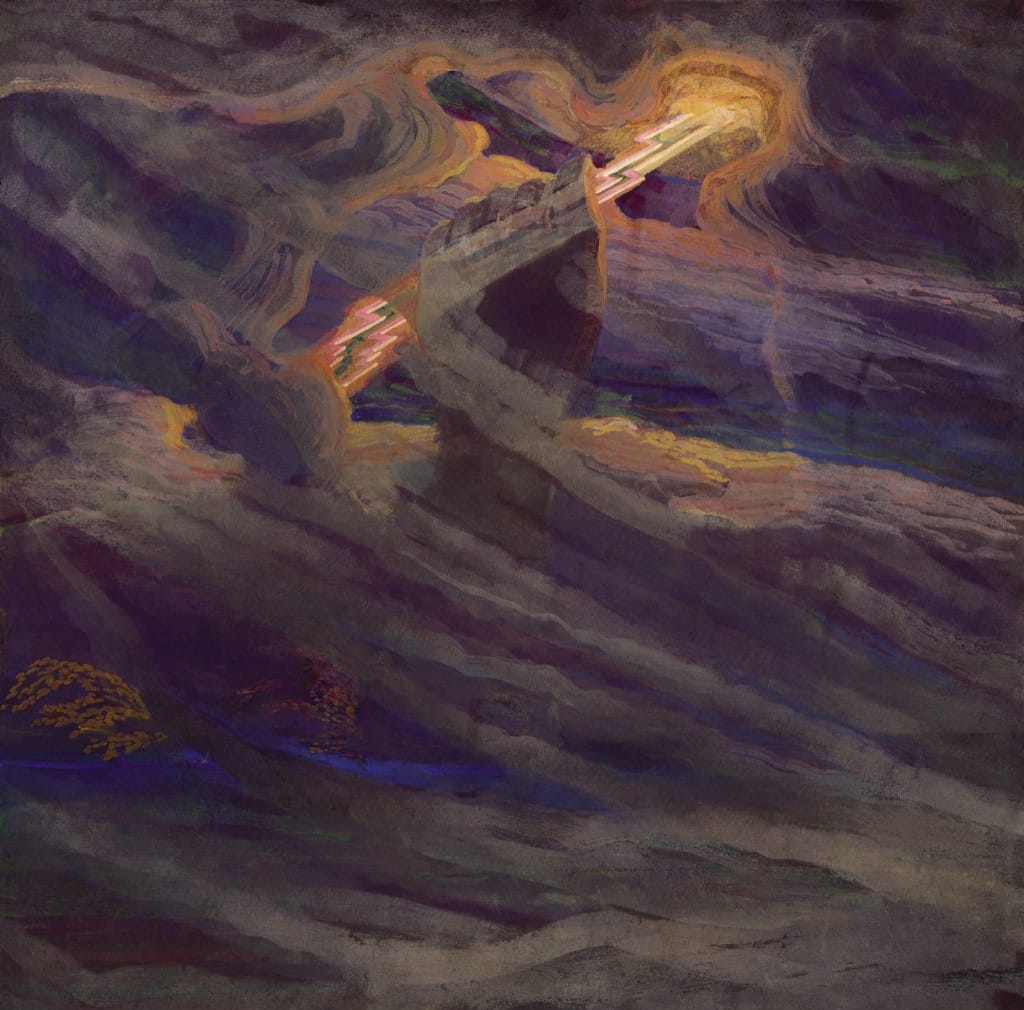
Appear, appear, whatso thy shape or name,
O Mountain Bull, Snake of the Hundred
Heads,
Lion of the Burning Flame!
O God, Beast, Mystery, come!
—Euripides, Bacchae (see Campbell 2008)
Inward phenomena have been juxtaposed aesthetically with exciting qualities throughout human history, creating a general effect that reflects a universal preexisting bias in animal sensory systems and brains. Popular expressions such as those listed below suggest we think of outwardness as more exciting than inwardness, with specific concepts such as "away," "beyond," "far," "off" and "shot" being considered references to outwardness and those such as "getting," "pulling," "keeping" and "taking" as references to inwardness.
Outwardness/excitement (22): outrage, outbreak, outburst, far out, freak out, flip out, act out, out of hand, go all out, spiral out of control, blown away, blow off steam, take your breath away, piss off, go off, go too far, fly off the handle, all hell breaks loose, beyond the pale, beyond your wildest dreams, a shot across the bow.
Inwardness/less excitement (16): get it together, pull yourself together, keep it together, keep your cool, keep it down, keep my head down, reel it in, take it down a notch, take it easy, take a chill pill, get a grip, in a funk, withdrawn, stuck in a rut, contain yourself, get ahold of yourself.
The first list happens to contain exciting quality references aside from those to outwardness: heat and fluidity in "blow off steam," fluidity in "blown away" and "spiral," disorder in "outbreak" and "wildest dreams," dynamism in "go off," dynamism and multiplicity in "go all out," upwardness in "fly off the handle" and large numbers of things, or multiplicity, heat, disorder and freedom in "all hell breaks loose." Almost every word is related to a quality in list 1, while in the second list coldness and chilliness replace heat, downwardness and upwardness.
Outward phenomena interact aesthetically with those related to list 2 qualities and inward phenomena interact with those related to list 1 qualities, resulting in differentially exciting mixtures of perceptual opposites. One can choose almost any inward phenomenon and find that it tends to be juxtaposed accordingly. Hearts, for instance, because they're extremely inward from our perspective, are predictably coupled with the thermal qualities heat, fluidity, dynamism and disorder, and with the other relatively exciting things like brightness, length, large size, outwardness and multiplicity. This is shown in the expressions listed below, with the more exciting elements given in italics. Hearts interact with increased temperature in at least four common expressions, with fluidity in five, dynamism and speed in three and so on, and with at least ten of the qualities in list 1.
Heart mixtures (21): have a warm heart, heartwarming, warm heart cold hands (hot/hands~cold/in), warm the cockles of your heart, pour your heart out (fluid/out~heart), melt my heart, heart and soul, a bleeding heart, my heart bleeds for, my heart was racing, a change of heart, my heart was jumping out of my chest (up/out~in), a broken heart, strike terror into the heart of, a heart of gold, have a big heart, cross my heart (long/spiky~inward), my heart goes out to, eat your heart out, wear your heart on your sleeve, with all my heart.
The heart disruption effect can also be seen in the following lines of poetry from Shakespeare's plays (2022). Other mixtures are frequently present in lines adjacent to those expressing heart disruption. This is because mixtures are frequent generally, throughout all poetry, regardless of the author, culture and the time of writing. Some of these are indicated in bold, and sometimes by their structure in brackets at the ends of lines. The simplest explanation for the correspondence between contemporary idiomatic language and Shakespeare's work is that people liked the same mixtures in his time that we like now.
Henry VI:
I cannot weep; for all my body's moisture
Scarce serves to quench my furnace-burning heart: [hot~in]
Nor can my tongue unload my heart's great burthen; [big~in]
For selfsame wind that I should speak withal [fluid~order]
Is kindling coals that fires all my breast, [hot~in]
And burns me up with flames that tears would quench.
King John:
My heart hath melted at a lady's tears, [fluid~in]
Being an ordinary inundation; [fluid~order]
But this effusion of such manly drops,
This shower, blown up by tempest of the soul, [fluid/disorder/up~down]
Startles mine eyes, and makes me more amazed
Than had I seen the vaulty top of heaven
Figured quite o'er with burning meteors.
King Lear:
Prithee, nuncle, be contented! 'Tis a naughty night to swim in. [disorder/fluid~dark/in] Now a little fire in a wild field [hot/disorder~in] were like an old lecher's heart- a small spark, all the rest on's body cold. [hot~in, many~cold] Look, here comes a walking fire. [hot~small, hot~in]
Henry VI:
Ah, what a shame were this! Look on the boy;
And let his manly face, which promiseth
Successful fortune, steel thy melting heart [fluid~solid/in]
To hold thine own and leave thine own with him.
Henry VIII:
Hearts of most hard temper [many~solid]
Melt and lament for her. [fluid/hot~solid/in]
Hamlet:
O, most wicked speed, to post [round/low pitch~disorder/fast]
With such dexterity to incestuous sheets!
It is not, nor it cannot come to good.
But break my heart, for I must hold my tongue! [disorder~heart]
Coriolanus:
This last old man,
Whom with a crack'd heart I have sent to Rome, [disorder/out~heart]
Loved me above the measure of a father; [up~order]
Nay, godded me, indeed.
Thus, it's possible to derive a set of popular, otherwise nonsensical idiomatic and poetic expressions about the heart by coupling it with list 1 qualities, systematically replacing heat with fluidity, fluidity with speed, speed with disorder and so on, or any list 1 quality with any other. The same trick works for other expressions containing a reference to almost any definitively inward phenomenon, a pattern that in general could be called the inwardness disruption effect.
It's often pointed out that certain phrases we use regularly today, such as "a heart of gold," were first used by and originate from Shakespeare. This can leave the impression that the phrases are nothing special, that no other factors have played a part in making them popular, as if it was somehow inevitable they would be widely adopted and repeated for over 400 years regardless of their content, when in fact they endure primarily for aesthetic reasons, because they reflect universal biases. Shakespeare wrote them in the first place because he found them amusing, and thought, correctly, that other people would as well. There must be something about the phrases themselves that gives them appeal. In the case of "heart of gold," there's hardly more than inward brightness in the statement to which its popularity can be attributed. More recently, the term has been used as a name for at least five films, four television episodes, three books, seven songs, an album, a record label, a spaceship in Douglas Adams' The Hitchhiker's Guide to the Galaxy and a version of the Pokémon game (Wikipedia 2023). Goldenness in the heart, specifically, might have gotten its start in Shakespeare, but bright~inward as an aesthetic effect goes back millennia.
The oldest writing with a named author is a series of hymns attributed to Enheduanna of Ur, Sumeria, about 4,300 years ago. She was the daughter of the king, Sargon, and the high priestess of Sin, the moon god who had a temple in the city. In "The Exaltation of Inanna," she calls the war and sex goddess "Radiant of Heart" (Burch 2023):
Who can soothe Your infuriated heart?
Your baleful heart is beyond being soothed!
Uncontrollable Wild Cow, elder daughter of Sin,
O Majestic Queen, greater than An,
who has ever paid You enough homage?
O Life-Giving Goddess, possessor of all powers,
Inanna the Exalted!
Merciful, Live-Giving Mother!
Inanna, the Radiant of Heart!
I have exalted You in accordance with Your power!
I have bowed before You in my holy garb,
I the En, I Enheduanna!
Her "Hymn to Inanna" features inward brightness in line two, bright singularity in the third line, up~down in the fourth, inward multiplicity and inward power in the ninth, up~down again in the tenth and inward power again in the last few lines (Hirshfield 2023):
Lady of all powers,
In whom light appears, [bright~in]
Radiant one [bright~few]
Beloved of Heaven and Earth,
Tiara-crowned
Priestess of the Highest God,
My Lady, you are the guardian
Of all greatness.
Your hand holds the seven powers: [many~in]
You lift the powers of being,
You have hung them over your finger, [up~down]
You have gathered the many powers, [many~in]
You have clasped them now [many~in]
Like necklaces onto your breast.
One can think of a mixture in either specific or general terms. For instance, a hand holding seven powers could be labeled either seven~hold, specifically, or many~in, generally, with the general structure typically being made up of more primitive perceptual opposites. Homer's Iliad couples the heart with roughly the same set of primitively exciting perceptual qualities that Shakespeare did hundreds of years later and Enheduanna did hundreds of years earlier. Hearts are melting and hot (Pope 2004):
The wounds they wash'd, their pious tears they shed,
And, laid along their cars, deplored the dead.
Sage Priam check'd their grief: with silent haste [fast~silent]
The bodies decent on the piles were placed:
With melting hearts the cold remains they burn'd, [fluid~heart, hot~cold]
And, sadly slow, to sacred Troy return'd.
Fiery and multiplied:
Go then, successful, where thy soul inspires: [fluid~in]
This heart and hand shall second all thy fires: [many/hot~heart]
What with this arm I can, prepare to know,
Till death for death be paid, and blow for blow. [fluid/fluid~static/static]
Inflamed and angry:
Such was his threat, ah! now too soon made good,
On many a Grecian bosom writ in blood.
Is every heart inflamed with equal rage [anger~order]
Against your king, nor will one chief engage?
Vengeful:
Not though his heart were steel, his hands were fire; [hot/out~in/solid]
That fire, that steel, your Hector should withstand,
And brave that vengeful heart, that dreadful hand.
Fiery and wrathful:
Achilles heard, with grief and rage oppress'd,
His heart swell'd high, and labour'd in his breast;
Distracting thoughts by turns his bosom ruled;
Now fired by wrath, and now by reason cool'd:
That prompts his hand to draw the deadly sword,
Force through the Greeks, and pierce their haughty lord; [up~in, hot~cold]
This whispers soft his vengeance to control,
And calm the rising tempest of his soul. [up/fluid/fluid/disorder~static]
Furious and fluid:
Full in the midst, high-towering o'er the rest, [many~in]
His limbs in arms divine Achilles dress'd;
Arms which the father of the fire bestow'd,
Forged on the eternal anvils of the god.
Grief and revenge his furious heart inspire,
His glowing eyeballs roll with living fire; [bright/dynamic/dynamic/hot~round]
He grinds his teeth, and furious with delay
O'erlooks the embattled host, and hopes the bloody day. [fluid/disorder/bright~solid]
Furious and flaming:
Then parts the lance: but Pallas' heavenly breath
Far from Achilles wafts the winged death: [up/fluid/out~static]
The bidden dart again to Hector flies,
And at the feet of its great master lies.
Achilles closes with his hated foe,
His heart and eyes with flaming fury glow: [hot/angry/bright~in/round]
But present to his aid, Apollo shrouds
The favour'd hero in a veil of clouds. [fluid~in]
Thrice struck Pelides with indignant heart,
Thrice in impassive air he plunged the dart;
The spear a fourth time buried in the cloud. [spiky/many/fluid~in/in]
Furious and liquid:
In gloomy tempests, and a night of clouds: [fluid~dark]
Now through each Trojan heart he fury pours [hot/fluid~down/in]
With voice divine, from Ilion's topmost towers:
Now shouts to Simois, from her beauteous hill;
The mountain shook, the rapid stream stood still. [dynamic~solid, fast/fluid~static]
Melting and leaving:
Behold them weeping for their native shore;
What could their wives or helpless children more?
What heart but melts to leave the tender train, [fluid/out~in]
And, one short month, endure the wintry main?
Few leagues removed, we wish our peaceful seat,
When the ship tosses, and the tempests beat:
Then well may this long stay provoke their tears, [long/fluid~static]
The tedious length of nine revolving years.
Melting again:
The day may come, when, all our warriors slain,
That heart shall melt, that courage rise in vain:
Regard in time, O prince divinely brave!
Those wholesome counsels which thy father gave.
Melting again:
The troops obey'd; and thrice in order led [many~order]
(Achilles first) their coursers round the dead; [dynamic~static]
And thrice their sorrows and laments renew; [many/novel~sad]
Tears bathe their arms, and tears the sands bedew. [fluid/fluid/fluid/fluid~solid]
For such a warrior Thetis aids their woe,
Melts their strong hearts, and bids their eyes to flow. [fluid~round]
But chief, Pelides: thick-succeeding sighs
Burst from his heart, and torrents from his eyes: [out/fluid~in/round]
His slaughtering hands, yet red with blood, he laid [disorder/bright/fluid~down]
On his dead friend's cold breast, and thus he said:
"All hail, Patroclus! let thy honour'd ghost
Hear, and rejoice on Pluto's dreary coast;
Behold! Achilles' promise is complete;
The bloody Hector stretch'd before thy feet.
Lo! to the dogs his carcase I resign;
And twelve sad victims, of the Trojan line,
Sacred to vengeance, instant shall expire;
Their lives effused around thy funeral pyre." [dynamic/fluid/hot~round]
Weeping blood:
My heart weeps blood at what the Trojans say, [fluid/bright~in/down]
And hopes thy deeds shall wipe the stain away.
Weeping more blood:
Think, and subdue! on dastards dead to fame
I waste no anger, for they feel no shame:
But you, the pride, the flower of all our host,
My heart weeps blood to see your glory lost! [fluid/bright~in/down]
Nor deem this day, this battle, all you lose;
A day more black, a fate more vile, ensues. [bright~dark]
Breathing:
Pallas (this said) her hero's bosom warms, [hot~in]
Breathed in his heart, and strung his nervous arms; [fluid~in]
Where'er he pass'd, a purple stream pursued [fluid~dark]
His thirsty falchion, fat with hostile blood, [disorder/fluid/bright~in]
Bathed all his footsteps, dyed the fields with gore,
And a low groan remurmur'd through the shore.
Fluid and dynamic:
Can his dear image from my soul depart,
Long as the vital spirit moves my heart? [long/fluid/dynamic~heart]
If in the melancholy shades below,
The flames of friends and lovers cease to glow,
Yet mine shall sacred last; mine, undecay'd,
Burn on through death, and animate my shade. [hot~dead, dynamic~dark]
Dynamic, breathing and rising:
Apollo heard; and, suppliant as he stood,
His heavenly hand restrain'd the flux of blood; [up/fluid/bright~in]
He drew the dolours from the wounded part,
And breathed a spirit in his rising heart. [fluid/fluid/up~in/in]
Fast:
Through every Argive heart new transport ran; [dynamic~in]
All Troy stood trembling at the mighty man:
Even Hector paused; and with new doubt oppress'd,
Felt his great heart suspended in his breast: [big/up~in]
'Twas vain to seek retreat, and vain to fear;
Himself had challenged, and the foe drew near.
Hasty:
Once (as I think) you saw this brandish'd spear, [spiky~few]
And then the great Æneas seem'd to fear:
With hearty haste from Ida's mount he fled, [fast~in]
Nor, till he reach'd Lyrnessus, turn'd his head. [dynamic~round]
Quivering, flowing and free:
Yet should the fears that wary mind suggests
Spread their cold poison through our soldiers' breasts, [fluid~cold]
My javelin can revenge so base a part,
And free the soul that quivers in thy heart. [fluid/free/dynamic~in]
Quivering again:
No force, no firmness, the pale coward shows;
He shifts his place: his colour comes and goes: [out~in]
A dropping sweat creeps cold on every part; [fluid/dynamic/many - down/cold]
Against his bosom beats his quivering heart; [dynamic~in]
Terror and death in his wild eye-balls stare; [disorder~static/round]
With chattering teeth he stands, and stiffening hair, [sound~solid, long~solid]
And looks a bloodless image of despair! [fluid~less]
Bursting and swollen:
His country's woes he glories to deride,
And prayers will burst that swelling heart with pride.
Swollen and bold:
High in the midst the blue-eyed virgin flies; [up~in/cool color]
From rank to rank she darts her ardent eyes; [dynamic~round]
The dreadful ægis, Jove's immortal shield,
Blazed on her arm, and lighten'd all the field:
Round the vast orb a hundred serpents roll'd, [large/many/long~round]
Form'd the bright fringe, and seem'd to burn in gold, [bright~form]
With this each Grecian's manly breast she warms, [hot~in]
Swells their bold hearts, and strings their nervous arms, [big/long~heart]
No more they sigh, inglorious, to return,
But breathe revenge, and for the combat burn.
And upward:
The son of Peleus sees, with joy possess'd,
His heart high-bounding in his rising breast. [up/up/up~in/in/in]
"And, lo! the man on whom black fates attend;
The man, that slew Achilles, is his friend!
More contemporary poetry treats hearts the same as Enheduanna, Homer and Shakespeare did historically. This is not because later poets have borrowed the idea from earlier ones, but, rather, because humans have always been amused by heart disruption. Consider the final stanza of William Wordsworth's "I Wandered Lonely as a Cloud," with an inward flash and a dancing heart full of flowery pleasure:
They flash upon that inward eye [bright~in/round]
Which is the bliss of solitude; [exciting~few]
And then my heart with pleasure fills,
And dances with the daffodils. [exciting/many/dynamic/flower~in]
Or T. S. Eliot's "The Waste Land" where the heart mixes with light and the outwardness of looking:
Speak, and my eyes failed, I was neither
Living nor dead, and I knew nothing, [dynamic~static/few]
Looking into the heart of light, the silence. [bright~inward/silent]
Oed' und leer das Meer. [fluid~few]
And, later, with shaking and blood:
Waited for rain, while the black clouds [fluid~static, fluid~dark]
Gathered far distant, over Himavant. [out~in]
The jungle crouched, humped in silence.
Then spoke the thunder
DA
Datta: what have we given?
My friend, blood shaking my heart [fluid/disorder~in]
Hearts are gushing in Samuel Taylor Coleridge's "The Rime of the Ancient Mariner" (text of 1834):
O happy living things! no tongue [exciting/dynamic~few]
Their beauty might declare:
A spring of love gushed from my heart, [fluid~heart]
In Paul Laurence Dunbar's "We Wear the Mask," hearts are torn and bleeding:
We wear the mask that grins and lies,
It hides our cheeks and shades our eyes, -
This debt we pay to human guile;
With torn and bleeding hearts we smile, [fluid/disorder~in]
And mouth with myriad subtleties. [many~in]
In "A Process In The Weather Of The Heart" Dylan Thomas mixes the heart, and veins, with weather, storms with tombs, and inwardness with blood, the sun, suns, driving, life, leaking and outwardness:
A process in the weather of the heart [order/in~fluid/disorder~heart]
Turns damp to dry; the golden shot [wet~dry]
Storms in the freezing tomb. [fluid/disorder~cold/solid/in/confined]
A weather in the quarter of the veins [fluid/disorder]
Turns night to day; blood in their suns [bright~dark, fluid/bright~in~bright]
Lights up the living worm.
A process in the eye forewarns
The bones of blindness; and the womb
Drives in a death as life leaks out. [dynamic~death~dynamic/fluid/out]
A darkness in the weather of the eye [fluid/disorder~dark/in/round]
Is half its light; the fathomed sea [bright/fluid~few/down]
Breaks on unangled land. [disorder~round/solid]
The seed that makes a forest of the loin
Forks half its fruit; and half drops down,
Slow in a sleeping wind. [fluid~static]
A weather in the flesh and bone [fluid/disorder~in/solid]
Is damp and dry; the quick and dead [fluid/fast~dry/static]
Move like two ghosts before the eye. [dynamic/multiple~round]
A process in the weather of the world [fluid/disorder~in]
Turns ghost to ghost; each mothered child
Sits in their double shade. [multiple~in]
A process blows the moon into the sun, [fluid~round~in~brith/hot]
Pulls down the shabby curtains of the skin; [disorder~in/down]
And the heart gives up its dead. [out/up~heart/static]
Assuming the concept of "taking" to be inward, the following expressions show we apply to it the same set of exciting things we apply to the heart.
Take (28): take heat, a hot take, take a leak, take a licking (fluid~in), a quick take, take if for a spin, take a hike, take the money and run, take a break, take a wild guess, take the world by storm, take a shine to, take up, take over, take a flyer, take a flying leap, take you out, the takeaway, take off, give and take, take it outside, take your best shot, take a stab at it, take him for everything he's got, take ten, a double take, it takes all kinds, it takes two to tango.
The same method can be used to derive numerous idioms having to do with the inward concepts of "getting," "catching," "holding," "coming," "keeping" and "grabbing," listed below. The lists include individual words that have evolved independently to be structured the same way as the idioms. The word "upkeep," for instance, is analogous to the phrase "keep it up."
Get (35): get burned, get all fired up, get pissed, get in the spirit, get up to speed, get up and go (up/dynamic~in), get moving, got it going on, got to run, got to get going, get a life, get out of this alive, get all bent out of shape, get mixed up in, get bent, get busted, get screwed, get lit (bright~in), get over it, get it over with, get a leg up, getup (elaborate dress), get a rise out of, get all riled up (many/disorder/up~in), get off your high horse (out/up~in/horse), get all fucked up, as all get out, out to get me, get off, need to get out more, get lost, get carried away, get away with murder, make a getaway, don't get out much (out/many~negation), it got to be too much.
Catch (19): catch heat, catch hell, catch air, catch wind of, catch my drift, catch a wave, catch your breath, honey catches more flies than vinegar, playing catch up, catch you on the flip side, catch a break, catch some rays, caught red-handed, catch lightening in a bottle, catch a tiger by its tail, the early bird catches the worm, playing catch up, get caught up in, a catch 22, catch 40 winks.
Hold (17): hold your feet to the fire, hold your fire, it doesn't hold water, don't hold your breath, hold your liquor, can't hold a candle to, hold fast, hold sway over, hold on for dear life, hold in high regard, how you holding up, what's the holdup, a holdup, a hold over, hold it over, hold on high, a holdout, holding out on.
Come, keep, grab, have (26): come in hot, come hell or high water, it comes in waves, come alive, come to life, come and go, come up short, come out of the closet, when your number comes up, we've come so far, the second coming, grab and go, playing for keeps, grab the bull by its horns, keep it up, upkeep, keep up the good work, up for grabs, grab it up, keep an eye out, come out of your shell, keep your distance, first come first serve.
All these inward concepts behave alike linguistically, evolving to be coupled with primitively exciting qualities, even those they have nothing to do with perceptually. The heart is the same temperature whether we call it warm or cold. It's in the same condition regardless of our insistence that it's sometimes bright, broken, changing or melting. Nothing is being taken, gotten, caught or held when we say "take a flying leap," "I get carried away," "catch my drift" or "it doesn't hold water." Notably, some of the examples contain references to more than one quality in list 1: "get up and go," "get off your high horse," "as all get out." "Get all bent out of shape" is made up of three more and two less exciting qualities, the former being embedded in the latter, with the structure, when qualities are written in the order they occur, of in~many/disorder/out~order, similar to "get mixed up in," with the structure in~disorder/up~in, where up replaces out and in replaces order. The phrases are suspiciously similar, with different meanings, neither of which relates to it actual contents.
Another approach that leads to similar conclusions is to consider inwardness as a general phenomenon, and instead of choosing specific, inward concepts and asking if they interact with list 1 qualities, choose any exciting quality and ask if it interacts with inwardness, which produces additional popular expressions.
Out~in (37): day in and day out, know all the ins and outs of, out of the frying pan and into the fire, far-fetched, in so far as, go suck an egg, out to lunch, pack a punch, get it off your chest, cast a wide net, out of bounds, out of touch, a simple in and out, on the outside looking in, give in, give and take, give with one hand and take away with the other, out of your mind, pan out, the takeaway, all tuckered out, in the offing, easy come easy go, we've come so far, throw yourself into, get out the vote, bring out the best in someone, home free, you can dish it out but you can't take it, beyond the grave, get out of a pinch, get out of my face, send you packing, express, expression.
Hot~in (14): hellhole, burning a hole in your pocket, burst into flame, piping hot, too hot to handle, in your hot little hand, to hell in a hand basket, feeding the fire, packing heat, in heat, holy hell, depths of hell, pits of hell, caught in the crossfire.
Fluid~in (46): it comes in waves, into thin air, catch my drift, catch wind of, wind bag, sucking wind, get smoked, put that in your pipe and smoke it, gathering clouds, a genie in a bottle, land you in hot water, any port in a storm, it's in my blood, blood and treasure, bleeding heart liberal, make a hole in the water, sapsucker, bloodthirsty, honey trap, buttercup, blood and guts, spill your guts, wine and dine, save your breath, save your soul, a pot to piss in, save it for a rainy day, my cup of tea, suck some brew, heart and soul, take a rain check, hunger is the best sauce, my cup runneth over (fluid-dynamic-up~in), in the next breath, inflow, influential, get creamed, have a spat, holy water, holy spirit, holy ghost, holy smokes, the ghost in the machine, spellbound, inspire, blood is worth bottling (Australian), put that in your pipe and smoke it.
Dynamic~in (40): fools rush in, swoop in, motormouth, run your mouth, eat and run, take it in stride, going all in, play right into, hyper-focused, push the envelope, turn in, in turn, go with your gut, a go-getter, rock the boat, butterflies in the stomach, pull a fast one, catch on fast, eaten alive, hold on for dear life, a lifesaver, in another life, hold sway, eating out of my hand, in a tizzy, let's get started, from the get-go, in the driver's seat, drive home the point, in the running, throw in the towel, ransacked, action-packed, come into play, just waltz in here, don't rush into anything, run for cover, interact, involve.
Disorder~in (23): mixed bag, get wasted, get wrecked, coming around the bend, cracker-barrel, crazy drawer, luny bin, foul mouth, dirty mouth, dirtbag, belly flop, bust a gut, take a tumble, take a spill, in the mix, in the wild, split a gut, getting sloppy, junk in the trunk, sowing chaos, trick or treat, junkfood, feeding frenzy.
Bright~in (15): take a shine to, lightning in a bottle, yellow-bellied, bleeding heart, light up the room, catch some rays, caught red-handed, in broad daylight, as sure as the sun comes up, save the day, taco Tuesday, Groundhog Day, in the coming days, enlightenment.
Up~in (34): overcome, get over it, right up your alley, coming right up, up and coming, coming up in the world, in over your head, over a barrel, up your sleeve, up for grabs, jump right in, eat it up, keep it up, take it up, a takeover, keep up the good work, buckle up, suck it up, a suck-up, fed up, pull up, wrap it up, choked up, jump down your throat, kick it into the tall grass, hold up, holding up, holed up, get it up, catch up, caught up, top-notch, save up, top secret.
Many~in (13): I'm all in, insomuch as, winner takes all, keep it 100, too much information, come one come all, it's all in your head, as much as I need a hole in the head, not much in the way of, forever hold your peace, altogether, in all honesty, all in all, I'm all ears, get a second wind, one in a million.
Inward phenomena are mixed linguistically with their actual, perceivably opposite quality outwardness, but also with most of the other primitive, more exciting things in list 1. We're largely indifferent, from an aesthetic perspective, as to whether inwardness is juxtaposed to its real, obvious counterpart outwardness, or instead to high temperatures, liquids, chaos, speed or motion. The phrases exist because we use the lower excitement of inwardness to counter or moderate the higher excitement of list 1 qualities, which themselves are used to counter inwardness. We know the expressions are aesthetic because those with the same structure are over-represented in poetry and other aesthetic things. They don't come into existence randomly. They originate in response to a universal bias in their favor, and then spread and persist for the same reason. Meanwhile, the concept of outwardness is mixed linguistically with the qualities in list 2:
Out~cold (5): chill out, freeze out, ice out, left out in the cold, cool off.
Out~solid (20): out of the woodwork, come out of your shell, shell it out, out of the woods, groundswell, rock out, get your rocks off, throw me a bone, hammer it out, the hard way, give a shit, shooting the shit, beat the shit out of, going to shit, shit out of luck, get the lead out, land and expand, a stone's throw, a distant land, outlandish.
Out~static (8): pulling out all the stops, shoot to kill, layaway, beyond a shadow of a doubt, dead and gone, a dead giveaway, wait it out.
Out~order (23): out of sorts, out of line, sort it out, off the grid, outlaw, figure it out, flat out, rule out, peace out, a straight shooter, square off, squared away, block it out, smooth it over, straighten it out, bent out of shape, out of shape, out of the blocks, cleaned out, clean out of, out of control, box it out, knock your block off.
Out~dark (7): throwing shade, out of the blue, out of the shadows, out of the clear blue sky, a shot in the dark, blackout, lay out in lavender.
Out~down (14): down and out, out of your depth, hang out, drop out, downcast, beyond the grave, the fallout, layout, have a falling out, thrown under the bus, throw down, the bottom falls out, bow out, go off the deep end, hunt down.
Exciting Things in Containers
A general sensory bias favoring the idea of exciting things in containers, a type of inwardness disruption, is reflected in aesthetic phenomena throughout human culture.
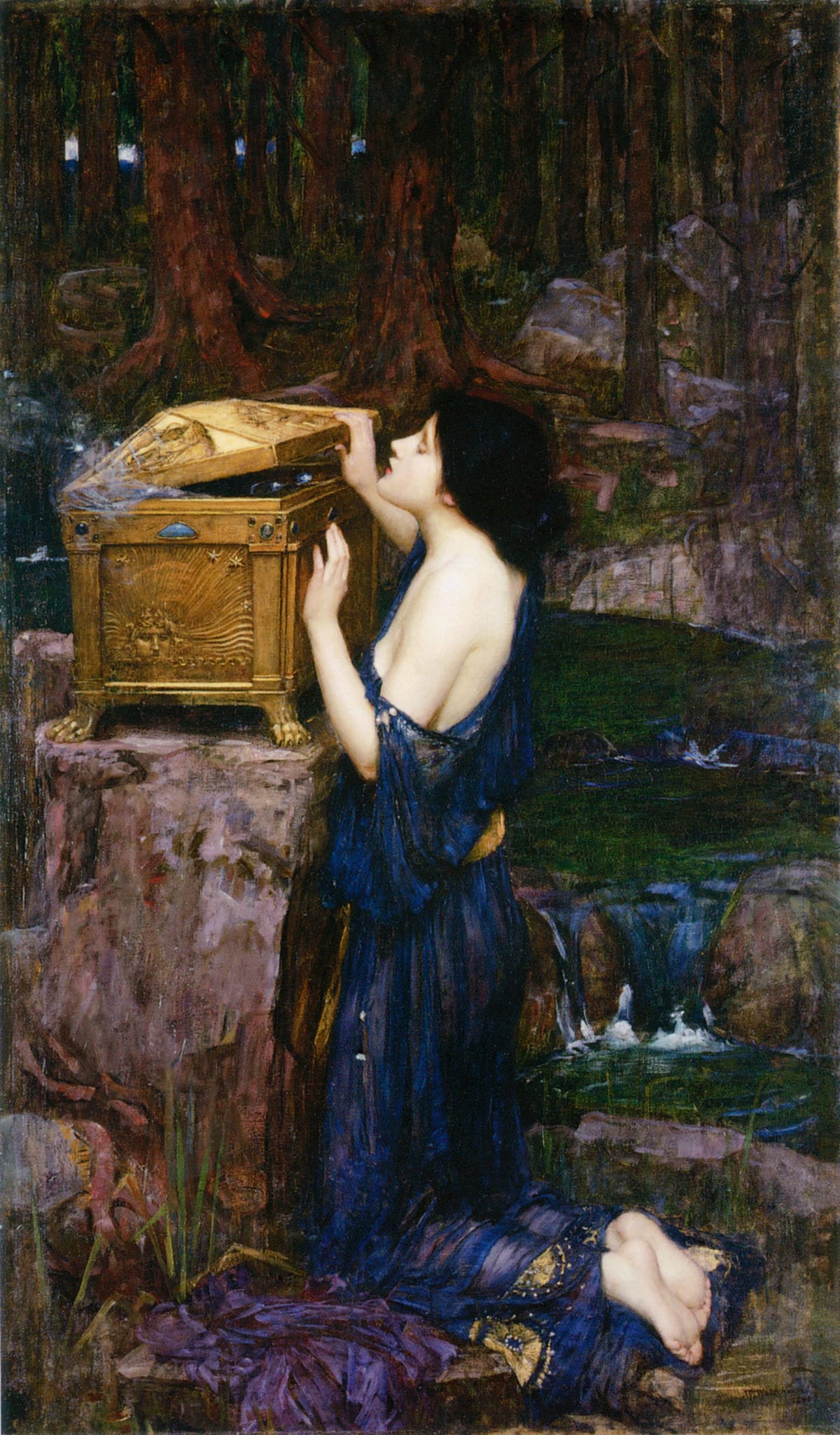
The fault, dear Brutus, is not in our stars,
But in ourselves, that we are underlings.
—Shakespeare, Julius Caesar (2022)
I'll example you with thievery.
The sun's a thief, and with his great attraction
Robs the vast sea: the moon's an arrant thief,
And her pale fire she snatches from the sun:
The sea's a thief, whose liquid surge resolves
The moon into salt tears: the earth's a thief,
That feeds and breeds by a composture stolen
From general excrement: each thing's a thief.
—Shakespeare, Tymon of Athens (2022)
There was a crooked man and he went a crooked mile,
He found a crooked sixpence against a crooked stile;
He bought a crooked cat, which caught a crooked mouse,
And they all liv'd together in a little crooked house.
—“There Was a Crooked Man," English nursery rhyme.
The theme of inward excitement, in which heat, fluidity, disorder, dynamism, brightness, loudness, high pitch, length, multiplicity and other perceptual qualities from the exciting side of primitive perceptual dimensions are captured in or associated with hands, mouths, cans, bottles, houses, boxes, barrels, baskets, pockets, boats, hats, pots, socks, wells, caves, pits, hells, valleys, cages and other inward, enclosure or container-like objects recurs so frequently in human aesthetic phenomena that it should be considered the consequence of a brain structure-based bias, rather than a side effect of sexuality. The structure of sexuality in terrestrial animals itself probably evolved to satisfy preexisting biases favoring inward fluidity, disorder, dynamism, brightness and outwardness.
That people are obsessed with the contradiction of a stimulating phenomenon coupled with containment is evident in the popular idiomatic phrases listed below. The inward, containing component of each expression is balanced by its relatively exciting inhabitant, creating an overall effect of satisfying moderation. We don't insist on the exciting component being outward, the direct opposite of inwardness, as might be expected. Instead, it can be any exciting thing.
Exciting things in containers (44): a hot house, packing heat, hotbox, a dumpster fire, engulfed in flames, gas bag, catch fire, fire in the hole, hellhole, to hell in a hand basket, burning a hole in my pocket (hot~in-in), my ears are burning, a bag of wind, breathing room, a pot to piss in, butter wouldn't melt in her mouth (fluid~in), a bucket of steam, spinning in the grave (dynamic~static), shaking in my boots (dynamic~in), a mixed bag, scumbag (disorder~in), slime bag (fluid~in), a bull in a china shop, house broken, junk in the trunk (disorder~in), a barn stormer, lightning in a bottle, people who live in glass houses shouldn't throw stones, a bee in your bonnet (high pitch~in/in), a can of worms, grasping at straws (long~in), cloak and dagger (spiky~in), shut up (up~in), wrap it up, think outside the box, a clown car, a bag of tricks, a trick up your sleeve (surprise~in), a barrel of monkeys, let the cat out of the bag, a bag of weasels, bats in the belfry, a canary in a cole mine, a box of birds (from Australian and New Zealand).
Few, if any of these expressions are used in ways that make sense in a context other than the satisfaction of a contained excitement bias. When we say something is a "mixed bag" it's not, actually, mixed or a bag. Money doesn't burn holes in our pockets. There's no such thing as lightning in a bottle. The same goes for the other expressions in the list. They can't be understood based on either their origins or applications. No one is really a bull in a china shop or grabbing a bull by the horns. There are no containers packed with live fish, monkeys, cats, snakes, weasels, slime, scum, heat or storms. These can be thought of as small poems or jokes that we share with each other repeatedly for fun. They can't have come about at random, because they all have the same basic structure. They're not used purely for purposes of practical communication, because we could make the same point using a more direct and understandable expression instead. They evolve in language the same way as complex songs and ornaments do in animals, through a process of aesthetic selection, in this case acting on concepts and words, instead of bodies and behaviors.
Nonlinguistic cultural examples of a contained excitement effect include pots of gold at the ends of rainbows, genies in bottles, ghosts in haunted houses, cauldrons of witch's brew, monsters under the bed or in closets, dragons in caves, snakes in pits, wrapped presents, Christmas stockings, wedding rings in cases, bags of candy, jack o'lanterns, pinball, lava lamps, plasma globes, snow globes, sword swallowing, drinking blood and eating fire.
Rhymes, novels and myths incorporate an exciting thing in a container more often than expected in the absence of a bias. Consider, for example, the fantastic underground rabbit hole world in Lewis Carroll's Alice's Adventures in Wonderland, the magical wardrobe containing Narnia in C. S. Lewis' The Lion, the Witch and the Wardrobe, Jules Verne's chaotic and strangely watery Journey to the Center of the Earth, the enclosed garden in Frances Hodgson Burnett's The Secret Garden, the scary world under a bed the 1989 movie Little Monsters, or under a restaurant in the 1985 movie The Goonies. The inward worlds of these stories are filled with many of the same types of things that tend to counter inwardness in idioms and mythology.
In the Mother Goose rhyme "The House that Jack Built," Jack's house contains malt, a rat, a cat, a scary dog and a cow with a crumpled horn being milked by a maiden. There's also a "man all tattered and torn," a crowing cock, a priest who marries the tattered man, kisses the forlorn maiden, milks the cow, tosses the dog, worries the cat, kills the rat and eats the malt. Other, less elaborate examples of inward excitement can be found in Goose's "Bat, Bat," "Pease Porridge," "Going to St. Ives" and "There Was an Old Woman Who Lived in a Shoe" (Goose 1916):
There was an old woman who lived in a shoe. [dynamic~in]
She had so many children, she didn't know what to do. [many~in]
She gave them some broth without any bread; [fluid~in]
And whipped them all soundly and put them to bed. [disorder/many~static]
Fire has almost all the given hypothetically primitive exciting qualities. It's perceptually hot, flowing, dynamic, disorderly, bright, warm colors, upward, outward, spiky and multiplying, so animals should find it to be one of the most exciting things we experience perceptually, and prefer it in a container. Fire theft is one of the most common and persistent of human myths, occurring in ancient stories told in Greece (Murray 1873), the Americas (Alexander 1916, Hough 1926), Polynesia (Westervelt 1910), Australia (Mackenzie 1911), Africa (Willis 1993), India (Hoffman 2012) and elsewhere. According to the Hani of southwest China, the hero Azha steals fire from a lamp being kept between a monster's eyebrows. Azha fights the monster, swallows the fire, returns home, cuts his chest open to give it to the people and dies (Yang et al. 2008). While it might make sense, if you happen to be stealing fire, to put in some kind of container for practical reasons, there's no reason to swallow it and die, like Azha, and it's not actually necessary to steal fire at all in order to have it.
Mythological instances of exciting things inside some kind of container include the common concept of a snake or dragon eating its own tail (the ouroboros), gods eating their divine children, monsters in caves, creator gods and chaotic worlds residing inside of cosmic eggs, sun swallowing, divine babies in baskets on rivers, heroes in the bellies of beasts and shutting every kind of animal in the world inside of an ark. In Greek mythology, all the world's evil is trapped inside a jar or box, to be released by Pandora as our punishment for having received fire from Prometheus, which he stole from the gods, sneaking it out of Olympus in a stalk of fennel. Hells are a particularly good example of contained excitement, like the one Dante describes in The Divine Comedy, which is filled with representatives of list 1 qualities, including loud, chaotic, infinite, high-pitched sounds (1893):
He led me in among the secret things.
There sighs, complaints, and ululations loud
Resounded through the air without a star,
Whence I, at the beginning, wept thereat.
Languages diverse, horrible dialects,
Accents of anger, words of agony,
And voices high and hoarse, with sound of hands,
Made up a tumult that goes whirling on
For ever in that air for ever black, (fluid~dark)
Even as the sand doth, when the whirlwind breathes.
Although it's customary to think about hells as something people came up with to scare each other into good behavior, or into adopting one or another political or religious view, there are plenty of ways to accomplish such things other than spreading the idea of buried worlds filled with heat, rivers, chaos, sharp objects, monstrous animals, devils and other exciting things. Hells don't have to exist in the mind at all, and the same kinds of places, offering all the same horrifying features, could just as well be placed at the Earth's surface, in the heavens, or nowhere in particular.
Dante's adventure includes encounters with phenomena exhibiting nearly all the qualities in list 1: rivers of fire and hot blood, pools of boiling pitch, flaming tombs, intense storms, violent battles, foul-smelling garbage, broken rocks, thorny bleeding trees ripped up by harpies, high-pitched sounds in the screaming of sinners, animals like worms, bees, coiling serpents, biting snakes, fire breathing dragons, the famous hellhound Cerberus and a giant, ugly, six-winged, flapping, munching, three-faced Devil, who, as the ultimate personification of evil, has to be one of the most exciting figures in mythology, and he's paradoxically trapped forever at the deepest point in the Earth, at the center of all nine concentric Hell spheres, and, also paradoxically, frozen from the chest down in a lake of solidified tears and saliva, about as simultaneously exciting and contained as a character can get. Also, according to Dante, the Devil is bigger than the usual giant (1893):
The Emperor of the kingdom dolorous
From his mid-breast forth issued from the ice;
And better with a giant I compare
Than do the giants with those arms of his;
Consider now how great must be that whole,
Which unto such a part conforms itself.
The Devil's fall out of Heaven was a dramatic event for the planet. As he flew downward, thrown by God in some accounts, we see a large-scale example of mythological sentience and animation in nonliving matter. The solid land of the Earth itself is frightened, recoiling from the approach of so much evil, leaving the conical crater in which Hell's circles are constructed, as well as a mountain on the far side, Mount Purgatory (Rendall 2019):
In Dante's conception, as Satan plummeted to earth, the lands of the southern hemisphere rushed to the north. In addition, material within the center of the earth, in a similar revulsion from the source of all evil, was ejected into the southern hemisphere to form the mountain of purgatory, the void being left by Satan's impact forming the cavern of hell. Thus, by a very satisfying irony, Satan's act of rebellion resulted in the formation not only of a pathway by which erring humanity could hope to re-ascend to God, but also of the dungeon in which the devil and all his followers were to be forever punished.
Satan's front face is vermillion. His right face is "twixt white and yellow," and the left is like "those from where the Nile falls valley-ward" (bright~right, left~dark). He's crying bloody tears with all six eyes, chewing on a sinner with every mouth, and the way he waves his wings creates not one but somehow three cold winds (fluid~cold) that travel outward through the ninth circle to keep its residents frozen forever, many in contorted positions (disorder~solid). Inferno is a lot more popular, for some reason, than the other sections of Divine Comedy, about Heaven (Paradiso) and Purgatory (Purgatorio). Buddhist hells, despite evolving independently, are just as exciting and very similar to what Dante describes (Gardiner 2012):
First stakes are put through his hands, feet and belly; then he is pared with axes and adzes, dragged by a chariot across a burning terrain, forced to climb up and down a mound of burning coals and finally plunged into a burning cauldron - all before he enters the Great Hell.
The Great Hell is an exciting container, a burning iron enclosure with "flames bursting from the walls, floor and ceiling," and this is just one of many Buddhist hells, with themes including heat, in the "hell of scorching heat" and the presumably even hotter "Hell of Fiercely Scorching Heat," fluidity in the form of blood, burning oils and Phlegethon-like fire rivers, length in the "Hell of Black Wire" (long~dark) and spikiness in the "Sword Blade Forrest." They have animals like dogs, snakes and birds, the usual chaos, and even frighteningly large numbers. We typically think of burning and being smashed by iron as mutually exclusive fates, but both of them will happen to you for 4,320 billion years if you end up in Ts'ao-wu-pei-tz'u, actually not a bad deal by comparison to burning for eternity. Other myths match the mixed aesthetic structure of hells, although they have nothing to do with death, the afterlife, sin or punishment.
The creation myth of the Zuni of North America starts with nothing, darkness and desolation being transformed through novelty into outwardness, fluidity, growth, brightness and upwardness, by a god known as the "Container of Everything," after which the fluidity is compressed and descends to be held by the earth (Cushing 1896):
Before the beginning of the new-making, Áwonawílona (the Maker and Container of All, the All-father Father), solely had being. There was nothing else whatsoever throughout the great space of the ages save everywhere black darkness in it, and everywhere void desolation. … In the beginning of the new-made, Áwonawílona conceived within himself and thought outward in space, whereby mists of increase, steams potent of growth, were evolved and uplifted. Thus, by means of his innate knowledge, the All-container made himself in person and form of the Sun whom we hold to be our father and who thus came to exist and appear. With his appearance came the brightening of the spaces with light, and with the brightening of the spaces the great mist-clouds were thickened together and fell, whereby was evolved water in water; yea, and the world-holding sea.
Multiple inwardness continues in the form of four warm egg-like caves being overpopulated by spitting, slimy, filthy, loud, diverse, semi-reptilian and generally indecent beings, who are trying to break out of their underground prisons:
Anon in the nethermost of the four cave-wombs of the world, the seed of men and the creatures took form and increased; even as within eggs in warm places worms speedily appear, which growing, presently burst their shells and become as may happen, birds, tadpoles or serpents, so did men and all creatures grow manifoldly and multiply in many kinds. Thus the lowermost womb or cave-world, which was Ánosin téhuli (the womb of sooty depth or of growth-generation, because it was the place of first formation and black as a chimney at night time, foul too, as the internals of the belly), thus did it become overfilled with being. Everywhere were unfinished creatures, crawling like reptiles one over another in filth and black darkness, crowding thickly together and treading each other, one spitting on another or doing other indecency, insomuch that loud became their murmurings and lamentations, until many among them sought to escape, growing wiser and more manlike.
Some of the Zuni proto-people escape the first, deepest cave with help from two "Little but Mighty Ones," climbing up a vine, or trees, and go on to exceed the capacity and break out of the other three enclosures above them in succession, but not everyone makes the trip:
Up this ladder, into the second cave-world, men and the beings crowded, following closely the Two Little but Mighty Ones. Yet many fell back and, lost in the darkness, peopled the under-world, whence they were delivered in after-time amid terrible earth shakings, becoming the monsters and fearfully strange beings of olden time.
When they reach the final cave, just below the surface, there's light enough to see for the first time and the Zuni ancestors are horrified. They're too wet, dirty, outward and spiky, with slimy bodies, tails, horns and claws, and they're lacking the normal inward human feature of a mouth, so the gods dry them out, cut off their outward and spiky parts and carve holes in their faces. The Zuni myth of creation can be said to incorporate the following aesthetic mixtures: fluid~down/in, disorder~down/in, loud~down/in, long~down/in, spiky~down/in, many~down/in, many of the same that apply to Dante's Inferno and to hells in general.
While we're amused by the concept of exciting things in containers, we also appreciate the application of list 1 qualities to containers themselves, setting them in motion, multiplying them, lifting them up and making them chaotic, either literally or conceptually, as in the expressions "whatever floats your boat," "a rising tide lifts all boats," "pot-shot," "kick the bucket," "kick the can down the road," "throw your hat in the ring," "rock the boat," "that ship has sailed," "run a tight ship," "the big house," "raise the roof" "home-wrecker" and "crack the case." Cultural container disruption includes shoe throwing, barrel rolling, games like kick the can and spin the bottle, nested Russian dolls, the sea shanty "99 Bottles of Beer on the Wall," Andy Warhol's repeated (multiplied) and stacked up product containers in American pop art, elaborate decoration of pottery and baskets, Japanese Wabi-Sabi style tea ceremony bowls with deliberate, sometimes accentuated cracks and so-called "incantation," "magic," "demon" or "devil-trap bowls" with magic spells written inside, spiraling in and down from the rim.
Verticality
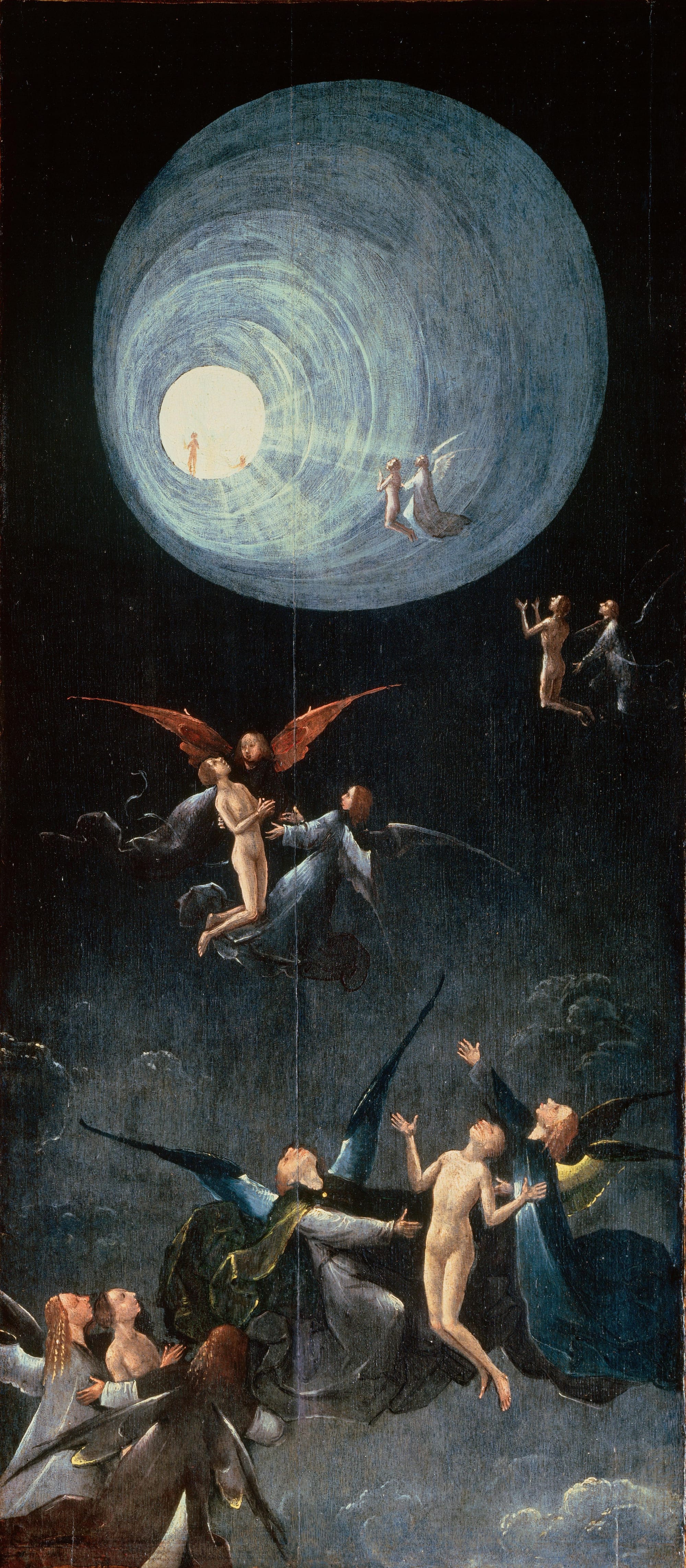
Oh, the blooming, bloody spider went up the water spout,
The blooming, bloody rain came down and washed the spider out,
The blooming, bloody sun came out and dried up all the rain,
And the blooming, bloody spider came up the spout again.
—“Spider Song," see North (1910)
The direction up is strongly associated with other qualities at the exciting ends of perceptual dimensions, and downwardness with those on the less exciting side. Both directions are important aesthetically, in everything from the mating dances of insects to stories of gods on vertical journeys between worlds, a pattern that reflects a universal bias for the mixture up~down in the animal mind.
In Metaphors We Live By (2008), Lakoff and Johnson say metaphorical patterns in language are reflections of the conceptual system that governs how we think and behave at a fundamental level, and therefore that language can be used to understand the mind:
Primarily on the basis of linguistic evidence, we have found that most of our ordinary conceptual system is metaphorical in nature. And we have found a way to begin to identify in detail just what the metaphors are that structure how we perceive, how we think, and what we do. … The most important claim we have made so far is that metaphor is not just a matter of language, that is, of mere words. We shall argue that, on the contrary, human thought processes are largely metaphorical.
The authors say humans tend to think and behave in terms of simple, opposite qualities, which aren't just used in language to describe what they mean directly, but also various kinds of other, seemingly unrelated human feelings and concepts. They point out that some metaphorical relations tend to take priority over others, and some types of opposites are "sharply delineated," systematic, and occur more cross-culturally, including those involving the dualities warm~cold, active~passive, light~dark, up~down, out~in, central~peripheral, front~back and male~female.
For whatever ultimate reason, humans are more excited by the direction up than the direction down. This is evident in how we think of higher-excitement things like heat, anger, power and sexual arousal as upward. Phenomena Lakoff and Johnson show to be associated with upwardness based on commonly used metaphors include happiness, consciousness, life, dominance, increasing numbers of things, the future, masculinity, high status and rationality. In other words, such things reside together in an upward mental category. Meanwhile sadness, sleep, death, submission, smaller numbers, the past, femininity, low status and emotion are reported to be metaphorically downward, or associated in an opposite mental category. That rationality is up and emotion is down, as the authors propose, is probably incorrect. Otherwise, these dualities are the same as many of those used here as examples of differentially exciting aesthetic opposites.
Every human culture uses references to up and down, or high and low, to describe pitch (Evans and Treisman 2010), even though there's nothing inherent in the nature of pitch or pitch differences that have anything to do with upwardness and downwardness, except perhaps in the brain. We know the direction up is universally exciting both from arousal experiments and language. People judge objects to be more elevated when we're more aroused (Stefanucci et al. 2009), showing not only that up is related to excitement in the mind but also that our mental state can influence our perception. The following expressions indicate that we generally think of upwardness as more exciting and downwardness as less so.
Up/excitement (29): raising hell, a blowup, blow your top, high spirits, high alert, hopping mad, all shook up (many/dynamic/up), raising a ruckus, amped-up, a bang-up time, high stakes (up/spiky), raise the stakes, up to no good, over the top (up/up), overzealous, overwhelming, overhyped, on the upside, upheaval, upset, I've had it up to here, high-strung, fed up, all riled up, all worked up, go through the roof, fly off the handle, raising red flags (up/bright/fluid), super!
Down/less excitement (20): settle down, calm down, on the downside, down and out, feeling down, feeling low, downplay, something got you down, low spirits (down~fluid), a downer, a Debbie downer, down on your luck, down in the dumps, dampen down, down in the mouth, underwhelming, understatement, under the weather, hit rock bottom (solid/down), subdued.
Conventional and unaccountable association with upwardness is one of many ways to predict the amount of excitingness with which a given quality is associated. We think of and describe hotter temperatures, faster speeds, louder sounds and high pitch as "higher" or "up," as though they move from a lower to a higher vertical position as they increase, even though verticality is not involved or apparent when they vary perceptually, indicating we associate them in a category with upwardness. The fact that we relate heat and upwardness is built into language, so that when we speak about the temperature increasing we say it's "heating up," not that it's "heating down." The same holds in reverse. We call getting colder "cooling down," not "cooling up." We also don't just say it's "heating" or "cooling," disregarding direction, although this would be more practical and sensible given that there's no way in which anything external to the body is moving when we feel heat or coldness.
Connections between exciting thermal qualities and upwardness can be observed in how the qualities show up in variations of language used in particular situations. Upwardness tends to appear in greetings, in the word "hi," for instance, or "what's up." So do motion and disorder, in "how's it going," "what's going on" and "what's cracking." It's notable that three of these greetings begin with exactly the same word, "what's," so that they differ only in which exciting quality completes the phrase.
Words related to stimulatory drugs and their use are another example. We describe being high as elevated in "high," "upper" and "high as a kite," also fluid, disorderly, bright, fast, expansive and outward, as in "sloshed," "juiced," "wavey," "following the cloud," "stewed," "blow," "spun out," "speed," "the spins," "crack," "crackhead," "crackhouse," "tossed," "tipsy," "ripped," "wasted," "smashed," "on a bender," "trashed," "bombed," "lit," "a shot," "a shooter," "tripping" and "tripping out."
Mixtures of Up and Down
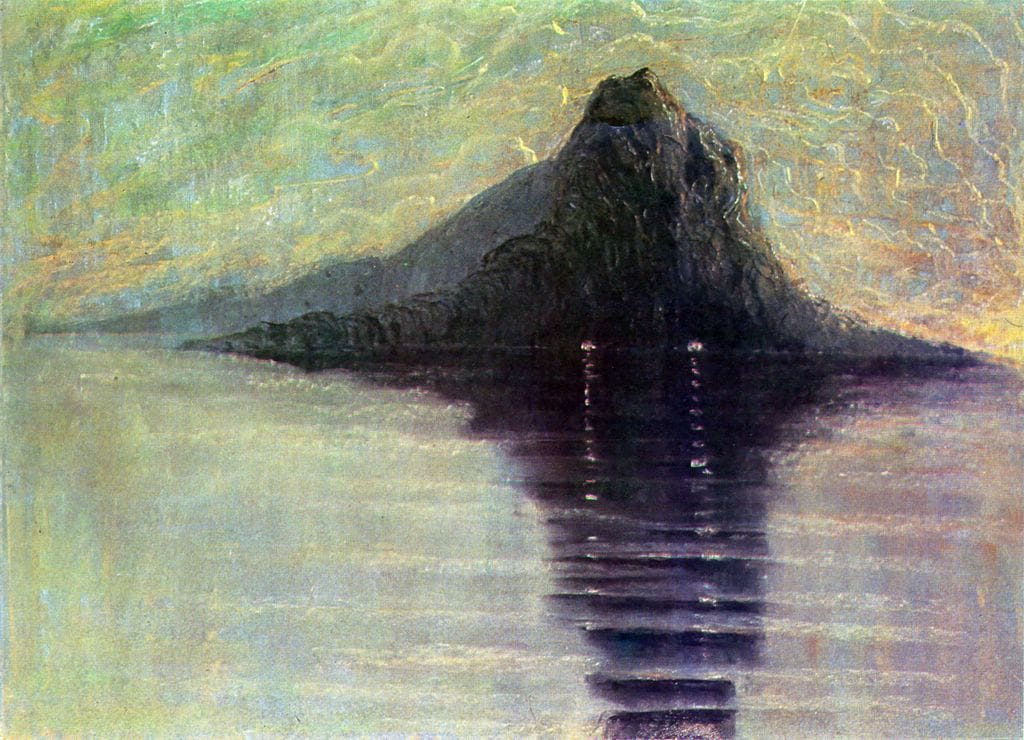
Upwardness is mixed with downwardness (up~down) in handshakes, head shaking, bowing and curtsying, in sports and games, and in entertainment like swings, Ferris wheel's, teeter totter's, yo-yo's and rollercoasters. It's an indispensable element in human dances and those of other species. Aesthetic mixtures involving verticality occur in the movement of various characters and inanimate objects in common rhymes and stories such as Mother Goose's “Jack and Jill,” “A-Tisket A-Tasket,” “Hush-A-Bye,” “Hickory Dickory Dock,” “Little Robin Redbreast,” “The Cat and the Fiddle,” “The Flying Pig,” “London Bridge,” “The Hunter of Reigate,” “Pipen Hill,” “Pancake Day,” “The King of France,” “Leg Over Leg,” “See-Saw,” “Dance Little Baby,” “The Man in the Moon,” “The Mouse and the Clock” and “Goosey, Goosey, Gander.”
In Lewis Carroll's Through the Looking-Glass, and What Alice Found There, in order to get a better look at the "Garden of Live Flowers" Alice decides to follow what appears at first to be a straight path up a hill, but the path turns out to be twisted, "curiously," taking her up and down and forward and back but repeatedly leaving her in the place where she started, until she tries walking in the opposite direction. The live flowers, who can talk because the soil they live in is unusually solid, tell Alice there's another awkwardly human-shaped character in the garden with redder, shorter petals, "done-up close" like a dahlia, and a thorny head: the Red Queen, reconstituted from ashes by the freshness of the air. The conversation when Alice meets the Queen is a series of humorous contradictions between differentially exciting opposites: order versus chaos (gardens and wilderness), up versus down (hills and valleys) and nonsense versus reality (2010):
I only wanted to see what the garden was like, your Majesty -
'That's right,' said the Queen, patting her on the head, which Alice didn't like at all, 'though, when you say "garden," - I'VE seen gardens, compared with which this would be a wilderness.'
Alice didn't dare to argue the point, but went on: ' - and I thought I'd try and find my way to the top of that hill - '
'When you say "hill,"' the Queen interrupted, 'I could show you hills, in comparison with which you'd call that a valley.'
'No, I shouldn't,' said Alice, surprised into contradicting her at last: 'a hill CAN'T be a valley, you know. That would be nonsense - '
The Red Queen shook her head, 'You may call it "nonsense" if you like,' she said, 'but I'VE heard nonsense, compared with which that would be as sensible as a dictionary!'
Having reached the top of the hill, Alice looks out over the Garden and sees a perfectly geometric grid, with water in tiny brooks running across in stripes to divide the squares into a chessboard, exemplifying the mixture fluid~order. Mythological mixtures of up and down are common, the most obvious being heavens, hells, and other pairs of upward and downward dwelling places populated with human-like beings, animals, gods and monsters who travel vertically between the realms. According to religious thought, we go one way or the other depending on our behavior, good people straight to heaven, semi-good people climbing through Purgatory and evil people going down like the devil after his transformation from a perfect angel to a hideous demon (Ezekiel 28:6–19):
You had everything going for you. You were in Eden, God's garden. You were dressed in splendor, your robe studded with jewels: Carnelian, peridot, and moonstone, beryl, onyx, and jasper, Sapphire, turquoise, and emerald, all in settings of engraved gold. A robe was prepared for you the same day you were created. You were the anointed cherub. I placed you on the mountain of God. You strolled in magnificence among the stones of fire. From the day of your creation you were sheer perfection . . . and then imperfection - evil! - was detected in you. In much buying and selling you turned violent, you sinned! I threw you, disgraced, off the mountain of God. I threw you out - you, the anointed angel-cherub. No more strolling among the gems of fire for you! Your beauty went to your head. You corrupted wisdom by using it to get worldly fame. I threw you to the ground, sent you sprawling before an audience of kings and let them gloat over your demise. By sin after sin after sin, by your corrupt ways of doing business, you defiled your holy places of worship. So I set a fire around and within you. It burned you up. I reduced you to ashes. All anyone sees now when they look for you is ashes, a pitiful mound of ashes.
The idea of downwardness being an appropriate punishment or reaction to imperfection is older than Satan, an earlier example being Hera throwing the metalwork and volcano god Hephaestus off Mount Olympus for being an ugly baby (Hamilton 1916):
Hera, it was said, was ashamed of the ugliness of Hephaestus, and threw him from high heaven down to the depths of ocean. There for nine years he remained in a subterranean cavern, fashioning lovely works of art in gold and bronze and silver, amongst them a golden throne of exquisite workmanship, which he sent to his mother. Suspecting nothing Hera sat down upon it, to find herself imprisoned by invisible chains, and held so fast that none could release her. Hephaestus was sent for, but refused to come. In vain did Ares try to force him back. At last Dionysus, the god of wine, made Hephaestus drunk, and in that condition he was conveyed back to heaven.
Hephaestus makes a deal with Zeus to release Hera in exchange, according to some accounts, for a return to Olympus as the god of crafts, fire and volcanoes, and for marriage to Aphrodite, the goddess of beauty, arguably a contradictory match.
Mixtures of up and down in mythology include the story of Inanna's descent to the Sumerian underworld, where she's killed by her sister Ereshkigal, who hangs her body up on a hook (down~up, static~up) for three days before she's rescued with help from the god Enki and returns to the surface, and the story of Persephone alternately serving as Queen of Hades and ascending to the surface in her role as the goddess of spring. The boulder of Sisyphus, endlessly being pushed up and then rolling down a hill, and myths of characters flying too high and falling back to Earth or diving to the bottom of the sea and back, for a magic plant of immortality in the case of Gilgamesh, or to bring up solid material to make the world in earth-diver creation stories, are further examples. In Greek mythology alone there are at least eight characters who travel to the underworld and back, in what psychologists and mythologists call the "descent and ascent" archetype or motif, including "Hercules, Orpheus, Theseus, Odysseus, and Aeneas; and the divinities Hermes, Persephone, and Dionysus" (LaPrade 2019).
One can see how the vertical dimension plays a role in a creation story from that of the Spokane Tribe of the American Inland Northwest, in which various animals are sent up a pole and apparently have to come back down due to the way being elevated interacts with their temperature and disposition, and a pair of brothers are sent into the sky to become the sun and moon. As with poetry, an example of any mixture in mythology is likely to be surrounded by examples of others, simply because of how common they are in general. The story features the mixtures up~down, hot~cold, loud~down, bright~solid, disorder~solid, the common aesthetic themes of a male character being coupled with solidness and losing an eye, and the idea that birds are hotter than bears (Brown and Ruby 1981):
Amotkan, the Creator, made light only after all the animals had congregated to create it for themselves. The animals first erected a high pole and sent Woodpecker up it, but the pole was too hot for him. They next sent Coyote up the pole. But he was too noisy, all the time shouting down to his children. Bear volunteered, but he found it too cold atop the pole. The sound of thunder shattered their efforts then. It loosened a piece of red rock, which turned into a handsome red man. He wanted a brother, so Amotkan gave him one made out of the root of an herb called spowaunch. The two brothers went to a lodge occupied by a witch, Lady Bullfrog. She became so enamored of the brother formed of the root that she lept on his face - and stuck there. In pulling loose, she tore out one of his eyes. Then he volunteered to ascend into the sky and be the light for the earth, for he did not want people to see his face, now missing one eye. Thus, he became the sun, and when people looked at him, they had to close one of their own eyes. The other man joined his lonely brother in the sky. But before he did so, Lady Bullfrog had jumped onto his face, too. He became the moon. Today, if one looks carefully at the moon, one can see Lady Bullfrog clinging to his face.
Upwardness behaves like heat, fluidity, dynamism, disorder and outwardness in popular expressions, mixing with the same qualities from list 2, as shown below.
Up~cold (2): freeze up, ice over; up~solid (12): the high ground, heaven on earth, mind over matter, stiff upper lip, upper crust, hard up, high and dry, bone up, jump your bones, chalk it up to, raise the bar, pennies from heaven; up~static (11): over my dead body, waiting in the wings, slow on the uptake, stay up, hold up, wait up, wouldn't lose sleep over, sleep over, dead cat bounce, rest up, hill to die on; up~order (17): a tall order, clear it up, upright, above the law, fly straight, aim high, measure up, straight as the crow flies, overrule, straight up, straighten up, shape up, clean up, a match made in heaven, high level, rocket science; up~dark (5): tall dark and handsome, fly by night, flying blind, overshadow, up all night; up~down* (16): jumping up and down, look someone up and down, searched high and low, as above so below, bottoms up, it's a rollercoaster, upside down, hangover, top down, the over under, are you picking up what I'm laying down, overlay, crestfallen, layover, layup, laid up, fall over.
Although the expressions haven't been collected systematically or randomly, there seem to be fewer of them than there are involving outwardness and inwardness. This might be true because in and out are more important directions for a terrestrial animal to understand and care about than up and down. Nevertheless, up~down is easy to express, and it's extremely common in courtship and dance. Grebes, widowbirds, bald eagles, king penguins, gentoo penguins, the Vogelkop superb bird-of-paradise, sage grouse, red-crowned cranes, hummingbirds, manakins, mallard ducks, ruddy ducks, hooded mergansers, cormorants, albatrosses, bowerbirds, magnificent riflebirds, American woodcocks, ostriches, swans, dippers, flickers, herons, ravens, anole lizards, rattlesnakes, grasshoppers, spiders, butterflies and others employ the mixture in their efforts to attract each other.
The dive-bombing or "spiral dive dance" of bald eagles demonstrates an appreciation for downward and disorderly motion in birds, for whom the ground is less of a limit than it is for dancing terrestrial animals. As the linked video shows, they hold each other by the claws and fall as long as possible, spinning chaotically all the way. They could fall without spinning, but they choose to spin. They could sit in the safety of a nest and hold each other by the feet, but they choose to mix touching and closeness with disorder, rapid motion and uncontrolled descent. If the encounter doesn't end in a deadly collision with the ground, which is not in common, they separate, pull up, climb to a suitable height and do it again.
This is very unlikely to be understood as either adaptive in a survival sense or as any kind of signal indicating superior health or genes. If it's informing mates, in any way, it probably came to do so after the dance originated as a reflection of aesthetic biases that existed all along. There are many other, easier, better ways for an eagle to demonstrate its vigor without engaging in such dangerous tricks, and much simpler and safer ways for a pair of birds to get a sense of each other's strength, healthiness, parasite resistance, parental abilities or general fitness. A preexisting bias for the perceptual contradictions inherent in a falling spiral dance would also explain its persistence, and why adolescent eagles "practice" the behavior. Human regard for sky diving, high diving, bungee jumping and cliff jumping are analogous. That humans do these things for fun rather than to demonstrate good genes is further reason to believe rapid downward motion is universally amusing to animals. This isn't to say eagles didn't evolve to be amused by the spiral dive dance, and to perform the dance, but that they did so with a preexisting tendency to be amused by downward dynamism and disorder in place to begin with, the same tendency that led to the cultural evolution of similar behaviors in humans.
Front and Back
All directional dimensions are probably distinguished partially through differential excitement, with forwardness and the fronts of things being more exciting, like up, outward and left, and backwardness and the backs of things being less exciting, like down, inward and right, leading to such expressions as "on the back burner" (hot~back), "backseat driver" (dynamic~back), "the straw that broke the camel's back," "backbreaking work," "a bad penny always comes back" (disorder~back), "bend over backward" (disorder/up~back), "the outback" (out~back) and "one step forward two steps back" (multiple~back).
A bright~back preference in mating decisions appears to be responsible for widespread bright/warm coloring in the posterior parts of animals, most spectacularly fireflies, but also mammals (silverback gorillas, okapi, white-tailed deer), birds (Raggiana birds-of-paradise, Bulwer's white-tailed wattled pheasant), snakes (ring-necked snakes), fishes (neon tetras, Red-tailed black sharks, orange tail blennys, yellowtail tangs, Royal grammas, fairy basslets, ornate cowfish), lizards, spiders (peacock spiders, ladybird spiders, redbacks), bees, wasps, butterflies (blushing phantoms), beetles and thousands of species overall. See Bright~Back on Pinterest for over 200 examples.
A bias for long backwardness (long~back) can at least partially explain the existence of nonfunctional tails as well as the initial evolution of those that have come to serve a purpose, such as stinging or prehensility.
Brightness and Color
The Contrast Effect
For what seemed an immensely long time, I gazed without knowing, even without wishing to know, what it was that confronted me. At any other time I would have seen a chair barred with alternate light and shade. Today the percept had swallowed up the concept. I was so completely absorbed in looking, so thunderstruck by what I actually saw, that I could not be aware of anything else. Where the shadows fell on the canvas upholstery, stripes of a deep but glowing indigo alternated with stripes of an incandescence so intensely bright that it was hard to believe that they could be made of anything but blue fire.
— Aldous Huxley, on mescalin, see Campbell, Flight of the Wild Gander
Brightness and the so-called warmer colors red, orange and yellow are coupled with darkness and the cooler colors purple, blue and green, not only throughout human creations like art, clothing, flags, cosmetics, games, movies, symbols, products and elsewhere, but across the animal world in thousands of insect, fish, reptile, bird and mammal species, as well as many flowers. Thus, humans and other animals consistently select for more chromatically complicated versions of objects and mates, those expressing both white and black, red and blue, yellow and green, red and black, white and blue and so on, over chromatic monotony and lower contrast color combinations.
Repeated evolution of these same patterns in distant taxonomic groups implies the action of biases that came into existence with color vision, and it undermines arguments based on survival-related benefits like thermoregulation, parasite resistance or crypsis, which ignore the scope of the pattern as well as the fact that there's no connection to survival in the case of human cultural objects.
Each instance of the contrast effect, in a species or culture, constitutes evidence of an overall color contrast bias in the animal brain. Examples of the effect can be viewed on the Pinterest board Bright~Dark. It's common for such opposing colors to appear or increase during mating seasons, and they often describe the color scheme of small, particular parts of an animal's surface, such as decorative ocelli in butterflies, birds and fishes, or they appear as an element of the allure of a part of the body that obviously serves no purpose other than impressing a mate, such as the fan of a dancing pheasant, the tail of guppy or the elaborate abdomen of a peacock jumping spider, all of which are evidence against or rule out traditional explanations having to do with adaptive crypsis or thermoregulation.
Assuming brightness and redder colors to be more exciting perceptually than darkness and bluer colors, the contrast effect is complex with regard to excitement, and fits the present thesis. There's indifference between opposites as long as they come from opposing sides of a bright~dark or rainbow spectrum. Red can be coupled aesthetically with blue, but also darkness, green or purple, for instance, and blue can be coupled with brightness or any warmer color to create a mixture matching the coloration of countless animals.
Considering this pattern as a whole, especially given how it holds across distantly related species, the most reasonable conclusion is that all animals with the ability to see them prefer a mixture of brightness with darkness and warmer with cooler colors. The preferences apparently evolved along with and as a side effect of the practical ability to make such visual distinctions for survival.
Various approaches can be used to estimate the excitement with which a quality or concept is associated. One is to consult studies of the arousal level experienced by subjects perceiving it. Wilms and Oberfeld (2018) measured skin conductance and heart rate as indicators of arousal in subjects observing red, green or blue light presented on a screen in an otherwise dark room. The results showed a significant effect of color on arousal, with red being most arousing, green being moderately so and blue the least. Wilms and Oberfeld's experiment was special in that it controlled for color brightness and saturation, which interact with hue in determining how colors are perceived. Incidentally, arousal increased significantly with increases in both the saturation and brightness of a color.
Dynamic Darkness and Bright Stasis
A universal sensory bias is likely responsible for animals usually being colored so that their most perceptually dynamic body parts are darker and their relatively static and/or central parts are brighter.
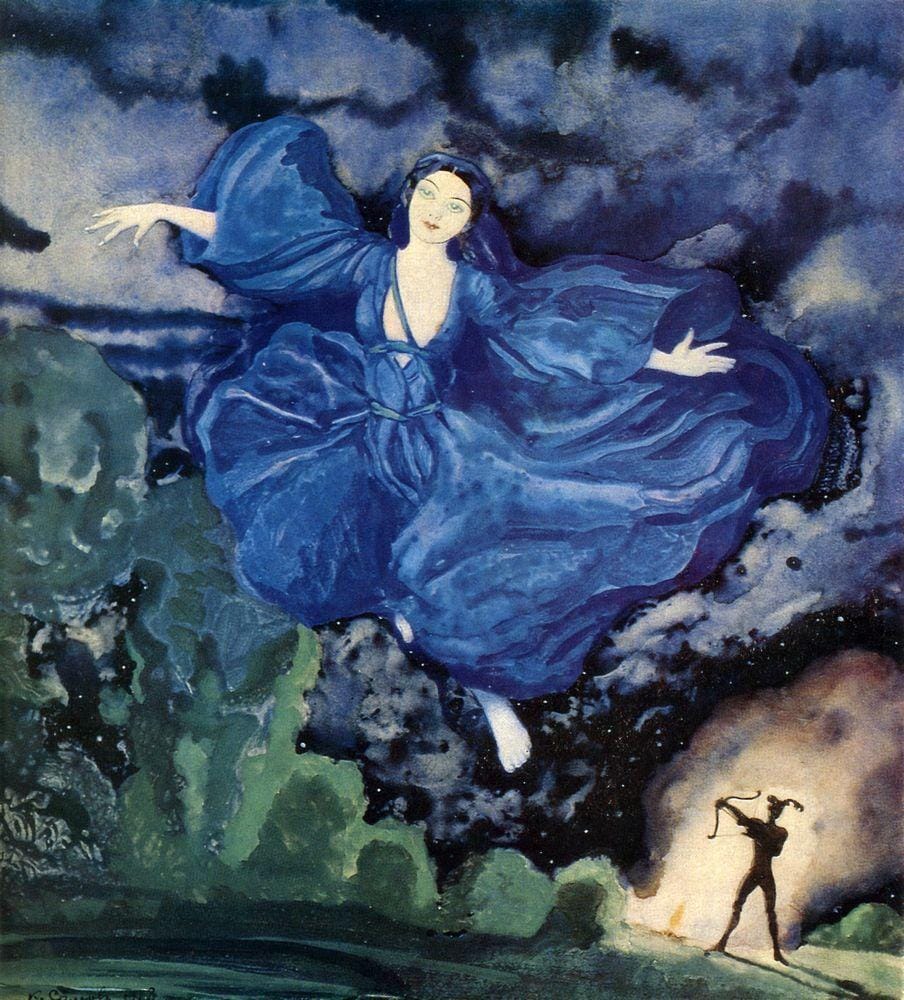
Nevertheless, it is possible to find rough verbal equivalents for the simpler colors. Thus every one would probably agree with Lipps and call a pure yellow happy, a deep blue quiet and earnest, red passionate, violet wistful; would perhaps feel that orange partakes at once of the happiness of yellow and the passion of red, while green partakes of the happiness of yellow and the quiet of blue; and in general that the brighter and warmer tones are joyful and exciting, the darker and colder, more inward and restful.
— Dewitt H. Parker, The Principles of Aesthetics (1920)
In February 1758, strange objects had begun to float into his field of vision. It started with something that resembled a blue handkerchief, with a small yellow circle in each corner.… The handkerchief followed the movement of his eyes: whether he was looking at a wall, his bed, or a tapestry, the handkerchief blocked out all the ordinary objects in his room. Lullin was perfectly lucid and at no time did he believe that there really was a blue handkerchief floating around.
— Oliver Sacks, Hallucinations (2012), quoting Douwe Draaisma's Disturbances of the Mind
Animals tend to be colored so that red, orange and yellow, hues Parker and Lipps say "every one" relates to the relatively exciting emotions of happiness, passion, warmth, joy and excitement, decorate the more inward, central and visually stationary body parts while colors they say relate to rest (stasis), quietness, wistfulness, coldness and inwardness decorate more peripheral, flowing and dynamic parts. Photographic evidence for this can be viewed on the Pinterest board Darker Extremities, which includes over 1,100 pins of various butterflies, flies, grasshoppers, leafhoppers, mantids, beetles, spiders, crickets, crabs, lobsters, sharks, rays, seahorses, cichlids, killifish, clownfish, catfish, swordfish, salmon, trout, frogs, lizards, songbirds, parrots, penguins, pigeons, toucans, hummingbirds, bowerbirds, ducks, manakins, eagles, vultures, owls, horses, tapirs, foxes, bats, squirrels, monkeys, pandas and others.
If animals are biased to favor darker, bluer (cooler) colors in motion and brighter, redder (warmer) colors in more stationary states, then such mixtures should be found in the elaborate dances of many different species, which we know to have been selected for aesthetically. The marvelous spatuletail Loddigesia mirabilis, an endangered hummingbird in the forests of Peru, does a dance in which he flips his head forward and backward to expose either the purple coloration on top of his head or the green of his neck, depending on how fast he's moving. He alternates between motion and stillness, hanging stationary in the air and then moving suddenly and rapidly sideways. During periods of stillness he keeps his head back so the female sees the green on his neck. When he makes a sudden move to one side or the other, he's careful to switch colors by lowering his head to expose purple, a "cooler" color, instead of green. He keeps green in sync with stillness and purple in sync with motion throughout the performance, reflecting female appreciation for the mixtures dynamic~dark and bright~static.
The male wire-tailed manakin (Pipra filicauda) has a bright round red cap, a bright round yellow breast and jet-black extremities, including the wings, beak, legs and tail, with the tail being elongated and pointy. Its eye is like an ocellus pattern, with a black pupil surrounded by a white ring and then a longer, outer black ring. When the male dances, he flicks his black wings and specifically puffs up, gyrates and flips the black portion of his body back and forth while keeping his bright cap and breast feathers in a smooth, rounded shape, holding them downward, inward and relatively still. From the front, his appearance is that of a central, bright red and yellow oval surrounded by a peripheral, dark and spiky halo.
The moonwalk dance of the red-capped manakin (Ceratopipra mentalis) is an example of dynamic darkness and bright stasis attracting mates. As he travels backward along a branch we can see the care he takes to keep his bright red head as still as possible while vibrating the darker parts of his body, especially the tip of the tail. In this bird as well the red color of the head is nearly round, the yellow pompoms on his legs are nearly round, and the black parts are a longer, spikier shape. Also like the wire-tailed manakin, moonwalking red-capped manakins lower their heads below their bodies, arranging darkness over brightness.
Dynamic darkness and bright stasis are essential in the dance of the Vogelkop superb bird-of-paradise Lophorina niedda. The black body parts involved, the wings and tail, undergo a set of spectacular transformations in shape. We see dark elements being raised into a peacock-like arch, slapping above the head, slapping against a log, shaking back and forth, bouncing up and down and generally undergoing extremely dynamic motion by comparison to the much brighter, blue, mouth-like invitation on his chest, which he holds steady, attempting to maintain the same shape of throughout.
The western parotia Parotia sefilata dances in a ballerina skirt of pitch-black feathers, which is viewed in the late phase of the dance by the female from above, so he looks like a frilly circle spinning and waving around and back and forth like a top that's near the point of falling over. He adds a feature in which several circular black tufts at the ends of naked wires protruding from his head fly around the outer edges of the skirt in various patterns. After going on in this way, moving intensely and only showing black coloration to the female, he stops, holds perfectly still and raises a strikingly bright, shiny, metallic yellow breastplate up for her to see. He holds the pose briefly, remaining perfectly motionless, and then snaps back into a mode of rapid motion with the breast shield flipped down. Mixed with the motion is a patch of blue coloration, previously hidden behind his head, which is longer in shape and apparently darker, at least from some angles, than the features of the breastplate. The blue pattern sways back and forth with his body as the dance continues. He keeps periods of bright stasis and dynamic darkness clearly distinguishable. The breastplate flipping part of the dance can be viewed in the linked video, starting at the time 3:37.
Every species added to the list of those communicating their affection as such makes it more difficult to explain the pattern in the absence of a universal bias. The fact that two seemingly complimentary biases are involved, one for darker motion and another for brighter stasis, already presents a problem for alternative mechanisms, as does the fact that animals appear to think of green as intermediately bright, yellow as less bright than red, blue between green and purple and so on. A bias favoring dynamic darkness doesn't necessarily explain or necessitate the existence of a complementary bias for stimuli exhibiting bright stasis, yet both seem to be essential in animal ornamentation.
It's notable that in almost every example so far the male has evolved to present a darker color above a brighter one. This configuration fits the Thayer effect, in which most animals are colored more brightly on their lower surfaces and darker on the upper surface. Thayer's effect has been attributed to protective coloration, but it's much more likely to result from mate choice favoring the pattern.
The beaks of flamingoes are colored white and pink from the base to about half the distance to the beak tip, with some thin black lines, and the distal, relatively spiky section being dark black. These are normally held downward so that the brighter portion presents itself to other flamingoes above the black part. When they dance, in large groups, a behavior that evolved aesthetically, they lift the black part of their beaks above the base, and above their heads, reversing the color orientation to fit the Thayer effect, and then, at intervals, they shift the beak back and forth from side to side while holding the rest of the body as stationary as they can while walking through the water.
The flame bowerbird Sericulus ardens employs dynamic darkness in the phase of his dance in which he lowers his flame-colored head in front of the black-tipped feathers of his wing. He raises his head up and down repeatedly, flapping the darkness of his wing faster and more chaotically than the rest of his body, faster on the way down than the way up, but always more dynamically than the red and yellow parts of his body. Here again we see female birds choosing mates on the basis of dynamic and upward darkness and static, downward brightness.
The dynamic darkness effect can be observed in North American bird coloration on the Audubon website, or tested directly by sampling species at random. Out of a list of 100 bird species generated using Random Lists (2021), ~62% are a darker or cooler color at the wing tip than the lower breast, ~32% are the same color at both locations, and ~6% are a brighter, warmer color at the wing tip than on the lower breast. Disregarding birds with no color difference, 62 out of 68, or about 91%, are darker at the wing tip than the breast. Other samples should yield similar results, with other groups of animals exhibiting the pattern as well.
Painted by Nature
General sensory biases selecting for mixtures of upwardness with darkness and downwardness with brightness in bodies are the most likely explanation for widespread dorsal darkness and ventral brightness in animals, rather than differential survival, countershading and obliteration.
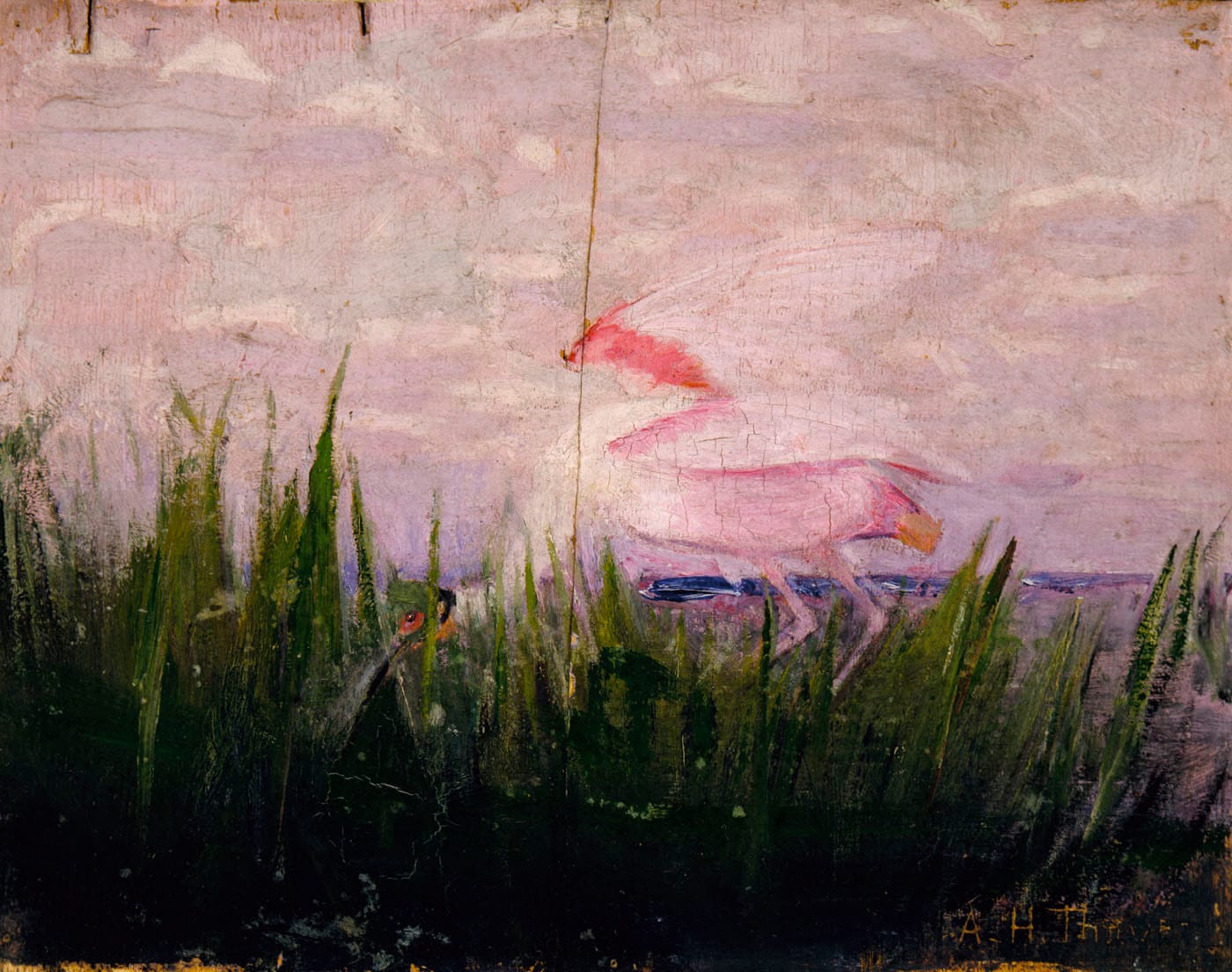
Animals are painted by nature, darkest on those parts which tend to be most lighted by the sky's light, and vice versa.
— Abbott Thayer (1896)
Among all the wild absurdities to which Mr. Thayer has committed himself, probably the wildest is his theory that flamingos are concealingly colored because their foes mistake them for sunsets. He has never studied flamingos in their haunts, he knows nothing personally of their habits or their enemies or their ways of avoiding their enemies … and certainly has never read anything to justify his suppositions; these suppositions represent nothing but pure guesswork, and even to call them guesswork is a little over-conservative, for they come nearer to the obscure mental processes which are responsible for dreams.
— Theodore Roosevelt (Gould 2010)
Universal biases favoring the perceptual mixtures up~dark and bright~down appear to be responsible, via mate choice, for a widespread animal coloration pattern in which the upper parts of bodies are darker and the lower parts are brighter. Hundreds of examples of this can be viewed on the Thayer Effect Pinterest page. The pattern, known as Thayer's Law, or countershading, has been recognized and studied for over a century. It was described in detail under the title "The Law Which Underlies Protective Coloration" by Abbott Handerson Thayer in The Auk (1896), and further by Thayer and his son in a book called Concealing-Coloration in the Animal Kingdom (1909), in which they state:
If an object be colored so that its tones constitute a gradation of shading and of coloring counter to the gradation of shading and of coloring which light thrown upon it would produce, and having the same rate of gradation, such object will appear perfectly flat; - retaining its length and breadth, but losing all appearance of thickness; and when seen against a background of color and pattern like its own will be essentially indistinguishable at a short distance. All persons who have seen the models which illustrate this, know that they prove it. Now, if this stands proved, the fact that a vast majority of creatures of the whole animal kingdom wear this gradation, developed to an exquisitely minute degree, and are famous for being hard to see in their homes, speaks for itself.
The effect is attributed to differential survival, based on the idea that the color arrangement contributes to concealment due to how it interacts with light from above during the day. It's thought that an animal's upper body causes a shadow to be cast on its lower body, and this self-shadowing in turn gives it more contrast and makes it stand out more as a distinct solid object, which is related to the way darkness and shadows are used to make an object look solid and distinct in a painting. Brightness on the underside and darkness on top presumably "obliterates" the shadow and hides the animal more effectively against its background.
Within the general effect, ornaments used specifically for attracting mates often have the same structure. Mating colors with an upper blue and lower red portion, for example, occur in three-spined stickleback Gasterosteus aculeatus, the peacock spiders Maratus azureus, M. fletcheri, M. neptunus, M. amabilis and M. linnaei, Wilson's birds-of-paradise Cicinnurus respublica, wild turkeys Meleagris gallopavo, cassowaries (Casuarius), fan-throated lizards Sitana ponticeriana and mandrill's Mandrillus sphinx. Thus, widely unrelated species choose this configuration of color and direction for sexually selected features, those which, by definition, are either detrimental or have nothing to do with survival or avoiding detection.
Rowland (2009) calls countershading one of the most common visual characteristics of animals. She points out that little empirical evidence exists at present to support an obliterative, self-shadowing-based mechanism, despite its ubiquity, the time that's passed since the inception of the idea and the amount of research that's been dedicated to to it. Some studies, including Rowland's, have had success in showing that countershading can sometimes be effective for hiding from predators, but she says that other possible reasons should be explored, such as thermoregulation. She gives examples of dorsal to ventral darker to lighter coloration in frogs, sharks, lizards, turtles, snakes, water bugs, penguins, tropical rainforest birds, shrimp, mice, rats, mole rats, squirrels, bats, lemurs, monkeys and other animals, along with several potential adaptive mechanisms for the effect.
The concept of obliteration by countershading is a questionable explanation for various reasons aside from it being inapplicable to sexually selected traits. The direction sunlight comes from throughout the day is variable, and it scatters, so light is not shining straight down on animals very often. The shadow an animal casts depends on its shape. The top of a frog, snake, turtle, penguin or butterfly wing, for instance, doesn't exactly cast a shadow on its lower surface. The background against which an animal is seen is variable, and they don't spend all their time oriented to be viewed directly from the side.
Thayer made the argument that Flamingos are pink because it makes them hard to see in the sunset, illustrated in the painting above. Strangely, in this case, obliteration doesn't apply because, from a predator's viewpoint, the sun is behind a flamingo rather than above it. Obliteration assumes, of course, that predators aren't able to adapt to the effect by evolving to detect prey as effectively as they would in its absence. It's easy to imagine adaptations that would solve the problem of potential food being slightly harder to see at noon from a particular angle in front of a specific background, potentially including hunting at different times of day, at night, from different angles, or increased sensitivity to motion, shape, vibrations, scent, infrared radiation or the Thayer effect itself.
Countless predatory animals participate in the Thayer effect in addition to those expected to benefit most from crypsis. Most sharks, apparently, including the Great White Carcharodon carcharias, the Tiger shark Galeocerdo cuvier and the Whale Shark Rhincodon typus exhibit a dark to light coloration gradient from the dorsal to ventral surface. So do the Tiger Panthera tigris, Snow Leopard Panthera uncia and Jaguar Panthera onca. It could be that countershading helps predators sneak up on prey. In the case of many animals, however, like the Whale Shark, a filter feeder, it seems unlikely that plankton is keen enough to escape based on the lack of a vertical coloration difference in the look of a giant, fast-swimming shark, or that being two contrasting colors to hide from prey gives any predator a meaningful edge over one that's a either a single color or brighter on top and darker below. One could argue that if countershading does conceal an animal when the sun is casting light across its body in such a way that it would be visually obliterated from the perspective of a predator, or prey, the rest of the time, when the sun isn't shining straight down on it, the coloration pattern would make it more conspicuous.
Another problem with explaining dorsoventral color gradients in animal bodies is lack of uniformity. It's common for the darker dorsal area to be interrupted by other, light colors and the brighter ventral surface to be interrupted by patches of darker color. As Rowland (2009) points out, the upper surface of a whale shark is darker than the lower surface, but it's also covered with regularly spaced bright white spots and lines. The Mandarin Duck Aix galericulata has bright to dark ventral to dorsal coloration but the upper surface is also red, white, orange, green, blue and tan, hardly the look of an animal with a strong evolutionary need to hide from predators, at any angle, and this goes for thousands of species.
Perhaps most importantly, countershading, the traditional adaptationist perspective, requires many independent, case-by-case explanations, one for each species in which the pattern occurs, along with a significant and ongoing relationship to one or more predators hunting with prey coloration patterns as a major determinant of their success. A universal bias in the animal brain provides a single, simple explanation for every case of the Thayer effect at once.
Abbott Thayer was right about the need for an unconservative interpretation of his law, and to look for a single underlying cause. The problem wasn't concealing coloration, it was how unbelievably effective it is to predict that an animal, of almost any kind, will be brighter on the bottom and darker on the top. His mechanism hasn't worked in practice because he assumed everything that happens in biology is functional, dismissing sexual selection and aesthetic preferences as insignificant evolutionary forces, even though they represent a far more sensible solution.
Multiplicity
I came across the paragraph on the Trinity. Here was something that challenged my interest: a oneness which was simultaneously a threeness. This was a problem that fascinated me because of its inner contradiction. I waited longingly for the moment when we would reach this question. But when we got that far, my father said, 'We now come to the Trinity, but we'll skip that, for I really understand nothing of it myself.' I admired my father's honesty, but on the other hand I was profoundly disappointed and said to myself, 'There we have it; they know nothing about it and don't give it a thought.'
— Carl Jung, Memories, Dreams, Reflections
One day a guy was driving down the road out in the country, doing 30 miles and hour. Suddenly a chicken came up and ran beside the car. The guy sped up, to get ahead of the chicken, going 60, but the chicken sped up, running faster than the car. Then another chicken appeared on the other side, also outrunning the car. As they pulled out ahead they turned down a driveway to a farmhouse, and he noticed the chickens had three legs. Out of curiosity, he pulled in the drive to talk to the farmer, and saw there were dozens of three-legged chickens running around the farm. He asked, “how did you get all these three-legged chickens?” ”The farmer said “well, before it was just me and my wife, now we have the boy. I happen to like the drumstick. So does she, and so does the boy, so we bred these chickens.” The man said “wow, that’s a great idea, so how do they taste?” The farmer said “we don’t know, we can’t catch em.”
—Lyle Hodgson, “The Three-Legged Chicken Joke”
In my Father's house are many mansions: if it were not so, I would have told you. I go to prepare a place for you.
— The Bible, John 14:2
Having broken with much of the religious past by adopting a singular god, Christians must have decided one wasn't quite enough, and added two more to make the Trinity. Three gods is apparently too many, though, so the components of the Trinity are blended together into one, as though being one and many simultaneously somehow makes sense even though no one can quite understand or explain it. Regardless of defying the most basic logic, the Trinity can make sense for followers with a desire for between one and three gods, as well as those with a desire for numerically complicated and contradictory concepts.
No animal needs to be able to count in order to tell the difference between one thing and two, or many. The ability is probably very old, going back to around the time that vision evolved, and it's reasonable to expect it works in such a way that the sight of many things: a swarm of bees, a school of fish, a herd of antelope, a tree filled with fruit or a field of flowers, registers in the brain as exciting by comparison to the sight of a single individual or object.
It's predictable based on the thesis that larger numbers of things will be mixed with smaller numbers of things in expressions, poetry and mythology, and that due to aesthetic indifference, the former will tend to mix with list 2 qualities and the later with those in list 1. This is demonstrated in the expressions listed below.
Language appears to be structured so that less exciting things are repeated more often than more exciting things, representing aesthetic mixtures such as multiple~solid, multiple ~dark and multiple ~round.
Many~few (28): much ado about nothing, much less, less is more, double or nothing, all rolled into one, once and for all, first of all, all for one and one for all, seen one seen them all, come one come all, nothing much, a whole lot of nothing, one too many, every once in a while, every single time, half a dozen, six of one half dozen or the other, I'll try anything once, two's company and three's a crowd, second to none, two sides of the same coin, give them an inch and they'll take a mile, be in two places at once, once bitten twice shy, a glass half full, alone in the crowd, too clever by half.
Many~cold (1): crowned by many winters.
Many~solid (5): cover a lot of ground, too many irons in the fire, my two cents, all roads lead to Rome, a tooth for a tooth (mutiple~solid).
Many~static (6): death by a thousand cuts, still and all, cowards die many times before their death, seven deadly sins, can’t stop won’t stop, full stop.
Many~order (5): possession is nine tenths of the law, all shapes and sizes, five second rule, two wrongs don’t make a right, alright.
Many~dark (4): blue on blue (multiple blue), a three dog night, five o’clock shadow, all black and blue.
Many~down (5): hang ten, it's all downhill from here, six feet under, double down, deep six.
Many~in (7): all in, double take, take five, a mouthful, like two peas in a pod, it takes two to tango, a catch 22.
Hot~few (2): a hot little number, all over hell’s half acre.
Fluid~few (2): half seas over, laugh and the world laughs with you weep and you weep alone.
Dynamic~few (11): at one go, here goes nothing, running on empty, you only live once, once in a lifetime, half a shake of a lamb’s tail, go off half cocked, how the other half lives, half life, he travels fastest who travels alone, one does not live on bread alone.
Disorder~few (5): a wild one, not half bad, half the battle, first go, empty threat.
Bright~few (2): one of these days, day one.
Up~few (4): once upon a time, one up, pull one over on, give it a once over.
Out~few (9): the one that got away, only get one shot at it, the odd one out, first out of the gate, few and far between, a one off, go away empty handed, leave it alone, leave well enough alone.
The title and first line of William Wordsworth's "I Wandered Lonely as a Cloud" mixes singularity with fluidity and multiplicity, and the third line mixes "once" with "all" and "a crowd":
I wandered lonely as a cloud
That floats on high o'er vales and hills
When all at once I saw a crowd.
More~less is a major theme in Edgar Allan Poe's "The Raven," matching the structure of the lines "Only this and nothing more," "This it is and nothing more," "Darkness there and nothing more," "Merely this and nothing more," "'Tis the wind and nothing more!," "Perched, and sat, and nothing more" and the eleven lines ending in "nevermore," with "never" replacing "nothing," while "more" stays the same. In the first line: "Once upon a midnight dreary, while I pondered, weak and weary," we see the mixture up~singular in "once upon," words that have also been used hundreds of times in the openings of folk tales and other stories going back at least to 1380 in the expression "once upon a time" (Wikipedia 2023).
Big~Small
The Sirian resumed his discussion with the little mites. He spoke to them with great kindness, although in the depths of his heart he was a little angry that the infinitely small had an almost infinitely great pride. He promised to make them a beautiful philosophical book written very small for their usage, and said that in this book they would see the point of everything. Indeed, he gave them this book before leaving. It was taken to the academy of science in Paris, but when the ancient secretary opened it, he saw nothing but blank pages. "Ah!" he said, "I suspected as much."
— Voltaire, Micromégas, 1752 (2023)
And Jesus said unto them, Because of your unbelief: for verily I say unto you, If ye have faith as a grain of mustard seed, ye shall say unto this mountain, Remove hence to yonder place; and it shall remove; and nothing shall be impossible unto you.
— The Bible, Matthew 17:20
The gray of the morning has passed, and the sun is high over the distant horizon, which seems jagged, whether with trees or hills I know not, for it is so far off that big things and little are mixed.
—Bram Stoker, Dracula (2023)
Expressions such as "no big deal," "big news," "big time" and "small potatoes" use references to size in ways that would be consistent with smaller things being less exciting than bigger things. The excitement of increased size might be related to the phenomenon of supernormality, in which exaggerated versions of stimuli capture attention.
Juxtapositions of bigger and smaller size recur throughout fictional stories. In Norse mythology Thor's hammer can be reduced to the size of an amulet, and the magical ship Skíðblaðnir can be folded up small enough to fit in a pocket. Sometimes a single character, such as Alice, in her adventures in Wonderland, changes size throughout the course of a story. Other times a small character is juxtaposed with another, larger character, as in the story of David versus Goliath or Lemuel Gulliver versus the tiny, six-inch people in the lands of Lilliput and Blefuscu in Jonathan Swift's Gulliver's Travels, or Travels into Several Remote Nations of the World.
Big~small and many~few appear to interact so that giants and other oversized characters in stories tend to be singular while smaller characters like dwarves are multiplied. Big~small interacts with dynamic~static such that it's more satisfying if smaller characters kill larger ones than it is the other way around. Smaller characters are amusingly higher-pitched, faster and brighter; giants are amusingly slow, dark, cold and solid. Linguistically, the expressions below show that the usual patterns regarding differentially exciting opposites hold for size.
Big~small (7): a big baby, big things come in small packages, jumbo shrimp, a big fish in a small pond, all things great and small, on small step for man one giant leap for mankind, little pitchers have big ears, great oaks from little acorns grow; big~solid (1): big-boned; big static (1): a sleeping giant; big~order (3): a tall order, in great measure, a gentle giant; big~dark (1): tall dark and handsome; big~down (1): the bigger they are the harder they fall; big~round (2): my eyes were bigger than my belly, get a big head; big~in (5): we’re going to need a bigger boat, big into, go big or go home, the big house, too big for your britches.
Hot~small (3): it got a little heated, a little fire is quickly trodden out, a little pot is soon hot; fluid~small (2): don't sweat the small stuff, in small doses; dynamic~small (2): live a little, it's the little things in life; disorder~small (1): a little rough around the edges, bright~small (1): a little white lie; high pitch~small (1): lie low and sing small, the world's smallest violin; up~small (1): a little slice of heaven, out~small (1): give a little, a little goes a long way; many~small (1): a small fortune.
Appendix 1: Lists of Monoaesthetic Mixtures
Heat
Even thus did we bore the red hot beam into his eye, till the boiling blood bubbled all over it as we worked it round and round, so that the steam from the burning eyeball scalded his eyelids and eyebrows, and the roots of the eye sputtered in the fire.
— Homer, Odyssey (2010)
Curiously, although it might be one of the first dimensions of perception, with the possible exception of species that have thermal sensory systems (certain snakes, mosquitoes, beetles, bats and butterflies) there's no easy way for an animal to reference temperature in an interaction. Perhaps this is because temperature is an abstract invention, a measure of disorder and motion or order and stasis in matter, which themselves can be expressed by almost any animal species, and which happen to behave aesthetically the same as more traditionally recognized opposites like bright versus dark, sound versus silence or long versus round, and this is a clue to the mechanism behind universal preferences.
Hot~cold (7): a cold day in hell, cold hands warm heart, blow hot and cold, a snowball's chance in hell, feed a cold starve a fever, roast snow in a furnace, freezer burn, (53): Dante's half-frozen devil, A Song of Ice and Fire by George R. R. Martin, "Fire and Ice" by Robert Frost, Red Hot Ice by Frank Kane, Cold Fire by Dean Koontz, Cold Fire by Tamora Pierce, "Cold Fire" by Rush, the hot and cold game, the cold fire breathing Japanese chicken monster Basan, Wikipedia lists 6 books, 8 films, 3 games, 6 albums and 9 songs names “Fire and Ice,” four films with the name Hot Ice, 11 songs named “Hot and Cold” and a racehorse named “Frozen Fire.”
Thou shalt see the spring which boils, though the water is colder than marble.
—Chrétien de Troyes (2018)
Yvain, the Knight of the Lion
I know thy works, that thou art neither cold nor hot: I would thou wert cold or hot. So then because thou art lukewarm, and neither cold nor hot, I will spew thee out of my mouth.
—The Bible, The Revelation of Saint John the Divine 3:15–16 (Bartlett 2024)
Hot~solid (18): fire and brimstone, hot stuff, hot shit, burn your bridges, strike while the iron is hot, burn to the ground, hot off the grill, scorched earth, firewall, hot and heavy, like a cat on a hot tin roof, like a cat on hot bricks, dumpster fire, firing on all cylinders, boilerplate, guns blazing, third rock from the sun, the road to hell is paved with good intentions, (24): the flaming dragon’s pearls in Chinese art, mythological flaming swords, the burning bridge Bifröst, Burning Man, "Of Bronze - and Blaze" and "Talk not to me of Summer Trees" by Emily Dickinson, the Irish fairy tale "Fire on the Mountain," the flaming skeleton horse Bakotsu, the comic book character Hot Stuff the Little Devil, Wikipedia lists five films and 10 songs with the name “Hot Stuff.”
Hot~static (7): a dead heat, like death warmed over, three hots and a cot, hotbed, slow burn, slowly boiling a frog, ceasefire, (23): the kenning "flame-farewelled" meaning death, Dies the Fire by S. M. Stirling, "How good his Lava Bed" and "'Twas here my summer paused" by Emily Dickinson, “Death and Fire” by Paul Klee, Wikipedia lists 3 films and 15 novels named Dead Heat.
Hot~order (1): spring cleaning, (1): Fire Logic by Laurie J. Marks.
Hot~dark/cool colors (4): the heat of the night, burning the midnight oil, what in blue blazes, burn with a low blue flame, (21): "A shady friend - for Torrid days" and "Blazing in Gold and quenching in Purple" by Emily Dickinson, "A Midsummer Night's Dream" by Shakespeare, the Irish fairy tale "Black Stairs on Fire," "Black Friar of the Flame" by Isaac Asimov, the “blue heron fire” yokai Aosaginohi, Wikipedia lists four albums and ten songs named either “Heat of the Night” or “In the Heat of the Night.”
Water is best. But gold shines like fire blazing in the night, supreme of lordly wealth.
— Pindar, Olympian Odes (Bartlett 2022)
Try to set the night on fire.
—“Light My Fire,” The Doors (Bartlett 2022)
Hot~quiet (2): The Year of the Quiet Sun by Wilson Tucker.
And after the earthquake a fire; but the LORD was not in the fire: and after the fire a still small voice.
—The Bible, Kings 19:12
Hot~down (6): fire down below, under fire, under the sun, drop it like it's hot, simmer down, (31): the floor is lava game, the fire dance Anastenaria, Gloger's rule, Wikipedia lists four films, two novels, seven albums and 13 songs named “Under the Sun.”
The thing that hath been, it is that which shall be; and that which is done is that which shall be done: and there is no new thing under the sun.
—The Bible, King James version, Ecclesiastes 1:9
Hot~in (28): hellhole, burning a hole in your pocket, burst into flame, piping hot, too hot to handle, in your hot little hand, in the hot seat, to hell in a hand basket, feeding the fire, packing heat, in heat, holy hell, depths of hell, pits of hell, caught in the crossfire, ears are burning, fire in the belly, go up in flames, come to a boil, housewarming, come under heat, (13): the chariot of fire, the flaming Ghost Ship of Northumberland Strait, the Solar barge of Ra, the fire theft motif, fire swallowing, the flaming chalice, the band name Canned Heat, Harry Potter and the Goblet of Fire by J. K. Rowling, "Spring comes on the World," "Would you like summer? Taste of ours" and "The Lamp burns sure - within" by Emily Dickinson, “Set the Controls for the Heart of the Sun” by Pink Floyd.
Did not our heart burn within us, while he talked with us?
—The Gospel According to Saint Luke 24:32 (Bartlett 2022)
Hot~round (12): the boiling point, hothead, a snowball's chance in hell, great balls of fire, hot as balls, hot potato, a hotspot, firing on all cylinders, hell on wheels, hotter than a hooker's doorknob on nickel night, circle of hell, heap coals of fire on my head, (50): the name of Odin "Flaming Eye," the fire-wheel of Nezha, the Greek wheel of fire, Hot Wheels, the bird genus fire-eye (Pyriglena), the fire-eyed goby (Yoga pyrops), the fire-eyed diucon (Pyrope pyrope), Great Balls of Fire by Jerry Lee Lewis, the volcanic Ring of Fire, “Ring of Fire” by Johnny Cash, the blazing eyes of Athena, Wikipedia lists four films, seven characters, two bands, one album and five songs named “Fireball,” and six films or episodes, four books or novels, a band, two albums, three songs, a type of sunflower, a drinking game, an amusement ride and a ring of the Elvenkind of Tolkien named “Ring of Fire.”
Hot~small (4): hot little number, it got a little heated, a little fire is quickly trodden out, a little pot is soon hot, (3): Celeste Ng's Little Fires Everywhere, "To my small Hearth His fire came" by Emily Dickinson, "Little Cinders (Senicitas)" by Salvador Dali.
Hot~few (2): hell’s half acre, one swallow does not make a spring, (1): "The One who could repeat the Summer day” by Emily Dickinson.
Fluidity
Fluid~cold (10): in cold blood, a cold spell, pour cold water on, wind chill, cold soup, the water cooler effect, freeze your blood, keep your breath to cool your porridge, piss on ice, blow your cool, (11): the kenning "icicle of blood" meaning sword, "As if some little Arctic flower" and "Some, too fragile for winter winds" by Emily Dickinson, the Irish fairy tale "The Snow, the Crow, and the Blood," The Winds of Winter by George R. R. Martin, Wikipedia lists one band, four songs and a comic book character named “Cold Blood.”
A cold rain starting
And no hat -
So?
—Matsuo Basho, "A cold rain starting"
As cool as the pale wet leaves
of lily-of-the-valley
She lay beside me in the dawn.
— Ezra Pound, "Alba"
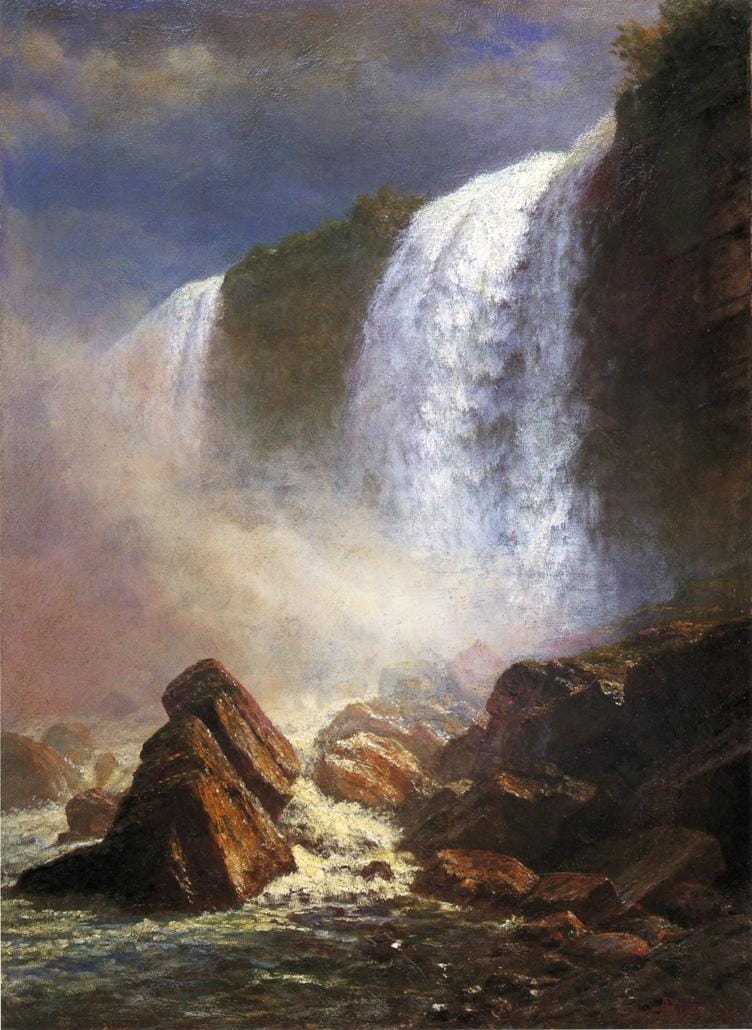
Fluid~solid (54): blood and iron, a diamond in the sky, every cloud has a silver lining, a melting pot, castles in the air, wet your beak, a watched pot never boils, a well-oiled machine, hard liquor, a stiff drink, a stiff breeze, a hard rain, cast stones against the winds, not my cup of tea, like getting blood from a stone, blood diamond, it makes my blood curdle, a smoking gun, a tempest in a teapot, sweating bullets, smoke and mirrors, raining pitchforks, ride hard and put away wet, soaked to the bone, bleed me dry, gravy train, the same fire that melts the butter hardens the egg, bread and butter, a greasy spoon, god's bloody nails (divine/fluid~solid), spill out into the streets (fluid/out~in/solid), up shit creek, before the ink was dry, from soup to nuts, like a cow peeing on a flat rock, piss on your chips, happy as a clam in butter sauce, milking me dry, scrape the poison from the bones, the land of milk and honey, cloud-cuckoo land, blowhard, milkbone, milk toast, land a blow, able to fog a mirror, (28): decorative water fountains, mermaids tears (sea glass), gargoyles, the wind gem of Kukulkan, the smoking mirror of Tezcatlipoca, Hard Rain (Bob Dylan album), the kenning "blood ember" meaning an axe, ceromancy, the ring Draupnir (which drips more rings), the Bleeding Lance (which drips blood from its point), kissing the Blarney Stone, rain chains, lava lamps, Crystal Rain by Tobias S. Buckell, Mountains Oceans and Giants by Alfred Döblin, Children of Blood and Bone by Tomi Adeyemi, "A Drop Fell on the Apple Tree," "How many Flowers fail in Wood," "Before the ice is in the pools," "The Mountains stood in Haze" and "How the old Mountains drip with Sunset" by Emily Dickinson, "To the Thawing Wind" by Robert Frost, the folktale "Stones soup," "Lines Composed in a Wood on a Windy Day" by Anne Brontë, anointment of Adam’s skull by the blood of Christ, Jacob’s anointing of the pillar.
If thou wilt take of the water in the basin and spill it upon the stone, thou shalt see such a storm come up that not a beast will remain within this wood; every doe, star, deer, boar, and bird will issue forth. For thou shalt see such lightning-bolts descend, such blowing of gales and crashing of trees, such torrents fail, such thunder and lightning, that, if thou canst escape from them without trouble and mischance, thou wilt be more fortunate than ever any knight was yet.
—De Troyes, Chrétien. Yvain, the Knight of the Lion (2018)
A land flowing with milk and honey.
—The Bible, Exodus 3:8
Moses lifted up his hand, and with his rod he smote the rock twice: and the water came out abundantly.
—The Bible, Numbers 20:11
Thou shalt see the mountains that thou supposest fixed, passing by like clouds.
—The Koran 27:88 (Bartlett 2022)
Winter seclusion -
Listening, that evening,
To the rain in the mountain.
— Kobayashi Issa, 1763-1828
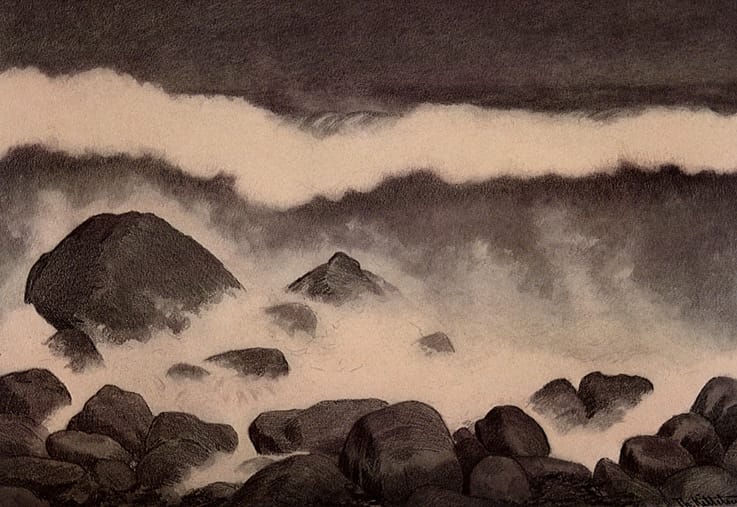
Fluid~static (13): cry yourself to sleep, still waters run deep (fluid/dynamic~static/down), dead in the water, the dead spit of, only dead fish go with the flow, a watery grave, the kiss of death, dead air, stop the bleeding, stay afloat, lazy river, god rest his soul, slow you blow, die for want of lobster sauce, (14): flowers, decorative floral patterns, the kenning "dead-slave" meaning blood, water burials, feeding wine to the dead in Rome, the Sea of Tranquillity, the Dead Sea, Deadpool, "Go slow, my soul, to feed thyself," "Water makes many Beds,""Though the great Waters sleep" and "How slow the Wind" by Emily Dickinson, "Spirits of the Dead" by Edgar Allan Poe.
Aye, and more than that, endless duty of the frontier guard, for as the Turks say, ‘water sleeps, and the enemy is sleepless.’
—Bram Stoker, Dracula (2023)
No one knew, no one could imagine; no one—not even the burgomaster Mynheer Superbus Von Underduk—had the slightest clew by which to unravel the mystery; so, as nothing more reasonable could be done, every one to a man replaced his pipe carefully in the corner of his mouth, and cocking up his right eye towards the phenomenon, puffed, paused, waddled about, and grunted significantly—then waddled back, grunted, paused, and finally—puffed again.
—Edgar Allan Poe, The Unparalleled Adventure of One Hans Pfaall (2024)
Hitherto shalt thou come, but no further: and here shall thy proud waves be stayed.
—The Bible, Job 38:11 (Bartlett 2022)
I stood beside a lake that appeared to be completely still. A storm came up abruptly and high waves arose, so that my whole face was splashed.
—Dream of a girl with ereuthophobia, see Campbell (2008)
Fluid~order (4): clear the air, rinse and repeat, lick into shape, right as rain, (2): a straight flush, The band Creedence Clearwater Revival.
The spirits of just men made perfect.
—The Bible, The Epistle of Paul the Apostle to the Hebrews 12:23
Fluid~dark (8): burning the midnight oil (hot/fluid~dark), blue wave, blue blood, turn the air blue, dark cloud on the horizon, nothing but blue skies ahead, blue sky thinking, out of the clear blue sky (cool color/order~out), (14): the Zen ensō circle, calligraphy, "Purple Haze" by Jimi Hendrix, "Purple Rain" by Prince, "Lavender Haze" by Taylor Swift, The Black Cloud by Fred Hoyle, the Irish fairy tale "The Black Cloud," The Black Tides of Heaven by JY Yang, "Upon a Lilac Sea" by Emily Dickinson, "Dark Night of the Soul" by John of the Cross, "Blue Stream" by Hwong Jini, the Smoke Monster in the series Lost, the yokai Enenra who is made of smoke and darkness, the wine dark sea (epithet in Homer).
The apparition of these faces in the crowd;
Petals on a wet, black bough.
—Ezra Pound, "In a Station of the Metro"
Fluid~quiet/low pitch (2): blood and thunder, piss and moan, (2): Rachel Carson's Silent Spring, "She went as quiet as the Dew" by Emily Dickinson.
Fluid~down (18): water under the bridge, teardrop, blow me down, trickle down, watered down, what it boils down to, under your breath, breathing down my neck, meltdown, plant a flag, drain the swamp, under the weather, undercurrent, downstream, sink or swim, under a cloud of suspicion, under the influence, (9): libations, the tears of Ra, the shower of gold with which Zeus impregnates Danae, waterfalls, crying, Watership Down by Richard Adams, "I think that the Root of the Wind is Water" by Emily Dickinson, the Scottish fairy tale "The Daughter Of King Under-Waves," The Tenant of Wildfell Hall by Anne Brontë.
Fluid~in (57): it comes in waves, into thin air, catch my drift, catch wind of, wind bag, sucking wind, get smoked, gathering clouds, a genie in a bottle, land you in hot water, any port in a storm, it's in my blood, blood and treasure, bleeding heart liberal, make a hole in the water, sapsucker, bloodthirsty, bloodsucker, honey trap, buttercup, blood and guts, spill your guts, wine and dine, save your breath, save your soul, a pot to piss in, save it for a rainy day, in the soup, my cup of tea, suck some brew, heart and soul, take a rain check, hunger is the best sauce, my cup runneth over (fluid-dynamic-up~in), mouth breather, in the next breath, inflow, in a stew, influential, get creamed, have a spat, holy water, holy spirit, holy ghost, holy smokes, blow the coals, the ghost in the machine, spellbound, inspire, come on in the water’s fine, come home by Weeping Cross, blood is worth bottling (Australian), frothing at the mouth, blow my cover, put that in your pipe and smoke it, take a licking, home and hosed, got milk? (humorous), (13): the Grimm's fairy tale "The Spirit in the Bottle," drinking the blood of Christ, the lotus-eaters, the bag of winds given to Odysseus, house-haunting ghosts, blood oaths, "Have you got a Brook in your little heart," "How the Waters closed above Him," "The Sea said 'Come' to the Brook," "There came a Wind like a Bugle" and "I saw the wind within her" by Emily Dickinson, kissing, sex.
Fluid~round (20): honeymoon, just spitballing, here's mud in your eye, here's spit in your eye, a full head of steam, head in the clouds, airhead, fountainhead, dip your toe in the water, grease the wheels, the squeaky wheel gets the grease, a spot of tea, cry on your shoulder, the rain beats the leopard's skin but it does not wash out the spots (African proverb), when life gives you lemons, make lemonade, eye of the wind, air ball, slimeball, scuzball, (5): the wind-wheel of Nezha, the Zen ensō circle, the Greek River Okeanos, bubble baths, "The Moon upon her fluent Route" by Emily Dickinson.
Fluid~few (2): breathless, a drop in the bucket, (5): "How lonesome the Wind must feel Nights," "Least Rivers - docile to some sea," "I taste a liquor never brewed" and "The duties of the Wind are few" by Emily Dickinson, The Anointed One.
Fluid~small (4): don't sweat the small stuff, in small doses, a drop in the ocean, sparrows tears (Japanese), (4): "A little overflowing word," "Adrift! A little boat adrift!," "The pungent atom in the Air" and "It's such a little thing to weep" by Emily Dickinson.
Fluid~back (2): wet behind the ears, backwater.
Fluid~old (1): you cannot put new wine in old bottles, (1): Ernest Hemingway's The Old Man and the Sea.
Dynamism and Speed
Life is one long struggle in the dark.
—Lucretius, De Rerum Natura (Bartlett 2022)
Dynamic~cold (5): play it cool, the trail ran cold, pure as the driven snow, cold brew, cool your jets, (2): Frosty the Snowman, the band name Coldplay.
Dynamic~solid (42): move mountains, drive a hard bargain, turn on a dime, drive me nuts, shaky ground, hit the ground running, throw me a bone, bone shaking, start shit, turn to shit, pack your shit and go, go to the ends of the earth, live off the land, party hard, play hard ball, play hard to get, go hard, go hard or go home, a hard knock life, throw a wrench into the works, off to a rocky start, letting go is hard, a hard and fast rule, landslide, meat wave, leave no stone unturned, shit rolls downhill, a rolling stone gathers no moss, it sent a shiver down my spine, if the tables were turned, hit the ground running, dry run, carry coals to Newcastle, hard carry, in the land of the living, playground, cast the first stone, stir up shit, curb-crawler, shiver me timbers, it's not the meat it's the motion, brass monkeys (British), (48): Golems, Baetylus (stones endowed with life), the flying mortar and pestle of Baba Yaga, the Japanese bone whale Bake-kujira, Mount Rushmore, the tree of life in the midst of the Garden of Eden, the tree of life Égig érő fa, the tree of life Életfa, the self-playing chessboard of Gwenddoleu ap Ceidio, The Rolling Stones, Fleetwood Mac, "Like a Rolling Stone" (Bob Dylan song), the band name Stone Temple Pilots, The Rolling Stones by Robert A. Heinlein, Sword of Freyr (which fights by itself), witch's brooms, Pinocchio, Marionettes, the living earth Xirang in Chinese myth, rocks and trees dancing to the lyre of Orpheus, action figures, Transformers, pinball, bowling, baseball, cricket, billiards, air hockey, wind-up toys, Slinkys, Matchbox cars, The Stainless Steel Rat by Harry Harrison, Bone Dance by Emma Bull, Howl's Moving Castle by Diana Wynne Jones, a "Alter! When the Hills do," "It sounded as if the Streets were running" and "An altered look about the hills" by Emily Dickinson, "The Glass Menagerie" by Tennessee Williams.
Dynamic~static (38): get a move on, the quick and the dead, ride or die, going steady, fast asleep, go to sleep, suspended animation, jet lag, hurry up and wait, it's a waiting game, the calm before the storm, unmoved mover, death march, dead man walking, wake the dead, spinning in the grave, playing dead, dancing on someone's grave, go in for the kill, death spiral, slow your roll, still life, a matter of life and death, live free or die, you can't swing a dead cat without hitting something, the king is dead long live the king, ready steady go, slow and steady wins the race, steady as she goes, going nowhere fast, asleep at the wheel, change is the only constant, steadfast, bedswerver, live by the sword die by the sword, live dog is better than a dead lion, wake up and die right, festina lente (make haste slowly), (26): zombies, vampires, ghosts, cephalophores, draugr, haugbui, aptrgangr, dancing with the dead, the Flying Dutchman, Frankenstein's Monster, Dracula, Hindu vetala that inhabit the reanimated dead, The Walking Dead series, the cauldron Pair Dadeni that revives the dead, dance, yoga, mimes, stop motion animation, Live and Let Die (Bond Film), The Sleeper Awakes by H.G. Wells, "A Death blow is a Life blow to Some," "The Stimulus, beyond the Grave," "She died at play," "We do not play on Graves" and "Because I could not stop for Death" by Emily Dickinson, still life paintings, "Static-Dynamic Gradation" by Paul Klee, the dying and rising god motif (Inanna/Ishtar, Baal, Dumuzi, Osiris, Dionysus, Odin, Jesus), shapeshifting.
Evil deeds do not prosper; the slow man catches up with the swift.
—Homer, Odyssey, VIII, l. 329
I had to climb a mountain. There were all kinds of obstacles in the way. I had now to jump over a ditch, now to get over a hedge, and finally to stand still because I had lost my breath.
—Dream of “a stutterer,” see Campbell (2008)
Dynamic~order (16): play it straight, play it square, go in peace, go back to square one, steer clear, smooth move, keep calm and carry on, marching orders, level playing field, right quick, game plan, go figure, transfigure, go pear shaped, a fair shake, a balancing act, (3): Rubik's Cube, The Shapeshifter by Ali Sparkes, The Shape-Changer's Wife by Sharon Shinn.
Dynamic~dark (8): jet black, blue streak, stroke of midnight, tossing and turning all night, cruisin' for a bruisin, that got dark fast, flying blind, nightcrawler, (7): Voyager in Night by C. J. Cherryh, The Nightrunner by Lynn Flewelling, Shadowplay and Shadowmarch by Tad Williams, "Like Men and Women Shadows walk" and "The last Night that She lived" by Emily Dickinson, the Irish fairy tale "The Midnight Ride."
Dynamic~round (25): turn a blind eye, head-spinning, heads will roll, run head on, a head start, run head first, get the runaround, running around in circles, run circles around, the circle of life, makes the world go round, a rolling stone gathers no moss, a leopard cannot change its spots, a turning point, get the ball rolling, every time I turn around, jerking around, that's the way the ball bounces, speedhead, play ball, it's a coin toss, go off your dot, turn on a dime, a roving eye, swings and roundabouts (UK), (12): the name of Odin "Shifty Eyed," yo-yo's, juggling, hula hoops, spinning tops, carousels, Ferris wheels, roulette, Magic 8-Balls, bobbleheads, the Irish fairy tale "Shaking-Head," "Runaround" by Isaac Asimov.
Dynamic~short (1): Contained in this short Life" by Emily Dickinson.
Dynamic~down (23): the rundown, a shakedown, sinking fast, swing low, running low, how low can you go, turned down, downplay, play it down, going down, going under, never live it down, lowlife, a race to the bottom, winding down, mosey on down, one fell swoop, sweep it under the rug, shake a leg, thrown under the bus, wipe the floor with, bottom dweller, undergo, in free fall, (18): skydiving, high diving, sledding, downhill skiing, bungee jumping, drop towers, slam dunks, spiking volleyballs, spiking footballs, Tetris, snow angels, stadium sports, foot tapping, tap dancing, breakdancing, dancing in animals generally, "I sometimes drop it, for a Quick," "The Love a Life can show Below" by Emily Dickinson.
Dynamic~in (61): fools rush in, swoop in, motormouth, run your mouth, eat and run, feeding frenzy, take it in stride, going all in, in play, play right into, play it by ear, hyper-focused, push the envelope, turn in, in turn, in a spin, go with your gut, what goes around comes around, a go-getter, get the go ahead, rock the boat, butterflies in the stomach, pull a fast one, catch on fast, eaten alive, hold on for dear life, a lifesaver, in another life, come to life, come alive, hold sway, eating out of my hand, in a tizzy, let's get started, from the get-go, in the driver's seat, drive home the point, in the running, throw in the towel, ransacked, action-packed, come into play, just waltz in here, fast food, don't rush into anything, come thick and fast, run for cover, in the long run, bring to life, bring into play, interact, involve, go hand in hand, in two shakes, get-rich-quick, grab and go, take your turn, take a turn, in a brace of shakes, throw a tub to the whale, poetry in motion, hold with the hare and run with the hounds, (12): handshakes, flying chariots, the chicken-legged hut of Baba Yaga, snow globes, kaleidoscopes, fencing, pat-a-cake, couple dancing, sex, the Grimm's fairy tale "Little Red Riding Hood," The Hunger Games by Suzanne Collins, "Who goes to dine must take his Feast" by Emily Dickinson, the Scandinavian fairy tale "The Flying Trunk."
Dynamic~small (2): live a little, it's the little things in life.
Dynamic~few (8): we got a live one here (humorous), at one go, you only live once, for once in your life, running on empty, one horse race, less haste more speed, boldly go where no man has gone before, (3): Ready Player One by Ernest Cline, "How fleet - how indiscreet an one" and "I cautious, scanned my little life" by Emily Dickinson.
No one travels
Along this way but I,
This autumn evening.
— Matsuo Bashō
Dynamic~good (2): good to go, when the going is good, when the going gets tough the good get going, (1): "Good Vibrations" (The Beach Boys song).
Disorder
Disorder~cold (7): break the ice, cold war, fighting a cold, frozen conflict, crack open a cold one, a bad cold, stone cold crazy (disorder~cold/solid), (1): Snow Crash by Neal Stephenson.
Disorder~solid (26): break new ground, break ground, groundbreaking, earth-shattering, a hard nut to crack, bust a nut, shell shock, fight tooth and nail, bad iron, meat grinder, breaking up is hard to do, a bone of contention, when the shit hits the fan, crazy shit, fender bender, that's the way the cookie crumbles, bone-crunching, I'll break every bone in your body, just busting your chops, a turf war, a bombshell, as the twig is bent, so is the tree inclined, constant dropping wears away a stone, asphalt jungle, (12): kintsugi, the kenning "breaker of trees" meaning the wind, Piñatas, dish breaking in Germany, instrument destruction in concerts, christening with wine bottles, spoon bending, breaking piggy banks, breaking bread, Stranger in a Strange Land by Robert A. Heinlein, Tanglewood Tales for Boys and Girls by Nathaniel Hawthorne, A Tale of the Ragged Mountains by Edgar Allan Poe, bone chewing in dogs.
A stone had broken my windshield. I was now open to the storm and rain. Tears came to my eyes. Could I ever reach my destination in this car?
—Dream of a woman who lost her virginity, Campbell (2008).
Disorder~static (13): death spiral, a disaster waiting to happen, no rest for the wicked, get up on the wrong side of the bed, strange bedfellows, couldn't lie straight in bed (humorous), sleeping rough, dead broke, die of a broken heart, the calm before the storm, after a storm comes a calm, break the deadlock, (1): dying for sins.
Disorder~order (22): mix and match, bad form, rough around the edges, a diamond in the rough (disorder~solid/order), break even, break the rules, rules were made to be broken, a fair crack, blockbuster, method to the madness, flat broke, deterministic chaos, damage control, perfect strangers, clean break, a chip off the old block, just plain wrong, clearly confused, clear as mud, a rough diamond, civil war, (10): music, dance, games, sports, jigsaw puzzles, Conway's Game of Life, kaleidoscopes, Rubik's Cubes, War and Peace by Leo Tolstoy, The Patterns of Chaos by Colin Kapp.
I have a dream that one day every valley shall be exalted, and every hill and mountain shall be made low, the rough places will be made plain, and the crooked places will be made straight; “and the glory of the Lord shall be revealed and all flesh shall see it together.
— Martin Luther King, “I Have a Dream”
Disorder~dark (3): wild blue yonder, black don't crack, night terrors, (11): the archetypal story opening "it was a dark and stormy night," Halloween, "A wild Blue sky abreast of Winds," "Where Ships of Purple - gently toss," "A slash of Blue" and "Wild Nights - Wild Nights!" by Emily Dickinson, "Fragmentary Blue" by Robert Frost, Jacob wrestling with a man (or angel) all night in Genesis, telling scary stories at night, the orderly or chaotic nighttime yōkai parade Hyakki Yagyō, the “black cooked one” Crom Dubh in Irish myth.
Wild nights - Wild nights! [disorder~dark, disorder~dark]
Were I with thee
Wild nights should be [disorder~dark]
Our luxury!
Futile - the winds -
To a Heart in port -
Done with the Compass -
Done with the Chart!
Rowing in Eden -
Ah - the Sea!
Might I but moor - tonight -
In thee!
—Emily Dickinson, "Wild nights - Wild nights!"
Disorder~low pitch/quiet (3): break the silence, drums of war, miss a beat.
Disorder~down (18): crackdown, have a breakdown, break it down, break down and cry, deep trouble, let the chips fall where they may, break the fall, downward spiral, drop kick, drop a bombshell, down and dirty, down in the dumps, scraping the bottom of the barrel, lay waste to, come crashing down, the fish rots from the head down, crack under pressure, the root of all evil, (29): dancing, breakdancing, the moonwalk, wrestling, falling down as a joke, tackling in American football, stadium sports, by Emily Dickinson YoYos, skateboard tricks, olympic diving, 52 card pickup, Tetris, Cooper's Hill Cheese-Rolling and Wake, mud wrestling, belly flops, head-banging, monster trucks running over cars, curtsey, Twister, jumping in puddles, white water rafting, coin tossing, dice rolling, confetti, scattering flower petals at weddings, Humpty Dumpty's great fall, Chinua Achebe's Things Fall Apart, "How many times these low feet staggered" by Emily Dickinson, "The Valley of Unrest" and A Descent into the Maelström by Edgar Allan Poe.
Disorder~in (35): a mixed bag, get wasted, get wrecked, get crazy, coming around the bend, rotten to the core, cracker-barrel, crazy drawer, luny bin, foul mouth, dirty mouth, dirtbag, belly flop, bust a gut, take a tumble, burst in, take a spill, in the mix, in the wild, split a gut, bunker buster, getting sloppy, junk in the trunk, break in (interrupt), sowing chaos, trick or treat, junkfood, gatecrasher, feeding frenzy, mad as a hatter, take a walk on the wild side, break my brain, in fighting, a holy terror, mistake, (11): mazes, kaleidoscopes, kintsugi, witch's cauldrons, Kurt Vonnegut's Slaughterhouse Five, Something Wicked This Way Comes by Ray Bradbury, couple dance, sex, "A poor - torn heart - a tattered heart -" by Emily Dickinson, Random House (Publishing), Namahage.
For the imagination of man's heart is evil from his youth.
—The Bible, Genesis 8:21
Disorder~round (27): burst your bubble, eye-popping, keep your eyes peeled, green-eyed monster, flipped it on its head, knock the cover off the ball, a spot of bother, a spot of trouble, the breaking point, leave no stone unturned, cherry bomb, a bad apple, upset the apple cart, mess around, that's the way the cookie crumbles, throw you a curveball, screwball, kick the tires, quit busting my balls, don't get your balls in a twist, bash around, rough around the edges, around the bend, you can't make an omelet without breaking a few eggs, the wheels fell off, break a butterfly upon a wheel, a broken record, a moonflaw, vicious circle (10): The kenning "breaker of rings" meaning a king, the name of Odin "Wavering Eye," the randomly spinning Rota Fortunae, Wheel of Fortune, the Gorgoneion, pinball, Picasso paintings, plasma balls, Sumo wrestling, the apple of discord.
Disorder~small (1): a little rough around the edges, (1): A little Madness in the Spring by Emily Dickinson.
Disorder~few (8): a wild one, one bad apple spoils the bunch, nothing but trouble, not half bad, half the battle, at first go, trouble shared is trouble halved, one hell of a mess, half crazy, unibomber, (1): Rogue One: A Star Wars Story.
Disorder~back (2): the straw that breaks the camel's back, back breaking work.
Disorder~end (2): the war to end all wars, loose ends.
Disorder~good (2): damaged goods, a ragged colt may make a good horse.
Form
Hot~form (10): It makes my blood boil, making me hot under the collar, make it hot for, make sparks fly, one swallow does not make a summer, soft fire makes sweet malt, it's a hell of a thing, just for the hell of it, is it hot enough for you, damn it to blue blazes, it burns me up, (1): "A something in a summer's Day (1890) by Emily Dickinson."
Fluid~form (22): make waves, make a splash, make it rain, makes my blood boil, when life gives you lemons make lemonade, make my mouth water, can't make a lick of sense out of, makes my head swim, you can lead a horse to water but you can't make it drink, in the swim of things, make things gel, wash a few things out, building up a head of steam, lick into shape, it's a wash, that blows, it blows, blow it off, call it a wash, don't sweat it, when it rains it pours, it's a crying shame, there's something in the air, (2): Swamp Thing, the Irish fairy tale "How the Lakes were Made."
Dynamic~form (31): make haste, make a move on, every move you make, make a living, makes my head spin, make a dash, make a fast buck, make a go of it, make a run for it, make all the running, make a play for, make strides, make dry bones live, make quick work of, make it snappy, makeshift, run a make on, makes the world go round, make a fresh start, the finer things in life, got a good thing going, got one thing going for you, the best things in life are free, in the swing of things, see how things play out, whip into shape, go figure, got it going on, it's time to go, as it turns out, as if it's going out of style, go it alone, (1): "Between the form of Life and Life" by Emily Dickinson.
Disorder~form (22): make or break, make a break for it, make it or break it, make a clean break, make a crack, make a mess, make strange with, make love not war, make mincemeat of, make a change, you can't make an omelet without breaking some eggs, great haste makes great waste, stranger things have happened, a mind is a terrible thing to waste, take a crack at it, not all it's cracked up to be, if you break it you bought it, it's just crazy enough to work, crushing it, crack it, cracking it, break it down, if it ain't broke don't fix it.
Bright~form (8): make hay while the sun shines, make my day, make a day of it, first thing in the morning, Rome wasn't built in a day, call it a day, see it in a new light (3): Star Maker by Olaf Stapledon, "Glory is that bright tragic thing" and "Make me a picture of the sun" by Emily Dickinson.
Up~form (36): makeup, make it up to you, you can't make this stuff up, make up your mind, my mind is made up, get a makeover, make an uproar, make up ground, make up for lost time, make the dust fly, make the fur fly, a match made in heaven, step things up, take things up a notch, spice things up, add up to the same thing, thing are looking up, building up to, building castles in the air, built from the ground up, tip-top shape, you better shape up, shaping up to be, figure up, fuck it up, screw it up, it's all uphill from here, it's an uphill battle, chalk it up to, cough it up, do it up brown, had it up to here, ham it up, hand it over, jack it up, living it up, (1): "Some things that fly there be" by Emily Dickinson.
Out~form (39): make out, making out, make out like a bandit, make a pitch, make way, make an all-out effort, make away with, make like a tree and leave, make an exit, the way things turned out, see how things play out, overdo things, out of shape, all bent out of shape, throw some shapes, figure it out, work it out, as it turns out, get away from it all, I'm over it, it's all over, as far as that goes, that's as far as it goes, as it turns out, as if it's going out of style, out of it, put it off, blow it off, box it out, it'll be over soon, in it for the long haul, cut it out, doggone it, spell it out, duke it out, far from it, I'm going to lose it, have it out, explain it away.
Loudness/high-pitch~form (11): make an uproar, make a fuss, make a laughingstock of, make a bee-line for, an empty vessel makes the most noise, bang it out, it doesn't ring a bell, yell it from the rooftops, all that jazz, get a bang out of it, whoop it up.
Long~form (5): make a long story short, make a long arm for, the finer things in life, things are getting hairy.
Many~form (23): two wrongs don't make a right, it takes two to tangle, make it a double, make a fortune, all things to all people, teach you a thing or two, all the thing, all good things, any number of things, bad things come in threes, he who begins many things finishes but few, too much of a good thing, of all things, a million and one things to do, add up to the same thing, all things considered, this that or the other thing, all shapes and sizes, any way shape or form, it's all good, it's too much, it's all I need, that says it all.
Brightness and Warm Colors
Bright~cold (1): a cold day in hell, (4): Snow White, snowmen, Christmas lights, Gloger's rule.
Bright~solid (5): a shiny object, a red cent, a hard day, pearly whites, star studded, (22): gold, alchemy (chrysopoeia), trophies, medals, pearls, jewels, jewelry, gold teeth, colored fingernails, A Hard Day's Night (The Beatles album), the kenning "heaven's jewel" meaning the sun, The Golden Bough, Iron Sunrise by Charles Stross, The Sunrise Lands by S. M. Stirling, A Hard Day's Night (Beatles album), "Frequently the woods are pink, "This - is the land - the Sunset washes" and "The Road was lit with Moon and star" by Emily Dickinson, "A Star In A Stone Boat" by Robert Frost, the Scottish fairy tale "Gold-Tree and Silver-Tree," Flashman and the Mountain of Light by George MacDonald Fraser, Sun and Steel by Yukio Mishima.
The road to the City of Emeralds is paved with yellow brick.
—The Wonderful Wizard of Oz (Bartlett 2022)
Then higher on the glistering Sun I gaz'd
Whose beams was shaded by the leavie Tree,
The more I look'd, the more I grew amaz'd
And softly said, what glory's like to thee?
Soul of this world, this Universes Eye,
No wonder, some made thee a Deity:
Had I not better known, (alas) the same had I
—Anne Bradstreet, "Upon a Fit of Sickness, Anno. 1632."
How the old Mountains drip with Sunset
How the Hemlocks burn—
How the Dun Brake is draped in Cinder
By the Wizard Sun—
—Emily Dickinson, excerpt from “How the old Mountains drip with Sunset”
Bright~static (3): carpe diem, better dead than red, kill the goose that lays the golden egg, (12): Day of the Dead, the Death Star, “Waiting for the Sun” (The Doors album), Die Another Day (Bond film), Slow Lightning by Jack McDevitt, "A Toad, can die of Light," "The Day came slow - till Five o'clock," "The Sunset stopped on Cottages," "This slow Day moved along" and "Midsummer, was it, when They died" by Emily Dickinson, To Sleep in a Sea of Stars by Christopher Paolini, "Bright star, would I were stedfast as thou art" by John Keats, Edgar Allan Poe’s The Masque of the Red Death.
Sun, stand thou still upon Gibeon; and thou, Moon, in the valley of Ajalon.
— The Bible, Joshua 10:12
And thine age shall be clearer than the noonday.
— The Bible, The Book of Job 11:17 (Bartlett 2022)
Requiem aeternam dona eis, Domine: et lux perpetua luceat eis [Eternal rest give them, O Lord: and let perpetual light shine upon them]. Mass for the Dead
— The Roman Missal, Mass for the Dead (Bartlett 2022)
Bye, Bye, Miss American Pie
Drove my Chevy to the levee but the levee was dry
Them good old boys were drinkin’ Whiskey and Rye
Singin’ this’ll be the day that I die This’ll be the day that I die
—Don McLean, “American Pie” (Bartlett 2022)
Bright~order (1): right and rosy, (5): This Perfect Day by Ira Levin, "The pattern of the sun" and "We shall find the Cube of the Rainbow" by Emily Dickinson, "How Clear She Shines" by Emily Brontë, the Golden Rule.
Bright~dark (8): a blue streak, it's like night and day, day or night, dark days, morning noon and night, once in a blue moon, a dim bulb, as clear as black and white, a black day, (47): the Yin Yang symbol, soccer balls, dominoes, checker boards, piano keys, dice, glow in the dark objects, motley jester attire, mood lighting, makeup, flags, playing cards, Wonder Woman, Spiderman, Superman, Green Lantern, Smurfs, Mickey Mouse, nun's habits, priest costumes, Christmas colors, Vincent Van Gogh's The Starry Night, Moonlit Night by Salvador Dali, the band name Green Day, the Grimm's fairy tale "The Blue Light," As the Green Star Rises by Lin Carter, Creatures of Light and Darkness by Roger Zelazny, The Dark Side of the Sun by Terry Pratchett, Dark Beyond the Stars by Frank M. Robinson, Night of Light by Philip Jose Farmer, Night Lamp by Jack Vance, The Blue Star by Fletcher Pratt, Red Moon and Black Mountain by Joy Chant, "As plan for Noon and plan for Night," "Good Morning - Midnight," "Sunset at Night - is natural," "To Whom the Mornings stand for Nights," "The first Day's Night had come," "'Tis my first night beneath the Sun" and "A Night - there lay the Days between" by Emily Dickinson, the German fairy tale "The White and the Black Bride," "Evening Star" by Edgar Allan Poe, "Black Cradle of Bright Life" by Vangel Naumovski, the yokai Aosaginohi which glows blue at night and breathes golden glowing dust, red and blue masks in Namahage, rainbow coloration in animals, the contrast effect, alternatingly bright and dark stripes, ornamental ocelli in animal coloration generally.
Anaxagoras, it will be remembered, maintained that snow is black, and this I have since found to be the case.
—Edgar Allan Poe, Loss of Breath (2024)
Our days on the earth are as a shadow.
— The Bible, The First Book of the Chronicles 29:15 (Bartlett 2022)
He discovereth deep things out of darkness, and bringeth out to light the shadow of death.
— The Bible, The Book of Job 12:22 (Bartlett 2022)
Lead me from the unreal to the real! Lead me from darkness to light! Lead me from death to immortality!
—Brihadaranyaka Upanishad, 1.3.28 (Bartlett 2022)
I see a red door and I want it painted black No colors anymore, I want them to turn black I see the girls walk by dressed in their summer clothes I have to turn my head until my darkness goes.
—“Paint It Black,” The Rolling Stones (Bartlett 2022)
Bright~down (3): sundowner, go to bed with the sun, under false colors; (7): red carpets, the Yellow Brick Road, "Yellow Submarine" (The Beatles), buried treasure, "The Sun kept setting - setting - still," "Under the Light, yet under," "Whole Gulfs - of Red, and Fleets - of Red" and "The Sun kept stooping - stooping - low!" by Emily Dickinson.
Bright~in (24): take a shine to, lightning in a bottle, in living color, have a nice day, a day in the sun, having a day, have our day, yellow-bellied, bleeding heart, light up the room, catch some rays, caught red handed, in broad daylight, as sure as the sun comes up, come rain or shine, come to light, save the day, a guided cage, taco Tuesday, in the coming days, enlightenment, in the spotlight, color inside the lines, in a bad light, hold a candle to, (18): the light theft motif, the kenning "sun of the houses" meaning fire, Jack-o'-lanterns, Virginia Woolf's To the Lighthouse, golden chariots, wrapped presents, Star Gate by Andre Norton, The Great God Pan & The Inmost Light by Arthur Machen, Here Comes the Sun by Tom Holt, The Starcatchers by Dave Barry and Ridley Pearson, "Glowing is her Bonnet," "Dear March - Come in," "There came a Day at Summer's full" and "Bring me the sunset in a cup" by Emily Dickinson, “Here Comes the Sun” by the Beatles, painting doorposts and lintels with blood at passover, the coat of many colors.
They stript Joseph out of his coat, his coat of many colors.
—The Bible, Genesis 37:23
Bright~small (1): a little white lie, (6): The Little White Horse by Elizabeth Goudge, "The Day grew small, surrounded tight" by Emily Dickinson, the Irish fairy tale "Little Red Bird," "Little Red Riding Hood," the Scottish fairy tale "Little Daylight," Little Sunbeam by Eleanora H. Stooke
Bright~round (18): the twinkle of an eye, a sparkle in your eye, in the flash of an eye, starry-eyed, bright-eyed and bushy-tailed, take the red eye, wait until you see the whites of their eyes, have the sun in your eyes (to be drunk), a bright spot, bright as a button, a flashpoint, a thousand points of light, lightning round, moonbeam, moonshine, a red cent, headlight, hump day, (24): the Eye of Providence, Þjazi's eyes, disco balls, halos, crowns, crystal balls, GoldenEye (Bond film), The name of Odin "Flashing Eye," the circle of stars, Christmas tree ornaments, Easter eggs, happy faces, Pac-Man, Santa Claus, Rudolph's nose, balloons, the golden apples of the Hesperides, the Greek fairy tale "The Goose That Laid the Golden Eggs," the English fairy tale "The Golden Ball," "The Golden Ball" by Agatha Christie, the Scandinavian fairy tale "Maiden Bright-eye," the Slavic fairy tale "The Nine Peahens and the Golden Apples," the flag of Bangladesh," "Ring Around the Sun" by Isaac Asimov.
Bright~quiet/silence (1): silence is golden, (1): "It was a quiet seeming Day" by Emily Dickinson.
Bright~few (5): one of these days, one day, from day one, colorless, 0-day, (3): "It bloomed and dropt, a Single Noon," "Too few the mornings be" and "One Day is there of the Series" by Emily Dickinson.
Bright~old (3): days of old, the good old days, in the old days, (1): Old Yeller.
Bright~good (4): good as gold, good day, have a good day, the good old days.
Other (2): back in the day (bright~back), close of day (bright~close).
Sound, Loudness and High Pitch
High pitch~cold (1): cold snap, (1) "The fascinating chill that music leaves" by Emily Dickinson.
High pitch/sound~solid (2): barking up the wrong tree, musical chairs, all steak and no sizzle, (8): the Singing Sword of Conaire Mór, the prow of the Argo, talking trees, Triton' conch shell, David's self-playing harp, Binnorie's singing harp, the German fairy tale "The Singing Bone," the bird name Stonechat, the “night-crying stone” Yonaki ishi.
If these should hold their peace, the stones would immediately cry out.
—The Bible, The Gospel According to Saint Luke 19:40 (Bartlett 2022)
High pitch/sound~static (12): stop the music, buzzkill, whistling past the graveyard, whistle stop tour, die laughing, laugh myself to death, croak, music soothes the savage beast, loud enough to wake the dead, death rattle, the tune the old cow died of, screech to a halt, (8): "Dying at my music!" "I heard a Fly buzz - when I died," "I sing to use the Waiting," "How still the Bells in Steeples stand," "When Bells stop ringing - Church - begins," "Where bells no more affright the morn" and "The murmuring of Bees, has ceased" by Emily Dickinson, Laughing Shall I Die: Lives and Deaths of the Great Vikings by Tom Shippey.
I heard a Fly buzz - when I died - [high pitch~static]
The Stillness in the Room
Was like the Stillness in the Air - [fluid~static]
Between the Heaves of Storm -
The Eyes around - had wrung them dry -
And Breaths were gathering firm [fluid~solid]
For that last Onset - when the King
Be witnessed - in the Room -
I willed my Keepsakes - Signed away
What portion of me be
Assignable - and then it was
There interposed a Fly -
With Blue - uncertain - stumbling Buzz- [disorder/high pitch~blue]
Between the light - and me -
And then the Windows failed - and then
I could not see to see -
—Emily Dickinson, "I heard a Fly buzz - when I died"
High pitch/sound~order (6): loud and clear, clean as a whistle, clear as a bell, squeaky clean, man plans and God laughs, perfect pitch, (2): The church service Evensong, The Song Remains the Same (Led Zeppelin album).
High pitch~dark (4): whistling in the dark, cry-baby the blues, sing the blues, effing and blinding (British), (3): "Bees are Black, with Gilt Surcingles" by Emily Dickinson, "The Voice in the Dark" by Agatha Christie, the Orson Welles film "Chimes at Midnight."
Sound~silence (3): say the quiet part out loud, with a bang or a whimper, you could hear a pin drop, (3): Simon & Garfunkel's "Sound of Silence," music, language.
High pitch~low pitch (7): bang the drum, ding dong, King Kong, ping pong, sing song, heebie-jeebies, tickety boo (British).
High pitch/sound~in (9): a loud mouth, music to my ears, catch some z's, sound bite, catch a buzz, a barrel of laughs, chatterbox, belly laugh, elevator music, (3): The Ship Who Sang by Anne McCaffrey, The Beast that Shouted Love at the Heart of the World by American writer Harlan Ellison, "The Bird her punctual music brings" by Emily Dickinson.
Sound/high pitch~round (5): music of the spheres, cry-baby, cry for the moon, hip hip hooray, a round of applause, (3): clown noses, baby rattles, the Slavic fairy tale "Laughing Eye and Weeping Eye."
Sound~few (3): an empty vessel makes the most noise, nothing to sneeze at, the sound of one hand clapping, (1): "A Never Naught Song" by Robert Frost.
High pitch~small (1): lie low and sing small, the world's smallest violin.
Upwardness
Up~cold (2): freeze up, ice over.
Up~solid (20): the high ground, the high road, heaven on earth, mind over matter, a stiff upper lip, upper crust, hard up, high and dry, bone up, jump your bones, chalk it up to, raise the bar, make shit up, up shit creek, brass ceiling, glass ceiling, fly in the teeth of, in an ivory tower, castles in the air, pennies from heaven, (16): the Biblical firmament, pyramids, gravestones, ziggurats, monoliths, Stonehenge, obelisks, the kenning "Ymer's skull" for the sky, gravestones, the band name Led Zeppelin, Pebble in the Sky by Isaac Asimov, Stone and Sky by Graham Edwards, Raising the Stones by Sheri S. Tepper, Tower of Glass by Robert Silverberg, the Irish fairy tale "The Highest Penny," "A Cap of Lead across the sky" by Emily Dickinson, high hearted (epithet in Homer).
A Cap of Lead across the sky
Was tight and surly drawn
We could not find the mighty Face
The Figure was withdrawn -
A Chill came up as from a shaft
Our noon became a well
A Thunder storm combines the charms
Of Winter and of Hell.
— Emily Dickinson, "A Cap of Lead across the sky"
May the road rise up to meet you.
May the wind be always at your back.
May the sun shine warm upon your face,
The rains fall soft upon your fields.
And until we meet again,
May God hold you in the palm of His han
—Popular Irish blessing
Up~static (17): overkill, over my dead body, waiting in the wings, slow on the uptake, stay up, hold up, wait up, wouldn't lose sleep over, sleep over, raising the dead, dead cat bounce, rest up, a hill to die on, creep up, overstay your welcome, died and gone to heaven, (3): "It was not Death, for I stood up" and "Love can do all but raise the Dead" by Emily Dickinson, "On a Bird Winging in its Sleep" by Robert Frost.
But man dieth, and wasteth away: yea, man giveth up the ghost, and where is he?
— The Bible, The Book of Job 4:10 (Bartlett 2002)
Up~order (16): a tall order, clear it up, upright, above the law, fly straight, aim high, measure up, straight as the crow flies, overrule, straight up, straighten up, shape up, clean up, a match made in heaven, high level, rocket science, (5): Egyptian pyramids, Mesoamerican pyramids, Odin's name "Evenhigh," "I think just how my shape will rise" by Emily Dickinson, the t-shaped pillars of Göbekli Tepe.
Up~dark (8): tall dark and handsome, fly by night, flying blind, overshadow, up all night, blue-sky thinking, keeps me up at night, do it up brown, (2): Nightwings by Robert Silverberg, The Dark Is Rising by Susan Cooper.
Up~round (14): eye in the sky, throw an eye over, head on over, over your head, heads up, heads and shoulders above, keep your head up, keep your chin up, raise the point, pie in the sky, jumping through hoops, wheels up, ball up, button up (18): domes, arches, celestial spheres, Atlas holding up the Earth, flying saucers, the Egyptian hieroglyphic Ankh symbol, balloons, baseball, basketball, coin flipping, bubbles, snowmen, neck elongation, wheelies, handheld fans, decorative peacocks, bindis, Spaceballs.
Up~down (24): jumping up and down, look someone up and down, searched high and low, as above so below, bottoms up, it's a rollercoaster, upside down, hangover, hung up on, have a hang up, top down, the over under, are you picking up what I'm laying down, overlay, crestfallen, layover, layup, laid up, fall over, eavesdropping, move heaven and earth, high floor low ceiling, fly under the radar, cork high and bottle deep, (49): dances, Icarus, Phaethon, Yo-yo's, rollercoasters, jumping on beds, trampolines, swinging, baby bouncers, teeter totters, roller coasters, dribbling in basketball, Skyfall (Bond film), "A Pit - but Heaven over it," "Cocoon above! Cocoon below," "Not any higher stands the Grave," "So much of Heaven has gone from Earth," "The Fact that Earth is Heaven," "The Pile of Years is not so high," "The Sky is low - the Clouds are mean," "Who has not found the Heaven - below" and "I rose - because He sank" by Emily Dickinson, Wikipedia lists three films, five albums, 20 songs and an arcade game named “Up and Down.”
Some people ask, “What if the sky were to fall?”
—Terence, Heauton Timoroumenos (Bartlett 2022)
He [Jacob] dreamed, and behold a ladder set up on the earth, and the top of it reached to heaven: and behold the angels of God ascending and descending on it.
—The Bible, Genesis 28:12
Hereafter ye shall see heaven open, and the angels of God ascending and descending upon the Son of man.
—The Gospel According to Saint Luke 1:51 (Bartlett 2022)
Up~in (48): overcome, get over it, right up your alley, coming right up, up and coming, coming up in the world, come up with, come up to, come up roses, in over your head, over a barrel, up your sleeve, up for grabs, jump right in, eat it up, keep it up, take it up, a takeover, keep up the good work, buckle up, suck it up, a suck-up, fed up, fed up to the back teeth, pull up, wrap it up, choked up, jump down your throat, kick it into the tall grass, hold up, holding up, holed up, get it up, catch up, caught up, top-notch, save up, top secret, all cooped up, knocking on heaven’s door, up the spout (British), and ace up your sleeve, bundle up, hold in high esteem, cover up, jumpsuit, (17): treehouses, Heaven's Gate (religious group), the flying canoe La Chasse-galerie, Santa's sleigh, Knockin' On Heaven's Door (Bob Dylan song), shooting baskets, upper goals in Mesoamerican ballgames, kicking a field goal, a hole in one, skee-ball, Trapped in Space by Jack Williamson, Tunnel in the Sky by Robert A. Heinlein, "Climbing to reach the costly Hearts" and "Except the Heaven had come so near " and "I've known a Heaven, like a Tent" by Emily Dickinson, the Slavic fairy tale "Flying Ship," the Flying Dutchman.
Up~quiet (3): hush up, shut up, a hush fell over.
Up~small (1): a little slice of heaven, (1): "Her little Parasol to lift" by Emily Dickinson.
Up~few (2): one up, an empty sack cannot stand upright, (3): Odin's name "High One," "Not One by Heaven defrauded stay" and "When One has given up One's life" by Emily Dickinson.
Up~good (2): good heavens, up to no good.
Outwardness
To go too far is as bad as not to go far enough.
— Confucius, Analects 11:15 (Bartlett 2022)
Out~cold (5): chill out, freeze out, ice out, left out in the cold, cool off, (1): throwing snow.
Out~solid (24): out of the woodwork, come out of your shell, shell it out, out of your skull, out of the woods, out of your tree, groundswell, get off the ground, rock out, get your rocks off, throw me a bone, hammer it out, the hard way, give a shit, shooting the shit, beat the shit out of, going to shit, shit out of luck, get the lead out, land and expand, a stone's throw, a distant land, brassed off (British), outlandish, (3): throwing horseshoes, skipping stones, The Wood Beyond the World by William Morris.
Out~static/slow (13): dead and gone, pulling out all the stops, shoot to kill, beyond the grave, dearly departed, die away, dead and gone, a dead giveaway, give it a rest, pass away, wait it out, creep me out, fuck off and die, (1) the Yom Kippur ritual of killing one goat and sending another into the wilderness.
Out~order (29): out of sorts, out of line, sort it out, off the grid, figure it out, flat out, rule out, peace out, a straight shooter, square shooter, square off, out of square, squared away, straight away, think outside the box, block it out, smooth it over, straighten it out, bent out of shape, out of shape, out of the blocks, cleaned out, clean out of, out of control, box it out, knock your block off, the best-laid plans of mice and men oft go astray, balance out, dispense with the formalities, (3): Gungnir the spear of Odin that always hits its target, target shooting, horseshoes.
Out~dark (9): throwing shade, beyond the shadow of a doubt, out of the blue, out of the shadows, out of the clear blue sky, a shot in the dark, blackout, dark cloud on the horizon, lay out in lavender, (2): tuxedos, "The distance that the dead have gone" by Emily Dickinson.
The night is far spent, the day is at hand: let us therefore cast off the works of darkness, and let us put on the armor of light.
—The Bible, The Epistle of Paul the Apostle to the Romans 13:12 (Bartlett 2022)
Out~silent (1): Out of the Silent Planet by C. S. Lewis, (1): "Great Streets of silence led away" by Emily Dickinson.
Out~round (16): keep an eye out, crying my eyes out, as far as the eye can see, headed out, head off, round trip, a head trip, off with her head, knock the spots off, knock the spots out of, throw you a softball, balls-out, tripping balls, off your dot, point out, point of no return, (6): throwing snowballs, bowling, hitting baseballs, kicking soccer balls, pinball, "Before I got my eye put out" by Emily Dickinson.
Out~down (15): down and out, out of your depth, hang out, drop out, bow out, bottom out, downcast, beyond the grave, the fallout, layout, have a falling out, thrown under the bus, throw down, the bottom falls out, go off the deep end, hunt down, (4): billiards, golf, Out of the Deeps by John Wyndham, "Neither Out Far nor in Deep" by Robert Frost.
Out~in (54): day in and day out, know all the ins and outs of, out of the frying pan and into the fire, near and far, far fetched, in so far as, go suck an egg, out to lunch, pack a punch, get it off your chest, cast your mind, cast a wide net, out of bounds, out of touch, a simple in and out, on the outside looking in, give in, give and take, give with one hand and take away with the other, out of your mind, pan out, the takeaway, all tuckered out, in the offing, easy come easy go, we've come so far, throw yourself into, get out the vote, gotta give it to ya, bring out the best in someone, home free, you can dish it out but you can't take it, beyond the grave, off limits, get out of a pinch, get out of my face, send you packing, sucker punch, when push comes to shove, express, expression, a home away from home, you took the words right out of my mouth, get a word in edgewise, shoot your mouth off, lock em up and throw away the key, out of pocket, come off, come off it, come away empty handed, fly out of the traps, have an out, getting up to (British), (10): darts, baseball, field goals, Skee-Ball, tennis, boomerangs, Thor's Hammer Mjölnir, decorative projections associated with animal entrances, "Away from Home are some and I" "The Outer - from the Inner" and "The Opening and the Close" by Emily Dickinson, the Irish fairy tale "The Well at the World's End."
Out of the frying pan into the fire.
— Tertullian (Bartlett 2022)
For the Lord seeth not as man seeth; for man looketh on the outward appearance, but the Lord looketh on the heart.
—The Bible, The First Book of Samuel 2:33 (Bartlett 2022)
And the Lord said unto Satan, Whence comest thou? Then Satan answered the Lord, and said, From going to and fro in the earth, and from walking up and down in it.
—The Bible, The Book of Job 1:7 (Bartlett 2022)
Out~small (1): give a little, a little goes a long way.
Out~few (6): a one off, the one that got away, only get one shot at it, the odd one out, first out of the gate, few and far between, (1): Edgar Allan Poe’s The Unparalleled Adventure of One Hans Pfaall.
Out~good (2): good riddance, have a good trip, in good hands.
Specific Inwardness
Hearts (20): have a warm heart, heartwarming, warm heart cold hands, warm the cockles of your heart, pour your heart out, melt my heart, heart and soul, a bleeding heart, my heart bleeds for, my heart was racing, a change of heart, a broken heart, strike terror into the heart of, a heart of gold, have a big heart, cross my heart (long/spiky~inward), my heart goes out to, eat your heart out, wear your heart on your sleeve, with all my heart, (10): "My Heart ran so to thee," "Proud of my broken heart, since thou didst break it," "This heart that broke so long," "This dirty - little - Heart," "To break so vast a Heart," "Not with a Club, the Heart is broken," "Unto a broken heart," "Sang from the Heart, Sire," "The Popular Heart is a Cannon first" and "The mob within the heart" by Emily Dickinson.
And the day star arise in your hearts.
— The Bible, The Second Epistle General of Peter 1:19 (Bartlett 2022)
I caused the widow’s heart to sing for joy.
— The Bible, Job 29:13 (Bartlett 2022)
Take (30): take heat, a hot take, take a leak, take a licking, a quick take, take if for a spin, take a hike, take the money and run, take a break, take a wild guess, take the world by storm, take a shine to, take up, take over, take a flyer, take a flying leap, take you out, the takeaway, take leave, take off, give and take, take it outside, take your best shot, take a stab at it, take him for everything he's got, take ten, a double take, it takes all kinds, take it out of context, it takes two to tango, (5): "I breathed enough to take the Trick," "I took one Draught of Life," "Take your Heaven further on," "Take all away from me, but leave me Ecstasy," and "Take all away" by Emily Dickinson.
Get (35): get burned, get all fired up, get pissed, get in the spirit, get up to speed, get up and go (up/dynamic~in), go get em, get moving, got it going on, got to run, got to get going, get a life, get out of this alive, get all bent out of shape, get mixed up in, get bent, get cracking, get busted, get screwed, get lit (bright~in), get over it, get it over with, get a leg up, getup (elaborate dress), get a rise out of, get all riled up (many/disorder/up~in), get off your high horse (out/up~in/horse), get all fucked up, as all get out, out to get me, get off, need to get out more, get lost, get carried away, get away with murder, make a getaway, don't get out much (out/many~negation), it got to be too much, (1): I've got an arrow here" (spiky~in) by Emily Dickinson.
Catch (19): catch heat, catch hell, catch air, catch wind of, catch my drift, catch a wave, catch your breath, honey catches more flies than vinegar, playing catch up, catch you on the flip side, catch a break, catch some rays, caught red-handed, catch lightening in a bottle, catch a tiger by its tail, the early bird catches the worm, playing catch up, get caught up in, a catch 22, catch 40 winks.
Hold (17): hold your feet to the fire, hold your fire, it doesn't hold water, don't hold your breath, hold your liquor, can't hold a candle to, hold fast, hold sway over, hold on for dear life, hold in high regard, how you holding up, what's the holdup, a holdup, a hold over, hold it over, hold on high, a holdout, holding out on.
Come, keep, grab, have (26): come in hot, it comes in waves, come alive, come to life, come and go, come up short, come out of the closet, when your number comes up, we've come so far, the second coming, grab and go, playing for keeps, grab the bull by its horns, keep it up, upkeep, keep up the good work, up for grabs, grab it up, come away with, keep an eye out, come out of your shell, keep your distance, first come first serve, (2): "Morning that comes but once," and "The Life we have is very great" by Emily Dickinson.
Exciting Things in Containers
Heat (14): a hot house, packing heat, hotbox, a dumpster fire, engulfed in flames, catch fire, catch hell, carry fire in one hand and water in the other, fire in the hole, hellhole, to hell in a handbasket, burning a hole in my pocket (hot~in-in), my ears are burning, cabin fever.
Fluidity (9): a bag of wind, catch air, catch my drift, breathing room, a pot to piss in, mouth watering, butter wouldn't melt in her mouth, wet behind the ears, a bucket of steam, (2): the Irish fairy tale "The Soul Cages," the bag of winds in The Odyssey.
Dynamism (3): spinning in the grave, shaking in my boots (dynamic~in-in), a mixed bag, (2): "My life closed twice before its close" and "The Bustle in a House" by Emily Dickinson.
The Bustle in a House [dynamic~in]
The Morning after Death [bright~static]
Is solemnest of industries
Enacted opon Earth –
The Sweeping up the Heart [up~heart]
And putting Love away
We shall not want to use again
Until Eternity –
—Emily Dickinson, The Bustle in a House
Disorder (9): scumbag, slimebag, a bull in a china shop, junk in the trunk, a barn stormer, house broken, people who live in glass houses shouldn't throw stones, crooked as a barrel of fish hooks, catch a break, (1): Pandora's box.
Brightness (3): lightning in a bottle, catch red-handed, carpe diem, (2): pots of gold, "My Cocoon tightens - Colors tease" by Emily Dickinson.
Sound/high pitch (3): a bee in your bonnet, a canary in a coal mine, catch a buzz.
Length (2): a can of worms, grasping at straws.
Spikiness (1): squint like a bag of nails.
Up (4): shut up, wrap it up, bag it up, box up.
Out (3): think outside the box, let the cat out of the bag, out of pocket.
Many (1): catch twenty winks, a mouthful, (2): "More than the Grave is closed to me" by Emily Dickinson, Noah’s Ark.
Other (10): a clown car, a bag of tricks, a trick up your sleeve, a barrel of monkeys, let the cat out of the bag, a bag of weasels, bats in the belfry, a canary in a coal mine, caught with your hand in the cookie jar, a box of birds, (1): The Cave of Treasures.
Monsters (1): the Minotaur in the labyrinth.
Length
Long~cold (1): it'll be a long day in January.
Long~solid (4): long in the tooth, by a long chalk, he who sups with the devil should have a long spoon, long and strong, (7): obelisks, the bronze serpent Nehushtan, long in the tooth, by a long chalk, he who sups with the devil should have a long spoon, long and strong, serpent stones.
Long~static (4): deadline, hold the line, long dead, the king is dead long live the king, (5): "A long - long Sleep - A famous - Sleep," "Her face was in a bed of hair," "Those who have been in the Grave the longest," "To wait an Hour - is long" and "Life is death we're lengthy at" by Emily Dickinson.
Long~order (3): the long arm of the law, the arc of the moral universe is long but it bends toward justice, straight laced.
Long~dark (6): cast a long shadow, old sins cast long shadows, all night long, night of the long knives, old sins have long shadows, the thin blue line, (9): eyeliner, Long Black Curl by Alex Bledsoe, the Jolly Green Giant, Gumby, "Presentiment - is that long Shadow - on the Lawn" and "The Night was wide, and furnished scant" by Emily Dickinson, "Black Lines" by Vasily Kandinsky, the French folktale “Bluebeard,” blue ribbons.
Long~short (4): the long and short of it, to make a long story short, take a long walk on a short pier, bright-eyed and bushy-tailed.
Long~round (9): headline, make heads or tails out of, run headlong, cross your t's and dot your i's, the long and short of it, the longest way round is the shortest way home, fat finger, dickhead, ball and chain, (12): the ouroboros, the wheel of dharma, dreamcatchers, the Flying Spaghetti Monster, scepters, Zen ensō, Celtic crosses, scarab beetles, lollipops, Tinkertoys, the mythical ball-tailed cat, Noughts & Crosses series by Malorie Blackman, ornamenta ocelli, the oblong effect.
Long~down (4): down the line, lay it on the line, the bottom line, down to the wire, let your hair down, (4): long hair, dresses, Rapunzel, the Christian Cross.
Long~in (9): in the long run, a snake in the grass, pull some strings, pulling your leg, a long time coming, take the long way home, a needle in a haystack, hold an eel by the tail, keep your hair on (British), (3): the mile-wide cauldron of Hymir in Norse myth, the kenning "serpent's lair" meaning gold, "The Brain - is wider than the Sky" by Emily Dickinson.
Long~few (2): the last straw, the straw that breaks the camel's back.
Spikiness
Spiky~solid (5): a bull in a china shop, bullshit, hard-nosed, sharp as a steel trap, tip of the iceberg (spiky~cold/solid), (10): pyramids, obelisks, unicorn horns, horned helmets, crowns, the crown of thorns, The Kingdoms of Thorn and Bone by Greg Keyes, horns and tusks and fangs in animals generally, The Tree of Swords and Jewels by C. J. Cherryh.
Spiky~static (5): slowpoke, a bed of nails, lock horns, seize the bull by the horns, he who lives by the sword dies by the sword; (1): the kenning "sleep of the sword" meaning death.
Spiky~dark (2): a stab in the dark, as black as the ace of spades, (4): Night of the Long Knives, The Blue Sword by Robin McKinley, Swords Against the Shadowland by Robin Wayne Bailey, the Irish fairy tale "The Black Cross."
Spiky~round (12): poking around, x marks the spot, the hairy eyeball, pointy-headed, square the circle, a sharp eye, a sharp cookie, bullseye, better than a poke in the eye with a sharp stick, spearheading, darting around, around the corner, (8): the Celtic cross, the Eye of Providence, the star and crescent, Nazar amulets, the Wicca pentacle, the Sigil of Baphomet, the globus cruciger, crowns.
Spiky~down (2): catch a falling knife, fall on your sword.
Spiky~in (5): pull in horns, not the sharpest knife in the drawer, into sharp relief, casket sharp, cloak and dagger, (1): sword swallowing.
Spiky~back (2): stab in the back, backstabbing.
Large Size
Big~cold (1): Norse frost giants.
Big~solid (5): big boned, groundswell, carry a big stick, big brass, the bigger they are the harder they fall, (5): Talos, pyramids, the Statue of Liberty, The Chalk Giants by Keith Roberts, the folk song "The Big Rock Candy Mountains" by Harry McClintock, the giant skeleton yokai Gashadokuro.
Big~static (2): a sleeping giant, the big sleep, (3): The kenning "slayer of giants" meaning Thor, "Life, and Death, and Giants" by Emily Dickinson," the fairy tale "Jack the Giant Killer."
Big~order (4): a tall order, in great measure, a gentle giant, the law of large numbers (frequently applied incorrectly because it’s amusing), big~dark (1): tall dark and handsome.
Big~quiet (1): speak softly and carry a big stick.
Big~down (1): the bigger they are the harder they fall, (1): The Grand Canyon.
Big~in (8): a big heart, the big house, big shoes to fill, big in, big tent, the elephant in the room, have it large, in the grand scheme of things, (1): Super Bowl.
The little space within the heart is as great as this vast universe. The heavens and the earth are there, and the sun, and the moon, and the stars; fire and lightning and winds are there; and all that now is and all that is not: for the whole universe is in Him [Atman, the Spirit] and He dwells within our heart.
—Chandogya Upanishad, 8.1 (Bartlett 2022)
Big~round (7): my eyes were bigger than my belly, get a big head, swollen head, big balls, the big eye, big eyes, The Big Apple, (1): James and the Giant Peach by Roald Dahl.
Big~small (9): a big baby, big things come in small packages, jumbo shrimp, a big fish in a small pond, all things great and small, on small step for man one giant leap for mankind, little pitchers have big ears, a dwarf standing on the shoulders of giants, great oaks from little acorns grow, (8): the magical staff Ruyi Jingu Bang that can change size from that of a needle to a pillar, the Abenaki Canoe of Gluskab that expands to hold an army or shrinks to fit in a hand, the Battle of the Little Bighorn, Little Big by John Crowley, the Irish fairy tale "Fin MacCool, the Three Giants, and the Small Men," "The Big and the Little," by Isaac Asimov, Micromégas by Voltaire, a camel going through the eye of a needle.
Big~few (3): bite the big one, once in a great while, a large unit, (1): "Who Giants know, with lesser Men," by Emily Dickinson.
Other: big old, big time.
Multiplicity
One principle must make the universe a single complex living creature, one from all.
— Plotinus, Enneads (Bartlett 2022)
Many~cold (3): too cool, too cool for school, crowned by many winters, (2): the sword name “Juuchi Yosamu” meaning 10,000 Cold Nights, Ice-nine Cat's Cradle by Kurt Vonnegut.
Many~solid (13): cover a lot of ground, gaining ground, land of plenty, all skin and bones, a lot of irons in the fire, my two cents, all roads lead to Rome, a two way street, all oak and iron bound, a tooth for a tooth (mutiple~solid), full of shit, brick by brick, double in brass, (5): cairns, coin collections, marbles, Eternity Road by Back McDevitt, 30 Rock.
Many~static (9): death by a thousand cuts, die a thousand deaths, still and all, cowards die many times before their death, kill two birds with one stone, seven deadly sins, all show and no go, all-a-mort, full stop, (6): apocalypses, the seven deadly sins, "All but Death, can be Adjusted," "Ample make this Bed" and "Beauty crowds me till I die" by Emily Dickinson, dismemberment of the dead.
With the jawbone of an ass… have I slain a thousand men.
—The Bible, The Book of Judges 15:16 (Bartlett 2022)
O'Brien, Geoffrey. Bartlett's Familiar Quotations (Function). Kindle Edition.
O'Brien, Geoffrey. Bartlett's Familiar Quotations (Function). Kindle Edition.
Many~order (15): all right, all righty then, all right already, even more, even more so, full-figured, all shapes and sizes, all sorts of, it takes all sorts, it’s all part of the plan, all else being equal, all is fair in love and war, all set, all else being equal, right as ninepence, (5): soccer balls, legos, "I many times thought Peace had come" by Emily Dickinson, All Shapes Derive from the Square by Salvador Dali, the ten perfections of Buddhism.
Many~dark (6): blue on blue, a three dog night, zero dark thirty, all night long, all-nighter, all cats are grey at night, (2): spots in animals, Twelfth Night by Shakespeare.
Many~quiet (2): the silent majority, all quiet on the Western Front, (1): the Elmer Fudd expression "be vewy vewy qwiet."
Many~round (22): many moons, all around, full circle, we keep going around and around (dynamic~round/round), an eye for an eye, see eye to eye, the third eye, four-eyes, all eyes on, more than meets the eye, go head to head, point by point, don't put all your eggs in one basket, have a lot on the ball, ten a penny, a dime a dozen, a third wheel, a fifth wheel, behind the eight ball, not have all your buttons, all my eye, (19): Argus Panoptes, Cerberus, eye multiplication, head multiplication, "My Eye is fuller than my vase" by Emily Dickinson, the Chinese Nine-headed Bird, the Olympic Rings, polka dots, billiards, marbles, checkers, Christmas tree ornaments, coin collections, poker chips, cookies, gum ball machines, spots in animals generally, the “many eye” yokai Mokumokuren.
Many~in (39): I'm all in, insomuch as, winner takes all, double take, keep it 100, too much information, come one come all, come again, it's all in your head, as much as I need a hole in the head, not much in the way of, forever hold your peace, altogether, in all honesty, all in all, I'm all ears, get a second wind, one in a million, goody two shoes, all hat and no cattle, a mouth full, an ear full, all duck and no dinner, all mouth and no trousers, all hat and no cattle, as full as a boot, full of holes, wear many hats, gain interest, crowd-puller, in your heart of hearts, six pack, (53): pots of gold, treasure chests, the cornucopia, the seven bowls, the quiver with infinite arrows Akshaya Tunir, the second coming, bags of Halloween candy, Noah's Ark, the "4,000 holes" in the Beatles song "A Day in the Life," Bringing It All Back Home (Bob Dylan album), A Million Open Doors by John Barnes, Thebes of the Hundred Gates by Robert Silverberg, Hundred-Gated Thebes, Hekatompylos translation "one hundred gates," "The Heart has many Doors" by Emily Dickinson, the ceremonial dwile flonking mantra "pot pot pot," the Noble Eightfold Path, Wikipedia lists four books, two films, 13 television episodes, 9 albums and 8 songs named “All In.”
Many~down (4): hang ten, six feet under, it's all downhill from here, falling apart, (3): Twenty Thousand Leagues Under the Seas by Jules Verne, "Behind Me - dips Eternity" and "Not so the infinite Relations - Below" by Emily Dickinson.
Ring around the rosie,
A pocket full of posies.
Ashes! Ashes!
We all fall down!
—“Ring a Ring o' Roses," nursery rhyme and folk song
Many~small (2): a small fortune, three skips of a louse, (1): "All I may, if small" by Emily Dickinson.
Many~few (38): e pluribus unum, much ado about nothing, much less, less is more, double or nothing, all rolled into one, all in one, once and for all, first of all, all for one and one for all, seen one seen them all, all dressed up and nowhere to go, come one come all, a bit much, nothing much, a whole lot of nothing, one too many, every once in a while, every single time, too close for comfort, I'll try anything once, two's company and three's a crowd, second to none, one in a million, two sides of the same coin, give them an inch and they'll take a mile, all and some, all kinds of one, all the one, one card short of a full deck (humorous), one brick short of a load (humorous), one over the eight, a Jack of all trades and master of none, half a dozen, six of one half a dozen of the other, too clever by half, be all brawn and no brains, (44): 100 Years of Solitude by Gabriel Garcia Marquez, "All things swept sole away," "Not any more to be lacked," "One and One - are One," "One Anguish - in a Crowd," "One Life of so much Consequence!" and "Her Losses make our Gains ashamed" by Emily Dickinson, Much Ado About Nothing by Shakespeare, the Mexican fairy tale "God Gives a Hundred for One," Hawaii Five-0, Wikipedia lists four films, four albums and 25 songs named “One in a Million.”
All the people arose as one man.
—The Bible, The First Book of Samuel 20:8 (Bartlett 2022)
Fools, they do not even know how much more is the half than the whole.
— Hesiod, Works and Days (Bartlett 2022)
All this happened, more or less.
—Kurt Vonnegut, opening of Slaughterhouse-Five
A journey of a thousand miles must begin with a single step.
—Lao-tzu, The Way of Lao-tzu (Bartlett 2023)
Many~good (6): all in good time, it's all good, a good many, all good things must come to an end, the greater good, too good to be true.
Many~back (3): hindsight is 2020, leave it all behind, behind the eight ball.
Good and Bad
Imperturbable, resolute, tree-like, slow to speak—such a one is near to Goodness.
— Confucius, Analects 13:27 (Bartlett 2022)
Fluid~good (3): right as rain, well-oiled machine, it's an ill wind that blows no good, dynamic~good (7): good to go, good going, live well, alive and well, let the good times roll, got a good thing going, no good dead goes unpunished, the good life, bright~good (3): good morning, good day, as good as gold, out~good (3): as good as gone, gone for good, so far so good, (1): Good Will Hunting, many~good (7): it’s all good, all in good time, that’s all very well, that’s all well and good, so good, a good many, a lot of good that did, goody two-shoes, novel~good (1): as good as new, bad~good (2): take the good with the bad, bad money drives out good, (1): the Tree of Knowledge of Good and Evil, divine~good (2): good god, God is good.
Bad~solid (2): bad to the bone, bad iron, bad~static (2): no rest for the wicked, stay out of trouble, bad~dark (2) blue devils, black as the devil, bad~in (2): in the wrong, feed the beast, bad~down (1): in deep trouble, bad~few (2): not half bad, the lesser of two evils, bad~round (2): the evil eye, a bad apple.
Though wickedness be sweet in his mouth, though he hide it under his tongue.
— The Bible, The Book of Job 20:12 (Bartlett 2022)
Gender
Male~cold (6): Yeti, Jack Frost, Frosty the Snowman, Santa Claus, the Winter Soldier, Vanilla Ice, male~solid (8): a tough guy, a good man is hard to find, hatchet man, man on the street, man on the ground, a man’s home is his castle, high man on the totem pole, no man’s land, (14): Talos, King Midas, the Sandman, Darth Vader, Storm Troopers, C-3PO, R2-D2, Ironman, the Man of Steel, the Terminator, Rocky Balboa, Groot, The Thing (Ben Grimm), the Metal Men, Ninja Turtles, Metallica, The Rock, Fred Flintstone,Ice Cube, male~static (2): dead man walking, deadbeat dad, male~order (7): Mr. right, right-hand man, man with the plan, just a regular guy, mister nice guy, even Steven, male~dark (2): tall dark and handsome, men in black, blue-eyed boy, (6): Little Boy Blue, Darth Vader, Blue Man Group, Men in Black, the Green Knight, the Jolly Green Giant, male~down (3): fall guy, you can’t keep a good, man down (humorous), male~in (7): a man after my own heart, man-eater, man cave, the way to a man’s heart is through his stomach, homeboy, jack it in, a man’s gotta do what a man’s gotta do, nothing is so good for the inside of a man as the outside of a horse, Johnny-come-lately, (1): Oscar the Grouch, male~few (3) one-man band, just one of the guys, man of few words, (1): Han Solo, male~round (2): Johnny on the spot, oh boy, (2) the man in the moon, Packman, male~small (2): a man wrapped up in himself makes a very small bundle, (1): the German fairy tale The Three Little Men in the Wood.
The first man is of the earth, earthy.
—The Bible, The First Epistle of Paul the Apostle to the Corinthians 15:47
At her feet he bowed, he fell, he lay down: at her feet he bowed, he fell: where he bowed, there he fell down dead.
—The Bible, The Book of Judges 5:27 (Bartlett 2022)
Hot~female (1): Hell hath no fury like a woman scorned, fluid~female (1): there she blows (6): mermaids, sirens, river numphs, Bloody Mary, the birth of Aphrodite, Lady Windermere's Fan by Oscar Wilde, the Lady of the Lake, disorder~female (3): crazy cat lady (humorous), let her rip, like a mad woman’s custard, (2): Tiamat, Pandora, Raggedy Ann, dynamic~female (2): you go girl, steady as she goes, (1): Atalanta, bright~female (2): Little Red Riding Hood, Rainbow Bright, high pitch/loud~female (1): the Sirens, up~female (1): heavens to Betsy, (6): fairies, angels, valkyries, flying witches, Rapunzel, Mary Poppins, out~female (1): girls night out, many~female (1): the whole shebang.
There is no animal more invincible than a woman, nor fire either, nor any wildcat so ruthless.
— Aristophanes, Lysistrata (Bartlett 2022)
I’m a fast speaking woman
I’m a fast-rolling woman
I’m a rolling-speech woman
I’m a rolling-water woman
—Anne Waldman, “Fast Speaking Woman and Other Chants” (Bartlett 2022)
Appendix 2: Mixtures of Qualities from List 4
Mixtures of qualities from list 4 (289): hot~cold, fluid~cold, dynamic~cold, fast~cold, disorder~cold, bright~cold, warm color~cold, sound~cold, loud~cold, high pitch~cold, up~cold, out~cold, long~cold, spiky~cold, large~cold, many~cold, novel~cold, hot~solid, fluid~solid, dynamic~solid, fast~solid, disorder~solid, bright~solid, warm color~solid, sound~solid, loud~solid, high pitch~solid, up~solid, out~solid, long~solid, spiky~solid, large~solid, many~solid, novel~solid, hot~static, fluid~static, dynamic~static, fast~static, disorder~static, bright~static, warm color~static, sound~static, loud~static, high pitch~static, up~static, out~static, long~static, spiky~static, large~static, many~static, novel~static, hot~slow, fluid~slow, dynamic~slow, fast~slow, disorder~slow, bright~slow, warm color~slow, sound~slow, loud~slow, high pitch~slow, up~slow, out~slow, long~slow, spiky~slow, large~slow, many~slow, novel~slow, hot~order, fluid~order, dynamic~order, fast~order, disorder~order, bright~order, warm color~order, sound~order, loud~order, high pitch~order, up~order, out~order, long~order, spiky~order, large~order, many~order, novel~order, hot~dark, fluid~dark, dynamic~dark, fast~dark, disorder~dark, bright~dark, warm color~dark, sound~dark, loud~dark, high pitch~dark, up~dark, out~dark, long~dark, spiky~dark, large~dark, many~dark, novel~dark, hot~cool color, fluid~cool color, dynamic~cool color, fast~cool color, disorder~cool color, bright~cool color, warm color~cool color, sound~cool color, loud~cool color, high pitch~cool color, up~cool color, out~cool color, long~cool color, spiky~cool color, large~cool color, many~cool color, novel~cool color, hot~silence, fluid~silence, dynamic~silence, fast~silence, disorder~silence, bright~silence, warm color~silence, sound~silence, loud~silence, high pitch~silence, up~silence, out~silence, long~silence, spiky~silence, large~silence, many~silence, novel~silence, hot~quiet, fluid~quiet, dynamic~quiet, fast~quiet, disorder~quiet, bright~quiet, warm color~quiet, sound~quiet, loud~quiet, high pitch~quiet, up~quiet, out~quiet, long~quiet, spiky~quiet, large~quiet, many~quiet, novel~quiet, hot~low pitch, fluid~low pitch, dynamic~low pitch, fast~low pitch, disorder~low pitch, bright~low pitch, warm color~low pitch, sound~low pitch, loud~low pitch, high pitch~low pitch, up~low pitch, out~low pitch, long~low pitch, spiky~low pitch, large~low pitch, many~low pitch, novel~low pitch, hot~down, fluid~down, dynamic~down, fast~down, disorder~down, bright~down, warm color~down, sound~down, loud~down, high pitch~down, up~down, out~down, long~down, spiky~down, large~down, many~down, novel~down, hot~in, fluid~in, dynamic~in, fast~in, disorder~in, bright~in, warm color~in, sound~in, loud~in, high pitch~in, up~in, out~in, long~in, spiky~in, large~in, many~in, novel~in, hot~short, fluid~short, dynamic~short, fast~short, disorder~short, bright~short, warm color~short, sound~short, loud~short, high pitch~short, up~short, out~short, long~short, spiky~short, large~short, many~short, novel~short, hot~round, fluid~round, dynamic~round, fast~round, disorder~round, bright~round, warm color~round, sound~round, loud~round, high pitch~round, up~round, out~round, long~round, spiky~round, large~round, many~round, novel~round, hot~small, fluid~small, dynamic~small, fast~small, disorder~small, bright~small, warm color~small, sound~small, loud~small, high pitch~small, up~small, out~small, long~small, spiky~small, large~small, many~small, novel~small, hot~few, fluid~few, dynamic~few, fast~few, disorder~few, bright~few, warm color~few, sound~few, loud~few, high pitch~few, up~few, out~few, long~few, spiky~few, large~few, many~few, novel~few, hot~familiar, fluid~familiar, dynamic~familiar, fast~familiar, disorder~familiar, bright~familiar, warm color~familiar, sound~familiar, loud~familiar, high pitch~familiar, up~familiar, out~familiar, long~familiar, spiky~familiar, large~familiar, many~familiar, novel~familiar, hot~good, fluid~good, dynamic~good, fast~good, disorder~good, bright~good, warm color~good, sound~good, loud~good, high pitch~good, up~good, out~good, long~good, spiky~good, large~good, many~good, novel~good.
Appendix 3: Mixtures of Qualities from Lists 4 and 5
Mixtures of Qualities from Lists 4 and 5 (2025): hot~cold, fluid~cold, dynamic~cold, fast~cold, disorder~cold, bright~cold, warm color~cold, sound~cold, loud~cold, high pitch~cold, up~cold, out~cold, long~cold, spiky~cold, large~cold, many~cold, novel~cold, evil~cold, life~cold, soul~cold, happy~cold, angry~cold, passionate~cold, fantasy~cold, forward~cold, dominant~cold, formless~cold, free~cold, open~cold, light~cold, thin~cold, rough~cold, future~cold, lies~cold, question~cold, unknown~cold, beginning~cold, expansion~cold, everywhere~cold, hot~solid, fluid~solid, dynamic~solid, fast~solid, disorder~solid, bright~solid, warm color~solid, sound~solid, loud~solid, high pitch~solid, up~solid, out~solid, long~solid, spiky~solid, large~solid, many~solid, novel~solid, evil~solid, life~solid, soul~solid, happy~solid, angry~solid, passionate~solid, fantasy~solid, forward~solid, dominant~solid, formless~solid, free~solid, open~solid, light~solid, thin~solid, rough~solid, future~solid, lies~solid, question~solid, unknown~solid, beginning~solid, expansion~solid, everywhere~solid, hot~static, fluid~static, dynamic~static, fast~static, disorder~static, bright~static, warm color~static, sound~static, loud~static, high pitch~static, up~static, out~static, long~static, spiky~static, large~static, many~static, novel~static, evil~static, life~static, soul~static, happy~static, angry~static, passionate~static, fantasy~static, forward~static, dominant~static, formless~static, free~static, open~static, light~static, thin~static, rough~static, future~static, lies~static, question~static, unknown~static, beginning~static, expansion~static, everywhere~static, hot~slow, fluid~slow, dynamic~slow, fast~slow, disorder~slow, bright~slow, warm color~slow, sound~slow, loud~slow, high pitch~slow, up~slow, out~slow, long~slow, spiky~slow, large~slow, many~slow, novel~slow, evil~slow, life~slow, soul~slow, happy~slow, angry~slow, passionate~slow, fantasy~slow, forward~slow, dominant~slow, formless~slow, free~slow, open~slow, light~slow, thin~slow, rough~slow, future~slow, lies~slow, question~slow, unknown~slow, beginning~slow, expansion~slow, everywhere~slow, hot~order, fluid~order, dynamic~order, fast~order, disorder~order, bright~order, warm color~order, sound~order, loud~order, high pitch~order, up~order, out~order, long~order, spiky~order, large~order, many~order, novel~order, evil~order, life~order, soul~order, happy~order, angry~order, passionate~order, fantasy~order, forward~order, dominant~order, formless~order, free~order, open~order, light~order, thin~order, rough~order, future~order, lies~order, question~order, unknown~order, beginning~order, expansion~order, everywhere~order, hot~dark, fluid~dark, dynamic~dark, fast~dark, disorder~dark, bright~dark, warm color~dark, sound~dark, loud~dark, high pitch~dark, up~dark, out~dark, long~dark, spiky~dark, large~dark, many~dark, novel~dark, evil~dark, life~dark, soul~dark, happy~dark, angry~dark, passionate~dark, fantasy~dark, forward~dark, dominant~dark, formless~dark, free~dark, open~dark, light~dark, thin~dark, rough~dark, future~dark, lies~dark, question~dark, unknown~dark, beginning~dark, expansion~dark, everywhere~dark, hot~cool color, fluid~cool color, dynamic~cool color, fast~cool color, disorder~cool color, bright~cool color, warm color~cool color, sound~cool color, loud~cool color, high pitch~cool color, up~cool color, out~cool color, long~cool color, spiky~cool color, large~cool color, many~cool color, novel~cool color, evil~cool color, life~cool color, soul~cool color, happy~cool color, angry~cool color, passionate~cool color, fantasy~cool color, forward~cool color, dominant~cool color, formless~cool color, free~cool color, open~cool color, light~cool color, thin~cool color, rough~cool color, future~cool color, lies~cool color, question~cool color, unknown~cool color, beginning~cool color, expansion~cool color, everywhere~cool color, hot~silence, fluid~silence, dynamic~silence, fast~silence, disorder~silence, bright~silence, warm color~silence, sound~silence, loud~silence, high pitch~silence, up~silence, out~silence, long~silence, spiky~silence, large~silence, many~silence, novel~silence, evil~silence, life~silence, soul~silence, happy~silence, angry~silence, passionate~silence, fantasy~silence, forward~silence, dominant~silence, formless~silence, free~silence, open~silence, light~silence, thin~silence, rough~silence, future~silence, lies~silence, question~silence, unknown~silence, beginning~silence, expansion~silence, everywhere~silence, hot~quiet, fluid~quiet, dynamic~quiet, fast~quiet, disorder~quiet, bright~quiet, warm color~quiet, sound~quiet, loud~quiet, high pitch~quiet, up~quiet, out~quiet, long~quiet, spiky~quiet, large~quiet, many~quiet, novel~quiet, evil~quiet, life~quiet, soul~quiet, happy~quiet, angry~quiet, passionate~quiet, fantasy~quiet, forward~quiet, dominant~quiet, formless~quiet, free~quiet, open~quiet, light~quiet, thin~quiet, rough~quiet, future~quiet, lies~quiet, question~quiet, unknown~quiet, beginning~quiet, expansion~quiet, everywhere~quiet, hot~low pitch, fluid~low pitch, dynamic~low pitch, fast~low pitch, disorder~low pitch, bright~low pitch, warm color~low pitch, sound~low pitch, loud~low pitch, high pitch~low pitch, up~low pitch, out~low pitch, long~low pitch, spiky~low pitch, large~low pitch, many~low pitch, novel~low pitch, evil~low pitch, life~low pitch, soul~low pitch, happy~low pitch, angry~low pitch, passionate~low pitch, fantasy~low pitch, forward~low pitch, dominant~low pitch, formless~low pitch, free~low pitch, open~low pitch, light~low pitch, thin~low pitch, rough~low pitch, future~low pitch, lies~low pitch, question~low pitch, unknown~low pitch, beginning~low pitch, expansion~low pitch, everywhere~low pitch, hot~down, fluid~down, dynamic~down, fast~down, disorder~down, bright~down, warm color~down, sound~down, loud~down, high pitch~down, up~down, out~down, long~down, spiky~down, large~down, many~down, novel~down, evil~down, life~down, soul~down, happy~down, angry~down, passionate~down, fantasy~down, forward~down, dominant~down, formless~down, free~down, open~down, light~down, thin~down, rough~down, future~down, lies~down, question~down, unknown~down, beginning~down, expansion~down, everywhere~down, hot~in, fluid~in, dynamic~in, fast~in, disorder~in, bright~in, warm color~in, sound~in, loud~in, high pitch~in, up~in, out~in, long~in, spiky~in, large~in, many~in, novel~in, evil~in, life~in, soul~in, happy~in, angry~in, passionate~in, fantasy~in, forward~in, dominant~in, formless~in, free~in, open~in, light~in, thin~in, rough~in, future~in, lies~in, question~in, unknown~in, beginning~in, expansion~in, everywhere~in, hot~short, fluid~short, dynamic~short, fast~short, disorder~short, bright~short, warm color~short, sound~short, loud~short, high pitch~short, up~short, out~short, long~short, spiky~short, large~short, many~short, novel~short, evil~short, life~short, soul~short, happy~short, angry~short, passionate~short, fantasy~short, forward~short, dominant~short, formless~short, free~short, open~short, light~short, thin~short, rough~short, future~short, lies~short, question~short, unknown~short, beginning~short, expansion~short, everywhere~short, hot~round, fluid~round, dynamic~round, fast~round, disorder~round, bright~round, warm color~round, sound~round, loud~round, high pitch~round, up~round, out~round, long~round, spiky~round, large~round, many~round, novel~round, evil~round, life~round, soul~round, happy~round, angry~round, passionate~round, fantasy~round, forward~round, dominant~round, formless~round, free~round, open~round, light~round, thin~round, rough~round, future~round, lies~round, question~round, unknown~round, beginning~round, expansion~round, everywhere~round, hot~good, fluid~good, dynamic~good, fast~good, disorder~good, bright~good, warm color~good, sound~good, loud~good, high pitch~good, up~good, out~good, long~good, spiky~good, large~good, many~good, novel~good, evil~good, life~good, soul~good, happy~good, angry~good, passionate~good, fantasy~good, forward~good, dominant~good, formless~good, free~good, open~good, light~good, thin~good, rough~good, future~good, lies~good, question~good, unknown~good, beginning~good, expansion~good, everywhere~good, hot~small, fluid~small, dynamic~small, fast~small, disorder~small, bright~small, warm color~small, sound~small, loud~small, high pitch~small, up~small, out~small, long~small, spiky~small, large~small, many~small, novel~small, evil~small, life~small, soul~small, happy~small, angry~small, passionate~small, fantasy~small, forward~small, dominant~small, formless~small, free~small, open~small, light~small, thin~small, rough~small, future~small, lies~small, question~small, unknown~small, beginning~small, expansion~small, everywhere~small, hot~few, fluid~few, dynamic~few, fast~few, disorder~few, bright~few, warm color~few, sound~few, loud~few, high pitch~few, up~few, out~few, long~few, spiky~few, large~few, many~few, novel~few, evil~few, life~few, soul~few, happy~few, angry~few, passionate~few, fantasy~few, forward~few, dominant~few, formless~few, free~few, open~few, light~few, thin~few, rough~few, future~few, lies~few, question~few, unknown~few, beginning~few, expansion~few, everywhere~few, hot~familiar, fluid~familiar, dynamic~familiar, fast~familiar, disorder~familiar, bright~familiar, warm color~familiar, sound~familiar, loud~familiar, high pitch~familiar, up~familiar, out~familiar, long~familiar, spiky~familiar, large~familiar, many~familiar, novel~familiar, evil~familiar, life~familiar, soul~familiar, happy~familiar, angry~familiar, passionate~familiar, fantasy~familiar, forward~familiar, dominant~familiar, formless~familiar, free~familiar, open~familiar, light~familiar, thin~familiar, rough~familiar, future~familiar, lies~familiar, question~familiar, unknown~familiar, beginning~familiar, expansion~familiar, everywhere~familiar, hot~death, fluid~death, dynamic~death, fast~death, disorder~death, bright~death, warm color~death, sound~death, loud~death, high pitch~death, up~death, out~death, long~death, spiky~death, large~death, many~death, novel~death, evil~death, life~death, soul~death, happy~death, angry~death, passionate~death, fantasy~death, forward~death, dominant~death, formless~death, free~death, open~death, light~death, thin~death, rough~death, future~death, lies~death, question~death, unknown~death, beginning~death, expansion~death, everywhere~death, hot~body, fluid~body, dynamic~body, fast~body, disorder~body, bright~body, warm color~body, sound~body, loud~body, high pitch~body, up~body, out~body, long~body, spiky~body, large~body, many~body, novel~body, evil~body, life~body, soul~body, happy~body, angry~body, passionate~body, fantasy~body, forward~body, dominant~body, formless~body, free~body, open~body, light~body, thin~body, rough~body, future~body, lies~body, question~body, unknown~body, beginning~body, expansion~body, everywhere~body, hot~sad, fluid~sad, dynamic~sad, fast~sad, disorder~sad, bright~sad, warm color~sad, sound~sad, loud~sad, high pitch~sad, up~sad, out~sad, long~sad, spiky~sad, large~sad, many~sad, novel~sad, evil~sad, life~sad, soul~sad, happy~sad, angry~sad, passionate~sad, fantasy~sad, forward~sad, dominant~sad, formless~sad, free~sad, open~sad, light~sad, thin~sad, rough~sad, future~sad, lies~sad, question~sad, unknown~sad, beginning~sad, expansion~sad, everywhere~sad, hot~content, fluid~content, dynamic~content, fast~content, disorder~content, bright~content, warm color~content, sound~content, loud~content, high pitch~content, up~content, out~content, long~content, spiky~content, large~content, many~content, novel~content, evil~content, life~content, soul~content, happy~content, angry~content, passionate~content, fantasy~content, forward~content, dominant~content, formless~content, free~content, open~content, light~content, thin~content, rough~content, future~content, lies~content, question~content, unknown~content, beginning~content, expansion~content, everywhere~content, hot~indifferent, fluid~indifferent, dynamic~indifferent, fast~indifferent, disorder~indifferent, bright~indifferent, warm color~indifferent, sound~indifferent, loud~indifferent, high pitch~indifferent, up~indifferent, out~indifferent, long~indifferent, spiky~indifferent, large~indifferent, many~indifferent, novel~indifferent, evil~indifferent, life~indifferent, soul~indifferent, happy~indifferent, angry~indifferent, passionate~indifferent, fantasy~indifferent, forward~indifferent, dominant~indifferent, formless~indifferent, free~indifferent, open~indifferent, light~indifferent, thin~indifferent, rough~indifferent, future~indifferent, lies~indifferent, question~indifferent, unknown~indifferent, beginning~indifferent, expansion~indifferent, everywhere~indifferent, hot~reality, fluid~reality, dynamic~reality, fast~reality, disorder~reality, bright~reality, warm color~reality, sound~reality, loud~reality, high pitch~reality, up~reality, out~reality, long~reality, spiky~reality, large~reality, many~reality, novel~reality, evil~reality, life~reality, soul~reality, happy~reality, angry~reality, passionate~reality, fantasy~reality, forward~reality, dominant~reality, formless~reality, free~reality, open~reality, light~reality, thin~reality, rough~reality, future~reality, lies~reality, question~reality, unknown~reality, beginning~reality, expansion~reality, everywhere~reality, hot~backward, fluid~backward, dynamic~backward, fast~backward, disorder~backward, bright~backward, warm color~backward, sound~backward, loud~backward, high pitch~backward, up~backward, out~backward, long~backward, spiky~backward, large~backward, many~backward, novel~backward, evil~backward, life~backward, soul~backward, happy~backward, angry~backward, passionate~backward, fantasy~backward, forward~backward, dominant~backward, formless~backward, free~backward, open~backward, light~backward, thin~backward, rough~backward, future~backward, lies~backward, question~backward, unknown~backward, beginning~backward, expansion~backward, everywhere~backward, hot~submissive, fluid~submissive, dynamic~submissive, fast~submissive, disorder~submissive, bright~submissive, warm color~submissive, sound~submissive, loud~submissive, high pitch~submissive, up~submissive, out~submissive, long~submissive, spiky~submissive, large~submissive, many~submissive, novel~submissive, evil~submissive, life~submissive, soul~submissive, happy~submissive, angry~submissive, passionate~submissive, fantasy~submissive, forward~submissive, dominant~submissive, formless~submissive, free~submissive, open~submissive, light~submissive, thin~submissive, rough~submissive, future~submissive, lies~submissive, question~submissive, unknown~submissive, beginning~submissive, expansion~submissive, everywhere~submissive, hot~form, fluid~form, dynamic~form, fast~form, disorder~form, bright~form, warm color~form, sound~form, loud~form, high pitch~form, up~form, out~form, long~form, spiky~form, large~form, many~form, novel~form, evil~form, life~form, soul~form, happy~form, angry~form, passionate~form, fantasy~form, forward~form, dominant~form, formless~form, free~form, open~form, light~form, thin~form, rough~form, future~form, lies~form, question~form, unknown~form, beginning~form, expansion~form, everywhere~form, hot~confined, fluid~confined, dynamic~confined, fast~confined, disorder~confined, bright~confined, warm color~confined, sound~confined, loud~confined, high pitch~confined, up~confined, out~confined, long~confined, spiky~confined, large~confined, many~confined, novel~confined, evil~confined, life~confined, soul~confined, happy~confined, angry~confined, passionate~confined, fantasy~confined, forward~confined, dominant~confined, formless~confined, free~confined, open~confined, light~confined, thin~confined, rough~confined, future~confined, lies~confined, question~confined, unknown~confined, beginning~confined, expansion~confined, everywhere~confined, hot~closed, fluid~closed, dynamic~closed, fast~closed, disorder~closed, bright~closed, warm color~closed, sound~closed, loud~closed, high pitch~closed, up~closed, out~closed, long~closed, spiky~closed, large~closed, many~closed, novel~closed, evil~closed, life~closed, soul~closed, happy~closed, angry~closed, passionate~closed, fantasy~closed, forward~closed, dominant~closed, formless~closed, free~closed, open~closed, light~closed, thin~closed, rough~closed, future~closed, lies~closed, question~closed, unknown~closed, beginning~closed, expansion~closed, everywhere~closed, hot~heavy, fluid~heavy, dynamic~heavy, fast~heavy, disorder~heavy, bright~heavy, warm color~heavy, sound~heavy, loud~heavy, high pitch~heavy, up~heavy, out~heavy, long~heavy, spiky~heavy, large~heavy, many~heavy, novel~heavy, evil~heavy, life~heavy, soul~heavy, happy~heavy, angry~heavy, passionate~heavy, fantasy~heavy, forward~heavy, dominant~heavy, formless~heavy, free~heavy, open~heavy, light~heavy, thin~heavy, rough~heavy, future~heavy, lies~heavy, question~heavy, unknown~heavy, beginning~heavy, expansion~heavy, everywhere~heavy, hot~thick, fluid~thick, dynamic~thick, fast~thick, disorder~thick, bright~thick, warm color~thick, sound~thick, loud~thick, high pitch~thick, up~thick, out~thick, long~thick, spiky~thick, large~thick, many~thick, novel~thick, evil~thick, life~thick, soul~thick, happy~thick, angry~thick, passionate~thick, fantasy~thick, forward~thick, dominant~thick, formless~thick, free~thick, open~thick, light~thick, thin~thick, rough~thick, future~thick, lies~thick, question~thick, unknown~thick, beginning~thick, expansion~thick, everywhere~thick, hot~smooth, fluid~smooth, dynamic~smooth, fast~smooth, disorder~smooth, bright~smooth, warm color~smooth, sound~smooth, loud~smooth, high pitch~smooth, up~smooth, out~smooth, long~smooth, spiky~smooth, large~smooth, many~smooth, novel~smooth, evil~smooth, life~smooth, soul~smooth, happy~smooth, angry~smooth, passionate~smooth, fantasy~smooth, forward~smooth, dominant~smooth, formless~smooth, free~smooth, open~smooth, light~smooth, thin~smooth, rough~smooth, future~smooth, lies~smooth, question~smooth, unknown~smooth, beginning~smooth, expansion~smooth, everywhere~smooth, hot~past, fluid~past, dynamic~past, fast~past, disorder~past, bright~past, warm color~past, sound~past, loud~past, high pitch~past, up~past, out~past, long~past, spiky~past, large~past, many~past, novel~past, evil~past, life~past, soul~past, happy~past, angry~past, passionate~past, fantasy~past, forward~past, dominant~past, formless~past, free~past, open~past, light~past, thin~past, rough~past, future~past, lies~past, question~past, unknown~past, beginning~past, expansion~past, everywhere~past, hot~truth, fluid~truth, dynamic~truth, fast~truth, disorder~truth, bright~truth, warm color~truth, sound~truth, loud~truth, high pitch~truth, up~truth, out~truth, long~truth, spiky~truth, large~truth, many~truth, novel~truth, evil~truth, life~truth, soul~truth, happy~truth, angry~truth, passionate~truth, fantasy~truth, forward~truth, dominant~truth, formless~truth, free~truth, open~truth, light~truth, thin~truth, rough~truth, future~truth, lies~truth, question~truth, unknown~truth, beginning~truth, expansion~truth, everywhere~truth, hot~answer, fluid~answer, dynamic~answer, fast~answer, disorder~answer, bright~answer, warm color~answer, sound~answer, loud~answer, high pitch~answer, up~answer, out~answer, long~answer, spiky~answer, large~answer, many~answer, novel~answer, evil~answer, life~answer, soul~answer, happy~answer, angry~answer, passionate~answer, fantasy~answer, forward~answer, dominant~answer, formless~answer, free~answer, open~answer, light~answer, thin~answer, rough~answer, future~answer, lies~answer, question~answer, unknown~answer, beginning~answer, expansion~answer, everywhere~answer, hot~known, fluid~known, dynamic~known, fast~known, disorder~known, bright~known, warm color~known, sound~known, loud~known, high pitch~known, up~known, out~known, long~known, spiky~known, large~known, many~known, novel~known, evil~known, life~known, soul~known, happy~known, angry~known, passionate~known, fantasy~known, forward~known, dominant~known, formless~known, free~known, open~known, light~known, thin~known, rough~known, future~known, lies~known, question~known, unknown~known, beginning~known, expansion~known, everywhere~known, hot~ending, fluid~ending, dynamic~ending, fast~ending, disorder~ending, bright~ending, warm color~ending, sound~ending, loud~ending, high pitch~ending, up~ending, out~ending, long~ending, spiky~ending, large~ending, many~ending, novel~ending, evil~ending, life~ending, soul~ending, happy~ending, angry~ending, passionate~ending, fantasy~ending, forward~ending, dominant~ending, formless~ending, free~ending, open~ending, light~ending, thin~ending, rough~ending, future~ending, lies~ending, question~ending, unknown~ending, beginning~ending, expansion~ending, everywhere~ending, hot~contraction, fluid~contraction, dynamic~contraction, fast~contraction, disorder~contraction, bright~contraction, warm color~contraction, sound~contraction, loud~contraction, high pitch~contraction, up~contraction, out~contraction, long~contraction, spiky~contraction, large~contraction, many~contraction, novel~contraction, evil~contraction, life~contraction, soul~contraction, happy~contraction, angry~contraction, passionate~contraction, fantasy~contraction, forward~contraction, dominant~contraction, formless~contraction, free~contraction, open~contraction, light~contraction, thin~contraction, rough~contraction, future~contraction, lies~contraction, question~contraction, unknown~contraction, beginning~contraction, expansion~contraction, everywhere~contraction, hot~nowhere, fluid~nowhere, dynamic~nowhere, fast~nowhere, disorder~nowhere, bright~nowhere, warm color~nowhere, sound~nowhere, loud~nowhere, high pitch~nowhere, up~nowhere, out~nowhere, long~nowhere, spiky~nowhere, large~nowhere, many~nowhere, novel~nowhere, evil~nowhere, life~nowhere, soul~nowhere, happy~nowhere, angry~nowhere, passionate~nowhere, fantasy~nowhere, forward~nowhere, dominant~nowhere, formless~nowhere, free~nowhere, open~nowhere, light~nowhere, thin~nowhere, rough~nowhere, future~nowhere, lies~nowhere, question~nowhere, unknown~nowhere, beginning~nowhere, expansion~nowhere, everywhere~nowhere.
Appendix 4: Associations
Heat and Coldness
Hot (41): hot-tempered (excitable), don’t tempt me, temper tantrum, hothead (anger), fired up (excited), furious (angry), spitting fire (angry), in hot water, add fuel to the fire (more/fluid/hot), heated argument, a hotbed, a hotspot, inflammatory, barnburner (exciting), things are heating up, playing with fire, inflame the situation (excitement), fan the flames, conflagration, blow a fuse (anger), a short fuse, in the hot seat, burning with rage (anger), burning desire, making sparks (sexuality), have the hots for, in heat, hot stuff, torrid romance, a hot date, a flame, a smoke show (sexuality), the heat of passion (sexuality) , five-alarm fire, hot damn, hot diggity dog, the heat is on, hot sauce (spiciness), hot pepper (spiciness), ball of fire (energetic), full of hot air (nonsensical), breathing fire (angry=fluid/hot).
Cold (17): cool as a cucumber (calmness), a cool head (calmness), out cold (unconscious), cold as ice, cold turkey (stopping), lower the temperature (calm down), chill, chillin, chilling, as cold as ice (unfriendly), cold comfort, cool down (calmness), cool your heels (stop), cool out (calm down), cool your jets (calm down), down cold (know well), grow cold.
Fluidity and Solidness
Fluidity (70): get a second wind (energy), shower with praise, walking on air (happy), gaining steam, souped-up, cream of the crop, take the wind out of your sails, open the floodgates, blow out of proportion, have a gas, make a splash, stir things up a little, gushing, blow it out of the water, waiting with bated breath, cooking with gas, all gas and gaiters, gaslighting (dishonesty), weak sauce, outpouring, pleased as punch, and the calm before the storm, stir up trouble, cause a stir, boil over, spitting mad, spiting fire, full of piss and vinegar, cast aspersions (sprinkling water), blow off steam, blood was boiling, blood in the water, bad blood (disagreement), out for blood, fuming, huffing and puffing (upset), fan the flames, simmer down, blow your top, blow the lid off, for crying out loud, come hell or high water, have a meltdown, sow the wind and reap the whirlwind, mix like oil and water, stewing, mad as a wet hen, don’t make waves, add fuel to the fire, where there’s smoke there’s fire, turbulent times, trouble is brewing, take a licking, steam your beam, coffee and love taste best when hot, foaming at the mouth, drooling over, steamy, juicy, smoke-show, a tall drink of water, take my breath away, sleazy, blow air with the bellows (a Spanish idiom for sex), slick as a whistle (high pitch), in full flow (fast), before the wind (fast), blow smoke (lie), breeze away (speed), have the wind up (be anxious), windmills in your head (crazy), lickety split (fast).
Solid (13): hard times, hard to swallow, a hard pill to swallow, rock bottom, solid argument (reality), carved in stone (certain), solid as a rock (stability), bone idle (stasis), hard-pressed, home and dry (completed), like watching paint dry (boring), bone-idle (static), crystal clear (certain), feel it in my bones (certain).
Dynamism, Speed, Stasis and Slowness
Dynamism and speed (18): get a rush (excited), all shook up, running amok, a quick temper, a fast temper, go hog wild, go mad, go nuts, go crazy, raring to go, go for broke, drive me wild, drive me crazy, flip out, riding high, running roughshod, actions speak louder than words, get some action (sexuality).
Stasis and slowness (5): slow (boring), bored to death (unexciting), unmoved (unexcited), no great shakes, dead set (certain=stasis).
Disorder and Order
Disorder (77): not all it’s cracked up to be (not that exciting), you’re cracking me up (humor), make a crack, wisecrack, crack a smile, get cracking, crack the whip, crackpot, a firecracker, take a crack at it, crack (drug), crackhead (intoxication), wrongheaded, a broken heart, nervous breakdown, a bad break, break into song, break the rules, break a promise, breakfast, busty, deranged, talk trash, play dirty, dirty language, get dirty, dirtbag, dirty rat, rough you up, read the riot act, I’m messing with you, loose cannon, let’s tangle, fly off the handle, blow your top, hellbent, get bent, get all bent out of shape, on a tear, get kinky, junk in the trunk, wet and wild, get nasty, sloppy seconds, have a crush on, bust a nut, screwing, banging, a smash hit, tongue twister, let it rip, bust up, having a blast, you’re a crook, get busted, drug bust, shattered dreams, a twisted outlook, just for a twist, with a twist, crash the party, twist the truth (lies), bend the truth, warped, all shook up, shaken up, shake it off, don’t twist my arm, in your wildest dreams, storming mad, bursting at the seams, by cracky (surprise), like gangbusters (energetic), crushing it (succeed), dirty trick (dishonesty), get freaky (sexuality).
By a tranquil mind I mean nothing else than a mind well ordered.
— Marcus Aurelius, Meditations (Bartlett 2022)
Order (9) get square, even-keeled, level-headed (calm), straighten up, on the level (honest), on the square (honest), come clean (honest), conscience is clean (innocence), a clear conscience (innocence).
Brightness, Warm Colors, Darkness and Cool Colors
Brightness and warm colors (15): light up the room, light at the end of the tunnel, lighten the mood, light-hearted, eyes light up, a heavy purse makes a light heart, newsflash, all moonlight and roses (positive), see through rose-tinted glasses (optimism), all sweetness and light, bright and breezy, bright-eyed and bushy-tailed, like a red flag to a bull, dazzled, it dawned on me (bright=novel), in its heyday, like a red flag to a bull (anger).
Darkness and cool colors (5): dark times, in the dark, feel blue (sad), have the blues (sad), baby blues.
Sound, Loudness and High Pitch, Silence, Quietness and Low Pitch
Sound, loudness and high pitch (11): buzzing, with bells on, all cry and no wool (many/loud/high pitch), all horns and rattles (spiky/loud/ high pitch), mad as a hornet, barking mad (crazy), on the fiddle (dishonest), whistling Dixie (optimistic), whistling in the dark (optimistic), whistling past the graveyard (optimistic), uproar, no screaming hell (not exciting).
Silence, quietness and low pitch (3): no screaming hell (unimpressive), nothing to shout about, black as thunder.
Up and Down
Up (43): jumping for joy (happiness), raising hell, a blowup, blow your top, high spirits, high alert, hopping mad, all shook up (many/dynamic/up), raising a ruckus, amped-up, a bang-up time (fun), high stakes (up/spiky), raise the stakes, up to no good, over the top (up/up), overzealous, overwhelming, overhyped, over done, on the upside, upheaval, upset, I’ve had it up to here, high strung, fed up, all riled up, all worked up, all wound up, go through the roof, fly off the handle, raising red flags (up/bright/fluid), super!, on top of the world, above and beyond, flying high, floating on air (happy), over the moon (happy), riding high, sensory overload (too exciting), uplifting (happy), crank up (intensify), flight of fancy (unrealistic), get your hopes up, get off your high horse (superiority), a toss up (uncertain).
Down (30): settle down, simmer down, calm down, on the downside, down and out, feeling down, feeling low, downplay, something got you down, low spirits (down~fluid), a downer (sad), a Debbie downer (sad), down on your luck, down in the dumps (sad), down in the doldrums (sad), dampen down, down in the mouth (sad), underwhelming, understatement, under the weather, hit rock bottom (solid/down), subdued, below par, bring down a peg or two, down with (agreement), bottom feeder, dial it down (lower the intensity), drop by (enter), drop in (enter), down trodden, let down (disappointment), diddly squat (down=none).
Out and In
Out (12): freaking out, flipping out (dynamic/out), blown away (overwhelmed), go all out (dynamic/many/out), alarums and excursions, extrovert, a bad trip (intense), all shot to hell, away with the fairies (crazy), far and away, out for blood (out/fluid/bright=angry), out of it, bliss out, blown out of proportion (fluid/out/big).
In (10): shortcomings, reel it in, pull it back, pull it together, introvert, keep it down (quiet), take it easy (calm down), from the bottom of my heart (down/in=honest), bottom of the barrel (down/in=unexciting), come to grips (understand), a pity (sad).
Spikiness, Length and Roundness
Spikiness (8): a sharp tongue, my hair stood on end, prick (insult), prickly, sharp (smart), tacky, on pins and needles, bristle with rage (angry).
Length (5): an arm and a leg (many), my patience is wearing thin (anger), a long shot (unlikely), go to great lengths, go to any length.
Roundness (3): cold as balls (coldness), see eye to eye (agreement), small ball.
arge and Small Size
Large size (10): a big deal (exciting), a huge deal (exciting), no small matter (exciting), big into, big on, the big cheese (dominance), larger than life (dynamism), at large (outward), bold, big up.
Small size (7): small potatoes, take it with a grain of salt (in/single/small/solid), don’t sweat the small stuff, lay low and sing small, small fry, the worlds smallest violin, feel small.
Multiplicity
More (17): on the double (fast), double or nothing, double trouble, all the rage, at sixes and sevens (craziness), hope springs eternal, hit for six (upset), in seventh heaven (happy), in full swing (fast), in full flow (fast), excessive, extraordinary, utmost, double-tongued (deceitful), two-faced (deceitful), feel like a million bucks (happy), like a dog with two tails (very excited).
Less (5): a nothing burger, nothing to write home about, nothing special, bar none (certain), too little too late.
References and Further Reading
Abbasvandi, Mehdi & Mojtaba Maghsoudi. “A Contrastive Socio-pragmatic Analysis of Anger Metaphors in English and Persian.” European Online Journal of Natural and Social Sciences, 2013.
Albers, Frank, Julia Maier, and Claudia Marggraf-Micheel. “In Search of Evidence for the Hue-heat Hypothesis in the Aircraft Cabin.” Lighting Research & Technology, vol. 14. No. 4, 2015, 483–494.
Allen, Judith M., et al. “Regional and sexual differences in fluke pigmentation of humpback whales (Megaptera novaeangliae) from the North Atlantic Ocean.” Canadian Journal of Zoology 72.2 (1994): 274–279.
Alexander, Hartley Burr. North American Mythology. Marshall Jones, 1916.
Alighieri, Dante, and Henry Wadsworth Longfellow. The Divine Comedy of Dante Alighieri. Apple Books,1893.
Anderson, Craig A. “Heat and Violence.” Current Directions in Psychological Science, 2001.
Anderson, Michael L. “Neural reuse: A Fundamental Organizational Principle of the Brain.” Behavioral and Brain Sciences 2010.
Aristotle. Aristotle on the Parts of Animals. Translated, with Introduction and Notes, by W. Ogle. Kegan Paul Co, 1882.
Aristotle. Metaphysics. Translated by W. D. Ross. United Kingdom, Clarendon Press, 1908.
Aronov, Dmitriy, and Michale S. Fee. “Natural Changes in Brain Temperature Underlie Variations in Song Tempo during a Mating Behavior.” PLoS ONE, vol. 7, no. 10, 2012.
Arnqvist, Göran. “Sensory Exploitation and Sexual Conflict.” Philosophical Transactions of the Royal Society B: Biological Sciences, vol. 361, no. 1466, 2006, pp. 375–386.
Aserinsky, Eugene, AL Joan and ME Mack. “Comparison of Eye Motion in Wakefulness and REM Sleep.” Psychophysiology, vol. 22, no. 1, 1985, pp. 1–10.
“Babyloniaca (Berossus).” Wikipedia, Wikimedia Foundation, 15 Jan. 2025, en.m.wikipedia.org/wiki/Babyloniaca_(Berossus).
Baron, Robert A., and Paul A. Bell. “Aggression and Heat: the Influence of Ambient Temperature, Negative Affect, and a Cooling Drink on Physical Aggression.” Journal of Personality and Social Psychology, 1976.
Bastide, H, A Yassin, EJ Johanning, and JE Pool. “Pigmentation in Drosophila melanogaster Reaches its Maximum in Ethiopia and Correlates Most Strongly With Ultra-violet Radiation in Sub-Saharan Africa.” BMC Evolutionary Biology14.1 (2014): 1–14.
Baird, Forrest E.. Philosophic Classics: Ancient Philosophy, Volume I. Taylor & Francis, 2016.
Bak, Per, Chao Tang, and Kurt Wiesenfeld. “Self-Organized Criticality: An Explanation of the 1/f Noise.” Physical Review Letters, vol. 59, no. 4, 1987, pp. 381.
Bartlett, John. Familar Quotations: A Collection of Passages, Phrases, and Proverbs Traced to Their Sources in Ancient and Modern Literature. United States, Little, Brown and Company, 2022.
Basolo, A. L. “Female Preference Predates the Evolution of the Sword in Swordtail Fish.” Science, vol. 250, 1990, pp. 808–810.
Basolo, A. L. 1995. Phylogenetic Evidence for the role of a pre-existing bias in sexual selection. Proc. R. Soc. Lond. B, 259: 307–311.
Basolo, A. L. 1996. The phylogenetic distribution of a female preference. Syst. Biol., 45: 290- 307.
Beaulieu, Paul-Alain (2021). "Berossus and the Creation Story". Journal of Ancient Near Eastern History. 8 (1–2): 147–170. doi:10.1515/janeh-2020-0012.
Beebe, William. A Monograph of the Pheasants. Dover Publications, 1990.
Behr, O., and Von Helversen, O. 2004. “Bat serenades — complex courtship songs of the sac-winged bat (Saccopteryx bilineata).” Behavioral Ecology and Sociobioliogy, 56:106–115.
Bellia, Laura, et al. “Dynamic Simulation of a Lighting System Based on the Hue-Heat Hypothesis.” Proceedings of the 16th IBPSA Conference (2019): 2434–2441.
Belojevic, G., V. Slepcevic, and B. Jakovljevic. "Mental performance in noise: The role of introversion." Journal of environmental Psychology 21.2 (2001): 209–213.
Bennett, Corwin A., and Paule Rey. “What’s So Hot About Red?.” Human Factors 14.2 (1972): 149–154.
Berlyne, D. E.. Aesthetics and Psychobiology. New York, Appleton-Century-Crofts, 1971.
Berry, Paul C. “Effect of Colored Illumination Upon Perceived Temperature.” Journal of Applied Psychology 45.4 (1961): 248.
Birch, L. C. “Experimental Background to the Study of the Distribution and Abundance of Insects: III. The Relation Between Innate Capacity for Increase and Survival of Different Species of Beetles Living Together on the Same Food.” Evolution 1(1953): 136–144.
Bongiovanni, Trans. The Yoga Sutras of Pantanjali. N.p., Lulu.com, 2018.
Breton, André, and Soupault, Philippe. The Magnetic Fields. Translated by Charlotte Mandell. United States, New York Review of Books, Incorporated, 2020.
Broughton, W. B. Acoustic Behavior of Animals. Ed. R. G. Busnel. Elsevier: London, 1963. 824–910.
Brown, Glenn and J. J. Wolken. Liquid Crystals and Biological Structures. United Kingdom, Elsevier Science, 1979.
Brown, John, and Robert H. Ruby. The Spokane Indians: Children of the Sun. University of Oklahoma Press, 1981.
Brown, P. Leon, and Eugene A. Kiyatkin. “Brain Hyperthermia Induced by MDMA (‘Ecstasy’): Modulation by Environmental Conditions.” European Journal of Neuroscience 20.1 (2004): 51–58.
Budge, E. A. Wallis. Legends of the Gods. The Egyptian Texts, edited with Translations. London: Kegan Paul, Trench and Trübner & Co. Ltd, 1912. https://sacred-texts.com/egy/leg/leg00.htm
Bull, J. J.. “Sex Ratio and Nest Temperatures in Turtles: Comparing Field and Laboratory Data.” Ecology 66 (1985): 1115–1122.
Bulfinch, Thomas. Bulfinch’s Mythology. United States, Avenel Books, 1979.
Bulfinch, Thomas. The Project Gutenberg eBook of Bulfinch’s Mythology, 1 Jan. 2024, www.gutenberg.org/cache/epub/4928/pg4928-images.html.
Burch, Michael R, Translator. “The Temple Hymns of Enheduanna.” The HyperTexts. Accessed 2 November 2023.
Burghardt, Gordon M. “Play in Fishes, Frogs and Reptiles.” Current Biology, vol 25. no. 1, 2015: R9-R10.
Burke, Edmund. “The Works of the Right Honourable Edmund Burke, Vol. 01 (of 12).” Produced by Paul Murray, Michael Punch and the PG Online Distributed Proofreading Team, Project Gutenberg, 14 Feb. 2005, www.gutenberg.org/ebooks/15043.
Burley, N., Krantzberg, G. and Radman, P. Influence of Colour-Banding on the Conspecific Preferences of Zebra Finches. Animal Behaviour, vol. 30, 1982, 444–455.
Burley, N. T. and Symanski R. 1998. A taste for the beautiful: Latent aesthetic mate preferences for white crests in two species of Australian grassfinches. Am. Nat., 152: 792–802.
Burroughs, John. The Breath of Life. Boston: Houghton Mifflin, 1915.
Buschmann, J. U., Manns, M., and Güntürkün, O. (2006). “Let there be light!” Pigeon eggs are naturally exposed to light during breeding. Behav. Processes 73, 62–67.
Burtt Jr, Edward H., and Jann M. Ichida. “Gloger’s Rule, Feather-Degrading Bacteria, and Color Variation Among Song Sparrows.” The Condor 106.3 (2004): 681–686.
Butler, Samuel. The Odyssey. India, Longmans, Green, and Company, 1900.
Campbell, Joseph. Myths of Light: Eastern Metaphors of the Eternal. United States, New World Library, 2003.
Campbell, Joseph. The Hero with a Thousand Faces. Vol. 17. New World Library, 2008.
Campbell, Joseph. The Masks of God Volume 1: Primitive Mythology. Joseph Campbell Foundation, 2020. Ebook.
Campbell, Joseph. The Masks of God Volume 2: Oriental Mythology. Joseph Campbell Foundation, 2014. Ebook.
Campbell, Joseph. The Flight of the Wild Gander: Explorations in the Mythological Dimension, 2018. Ebook.
Caro, T, K. Brockelsby, A. Ferrari, M. Koneru, K. Ono, E. Touche, T. Stankowich “The Evolution of Primate Coloration Revisited.” Behavioral Ecology 32.4 (2021): 555–567.
Carroll, Lewis. Through the Looking Glass, and What Alice Found There. United States, Lulu.com, 2017.
Cavanaugh, Lisa A., Deborah J. MacInnis, and Allen M. Weiss. “Perceptual Dimensions Differentiate Emotions.” Cognition and Emotion 30.8 (2016): 1430–1445.
Carroll, Lewis. Through the Looking-Glass, and What Alice Found There. Apple Books, 2010.
Cerchio, S., J. K. Jacobsen and T. F. Norris. “Temporal and Geographic Variation in songs of Humpback Whales, Megaptera novaeangliae: Synchronous Change in Hawaiian and Mexican Breeding Assemblages.” Animal Behavior 62 (2001): 313–329.
Cerezer, FO, JRI Ribeiro, M Graipel, and NC Cáceres. “The Dark Side of Coloration: Ecogeographical Evidence Supports Gloger’s Rule in American Marsupials.” Evolution 74.9 (2020): 2046–2058.
Chinazzo, Giorgia, et al. The Effect of Short Exposure to Coloured Light on Thermal Perception: A Study Using Virtual Reality. No. CONF. 2017.
Choungourian, A. (1967). Introversion - Extraversion and Color Preferences. Journal of Projective Techniques and Personality Assessment, 31(4), 92–94. https://doi.org/10.1080/0091651X.1967.10120401
Christy, J. H. 1995. “Mimicry, mate choice, and the sensory trap hypothesis.” The Am. Nat., 146: 171–181.
Christy, J. H., Baum, J. K. and Backwell, P. R. Y. 2003. Attractiveness of sand hoods built by courting male fiddler crabs, Uca musica: test of a sensory trap hypothesis. Anim. Behav., 66: 89–94.
Chomsky, Noam. Syntactic Structures. Germany, Mouton, 1957.
Chu, K., and P. Harcourt. “Behavioral Correlations with Aberrant Patterns in Humpback Whale Songs.” Behavioral Ecology and Sociobiology, no. 19, vol. 5, 1986, pp. 309–312.
Cibangu, Sylvain K. “Human Dark Skin and Equatorial Africa: Toward a Critique.” Current Research Journal of Social Sciences 7.3 (2015): 49–66.
Cladis, P. E., J. T. Gleeson, P. L. Finn, and H. R. Brand. 1991. “Breathing Mode in a Pattern-forming System with Two Competing Lengths.” Physical Review Letters 67 (1991): 3239–3242.
Clark, Janet H. “Reversible Crystallization in Tendons and Its Functional Significance.” Proceedings of the National Academy of Sciences, vol. 14, no. 7, 1928, pp. 526–532.
Clark, C. W. “Acoustic Behavior of Mysticete Whales.” Sensory Abilities of Cetaceans: Laboratory and Field Evidence. Ed. J. Thomas and R. Kastelein. New York: Plenum Press, 1990, pp. 571–583.
Clark, C. W., and P. J. Clapham. “Acoustic Monitoring on a Humpback Whale (Megaptera novaeangliae) Feeding Ground Shows Continual Singing into Late Spring.” Proceeding of the Royal Society of London, vol. 271, 2004, pp. 1051–1057.
Clark, C. J., and Feo, T. J. “Why do Calypte Hummingbirds ‘Sing’ With Both Their Tail and Their Syrinx? An Apparent Example of Sexual Sensory Bias.” The American Naturalist, vol. 175, no. 1, 2009, pp. 27–37.
Clarke, Tom, and Alan Costall. “The Emotional Connotations of Color: A Qualitative Investigation.” Color Research and Application, vol. 33, no. 5, 2008, pp. 406–410.
Cocchi, Luca, et al. “Criticality in the Brain: A Synthesis of Neurobiology, Models and Cognition.” Progress in Neurobiology, vol. 158, 2017, pp. 132–152.
Collins, S. A. “Is Female Preference for Male Repertoires Due to Sensory Bias?” Proceedings of the Royal Society Biology, vol. 266, 1999, pp. 2309-2314.
Collings, Peter J., and Hird, Michael. Introduction to Liquid Crystals: Chemistry and Physics. United Kingdom, CRC Press, 2017.
Constantinou, Maria. 2014. Conceptual metaphors of Anger in popularized scientific texts: Acontrastive (English/Greek/French) cognitive-discursive approach. In F. H. Baider and G. Cislaru (eds.), Linguistic Approaches to Emotions in Context, 159–188. John Benjamins Publishing House.
Cook, Theodore Andrea. Spirals in Nature and Art: A Study of Spiral Formations Based on the Manuscripts of Leonardo Da Vinci, with Special Reference to the Architecture of the Open Staircase at Blois, in Touraine, Now for the First Time Shown to be from His Designs. United Kingdom, J. Murray, 1903.
Corrigan, Adam M., et al. “The Formation of Nematic Liquid Crystal Phases by Hen Lysozyme Amyloid Fibrils.” Journal of the American Chemical Society, vol. 128, no. 46, 2006, pp. 14740–14741., doi:10.1021/ja064455l.
Crawford, Jackson. The Poetic Edda: Stories of the Norse Gods and Heroes. United States, Hackett Publishing Company, Incorporated, 2015.
Crawford, Jackson. “The Afterlife and Hel in Norse Myth.” YouTube. Dec 11, 2018. Accessed Sep 15, 2023.
“Creation of life from clay.” Wikipedia: The Free Encyclopedia. Wikimedia Foundation, Inc, 20 Jul. 2023. Accessed 23 Jul. 2023.
Crocker, Jon Christopher. Vital Souls: Bororo Cosmology, Natural Symbolism, and Shamanism. University of Arizona Press, 1985.
Cullhed, Eric. “Movement and Sound on the Shield of Achilles in ancient exegesis.” Greek, Roman and Byzantine Studies 54.2 (2014): 192–219.
Cushing, Frank Hamilton. 1896. Outlines of Zuñi Creation Myths: Thirteenth Annual Report of the Bureau of Ethnology to the Secretary of the Smithsonian Institution, 1891–1892. The Project Gutenberg eBook. https://www.gutenberg.org/files/48342/48342-h/48342-h.htm#Page379
Cuthill, Innes C. “Flower Colour: Gloger’s Rule Isn’t Just for the Birds.” Nature plants 1.1 (2015): 1–2.
Dahl, Roald, and Blake, Quentin. James and the Giant Peach. Penguin Young Readers Group, 2007.
Darling, J. D. and M. Berube. “Interactions of Singing Humpback Whales with Other Males.” Marine Mammal Science, 2001, pp. 570–584.
Darling, James D., Jo Marie V. Acebes, and Manami Yamaguchi. “Similarity yet a range ofdifferences between humpback whale songs recorded in the Philippines, Japan and Hawaii in 2006.” Aquatic Biology 21.2 (2014): 93–107.
Darwin, Charles. The Origins of Species by Means of Natural Selection, Or the Preservation of Favoured Races in the Struggle for Life. United Kingdom, J. Murray, 1888.
Darwin, Charles. The Descent of Man and Selection in Relation to Sex. New York, D. Appleton and Company, 1871.
Darwin, Charles, and Mead, Margaret. The Expression of the Emotions in Man and Animals. United Kingdom, Philosophical Library, 1896.
Da Vinci, Leonardo. Thoughts on Art and Life. Free EBooks, 14 Dec. 2022, https://www.gutenberg.org/cache/epub/29904/pg29904-images.html. TK
Da Vinci. Translated by Lewis Einstein. Thoughts on Art and Life. United States, Merrymount Press, 1906. TK
Delhey, Kaspar. “A Review of Gloger’s Rule, an Ecogeographical Rule of Colour: Definitions, Interpretations and Evidence.” Biological Reviews 94.4 (2019): 1294–1316.
De Troyes, Chrétien. Yvain, the Knight of the Lion. Fix Pub, Apple Books, 2018.
Doherty, John A. “Temperature Coupling and “Trade-off” Phenomena in the Acoustic Communication System of the Cricket, Gryllus bimaculatus De Geer (Gryllidae).” Journal of Experimental Biology. 114 (1985): 17–35.
Dona, Hiruni Samadi Galpayage, et al. "Do bumble bees play?." Animal Behaviour 194 (2022): 239-251.
“Do Not Stand at My Grave and Weep.” Wikipedia: The Free Encyclopedia. Wikimedia Foundation, Inc, 9 Jul. 2023. Accessed 23 Jul. 2023.
Dunmur, David, and Tim Sluckin. Soap, Science, and Flat-screen TVs: A History of Liquid Crystals. Oxford University Press, 2014.
Dunmur, David. “Liquid crystal chemistry and poetry.” Foundations of Chemistry 23 (2021): 277–287.
Dutton, Denis. The Art Instinct: Beauty, Pleasure, & Human Evolution. Bloomsbury Press, 2010.
Poe, Edgar Allan. The Cask of Amontillado. United States, Creative Education, 2008.
Egger, Anne E., et al. The Process of Science, Revised Edition. United States, Visionlearning, Incorporated, 2011.
Egger, B., Klaefiger, Y., Theis, A. and Salzburger, W. 2011. A sensory bias has triggered the evolution of egg-spots in cichlid fishes. PLoS ONE, 6: e25601.
Elliot, A. Italian Landscape Poems. Bloodaxe Books, Newcastle upon Tyne (1993)
Empedocles, Scarlett K. Kingsley and Richard Parry. “Empedocles.” Stanford Encyclopedia of Philosophy, Stanford University, 7 Apr. 2020, plato.stanford.edu/entries/empedocles/.
Endler, J. A. and Basolo, A. 1998. Sensory ecology, receiver biases and sexual selection. Trends Ecol. Evol., 13: 415–420.
Enquist, M. and Arak, A. 1993. Selection of exaggerated male traits by female aesthetic senses. Nature, 361: 446–448.
Evans, K. K., and A. Treisman. “Natural Cross-Modal Mappings between Visual and Auditory Features.” Journal of Vision, vol. 10, no. 1, 2011, pp. 6–6., doi:10.1167/10.1.6.
Eysenck, Hans Jurgen. The Scientific Study of Personality. United Kingdom, Routledge & K. Paul, 1952.
Eysenck, Hans J., and Sybil BG Eysenck. 1963. "Biological Basis of Personality." Institute of Psychiatry, University of London.
Eysenck, H. J. & Eysenck, S. B. G. (1975). Manual for the Eysenck Personality Questionnaire. San Diego: Educational and Industrial Testing Service.
“Ezekiel 28:6–19.” YouVersion | The Bible App | Bible.Com, YouVersion, www.bible.com/bible/97/EZK.28.11,12,13,14,15,16,17,18,19. Accessed 8 Nov. 2023.
Fernandez, A. A. and Morris, M. 2007. Sexual selection and trichromatic color vision in primates: statistical support for the preexisting-bias hypothesis. The American Naturalist, 170: 000–000.
“Fire and Ice.” Wikipedia, The Free Encyclopedia. Wikimedia Foundation, Inc, 27 Jun. 2023. Accessed 17 Jul. 2023.
Fisher, R. A. The Genetical Theory of Natural Selection. New York: Dover, 1930.
Fleishman, L. J. 1992. The influence of the sensory system and the environment on motion patterns in the visual displays of anoline lizards and other vertebrates. Am. Nat., 139: S36-S61.
Fort, Mathilde, et al. “Consonants Are More Important than Vowels in the Bouba-Kiki Effect.” Language and Speech 58.2 (2014): 247–266.
Frankel, A. S., C. W. Clark, L. M. Herman and C. M. Gabriele. “Spatial Distribution, Habitat Utilization, and Social Interactions of Humpback Whales, Megaptera novaeangliae, off Hawaii, Determined Using Acoustic and Visual Techniques.” Canadian Journal of Zoology. no. 73, 1995, pp. 1134–46.
Frazer, James George. The Golden Bough. eBook ed. Apple Books, 1941.
Freeman, Philip. Celtic Mythology: Tales of Gods, Goddesses, and Heroes. United States, Oxford University Press, 2017.
Galen, and Peter N. Singer. Galen: Works on Human Nature Volume 1, Mixtures (De Temperamentis). Oxford University Press, 1997.
Gardiner, Eileen. Buddhist Hell: Visions, Tours and Descriptions of the Infernal Otherworld (Hell-on-Line). Italica Press, Amazon Books, 2012.
Geen, Russell G. "Preferred Stimulation Levels in Introverts and Extroverts: Effects on Arousal and Performance." Journal of Personality and Social Psychology no. 46, vol. 6, 1984, pp. 1303.
George, Andrew (2021). "Berossus and Babylonian Cosmogony". In Kelly, Adrian; Metcalf, Christopher (eds.). Gods and Mortals in Early Greek and Near Eastern Mythology. Cambridge University Press. pp. 185–198.
Giljov, Andrey, Karina Karenina, and Yegor Malashichev. “Facing each other: mammal mothers and infants prefer the position favouring right hemisphere processing.” Biology letters 14.1 (2018): 20170707.
Gloger, C.L. (1833). Das Abandern der Vogel Durch Einfluss des Klimas. Breslau, Breslau.
Goebs, Katja (2008). Crowns in Egyptian Funerary Literature: Royalty, Rebirth, and Destruction. Griffith Institute.
Goodby, J. W. “Liquid Crystals and Life.” Liquid Crystals 24.1 (1998): 25–38.
Goose, Mother. Illustrated by Blanche Fisher Wright. The Real Mother Goose. Apple Books. 1916.
Gould, Stephen Jay. Bully for Brontosaurus: Reflections in Natural History. United States, W. W. Norton, 2010.
Green, S. and P. Marler. “The Analysis of Animal Communication.” Handbook of Behavioral Neurobiology, vol. 3: Social and Behavior and Communication. Ed. P. Marler and J. G. Vandenbergh. New York: Plenum Press, 1979. 73–157.
Grimm, Jacob, and Grimm, Wilhelm. The Original Folk and Fairy Tales of the Brothers Grimm: The Complete First Edition. United States, Princeton University Press, 2016.
Grimm, Jacob, and Grimm, Wilhelm. Household Stories. United Kingdom, Macmillan & Company, 1882.
Güntürkün, Onur. “How asymmetry in animals starts.” European Review 13.S2 (2005): 105–118.
Haeckel, Ernst. The Wonders of Life: A Popular Study of Biological Philosophy. Trans. Joseph McCabe. London: Watts and Co., 1904.
Hamilton, Mary Agnes. Greek Legends. United Kingdom, Clarendon Press, 1916.
Harper, Douglas. “Etymology of hyper-.” Online Etymology Dictionary, https://www.etymonline.com/word/hyper-. Updated 19 May 2017. Accessed 7 May, 2023.
Harrison, Jane Ellen. Prolegomena to the Study of Greek Religion. United Kingdom, Princeton University Press, 2021.
Hartshorne, C. Born to Sing. Indiana University Press, 1973.
Hartshorne, Charles. Wisdom as Moderation: A Philosophy of the Middle Way. United States, State University of New York Press, 1987.
Hattori, Yuko, and Masaki Tomonaga. “Rhythmic swaying induced by sound in chimpanzees (Pan troglodytes).” Proceedings of the National Academy of Sciences 117.2 (2020): 936–942.
Haviland, William A., et al. Anthropology: The Human Challenge. United States, Cengage Learning, 2013.
“Heart of Gold.” Wikipedia, Wikimedia Foundation, 23 Jul. 2023, en.wikipedia.org/wiki/Heart_of_Gold. Accessed 3 Nov. 2023.
Helle, Sophus, Translator. Gilgamesh: A New Translation of the Ancient Epic. United Kingdom, Yale University Press, 2021.
Heron, David S., M Hershkowitz and D Samuel. “Lipid Fluidity Markedly Modulates the Binding of Serotonin to Mouse Brain Membranes.” Proceedings of the National Academy of Sciences 77.12 (1980): 7463–7467.
Hirshfield, Jane, Translator. “From the Hymn to Inanna by Enheduanna.” Poetry Foundation, Accessed 5 Nov. 2023.
Ho, Mae-Wan, et al. “Organisms as Polyphasic Liquid Crystals.” Bioelectrochemistry and Bioenergetics, vol. 41, no. 1, 1996, pp. 81–91., doi:10.1016/0302–4598(96)05075–1.
Hoffman, Robert R., John E. Waggoner, and David S. Palermo. “Metaphor and context in the language of emotion.” Cognition and the symbolic processes: Applied and ecological perspectives (1991): 163–185.
Hoffman, Mark Alwin, and Ruck, Carl A. P. Entheogens, Myth, and Human Consciousness. United States, Ronin Publishing, 2012.
Hofstadter, Douglas R. Metamagical Themas: Questing for the Essence of Mind and Pattern. United Kingdom, Penguin Books, 1993.
Holy, T. E., and Guo, Z. 2005. “Ultrasonic Songs of Male Mice.” PLoS Biology, 3: e386.
Homer. Odyssey. Translated by Samuel Butler, Barnes & Noble, 2010.
Hough, Walter. Fire as an Agent in Human Culture. United States, U.S. Government Printing Office, 1926.
Huffman, Carl, “Alcmaeon”, The Stanford Encyclopedia of Philosophy (Summer 2021 Edition), Edward N. Zalta, https://plato.stanford.edu/archives/sum2021/entries/alcmaeon.
Huffman, Carl, “Pythagoreanism”, The Stanford Encyclopedia of Philosophy (Fall 2019 Edition), Edward N. Zalta (ed.), URL = https://plato.stanford.edu/archives/fall2019/entries/pythagoreanism/.
Huggett, Richard J.. Fundamentals of Biogeography. United Kingdom, Routledge, 2004.
Hull, C. D., et al. “Brain temperature and arousal.” Experimental neurology 12.3 (1965): 238–246.
“Hwang Jini.” Wikipedia, Wikimedia Foundation, 25 Mar. 2024, en.wikipedia.org/wiki/Hwang_Jini.
Ito, Yoshiki, et al. “Spontaneous Beat Synchronization in Rats: Neural Dynamics and Motor Entrainment.” Science Advances 8.45 (2022).
Jaggard, James B., Gordon X. Wang, and Philippe Mourrain. “Non-REM and REM/paradoxical sleep dynamics across phylogeny.” Current Opinion in Neurobiology 71 (2021): 44–51.
Jung, Carl Gustav. 1923. Psychological Types or The Psychology of Individuation. Kegan Paul, Trench, Trubner and Co., Ltd.: New York.
Jung, Carl Gustav. The Archetypes and the Collective Unconscious. United Kingdom, Princeton University Press, 1969.
Jung, C. G., and Beatrice M. Hinkle. Psychology of the Unconscious. Barnes & Noble, Inc, 2011. Apple Books.
Kalan, Ammie K., et al. “Chimpanzees use tree species with a resonant timbre for accumulative stone throwing.” Biology Letters 15.12 (2019): 20190747.
Kelker, Hans. “History of Liquid Crystals.” Molecular Crystals and Liquid Crystals 21.1–2 (1973): 1–48.
Kamilar, Jason M., and Brenda J. Bradley. “Interspecific Variation in Primate Coat Colour Supports Gloger’s Rule.” Journal of Biogeography 38.12 (2011): 2270–2277.
King, Lawrence J. “Biocrystallography: An Interdisciplinary Challenge.” BioScience 19.6 (1969): 505–518.
Kirkpatrick, M. 1982. Sexual selection and the evolution of female choice. Evolution, 36: 1–12.
Kiyatkin, Eugene A., P. Leon Brown, and Roy A. Wise. “Brain Temperature Fluctuation: A Reflection of Functional Neural Activation.” European Journal of Neuroscience 16.1 (2002): 164–168.
Kiyatkin, Eugene A and R. D. Mitchum Jr. “Fluctuations in brain temperature during sexual interaction in male rats: an approach for evaluating neural activity underlying motivated behavior.” Neuroscience 119.4 (2003): 1169–1183.
Kiyatkin, Eugene A. “Brain Temperature Homeostasis: Physiological Fluctuations and Pathological Shifts.” Frontiers in Bioscience (Landmark Edition), U.S. National Library of Medicine, 2010.
Kiyatkin, Eugene A. “Brain temperature fluctuations during physiological and pathological conditions.” European journal of applied physiology 101 (2007): 3–17.
Kleiser, Grenville. Dictionary of Proverbs. India, APH Publishing Corporation, 2005.
Knight, D. P., and F. Vollrath. “Liquid crystals and flow elongation in a spider’s silk production line.” Proceedings of the Royal Society of London. Series B: Biological Sciences 266.1418 (1999): 519–523.
Köhler, Wolfgang. Gestalt Psychology: An Introduction to New Concepts in Modern Psychology. United States, Liveright, 1970.
Komai, Taku. “An Actual Instance of Microevolution Observed in an Insect Population.” Proceedings of the Japan Academy 30.10 (1954): 970–975.
Koski, Matthew H., and Tia-Lynn Ashman. “Floral Pigmentation Patterns Provide an Example of Gloger’s Rule in Plants.” Nature Plants 1.1 (2015): 1–5.
Kovacs, Maureen Gallery, Translator. The Epic of Gilgamesh. United Kingdom, Stanford University Press, 1989.
Kövecses, Zoltan. 2000. “Metaphor and Emotion: Language, Culture, and Body in Human Feeling.” Cambridge: Cambridge University Press.
Kövecses, Zoltan. 2005. “Metaphor in Culture: Universality and Variation.” Cambridge: Cambridge University Press.
Kroodsma, D. E. 1980. Winter wren singing behavior: A pinnacle of song complexity. The Condor, 84: 57–365.
Kühl, Hjalmar S., et al. “Chimpanzee accumulative stone throwing.” Scientific Reports 6.1 (2016): 22219.
Kuo, Z. Y. (1932). Ontogeny of embryonic behavior in aves. III. The structural and environmental factors in embryonic behavior. J. Comp. Psychol. 13, 245–271.
Langdon, Stephen. The Epic of Gilgamish. Project Gutenberg, 2006. https://www.gutenberg.org/ebooks/18897.
Larison, Brenda, et al. “How the Zebra Got its Stripes: A Problem With Too Many Solutions.” Royal Society open science 2.1 (2015): 140452.
Lakoff, George, and Mark Johnson. Metaphors We Live By. University of Chicago press, 2008.
Lande, R. 1981. Models of speciation by sexual selection on polygenic traits. Proc. Natl. Acad. Sci., 78: 3721–3725.
Landgrebe, Michael et al. “Effects of Colour Exposure on Auditory and Somatosensory Perception — Hints for Cross-modal Plasticity.” Neuro endocrinology letters 29.4 (2008): 518–21.
Laozi. “The Tao Teh King, or the Tao and Its Characteristics by Laozi.” Project Gutenberg, 1 Feb. 1995, www.gutenberg.org/ebooks/216.
LaPrade, Joanna Capelin. Descent and Ascent: Archetypal Styles of Consciousness in Underworld Journeys. Pacifica Graduate Institute, 2019.
Lasisi, Tina, et al. “Human Scalp Hair as a Thermoregulatory Adaptation.” Proceedings of the National Academy of Sciences 120.24 (2023): e2301760120.
Leeming, David A. Creation Myths of the World: An Encyclopedia. United States, ABC-CLIO, 2010.
Leforestier, Amélie, et al. “Bilayers of Nucleosome Core Particles.” Biophysical Journal, vol. 81, no. 4, 2001, pp. 2414–2421., doi:10.1016/s0006–3495(01)75888–2.
Leonard, William Ellery. “The Fragments of Empedocles.” The Monist, vol. 17, no. 3, July 1907, pp. 451–474. https://www.jstor.org/stable/pdf/27900051.pdf.
Leonard, William Ellery. The Fragments of Empedocles. Open Court Publishing Company, Internet Archive, 1908.
Leslie, Esther. Liquid Crystals: The Science and Art of a Fluid Form. United Kingdom, Reaktion Books, 2016.
Levy, Bernard I. “Research into the Psychological Meaning of Color.” American Journal of Art Therapy, 23.2 (1984): 58–62.
Lewin, Roger. Complexity: Life at the Edge of Chaos. Chicago, University of Chicago Press, 1999.
Lewis-Williams, J. David, et al. “The signs of all times: entoptic phenomena in Upper Palaeolithic art [and comments and reply].” Current anthropology 29.2 (1988): 201–245.
“List of national mottos.” Wikipedia, The Free Encyclopedia. Wikimedia Foundation, Inc, 16 Jul. 2023. Accessed 17 Jul. 2023.
Luzatti, V., and F. Husson. “The Structure of Liquid-crystalline Phases of Lipid-water Systems.” Journal of Cell Biology 12.2 (1962): 207–219.
Mackenzie, Alastair St. Clair. The Evolution of Literature. United Kingdom, T. Y. Crowell, 1911.
Maffie, James. “Aztec Philosophy” Internet Encyclopedia of Philosophy. 2023.
Makow, David. “Liquid Crystals in Painting and Sculpture.” Leonardo (1982): 257–261.
Manukyan L, Montandon SA, Fofonjka A, Smirnov S, Milinkovitch MC. A living mesoscopic cellular automaton made of skin scales. Nature. 2017 Apr 12; 544(7649):173–179. doi: 10.1038/nature22031. PMID: 28406206.
Markman, Peter T., and Roberta H. Markman. Masks of the Spirit: Image and metaphor in Mesoamerica. Univ of California Press, 1989.
Matsubara, Naoki, Akira Gassho, and Yoshihito Kurazumi. “Facilitatory Effects of Environmental Sounds on Hue-Heat phenomena.” 18th Int. Congr. Acoust. 2. (2004).
Maybury-Lewis, David. “Social Theory and Social Practice: Binary Systems in Central Brazil.” The Attraction of Opposites: Thought and Society in the Dualistic Mode. Ed Maybury-Lewis, David and Uri Almagor. Michigan: University of Michigan Press, 1989. 97–116.
M.C. Escher’s Legacy: A Centennial Celebration : Collection of Articles Coming from the M.C. Escher Centennial Conference, Rome, 1998. Germany, Springer, 2005.
McCoy, Dakota E., et al. “Structural absorption by barbule microstructures of super black bird of paradise feathers.” Nature Communications 9.1 (2018): 1–8.
McMullen, Linda M. and John B. Conway. “Conventional Metaphors for Depression.” In: The Verbal Communication of Emotions: Interdisciplinary Perspectives. United Kingdom, Taylor & Francis, 2002.
Mercado III, E. Humpback Whale Bioacoustics: From Form to Function. Doctoral thesis. Honalulu: University of Hawaii Press, 1998.
Mercado, Eduardo, et al. “Stereotypical Sound Patterns in Humpback Whale Songs: Usage and Function.” Aquatic Mammals, vol. 29, no. 1, 2003, pp. 37–52., doi:10.1578/016754203101024068.
Merrell, David J. Ecological Genetics. United Kingdom, Longmans, 1981.
Milan, E et al. “The Kiki-Bouba Effect A Case of Personification and Ideaesthesia.” Journal of Consciousness Studies 20 (2013).
Mishra, R. K. “The ‘Mind’ — Brain Relation: A Physical Analogy.” Indian Journal of Psychiatry VII.3 (1965).
Mitchell, Rachel LC, and Veena Kumari. "Hans Eysenck's interface between the brain and personality: Modern evidence on the cognitive neuroscience of personality." Personality and Individual Differences 103 (2016): 74–81.
Møller, A. P. and Erritzøe, J. 2010. Why birds eat colourful grit: colour preferences revealed by the colour of gizzard stones. J. Evolution Biol., 23: 509–517.
Mogensen, Meryl F., and Horace B. English. “The Apparent Warmth of Colors.” The American Journal of Psychology (1926).
Montanari, Franco, and Montana, Fausto. History of Ancient Greek Literature: Volume 1: The Archaic and Classical Ages. Volume 2: The Hellenistic Age and the Roman Imperial Period. Germany, Routledge, 2022.
Moradi, Gholamreza, et al. "Effects of noise on selective attention: The role of introversion and extraversion." Applied Acoustics 146 (2019): 213–217.
Murray, Alexander S. Manual of Mythology. United Kingdom, Tudor, 1873.
Nakata, Michi, Giuliano Zanchetta, Brandon D. Chapman, Christopher D. Jones, Julie O. Cross, Ronald Pindak, Tommaso Bellini, and Noel A. Clark. “End-to-End Stacking and Liquid Crystal Condensation of 6- to 20- Base Pair DNA Duplexes.” Science 318.5854 (2007): 1276–1279.
Neihardt, John G. Black Elk Speaks Lincoln, Nebraska: University of Nebraska Press, 1961.
Nero, Robert W. Biology and Conservation of Northern Forest Owls: Symposium Proceedings: February 3–7, 1987, Winnipeg, Manitoba. United States, U.S. Department of Agriculture, Forest Service, Rocky Mountain Forest and Range Experiment Station, 1987.
Newell, Caroline, Hannah Walker, and Tim Caro. “Pig Pigmentation: Testing Gloger’s Rule.” Journal of Mammalogy 102.6 (2021): 1525–1535.
Nietzsche, Friedrich. The Birth of Tragedy. United Kingdom, Dover Publications, 1995.
Nietzsche, Friedrich. Thus Spoke Zarathustra. United Kingdom, Penguin Books Limited, 1974.
Noad, Michael J., et al. “Cultural Revolution in Whale Songs.” Nature 408.6812 (2000): 537–537.
North, Arthur Walbridge. Camp and Camino in Lower California: A Record of the Adventures of the Author While Exploring Peninsular California, Mexico. United States, Baker & Taylor Company, 1910.
Norsworthy, Scott. “Clare Harner’s ‘Immortality’ (1934).” Notes and Queries (2018).
Ocklenburg, Sebastian, and Onur Güntürkün. “Hemispheric asymmetries: the comparative view.” Frontiers in psychology 3 (2012): 5.
O’Donald, Peter. “A General Model of Sexual and Natural Selection.” Heredity vol. 22, no. 4, 1967, pp. 499–518.
Oishi, Shigehiro, Thomas Talhelm, and Minha Lee. "Personality and geography: Introverts prefer mountains." Journal of Research in Personality 58 (2015): 55–68.
Ortony, A., Fainsilber, L. (1989): “The role of metaphors in descriptions of emotions”, in: Yorick Wilks (Ed.), Theoretical issues in natural language processing. Hillsdale, NJ: Erlbaum.
Owen, M. A., Rohrer, K. and Howard, R. D. 2012. “Mate choice for a novel male phenotype in zebrafish, Danio rerio.” Anim. Behav. 83: 811–820.
Ovid. “Metamorphoses.” Trans. Charles Martin. Western Literature: The Norton Anthology. Vol. 1. 8th ed. Ed. Sarah Lawall. New York: Norton, 2006.
Oxendine, Joseph B. American Indian Sports Heritage. United Kingdom, University of Nebraska Press, 1995.
Parise, Cesare, and Charles Spence, ‘Audiovisual Cross-Modal Correspondences in the General Population’, in Julia Simner, and Edward Hubbard (eds), Oxford Handbook of Synesthesia (2013; online edn, Oxford Academic, 16 Dec. 2013).
Parr, L.A, and W.D. Hopkins. “Brain Temperature Asymmetries and Emotional Perception in Chimpanzees, Pan Troglodytes.” Physiology & Behavior, vol. 71, no. 3–4, 2000, pp. 363–371., doi:10.1016/s0031–9384(00)00349–8.
Parker, Dewitt Henry. The Principles of Aesthetics. United States, Silver, Burdett, 1920.
Passey, Benjamin H., et al. “High-temperature environments of human evolution in East Africa based on bond ordering in paleosol carbonates.” Proceedings of the National Academy of Sciences 107.25 (2010): 11245–11249.
Patel, Aniruddh D., John R. Iversen, Micah R. Bregman, and Irena Schulz. “Experimental Evidence for Synchronization to a Musical Beat in a Nonhuman Animal.” Current Biology 19 (2009): 827–830.
Payne, R. S., and S. McVay. “Songs of Humpback Whales.” Science 173.3997 (1971): 585–597.
Payne, Katharine., P. Tyack, and R. Payne. “Progessive Changes in the Songs of Humpback Whales (Megaptera novaeangliae): A detailed Analysis of Two Seasons in Hawaii. Communication and behavior of whales.” Ed. R. Payne. Boulder: Westview Press, 1983. 9–57.
Payne, Katharine. “The Progressively Changing Songs of Humpback Whales: A Window on the Creative Process in a Wild Animal.” The Origins of Music. Ed. Nils Lennart Wallin, Bjorn Merker and Steven Brown. Cambridge: MIT Press, 2000. 135–150.
Pazda, Adam D., and Christopher A. Thorstenson. "Extraversion predicts a preference for high-chroma colors." Personality and Individual Differences 127 (2018): 133–138.
Plato. Timaeus. United Kingdom, EbooksLib, 2015.
Pediconi, M. F., and F. J. Barrantes. “Brain asymmetry in phospholipid polar head group metabolism: Parallel in vivo and in vitro studies.” Neurochemical research 15 (1990): 25–32.
Peterson, I. “Breathing Time for Liquid Crystal States.” Science News 147.12 (1995): 182.
Petrov, Alexander G. The Lyotropic State of Matter: Molecular Physics and Living Matter Physics. Austria, Taylor & Francis, 1999.
Pepper, J. H., and Ellsworth Hastings. “The Effects of Solar Radiation on Grasshopper Temperatures and Activities.” Ecology 33 (1952): 96–103.
Plato. The Dialogs of Plato. Translated Benjamin Jowett. United States, Scribner, 1892.
Poe, Edgar Allan. The Narrative of Arthur Gordon Pym [pseud.] of Nantucket, North America: Comprising the Details of a Mutiny, Famine, and Shipwreck, During a Voyage to the South Seas; Resulting in Various Extraordinary Adventures and Discoveries in the Eighty-fourth Parallel of Southern Latitude. United Kingdom, Wiley and Putnam, 1838.
Poe, Edgar Allan. Tales of Mystery and Imagination. United Kingdom, Read Books Limited, 2011.
Poe, Edgar Allan. Edgar Allan Poe: The Complete Collection Kindle Edition. Beelzebub Classics. Lovell, 2024.
Pope, Alexander, Translator. “The Project Gutenberg eBook of the Iliad of Homer.” Project Gutenberg, 1 July 2004.
Popul Vuh. “Popol Vuh — Read the Text.” Annenberg Learner, 26 Sept. 2019, https://www.learner.org/series/invitation-to-world-literature/popol-vuh/popol-vuh-read-the-text/.
Portmann, Adolf. Die Bedeutung der Bilder in der lebendigen Energiewandlung. Rhein-Verlag, 1953.
Proctor, H. C. 1991. Courtship in the water mite Neumania papillator: males capitalize on female adaptations for predation. Anim. Behav., 42: 589–598.
Proctor, H. C. 1992. Sensory exploitation and the evolution of male mating behavior: a cladistic test using water mites (Acari: Parasitengona). Anim. Behav., 44: 745–752.
Prum, Richard O. “The Lande–Kirkpatrick Mechanism is the Null Model of Evolution by Intersexual Selection: Implications for Meaning, Honesty, and Design in Intersexual Signals.” Evolution: International Journal of Organic Evolution 64.11 (2010): 3085–3100.
Prum, Richard O.. The Evolution of Beauty: How Darwin’s Forgotten Theory of Mate Choice Shapes the Animal World — and Us. United States, Knopf Doubleday Publishing Group, 2017.
Pryke, S. R. and Andersson S. 2002. A Generalized Female Bias for Long Tails in a Short-Tailed Widowbird. Proc. R. Soc. Lond. B, 269: 2141–2146.
“Pyramid Texts of Unas: Translation.” Faulkner, Piankoff and Speleer, translators. English Translation of the Unas Pyramid Texts — Pyramid Texts Online, 2002, pyramidtextsonline.com/translation.html.
Random Lists. “Random Bird Species — List of Random Birds.” 2021. www.randomlists.com/birds.
Reisman, Howard M., and Tom J. Cade. “Physiological and Behavioral Aspects of Reproduction in the Brook Stickleback, Culaea inconstans.” American Midland Naturalist 77.2 (1967): 257–295.
Repula, Andrii, et al. “Biotropic liquid crystal phase transformations in cellulose-producing bacterial communities.” Proceedings of the National Academy of Sciences 119.24 (2022): e2200930119.
Rendall, T. (2019). Did Satan’s Fall Form Hell? A Persistent Misreading in Inferno XXXIV. Forum Italicum, 53(1), 3–13. https://doi.org/10.1177/0014585818812410
Rinne, F. “Sperms as Living Liquid Crystals.” Nature vol. 126, no. 3173, 1930, pp. 279–279.
Robinson, C. (1975). Color preference as a function of introversion and extraversion. Perceptual and Motor Skills, 40(3), 702. https://doi.org/10.2466/pms.1975.40.3.702.
Rodd, F. H., Hughes, K. A., Grether, G. F. and Baril, C. T. 2002. A possible non-sexual origin of mate preference: are male guppies mimicking fruit? Proc. R. Soc. Lond. B, 269: 475–481.
Roget, Peter Mark. Animal and Vegetable Physiology: Considered with Reference to Natural Theology. United States, Carey, Lea & Blanchard, 1836.
Roulin, Alexandre, and Christophe Randin. “Gloger’s Rule in North American Barn Owls.” The Auk: Ornithological Advances 132.2 (2015): 321–332.
Rowland, Hannah M. “From Abbott Thayer to the Present Day: What Have We Learned About the Function of Countershading?.” Philosophical Transactions of the Royal Society B: Biological Sciences 364.1516 (2009): 519–527.
Ryan, M. J. and Rand, A. S. 1990. The sensory basis of sexual selection for complex calls in the tungara frog, Physalaemus pustulosus (sexual selection for sensory exploitation). Evolution, 44: 305–314.
Ryan, M. J. and Keddy-Hector, A. 1992. Directional patterns of female mate choice and the role of sensory biases. The Am. Nat., 139: S4-S35.
Ryan, Michael J. A Taste for the Beautiful: The Evolution of Attraction. United Kingdom, Princeton University Press, 2019.
Sacks, Oliver, and Sacks, Oliver W. Musicophilia: Tales of Music and the Brain. United States, Vintage Books, 2008.
Sacks, Oliver. Hallucinations. United States, Knopf Doubleday Publishing Group, 2012.
Sakaluk, S. K. 2000. Sensory exploitation as an evolutionary origin to nuptial food gifts in insects. Proc. R. Soc. Lond. B, 267: 339–343.
Sauquet, Hervé, et al. “The ancestral flower of angiosperms and its early diversification.” Nature communications 8.1 (2017): 1–10.
Scholes III, E. 2006. Courtship ethology of Carola’s parotia (Parotia carolae). The Auk, 123: 967–990.
Searcy, William A., and Malte Andersson. “Sexual Selection and the Evolution of Song.” Annual Review of Ecology and Systematics (1986): 507–533.
Serota, H. M., and Gerard, R. W. (1938). Localized Temperature Changes in the Cat Brain. J. Neurophysiol. 1, 115–124.
Serota, H. M. (1939b). Temperature changes in the cortex and hypothalamus during sleep. J. Neurophysiol. 2, 42–47.
Schiestl, F. P. and Cozzolino S.. 2008. Evolution of sexual mimicry in the orchid subtribe orchidinae: the role of preadaptations in the attraction of male bees as pollinators. BMC Evolutionary Biology, 8: 27.
Schlupp, I., Waschulewski, M. and Ryan, M. J. 1999. Female preferences for naturally-occuring novel male traits. Behaviour, 136: 519–527.
Scudder, Horace Elisha. The Children’s Book: A Collection of the Best and Most Famous Stories and Poems in the English Language. United States, Houghton, Mifflin, 1909.
Shakespeare. Open Source Shakespeare. George Mason University, 2022.
Shakespeare. “Tymon of Athens.” Wikiquote. 2 Nov 2021, 15:38 UTC. 28 Feb 2024, 04:33 https://en.wikiquote.org/w/index.php?title=Timon_of_Athens&oldid=3027632.
Sheets, Alec D., and Andreas S. Chavez. “Evolution of Pelage Luminance in Squirrels (Sciuridae).” Frontiers in Ecology and Evolution 8 (2020): 249.
Shevtsova, Ekaterina, et al. “Stable Structural Color Patterns Displayed on Transparent Insect Wings.” Proceedings of the National Academy of Sciences of the United States of America 108.2 (2011): pp. 668.
Shine, Richard, Melanie J. Elphick, and Peter S. Harlow. “The Influence of Natural Incubation Environments on the Phenotypic Traits of Hermaphrodite Snail.” Ecology 75 (1994): 2066–2077.
Schrag, Stephanie J., G. Tata Ndifon, and Andrew F. Read. “Temperature-Determined Outcrossing Ability in Wild Populations of a Simultaneous Hermaphrodite Snail.” Ecology 75 (1994): 2066–2077.
Shih, H.-Y., Hsieh, T.-L., Goldenfeld, N., 2015. Ecological collapse and the emergence of travelling waves at the onset of shear turbulence. Nature Physics.
Silber, G. K. “The Relationship of Social Vocalizations to Surface Behavior and Aggression in the Hawaiian Humpback Whale (Megaptera novaeangliae). Canadian Journal of Zoology 64 (1986): 2075–2080.
Sigfusson, Saemund and Snorre Sturluson. The Poetic Edda & The Prose Edda. Translated by Benjamin Thorpe, I.A. Blackwell. Apple Books, 2019.
Smith, Michael E.. The Aztecs. Germany, Wiley, 2013.
Smith, Philip W. “A Blotch-Count Gradient in Snakes.” Herpetologica 12.2 (1956): 156–160.
Smith, Stanley D., Brigette Didden-Zopfy, and Park S. Nobel. “High-Temperature Responses of North American Cacti.” Ecology 65 (1984): 643–651.
Simpson, John. A Dictionary of Proverbs. United Kingdom, OUP Oxford, 2008.
Snowdon, Charles T., and David Teie. “Affective Responses in Tamarins Elicited by Species-specific Music.” Biology Letters 6.1 (2010): 30–32.
Soupault, Philippe, and Breton, André. The Magnetic Fields. London, Atlas Press, 1985.
Soriano, Cristina. 2003. Some anger metaphors in Spanish and English. A contrastive review. International Journal of English Studies 3(2). 107–122.
Spitzer, Leo. “Herrick’s Delight in Disorder.” Modern Language Notes 76.3 (1961): 209–214.
Standing, Lionel, Danny Lynn, and Katherine Moxness. "Effects of noise upon introverts and extroverts." Bulletin of the Psychonomic Society 28 (1990): 138–140.
Stefanucci, Jeanine K., and Dennis R. Proffitt. “The roles of altitude and fear in the perception of height.” Journal of Experimental Psychology: Human Perception and Performance 35.2 (2009): 424.
Stegemeyer, H., and H. Kelker. “Cholesterics Already Described in 1838.” Liquid Crystals Today vol. 1, no. 2, 1991, pp. 3–3.
Stewart, G. T. 1967. “Liquid Crystals as Ordered Components of Living Systems.” Ordered Fluids and Liquid Crystals. Ed. Robert F. Gould., American Chemical Society, 1967. 141–156.
Stewart, Ian. Does God Play Dice?: The New Mathematics of Chaos. United Kingdom, Wiley, 2002.
Stevens, Stanley S. 1957. “On the Psychophysical Law.” Psychological Review 64 : 153–181. 1975. Psychophysics. New York : Wiley-Interscience.
Stoddard, Mary Caswell, et al. “Avian Egg Shape: Form, Function, and Evolution.” Science 356.6344 (2017): 1249–1254.
Stoker, Bram. Dracula. Global Publishers, Amazon Books, 2023.
Sugrue, Michael. “The Bible and Western Culture.” YouTube, uploaded by Michael Sugrue, 9 Jun 2020. https://youtu.be/MKOoVMg9x1M?si=_oQS1Dclza6Lpm3q
The King James Bible, Complete. Apple Books. 1611.
Thorpe, W. H. Biology of Vocal Communication and Expression in Birds. Cambridge University Press, 1961.
Teeter, Emily. “Before the Pyramids: The Origins of Egyptian Civilization with Emily Teeter.” YouTube, Jul. 2011, https://www.youtube.com/watch?v=GEWGy6gP1jw.
“Tempus fugit.” Wikipedia, The Free Encyclopedia. Wikimedia Foundation, Inc, 20 Apr. 2022. Accessed 17 Jul. 2023.
Terry, O. W., Leland N. Edmunds Jr.. “Phasing of Cell Division by Temperature Cycles in Euglena Cultured Autotrophically Under Continuous Illumination.” Planta 93 (1970): 106–27.
Thayer, Abbott H. “The Law which Underlies Protective Coloration.” The Auk 13.2 (1896): 124–129.
Tien, Tran Ba. “Universality vs. cultural specificity of anger metaphors and metonymies in English and Vietnamese idioms.” Russian Journal of Linguistics 26.1 (2022): 74–94.
Tolkien, John Ronald Reuel. The Hobbit, or There and Back Again. Germany, Unwin Paperbacks, 1983.
Tzu, Lao. Tao Te Ching: The Essential Translation of the Ancient Chinese Book of the Tao (Penguin Classics Deluxe Edition). United Kingdom, Penguin Publishing Group, 2019.
University of Colorado at Boulder. “Tiny DNA Molecules Show Liquid Crystal Phases, Pointing Up New Scenario For First Life On Earth.” Science Daily, 23 November 2007. 6 July 2008.
Verga, Laura, et al. “Spontaneous Rhythm Discrimination in a Mammalian Vocal Learner.” Biology Letters, 2022.
Virgil. The Georgics. Virgil’s Georgics in English, www.gutenberg.org/files/232/232-h/232-h.htm. Accessed 23 Dec. 2023.
Voltaire. Micromegas. Demanding Books on Fiction, Beyond Books Hub, 2023.
Waggoner, John E. “Temperature-based metonymies for emotions in children and adults.” Psychological Reports 106.1 (2010): 233–245.
Waldrop, Mitchell M. Complexity: The Emerging Science at the Edge of Order and Chaos. United Kingdom, Simon & Schuster, 1993.
Wallin, Nils L. Biomusicology: Neurophysiological, Neuropsychological and Evolutionary Perspectives on the Origins and Purposes of Music. New York: Pendragon Press, 1991.
Wang, Huan, et al. “Brain temperature and its fundamental properties: a review for clinical neuroscientists.” Frontiers in Neuroscience 8 (2014): 307.
Wang, Robin R. “Yinyang (Yin-yang).” Internet Encyclopedia of Philosophy, iep.utm.edu/yinyang/. Accessed 27 Oct. 2023.
Weisler, Steven, and Milekic, Slavoljub P. Theory of Language. United Kingdom, Bradford Book, 2000.
Wertmann, Patrick, et al. “New Evidence for Ball Games in Eurasia from Ca. 3000-Year-Old Yanghai Tombs in the Turfan Depression of Northwest China.” Journal of Archaeological Science: Reports, vol. 34, 2020, p. 102576., doi:10.1016/j.jasrep.2020.102576.
West-Eberhard, M. J. 1979. Sexual selection, social competition, and evolution. Proc. Am. Phil. Soc., 128: 222–234.
West-Eberhard, M. J. 1984. Sexual selection, competitive communication, and species specific signals in insects. In Insect Communication (T. Lewis, ed), pp 283–324. London: Academic Press.
Westervelt, William Drake. “Legends of Ma-ui — a Demi God of Polynesia, and of His Mother Hina.” United States, Hawaiian Gazette, 1910.
Widom, Michael and Mahan, Gerald D.. “liquid crystal”. Encyclopedia Britannica, 15 Sep. 2023, https://www.britannica.com/science/liquid-crystal. Accessed 20 January 2024.
Willis, Roy G. World Mythology. United Kingdom, H. Holt, 1993.
Wilms, Lisa, and Daniel Oberfeld. “Color and emotion: effects of hue, saturation, and brightness.” Psychological Research 82.5 (2018): 896–914.
Wilson, Edward O. Consilience: The Unity of Knowledge. United Kingdom, Knopf Doubleday Publishing Group, 1999.
Winn, H. E., and L. K. Winn. “The Song of the Humpback Whale Megaptera novaeangliae in the West Indies.” Marine Biology 47.2 (1978): 97–114.
Wintemberg, W. J. “Myths and Fancies of the Milky Way.” Journal of the Royal Astronomical Society of Canada, vol. 2, 1809, p. 235–247.
Wolfram, Stephen. A New Kind of Science. Wolfram Media Inc., 2002.
Wreschner, Ernst E., et al. “Red ochre and human evolution: a case for discussion [and comments and reply].” Current Anthropology 21.5 (1980): 631–644.
Xu, Daisy Yangyang. “Dreams in Art History.” 2nd International Conference on Language, Art and Cultural Exchange (ICLACE 2021). Atlantis Press, 2021.
Xu, Xiaowen, et al. “An orderly personality partially explains the link between trait disgust and political conservatism.” Cognition and Emotion 34.2 (2020): 302–315.
Yang, Lihui, et al. Handbook of Chinese Mythology. Oxford University Press, 2008.
Yerkes, Robert Mearns, and John D. Dodson. "The relation of strength of stimulus to rapidity of habit-formation." (1908): 459-482.
“Zaqqum.” Wikipedia, The Free Encyclopedia, 15 February 2024, 17:09 UTC, https://en.wikipedia.org/w/index.php?title=Zaqqum&oldid=1207759418 [accessed 6 April 2024]
Zhang, Wei-bin. Chaos, Complexity, And Nonlinear Economic Theory. Singapore, World Scientific Publishing Company, 2023.
Zeidman, Irving. “Effect of Temperature on the Mutual Adhesiveness of Epithelial Cells.” Science 109 (1949): 596.
Ziat, Mounia, et al. “A Century Later, the Hue-Heat Hypothesis: Does Color Truly Affect Temperature Perception?” Haptics: Perception, Devices, Control, and Applications Lecture Notes in Computer Science, 2016, pp. 273–280., doi:10.1007/978–3–319–42321–0_25.
Zink, R. M., and J. V. Remsen Jr. “Evolutionary Processes and Patterns of Geographic Variation in Birds.” (1986).
Zylinski, Sarah. “Fun and play in invertebrates.” Current Biology 25.1 (2015).