Aesthetics

Aesthetic phenomena can be explained by universal biases in animal brains and sensory systems, rather than improbable coevolutionary connections to differential survival.
© 2025 Andrew Hodgson
Some kind of aesthetic activity is apparently a feature of all the 3,000 or so distinguishable cultures that are to be found on the earth’s surface. This suggests strongly that art grows out of some fundamental characteristics of the human nervous system.
—D. E. Berlyne, Aesthetics and Psychobiology (1971)
Aesthetics receives strangely little attention in scientific and philosophical circles, given the evidence of a sense of beauty in thousands of species and the ubiquity of aesthetic phenomena in biology and human culture. Examples include music and song, dance, flowers and fruits, poetry and lyrics, stories, characters, plays, paintings, decoration of all kinds, games and sports, toys, clothing, architecture, gods, myths, heroes, rituals, temples, films, bodies and gestures, cosmetics, clothing, hairstyles, celebrations and holidays, gardens and parks, parties, products, logos, names, bright solids like gold, silver, diamonds, jewelry, ivory, teeth, pearls and coins, soft body parts like breasts, lips and tongues, surprising things such as jokes, gambling, plot twists and presents, and figurative language including idioms, metaphors, oxymorons, hyperbole, irony, paradox, proverbs, understatement, euphemism and alliteration.
Not every aesthetic thing is accounted for here, of course, and attractive natural features of the world like streams, waterfalls, beaches, sunsets, eclipses, starry night skies, mountains, falling snow and rainbows aren’t included, although they’re aesthetic, and of special interest because they show it’s not unusual for animals to be amused by phenomena that weren’t created or didn’t evolve to amuse us. Our sense of beauty is broad enough to incorporate stimuli we have no reason to be concerned with, a subtle suggestion that its origin is disconnected from whatever purposes we imagine it to serve, and that preferences in general predate the evolution of beautiful things.
The existence of beauty itself doesn’t need an explanation. It exists because we select for it while ignoring or rejecting what we judge to be relatively unexceptional or displeasing. The mystery is why we find some experiences more desirable, or at least more tolerable, than others, why we so often agree about what they are, with each other and other animals, and what it is about the structure of aesthetic things that makes us like them. Aesthetics is primarily concerned with the source and persistence of psychological biases such as those for music over noise, dance over normal movement, flowers over leaves, colorful patterns over colorless invariance and generally with the existence of a common set of biases for attractive things, rather than the things themselves.
Even though the primary functions of the brain must be survival and reproduction, it’s also responsible for a wide variety of phenomena that can’t be understand as functional in these ways. Brains have to mix the physical characteristics of solids and fluids in order to maintain their structure, capture and transport energy, transport particles, support electrical impulses and perform any other essential physiological function. At the same time, somehow, it embodies animal preferences. It might not even be possible to put together a brain that functions well physiologically without introducing some amount of non-functional noise, or psychological by-products, such as aesthetic preferences for auditory and visual mixtures of regularity and variation. Certain types of preferences (and behaviors) are probably selected for indirectly through the apparent physical prerequisite that solidness and fluidity must be combined in the construction of a brain. Preferences and behaviors that don’t contribute in any obvious way to survival, or which greatly exceed in their magnitude that which would serve any apparent fitness-related purpose, might be explained as such by-products.
Darwin didn’t suggest that ornaments, songs and dances evolve because they indicate obscure, beneficial hereditary advantages, or that they come about through random, incomprehensible genetic feedback loops. He said they evolve in response to widespread preferences for similar stimuli in many different kinds of animals, through an aesthetic system of bias and effect (1871):
On the other hand, I willingly admit that a great number of male animals, as all our most gorgeous birds, some fishes, reptiles, and mammals, and a host of magnificently coloured butterflies, have been rendered beautiful for beauty’s sake. But this has been effected through sexual selection, that is, by the more beautiful males having been continually preferred by the females, and not for the delight of man. So it is with the music of birds. We may infer from all this that a nearly similar taste for beautiful colours and for musical sounds runs through a large part of the animal kingdom.
In Darwin’s view, something about the “common constitution” of the nervous system must be responsible for the evolution of beauty in animals (1888):
How the sense of beauty in its simplest form — that is, the reception of a peculiar kind of pleasure from certain colours, forms and sounds — was first developed in the mind of man and of the lower animals, is a very obscure subject. The same sort of difficulty is presented if we enquire how it is that certain flavours and odours give pleasure, and others displeasure. Habit in all these cases appears to have come to a certain extent into play; but there must be some fundamental cause in the constitution of the nervous system in each species.
What’s needed in order to account for similar preferences in so many species, from the “lower” animals to “man,” is something that’s the same about the brains of insects, fishes, reptiles, birds and mammals, ruling out factors like brain size, body size, intelligence, encephalization quotient, ecology or recent evolutionary history, leaving few potential common factors to consider, one of them being the physical complexity of plasma membranes in neurons, that which makes a brain thoroughly soft by comparison to other body parts and nonliving matter. Like beauty, complexity of this kind in the brain hasn’t received much attention, perhaps because it’s assumed to be an unimportant side effect of other properties. Instead, it appears to be essential to sensation, consciousness and preferences, so that a brain works more like a highly sensitive thermometer than a computer, with more exciting perceptual qualities corresponding to a greater increase in brain temperature than less exciting qualities.
In ancient Greece the word “aesthetic” meant the experience of a perception or feeling. Now, of course, it means beautiful or the study of beauty. The transition, connecting the senses with attractiveness, is comparable to the contemporary situation of “sensation” and “sensational,” or the word “like,” meaning both “similar to” and “attracted to,” or the meanings of “taste,” and the concept that art imitates life and vice versa. Empedocles’ claim that we see “fondness by fondness,” almost 2,500 years ago, also fits the idea that there’s a correspondence between beauty and the structure of the mind. If the correspondence is real, in some way, it would be as though we already knew it, collectively, and inadvertently constructed language to reflect the fact.
The present, thermoaesthetic perspective is a departure from mainstream views in that the unconscious biases responsible for beauty are assumed to have come into existence during the process of sensory system evolution, always in advance of their effects, as opposed to arising repeatedly in unlikely coevolutionary interactions between the sexes with unrealistic connections to survival. For instance, an appreciation for patterns of brightness mixed with darkness arose with sensitivity to light and dark and remained in place throughout the evolution of animals. That for contrasting colors and rainbows arose with color sensitivity and persisted despite the diversity that makes animal species different otherwise. Those for complex alternating patterns of sound with silence and dynamism with stasis go back to the ability to hear and detect motion, and so on.
All the things that seem to be beautiful are treated here as though they actually are, as consequences of aesthetic decisions, rather than accidents or features with functional purposes we can’t figure out. This is an extreme version of the sensory bias hypothesis of aesthetic preference evolution, expanding the idea to encompass a range of nonadaptive preferences that must exist in order to account for amusing traits and cultural phenomena with the same lack of a reasonable adaptive explanation.
Notes
Or shall we seek our answer, rather, in some psychological theory, like many of the most distinguished nineteenth-century ethnologists—Bastian, for instance, Tylor, and Frazer—attributing such cross-cultural accords to “the effect,” as Frazer put it, “of similar causes acting alike on the similar constitution of the human mind in different countries and under different skies”? Do such images, that is to say, take form naturally in the psyche? Can they be assumed and even expected to appear spontaneously, in dreams, in visions, in mythological figurations, any place on earth, wherever man has made his home?
— Campbell, The Flight of the Wild Gander (1987)
Universality
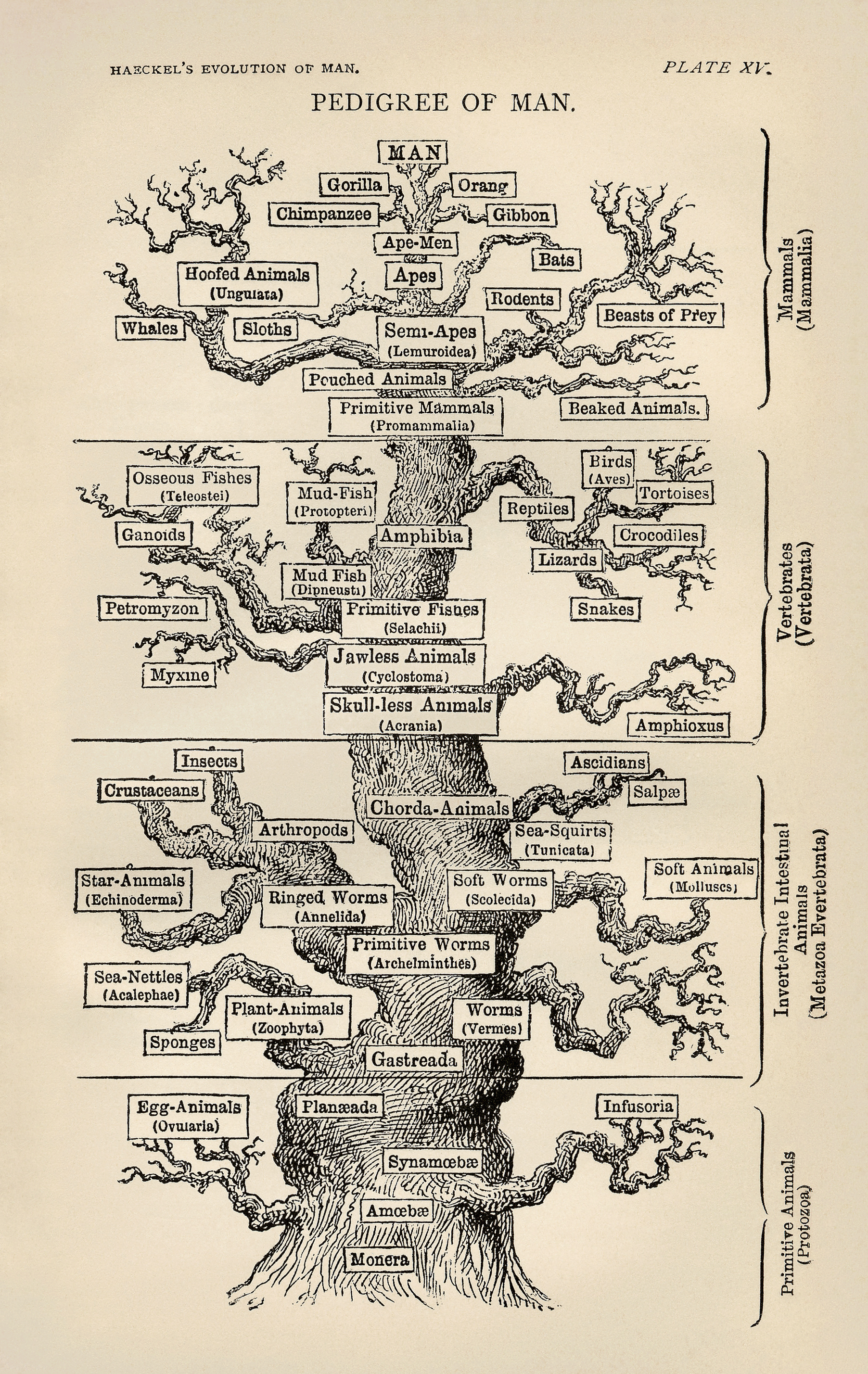
On the whole, birds appear to be the most aesthetic of all animals, excepting of course man, and they have nearly the same taste for the beautiful as we have.
— Charles Darwin (see Prum 2017)
To say tastes are unique, that they can’t be accounted for, or that beauty is “only in the eye of the beholder,” is a way of saying beauty and taste are random and dismissing the massive overlap of agreement about what’s likable and what isn’t. An extreme version of this view depicts a scenario in which one person has no idea what any other person will like or dislike, so that every time somebody happens to come up with and create something others find beautiful it’s a fortunate accident.
In reality, on the contrary, we know almost exactly what kinds of things we can say or do in any situation to be charming, repulsive, or something in between, and this wouldn’t be possible without a shared set of inclinations, or “common sense.” Similarly, artists can make art using their own sense of beauty because of how closely it tends to correspond with that of their audience. To some extent, our feelings about stimuli must be the same due to common elements of sensory systems, as Edmund Burke (2005) pointed out in A Philosophical Inquiry Into the Origin of Our Ideas of the Sublime and Beautiful, 1757:
We do and we must suppose, that as the conformation of their organs are nearly or altogether the same in all men, so the manner of perceiving external objects is in all men the same, or with little difference. We are satisfied that what appears to be light to one eye, appears light to another; that what seems sweet to one palate, is sweet to another; that what is dark and bitter to this man, is likewise dark and bitter to that; and we conclude in the same manner of great and little, hard and soft, hot and cold, rough and smooth; and indeed of all the natural qualities and affections of bodies. If we suffer ourselves to imagine, that their senses present to different men different images of things, this sceptical proceeding will make every sort of reasoning on every subject vain and frivolous, even that sceptical reasoning itself which had persuaded us to entertain a doubt concerning the agreement of our perceptions. But as there will be little doubt that bodies present similar images to the whole species, it must necessarily be allowed, that the pleasures and the pains which every object excites in one man, it must raise in all mankind, whilst it operates naturally, simply, and by its proper powers only: for if we deny this, we must imagine that the same cause, operating in the same manner, and on subjects of the same kind, will produce different effects; which would be highly absurd.
In the current context a single bias is taken to be responsible for all the independent instances of a given aesthetic effect, regardless of whether it was created culturally or evolved by mate choice. This has the advantage of agreeing with conventional thinking and the terminology already in place due to our collective understanding of aesthetic things. For instance, we think of birds as singing real songs and dancing real dances, conventionally calling their behavior by the same name as our own versions of the same conduct. The differences are not enough, apparently, to cause us to think of them in different terms.
To some extent, we know we’re hearing a song because sound, loudness, high notes and surprising variation are punctuated over short periods by silence, quietness, lower-pitched notes and predictable repetition. Relative simplicity regarding these qualities tends to characterize less amusing, less intricate, nonmusical communication. All of what we refer to as dancing in birds, fish, spiders and others, which can be as simple as expressing a little extra motion or asymmetry in the central, lower or posterior areas of the body, is understood as dancing just as real as our own, and in all cases there must be something about the brain that allows an animal to distinguish it from other types of motion.
Flowers must differ visually from leaves in some essential way that allows them to be recognized as such and admired by people and pollinators, and the brains of all species that admire flowers must have features that facilitate the admiration. The areas of the brain responsible for flower evolution are biased to select for complexity to the extent that the flowering part of a plant is complicated, visually, relative to its leaves and stems. The name “flower” itself, alluding to flow, is a clue to how we recognize them and how they seduce us.
The rule of discernibility applies to all conventionally aesthetic things. Jokes are somehow distinct from serious statements. Poetry sounds different than prose. Playing feels different from working. Myths and fantastical stories differ from everyday life. In each case, some process occurring in the part of the brain responsible for judging its appeal tells us whether we like it or not, and it’s predictable that the process is somehow the same every time from the fact that we put the things we like together in a group, calling them all “aesthetic,” for instance. There must be specific, determinable features that differentiate what we like from comparable but less interesting experiences.
Sensory Bias
What an odd thing it is to see an entire species — billions of people — playing with, listening to, meaningless tonal patterns, occupied and preoccupied for much of their time by what they call ‘music.’
— Oliver Sacks, Musicophilia (2008)
For beneath the first depth, namely that of the earliest civilizations — which are but the foreground of the long backward reach of the prehistory of our race — there rest the centuries, millenniums, indeed the centuries of millenniums of primitive man, the mighty hunter, the more primitive root-and-bug collector, back for more than half a million years. And there is a third depth, even deeper, and darker, below that, below the ultimate horizon of humanity. For we shall find the ritual dance among the birds, the fish, the apes and the bees.
— Joseph Campbell, The Masks of God: Primitive Mythology (2020)
Currently popular scientific approaches to beauty don’t address its structure, and they ignore the problem of its persistence and consistency across widely unrelated species. The most prevalent perspective regarding music, dance and elaborate shapes and coloration maintains that they evolve to demonstrate a good body or good genes, somehow more reliably than other attributes, indirectly benefiting a mate with a coevolving preference for the trait by allowing them to capture and pass on the genetic goodness to their own offspring. Such approaches don’t explain the complexity of sexually selected traits, or why, of all the things animals could do to prove themselves, and the vast number of more direct vitality-determining biases that could evolve, countless numbers of varied species have relentlessly converged on the particular scenario of preferring a complicated song, dance, shape or pattern.
We shouldn’t think of this convergence as somehow inevitable, that songs for instance represent such a large subset of the possible vocalizations an animal can make that the event of evolving to sing is hard to avoid statistically, any more than we think it’s inevitable a large proportion of human cultures would resort to singing instead of talking as a means of relaying relevant information simply because we’ve run out of more direct alternatives. The same argument applies to other aesthetic phenomena. They come about entirely because we select for them over less desirable stimuli, not because they’re inevitable or likely as members of a limited set of possibilities.
The second most popular scientific explanation for beauty and preferences, also a coevolutionary approach that doesn’t address the consistency, complexity or persistence of aesthetic traits is Fisherian runaway sexual selection (Fisher 1930, O’Donald 1967, Lande 1981, Kirkpatrick 1982), in which preference/trait pairs result from mathematically conceivable genetic feedback loops for no particular reason, or “beauty happens,” as Prum puts it in The Evolution of Beauty (2018), which otherwise argues against good genes as a realistic mechanism. Fisher’s model assumes an initial period in which a trait favored slightly by natural selection also randomly happens to be favored by certain mates, causing genes for the trait and those for the preference to increasingly occur together in succeeding generations. The preference and trait reinforce each other in a positive feedback loop, and the process continues until sexual selection for the trait and natural selection against it are in balance. The sequence of steps involved and the number of times they would need to play out independently but somehow lead to similar results across species makes this an extremely unlikely scheme compared to good genes, and especially compared to the idea that preferences simply exist by default.
The sensory bias model of sexual selection is a recently developed (West-Eberhard 1979, 1984; Ryan 1990, Ryan and Keddy-Hector 1992, Basolo 1996), relatively simple and intuitive alternative to good genes and Fisherian runaway. It predicts that side effects arise in the process of sensory system and brain evolution, causing preferences that generate selection for matching traits despite potentially reducing survival, arguably circling back, after more than 100 years of science, to Darwin’s original thinking (1896):
When male animals utter sounds in order to please the females, they would naturally employ those which are sweet to the ears of the species; and it appears that the same sounds are often pleasing to widely different animals, owing to the similarity of their nervous systems, as we ourselves perceive in the singing of birds and even in the chirping of certain tree-frogs giving us pleasure.
Sensory bias can be distinguished from other models in that the preference for a trait evolves prior to and in a different context than the trait preferred, non-coevolutionarily. Such biases could be originally adaptive, evolving through direct selection, by improving prey detection ability for instance, or they could be “hidden,” in that they’re an incidental by-product with no original, subsequent or current fitness-related function (see Ryan 1990, Enquist and Arak 1993, Endler and Basolo 1998, Arnqvist 2006).
Sensory bias appears to have played a role in the evolution of “courtship trembling” behavior in Neumania papillator water mites (Proctor 1991, 1992), complex mating calls in the Tungara frog Physalaemus pustulosus (Ryan and Rand 1990), complex swords in swordtail fishes (Basolo 1990, 1995, 1996), long, flowing tails in widowbirds (Pryke and Andersson 2002), orange spots in the guppy Poecilia reticulata (Rodd et al. 2002), song structure in Costa’s hummingbird Calypte costae (Clark and Feo 2009), song repertoires in birds (Collins 1999), nuptial food gifts in insects (Sakaluk 2000), egg-spots in Cichlids (Egger et al. 2011), mud pillar (Christy 1995) and sand hood (Christy 2003) building in the fiddler crabs Uca beebei and Uca musica, red pelage and skin colors in primates (Fernandez and Morris 2007), pollinator attraction in orchids (Schiestl and Cozzolino 2008), Anoline lizard head bobbing patterns (Fleishman 1992) and mate color preferences in birds (Møller and Erritzøe 2010). Preferences for entirely novel signals, like red leg bands in zebra finches Taeniopygia guttata (Burley et al. 1982), white crests in finches (Burley and Symanski 1998) and gene transfer-induced red color in zebrafish (Owen et al. 2012) indicate that preferences can exist independently of favored traits.
That organisms so widely separated taxonomically, ecologically and neurologically as humans, in every culture, whales (Payne and McVay 1971), bats (Behr and Helversen 2004), mice (Holy and Guo 2005), frogs (Searcy and Andersson 1986), about 5,000 species of birds (Hartshorne 1973), numerous different types of insects and other animals have an apparent preference for complex, song-like auditory stimuli strongly suggests the involvement of common elements in sensory systems, and it’s difficult to imagine so many different populations and species being subject to a common ecological factor that could possibly drive direct, adaptive selection leading all of them to a desire for song.
There’s no reason to believe other animals have strange, unidentifiable but somehow functional reasons for performing and enjoying songs and dances, particularly when we know that for us the reason is only the pleasure we take in experiencing the patterns that make them up. The problem with assuming independent origins of preferences for song in many different singing animals might be illustrated by the absurdity of the idea that unique preferences for the behavior had to evolve separately in every human culture rather than being in place to begin with, especially given the lack of a function for human song (Darwin 1871):
As neither the enjoyment nor the capacity of producing musical notes are faculties of the least use to man in reference to his daily habits of life, they must be ranked amongst the most mysterious with which he is endowed.
The 300 distinct notes and 66 types of songs of the winter wren Troglodytes troglodytes (Kroodsma 1980), or the 58 elements, 15 separate behaviors and 10 plumate ornaments distinguished by Scholes (2006) in the dance of Carola’s parotia (Parotia carolae) represent behaviors that are undeniably more complicated than what would suffice for the purpose of conveying a signal of condition. Unless we assume the songs of wrens came into existence fully formed, without increasing in complexity over time, these birds have been amused by every shorter, simpler evolutionary version of the song in addition to the current one. Parotias must have been impressed by every historical parotia dance, and by every new element as it was added, at the same time consistently rejecting potential mates who didn’t perform movements approaching the extremely complicated sequence currently in use. The existence of such traits is much easier to understand with a general preference for complexity in place prior to and throughout their evolution.
Humans have no adaptive business being so affectionate about flowers, given that we don’t get food from or pollinate any of them naturally. One common theoretical approach in such cases is to trace the origin of a currently inexplicable trait, an attraction to flowers in this case, back to a common ancestor with a species that does have a reason to express it. For humans, an attraction to flowers would seem to go back at least beyond our most recent common ancestor with the many species of nectar-feeding, flower-pollinating birds, or prior to the split between mammals and reptiles, around 300 million years, probably before the first flowers existed. Notably, human interaction with flowers isn’t restricted to those produced by plants. We paint abstract versions of them on objects and canvases, carve or mold them into architecture, stitch them into clothing and tattoo them on our bodies, an indication that animals enjoy the shape in general, not only in the practical, ecological context of foraging.
To explain why insects and birds share a preference for flowers one would predict it was present in the brains of the ancestors of both groups, going back over 500 million years, to a time long before flowers, which, according to Sauquet et al. (2017), appeared somewhere between 140 and 250 million years ago. Preferences for song and dance, judging by their effects, in the courtship of both insects and birds, for instance, probably go back to the same early times, persisting with no regard for the taxonomic distance between species, across massive discrepancies in body size, brain size and ecology, suggesting that every animal has some capacity to understand and admire them by default, as a consequence of universal, inevitable aspects of sensory system structure.
The proposition that every singing species of bird evolved an inclination for musical sounds independently is hardly different from proposing that every species of bird separately evolved the ability to fly, except that in the first case there’s no practical reason for them to do so, and therefore even less reason to believe it happened more than once. There are obvious benefits to flying. It seems very likely that doing so has allowed birds to be, according to Darwin, the second most aesthetic type of animal, and it’s very unlikely to be a coincidence that birds and humans also have in common such an unusual degree of freedom from ecological limitations related to resource availability, predation and unsuitable environmental conditions. This isn’t to say animals don’t evolve the tendency to be attracted to a specific flowering plant, or to enjoy the particular type of singing or dancing of their own species more than others; it’s that they do so in the context of preexisting, ever-present biases for these types of stimuli.
Even if we did historically pollinate a particular flower, for some hardly imaginable, naturally selected purpose, this would only explain our attraction to that kind of flower, not most or all of them. This problem applies in general because so many particular flowers are pollinated by multiple animal species, which themselves pollinate multiple kinds of flowers. Assuming animals like flowers to begin with helps explain the success angiosperms have had in using floral shapes to exploit us. If humans had a history, evolutionarily, of performing a song or dance in a courtship display to compete for mates, traditional thinking would only explain the enticement of whatever particular song we were singing or dance we were doing, not the massive variety of those we’ve created, and no obvious advantage would accrue to a population expanding the use of song or dance outside the context of sex into that of religion, patriotism, ceremony, celebration and general entertainment.
Musical patterns apparently flow through the animal brain from the auditory cortex to the motor areas, translating outwardly into alternating body shapes and actions with the same, semi-predictable, simultaneously regular and random (disorder~order) structure as the music, as though the substance of the brain is offering little resistance. That humans relate dance to music and integrate the two phenomena in practice shows we have an automatic, unconscious way of recognizing some degree of aesthetic overlap or equivalence between them, probably because they have similar effects on the brain.
There’s a growing list of animals that dance to human music, meaning the equivalence is likely recognized universally. Cotton-top tamarin monkeys respond emotionally to human music rendered in a tamarin style (Snowdon and Teie 2010), and research shows that harbor seals (Verga et al. 2022), cockatoos (Patel et al. 2009), rats (Ito et al. 2022) and chimpanzees (Hattori and Tomonaga 2020) enjoy dancing to human music. In these cases, animals that shouldn’t understand and care about music, or dance, or know that the two are related, unconsciously understand all three things, undermining coevolutionary arguments and supporting a universal sensory bias perspective.
Animals will also dance spontaneously, without a musical cue, in response to the sight of another dancing animal. Campbell (2020) gives an account of chimpanzees playing and joining a group dance featuring spinning in place, forming flowing chains of spinning individuals and trotting with synchronized, asymmetric steps in circles around a pole:
Tschengo and another chimpanzee named Grande invented a game of spinning round and round like dervishes, which was then taken up by all the rest. “Any game of two together,” Dr. Köhler writes, ‘was apt to turn into his “spinning-top” play, which appeared to express a climax of friendly and amicable joie de vivre. The resemblance to a human dance became truly striking when the rotations were rapid, or when Tschengo, for instance, stretched her arms out horizontally as she spun round. Tschengo and Chica — whose favorite fashion during 1916 was this “spinning” — sometimes combined a forward movement with the rotations, and so they revolved slowly round their own axes and along the playground. The whole group of chimpanzees sometimes combined in more elaborate motion patterns. For instance, two would wrestle and tumble near post; soon their movements would become more regular and tend to describe a circle round the post as a center. One after another, the rest of the group approach, join the two, and finally march in an orderly fashion round and round the post. The character of their movements changes; they no longer walk, they trot, and as a rule with special emphasis on one foot, while the other steps lightly, thus a rough approximate rhythm develops, and they tend to “keep time” with one another….’ “It seems to me extraordinary,” Köhler concludes, “that there should arise quite spontaneously, among chimpanzees, anything that so strongly suggests the dancing of some primitive tribes.
Like us, although they have no reason to do so, or to find it amusing, chimps are equipped psychologically with both the desire to dance and the knowledge of how it’s done. Due to the existence of music and dance throughout the animal world, it’s predictable that sensory systems and brains embody an understanding of the qualities and dualities involved automatically, perceive them as opposites and find the idea of mixing them together in intricate patterns intriguing.
Mythology has the same problem with aesthetic themes recurring in widely unrelated cultures and stories that evolutionary biology has with certain themes (song, dance, contrasting colors, ornamental ocelli, long flowing tails, Thayer’s law) turning up in widely unrelated species, and, probably, the same kind of solution in the form of universal preexisting biases in sensory systems. As a potential way to understand common features of human psychology and resulting patterns in mythology, Campbell brought up the subject of sensory bias long before it was popular, in Primitive Mythology (1959), the first volume of The Masks of God series, citing an experiment by Adolf Portmann (1953) with the grayling butterfly, Eumenis semele, which showed that males pursue artificially darkened females “in preference even to the darkest female of the species,” early empirical evidence that animals have preferences for versions of each other that don’t exist in nature:
A new and very promising approach is opened, however, when it [mythology] is viewed in the light of biological psychology as a function of the human nervous system, precisely homologous to the innate and learned sign stimuli that release and direct the energies of nature — of which our brain itself is but the most amazing flower.
Wallin (1991) proposes a kind of sensory bias as the mechanism responsible for the evolution of singing behavior, pointing out the “dynamic dichotomy in music is similar to that which characterizes organismal systems,” and a “morphodynamic isomorphism” between the form of music and that of the brain, music’s physiological substrate.
Sensory bias is usually thought of as a proximal explanation, for instance with the bias ultimately having arisen in an ecological context such as predation and later being exploited by traits that it favors happening to evolve in members of the opposite sex. However, the ecological origin step is an unnecessary complication. Especially when the same bias must have originated repeatedly, and it can’t convincingly be connected to anything of value survival-wise, it’s more reasonable to assume the bias is ultimately an incidental result of the basic structure of the brain to begin with, that it transcends and predates any particular ecological adaptation. Thermoaesthetics hypothetically extends Wallin’s isomorphism beyond music and song to other amusing things such as dance, color patterns and language, by way of a more general isomorphism between the dichotomies of liquid crystalline matter in the brain and aesthetic material.
Perplexity AI
Prompt: “How many species sing songs.”
The number of species that sing songs is far greater than commonly perceived, with conservative estimates suggesting over 200,000 species globally. This includes approximately 4,000 songbird species, at least 200,000 insect species producing vibrational songs, numerous marine mammals, various amphibians, select terrestrial mammals, and an increasing number of documented fish species. The true number continues to grow as researchers discover previously unknown vocal behaviors in species once thought to be silent, revealing that song is a fundamental form of communication across the animal kingdom.
Prompt: “How many species perform courtship dances?”
Conservative estimates suggest that several thousand species across the animal kingdom perform some form of courtship dance. Birds alone contribute hundreds of dancing species across multiple families. When combined with the diverse arthropod dancers, marine species, and representatives from other animal groups, the total likely reaches into the thousands.