Aesthetic Mixtures

Aesthetic phenomena tend to be made up of mixtures of qualities from the more and less exciting ends of primitive perceptual dimensions.
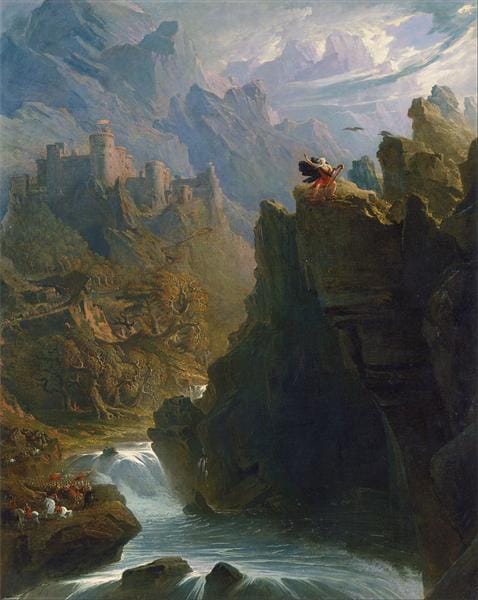
More will I tell thee too: there is no birth
Of all things mortal, nor end in ruinous death; But mingling only and interchange of mixed There is, and birth is but its name with men.
— Empedocles, On Nature (Leonard 1908)
Well did Aristotle say that virtues in contrast to vices are judicious means between contrary extremes. But the principle holds much more generally than even Aristotle saw. It applies, for example, in aesthetic matters. Beauty, too, is a mean. It is not the opposite to ugliness. Ugliness is an incongruity, a disorder, a jolt; but the sheer absence of incongruity and disorder is not beauty. Rather, beauty and all aesthetic value is what, in the words of Kurt Sachs the musicologist, ‘lies between the fatal extremes of mechanism and chaos.’ By ‘mechanism’, understand a too strict and unrelenting orderliness, and by ‘chaos’, a sheer lack of order. In the first case there is too little surprise, sense of tension, or interest in how things may come out; in the second case there are no definite expectations to be met with pleased surprise or to awaken any desire to experience the outcome. With mechanism we are merely bored, with chaos merely confused. In neither way does the sense of beauty arise.
— Charles Hartshorne, Wisdom as Moderation: A Philosophy of the Middle Way (1987)
List 3 below shows the primitive perceptual opposites from lists 1 and 2 as dualities, separated by tildes (~), with the more exciting quality on the left and the less exciting quality on the right. This is meant to emphasize the idea of perceptual opposites occurring in juxtaposition, as what could be called aesthetic mixtures: heat mixed with coldness (hot~cold), fluidity with solidness (fluid~solid), dynamism with stasis (dynamic~static) and so on.
Primitive aesthetic mixtures (list 3): hot~cold, fluid~solid, dynamic~static, fast~slow, disorder~order, bright~dark, warm color (red, orange, yellow)~cool color (green, blue, purple), sound~silence, loud~quiet, high pitch~low pitch, up~down, out~in, left~right, long~round, long~short, spiky~round, big~small, more~less, novel~familiar.
The term “mixture” is borrowed from Galen’s De Temperamentis, “On Mixtures.” His title is a form of the Latin word temperamentum, meaning to be mixed properly, or in due proportion. In Galen’s treatise the physical qualities hot, cold, wet and dry vary in the body and interact to influence a person’s health and disposition, most ideally into an optimal condition of moderation between extremes.
Language-based aesthetic mixtures are essential to the structure of idioms, poetry, lyrics, scripture, slang, clichés, fables, nursery rhymes, chants, prayers, euphemisms, greetings, riddles, jokes, mottos, epitaphs, epithets, kennings, koans, slogans, the names of songs, albums, bands, books, companies and products, and they seem to exist throughout every type of aesthetic material in which linguistic references to phenomena exhibiting animal sensory opposites can appear in pairs or sequences. Nonlinguistic cultural instances of mixtures occur at high rates in music, dance, mythology, fictional stories, art, decoration, games, architecture and elsewhere.
Mixtures also describe traits used to attract mates in animals, which indicates the biases favoring them are universal, and that they originate with sensory systems and persist despite the diversification of other traits, rather than evolving independently or in conjunction with the traits they favor. Thus, mixtures appear in every aesthetic realm, and any particular mixture appears often enough across the realms that if it proves to be common in one of them there’s a good chance it will also be found in others, assuming the respective medium allows it to be conveyed.
Mixtures of up and down can be understood perceptually and expressed visually by almost any animal. Based on its popularity elsewhere, for instance in language, poetry and myth, it’s predictable such motion tends to evolve through mate choice as a feature of courtship rituals. There are conspicuous examples of the mixture up~down in the dances of hummingbirds, bald eagles, red-tailed hawks, nighthawks, skylarks, tropicbirds, American woodcocks, bowerbirds, manakins, cranes, ducks, grebes, grouse, penguins, finches, anolis lizards, geckos, bearded dragons, Indian dancing frogs, turtles, tortoises, fiddler crabs, mudskippers, stickleback, seahorses, sea dragons, scorpions, fruit flies, mayflies, damselflies, grasshoppers, jumping spiders, peacock spiders and others.
Every aesthetic instance of up~down can be thought of as the effect of a single, universal bias that supports both its origin and persistence, and by the same approach it’s possible to use the popularity of out~in, motion~stasis, disorder~order, bright~dark or other mixtures in one type of aesthetic material to predict it’s occurrence in others.
There’s nothing inevitable, based on current evolutionary theory, about the inclusion of mixtures in aesthetic things, which could have any structure, no consistent structure at all, or be avoided altogether with no negative consequences regarding survival. There’s no need for animals to sing songs, let alone songs in which the auditory qualities in list 3 are intricately juxtaposed, or to dance, especially in ways that mix the given dualities of motion and direction, or to be colored in elaborate ways that contrast bright with dark and warm colors with cool colors. Lack of an obvious adaptive purpose is a feature that ties aesthetic things together, which could be taken to suggest the possibility of a single, ultimate explanation for their existence.
Because they were established as opposites early in animal evolution, the qualities in lists 1, 2 and 3 predate other concepts and can be used metaphorically or figuratively in all languages and in the communication of any species that’s capable of making reference to them. All animals understand them by default, and in a similar way, so they make convenient signals.
As a result of the ability to tell the difference between up and down, species have evolved to communicate by moving their bodies, limbs or other features in these directions. Such movements have probably always had meaning to an observer, at least in the sense that upwardness has conveyed a somewhat greater degree of arousal, and downwardness has done the opposite.
At the same time, mixtures of upward and downward orientations and motions have always been intriguing, so that individuals born with genes that compel them to integrate them into their courtship rituals have succeeded disproportionately at reproducing and passed on those genes more effectively than individuals who lack them. This same kind of scenario applies to the other perceptual dimensions of direction, and also to those of motion, color, sound, shape and size.
Mixture frequency, the rate at which mixtures occur per unit of sensory information, with units potentially being words, sounds, colors, shapes, periods of time, movements or other things, is higher in aesthetic material than in non-aesthetic sensory material, such as that used purely to convey important information. Mixture frequencies are higher in a poem, for instance, than a nonfictional report, in a comic routine than a lecture, in a game than a work project, in a mythical or religious text than a science book, or in singing and dancing than speech or the average sequence of motions made in the usual, practical routine of an animal.
Some mixtures seem to be considerably more important or popular than others, but whether this reflects the relative strength of preferences, how easily they can be referenced and/or other factors is difficult to say. Dynamic~static, fast~slow and disorder~order are more easily expressed by an animal than fluid~solid, which itself is more expressible than hot~cold, assuming there’s no abstract symbol available that’s been created for the purpose. An animal can easily move or remain still, move in chaotic or regular ways, orient itself symmetrically or asymmetrically, and convey references to up and down, in and out or left and right. It can evolve to be certain colors or shapes, and reposition itself to present these qualities in different proportions. It can evolve to make various sounds, punctuate them in a series with silence, and arrange them in orderly or disorderly patterns. Perceptual novelty and familiarity are also achievable with little effort. Thus, to some extent mixtures can be ranked in order of how widely they can be conveyed in signals between individuals, and the ranking of a mixture in the list would seem likely to correlate with how often it appears overall in aesthetic material.
Each pair of qualities in list 3 can be thought of in at least three ways: (1) as a primitive duality of differentially exciting opposites in the animal mind, (2) as the structure of a universal psychological bias, and (3) as an essential ingredient in aesthetic phenomena, which evolve to match the structure of the bias. All three perspectives are isomorphic, or structurally similar, in that they incorporate opposites, arguably implying a sequence of causation. The evolution of sensory mechanisms leads to sensory biases, and these biases cause outward aesthetic effects. The mechanism underlying our ability to tell red from blue entails a preference for red~blue mixtures, which is responsible for biological and cultural aesthetic selection favoring their evolution in bodies and artifacts.
Aesthetic isomorphism can be used to predict the contents of aesthetic material, or to identify sensory dualities. We know that all sufficiently visual animals have the ability to distinguish motion from stasis, which allows us to predict that courtship routines and play behavior will alternate between those qualities perceptually. In reverse, we know that fluidity is mixed with solidness aesthetically in creation stories, mythology, poetry and language, and therefore that the duality fluid~solid should be thought of as a perceptual dimension, alongside those we recognize more conventionally as such: bright~dark, high pitch~low pitch, up~down and so on. This is also true for disorder~order. Although it’s not normally thought of as a basic sensory dimension, its importance in the structure of aesthetic material means that it should be.
Physical qualities in list 3 include Galen’s hot~cold and fluid~solid (wet~dry), as well as dynamic~static and disorder~order. These are of special interest because they represent aesthetic biases that closely resemble the universal physical dualities heat, fluidity, dynamism and disorder form with coldness, solidness, stasis and order (see Leslie 2016). The correspondence in this case could be called physical isomorphism, because it extends beyond the realm of biology into state of matter physics. It wouldn’t necessarily be improbable for a physical duality to be isomorphic with an aesthetic one, but there are at least four such corresponding dualities. Others like expand~contract and free~confined could be added to the list, and at some point it becomes difficult to believe the correspondence is coincidental.
The closest psychological idea to that proposed here concerning preferences and excitement might be Daniel Berlyne’s aesthetic model of an inverted-U relationship between pleasantness and arousal. Berlyne demonstrated that both low and high arousal stimuli and mental states are unlikable compared to moderate levels, which are the most pleasing. Likability, or “hedonic tone,” increases from a low point to a maximum for an observer as stimuli become more arousing, before decreasing again as they gradually exceed the observer’s tolerance.
Perceptual variables shown by Berlyne to increase animal arousal levels and vary on a graph of hedonic tone in the shape of an inverted-U include novelty, complexity and surprisingness. In Berlyne’s model what he called complexity as a variable increases with perceptual multiplicity, disorganization, irregularity, incongruity and asymmetry, qualities that might more accurately be described as disorderly instead of complicated.
Thermoaesthetics hypothetically extends Berlyne’s idea to all primitive perceptual opposites, and assumes the relevant biases for moderation and against extremes have exististed since the evolution of sensory systems, although they can presumably be modified by natural or sexual selection. Hedonic tone is predicted to follow an inverted-U as light level varies for an observer from zero (darkness) to half light to extreme brightness, as pitch moves from low to moderate to high or as the texture of an object changes from solid to soft to wet. In contrast to Berlyne’s perspective, complexity is assumed to correspond to moderate rather than high arousal.
Tildes (~) are used throughout the present text to indicate aesthetic mixtures (list 3), or that the qualities involved are differentially exciting opposites, while slashes (/) or equal signs (=) indicate associations or combinations of qualities in the same psychological category of more or less excitement (list 1 or 2).
Fluid~solid, disorder~order, up~down and out~in are mixtures, for example, while fluid/disorder, fluid/up, fluid/out, solid/order, solid/down and solid/in are combinations. More specifically, with regard to popular expressions, “the land of milk and honey” (fluid~solid), “a diamond in the rough” (disorder~order), “bottoms up” (up~down) and “day in and day out” (out~in) are mixtures, while “break into tears” (fluid/disorder), “hell or high water” (fluid/up), “pissed off” (fluid/out), “a clean slate” (solid/order), “rock bottom” (solid/down) and “come on hard” (solid/in) are combinations.
Conceptual Relatives
Each of the qualities given in list 3 has a number of more specific conceptual relatives that behave the same way the quality does in aesthetic material, presumably because we use primitive sensory opposites as categories into which other, more recently derived phenomena are sorted.
Solidness is essentially the same as hardness, and it’s related in the mind to earth, land, rock, stone, metal, wood, teeth and bone. Fluidity relates to flow, flowers, water, rivers, streams, oceans, smoke, air, clouds, spirals, spirits, souls, ghosts, tears, saliva, breath and blood. Heat relates to the sun, spring, summer and fire, dynamism to wakefulness and life, stasis to sleep, calmness and death, brightness to mornings and day, darkness to twilight and night, high pitch to screaming and singing, low pitch to drums and thunder, spikiness to sharpness, horns, claws, fangs and crosses, roundness to eyes, heads, babies and the moon, length to fingers, tails and snakes, upwardness to being high, over or above, the tops of things, ascent, lifting, climbing and heaven, downwardness to lowness, being on the bottom or below, descent, sinking, falling, dropping and hells.
Simple geometric shapes, symmetry, straightness, regularity, form, patterns, rules, laws, rightness and roundness (spheres, circles, points, spots, dots) are related to the idea of order in the mind, while chaos, crookedness, brokenness, cracks, craziness, asymmetry, disarray, irregularity, the unexpected, strangeness, missing, being wrong, spikiness and length are conventionally disorderly.
We think of something far away or leaving us as outward and something close or coming toward us as inward. The central section of a scene or object is related to inwardness in the mind, while peripheral parts are thought of as outward. We assign inwardness to containers and anything with an inward dimension, such as houses, caves, bags, hats and ships. Behaviors in which something from the outside world enters the body, like breathing in or eating, are also inward, while the expulsion of something from the body is understood as outward. Inwardness applies to our hearts, minds and brains, and entrances to the body, and outwardness to bodily extensions or protrusions such as hands, fingers, feet, noses, hair, wings and tails.
Some of the conceptual relatives corresponding to list 1, 2 and 3 qualities are given for reference below. Because they behave aesthetically in the same way as the primitive qualities they relate to, fire and ice can be juxtaposed amusingly just as heat and cold can. The idea of being clean, a relative or order, is amusingly juxtaposed to being broken, a relative of disorder, in an expression such as “clean break.” The idea of “all” is a conceptual relative of larger numbers of things (many), and it behaves similarly as an aesthetic opposite to the idea of singularity (few), a relative of small numbers, in expressions like “e pluribus unum” (out of many, one), “once and for all,” “come one come all” and “all for one and for all.” More exciting qualites are marked with asterisks.
Conceptual Relative Lists
Heat* (34): blaze, blistering, boil, boiling, burn, burning, burnt, char, ember, fever, fiery, fire, flame, furnace, fuse, heat, hot, ignite, inferno, molten, scorch, scorching, simmer, simmering, sizzle, smolder, spark, stew, stewing, summer, sun, swelter, torch, warm.
Coldness (35): arctic, biting, bitter, blizzard, chill, chilled, chilling, chilly, cold, coldness, cool, cooling, crisp, freeze, freezing, frigid, frost, frostbite, frosty, frozen, gelid, glacial, glacier, hail, ice, iceberg, icy, numb, shiver, sleet, snow, snowy, thaw, winter, wintry.
Dynamism* (134): accelerate, action, active, activity, agile, agitate, alter, alteration, altered, animate, animated, awake, awakening, blur, bolt, bounce, bound, burst, bustle, buzz, careen, cascade, change, changing, charge, chase, churn, commotion, current, dance, dart, dash, dynamic, dynamism, electric, energetic, energy, erupt, fast, flail, flap, flicker, flit, flow, fluctuate, flurry, flutter, flux, fly, frantic, frenetic, frenzy, gallop, galvanize, go, gush, haste, hasty, hectic, hop, hurry, hurtle, jerk, jolt, jump, kinetic, launch, leap, life, live, lively, living, momentum, motion, move, nimble, oscillate, play, pulse, quake, quaking, quick, quicken, quiver, race, racing, ran, rapid, restless, rocking, rouse, run, rush, scamper, scramble, scurry, shake, shaky, shift, shock, shudder, skip, speed, speedy, spin, spring, sprint, spun, spurt, stir, streak, stream, surge, sway, swift, swing, swirl, throb, torrent, tremble, tumult, turmoil, twirl, twitch, velocity, vibrate, wake, waking, whirl, whirlwind, whiz, wriggle, zip, zoom.
Stasis (143): anchor, anchored, arrest, asleep, becalmed, buried, bury, calm, chain, check, clamp, coagulate, coma, comatose, constant, corpse, crawl, creep, curb, dawdle, dead, deaden, deadly, death, deathly, die, doldrums, dormant, doze, drowsy, dying, entrenched, equilibrium, fixed, fossil, fossilized, frozen, grave, halt, harden, hibernate, hibernation, hold, hush, idle, immobile, immobility, immovable, immutable, inanimate, indolent, inert, inertia, lag, languid, languor, lazy, lethargic, lifeless, linger, listless, lock, locked, loiter, lull, marble, moor, mortal, motionless, mute, pacify, paralysis, paralyze, pause, peace, peaceful, perish, permanent, perpetual, persist, petrified, pin, pinned, placid, plod, poise, quiescent, quiet, remain, repose, rest, restful, restrain, restrained, rigid, rooted, sedate, sedentary, serene, settle, settled, silence, sleep, sleeping, slack, slow, slumber, sluggish, snooze, solid, somnolent, soporific, stable, stagnant, stagnation, stale, stand, standing, standstill, stasis, static, stationary, statue, stay, steady, stiff, stiffen, still, stillness, stone, stony, stop, stuck, tether, torpid, torpor, tranquil, transfix, trap, unchanging, unconscious, unmoved, unmoving.
Fluidity* (139): air, amorphous, aqueous, bathe, billow, blood, blow, blowing, breath, breathe, breeze, brine, cascade, condense, current, damp, deluge, dew, dissolve, douse, downpour, drain, drench, drift, drip, drizzle, drool, drop, ebb, eddy, ethereal, evaporate, exhale, float, flood, flow, flowing, fluid, fluidity, flush, foam, fog, formless, froth, gale, gas, ghost, glide, gossamer, gush, gust, haze, humid, humidity, immerse, inhale, juice, kiss, kissing, lake, leak, liquefy, liquid, lubricate, melt, melted, melting, milk, mist, moist, moisture, nebulous, ocean, oil, oily, ooze, permeable, permeate, plume, porous, pour, puddle, puff, rain, ripple, runny, saliva, saturate, sea, seep, shower, sigh, sinuous, slick, slide, slime, slip, slippery, slither, smoke, soak, sodden, soggy, soul, spill, spiral, spirit, spit, splash, spout, spray, sprinkle, spurt, steam, stream, submerge, supple, surge, swamp, sweat, swell, swim, tears, thaw, tide, torrent, trickle, undulate, vapor, venom, waft, wash, water, watery, wave, wet, whirlpool, wind, wispy.
Solidness (135): adamant, alloy, anvil, armor, armored, bark, barrier, bastion, bedrock, block, board, bone, boulder, brass, brick, brittle, bronze, buttress, calcify, calcified, carapace, cement, compact, compress, concrete, copper, cornerstone, crystal, crystallize, dense, density, diamond, durable, earth, firm, firmness, fist, flint, fortify, fortress, foundation, frame, frozen, girder, glass, granite, granular, gravel, grit, gritty, ground, hard, harden, hardness, hardy, heavy, hoof, horn, impenetrable, impermeable, inflexible, iron, ironclad, ivory, jaw, keystone, knuckle, land, lead, marble, matter, metal, mettle, mortar, mountain, muscle, nail, oak, obdurate, obsidian, obstinate, ossify, pebble, petrified, petrify, pillar, plank, plate, quartz, rampart, rib, ridge, rigid, robust, rock, root, rugged, scale, shell, shield, skeleton, skull, slab, soil, solid, solidify, solidity, spine, stalwart, staunch, steel, steely, stiff, stolid, stone, stout, strength, strong, stubborn, sturdy, substance, teeth, thick, timber, tooth, tough, toughen, tree, tusk, unbending, unyielding, wall, weight, weighty, wood.
Disorder* (142): anarchy, askew, asymmetric, awry, bedlam, bizarre, blemish, blur, break, broken, cacophony, chaos, chaotic, clash, clutter, confusion, contaminate, corrosion, corrupt, corruption, crack, cracked, cracking, crazy, craziness, crooked, crumble, crumbling, crush, debris, decay, decompose, defect, deform, deformed, demolish, deranged, destroy, destruction, disarray, discord, discordant, disjointed, disorder, disordered, disorderly, disorganized, disrupt, dissonance, dissonant, distort, distorted, entropy, erode, erosion, erratic, error, fault, faulty, flaw, flawed, fracture, fragment, fragmented, fray, frayed, garbled, glitch, gnarled, grotesque, haphazard, havoc, impure, incorrect, irregular, jagged, jarring, jumble, jumbled, lopsided, lunacy, madness, mayhem, mess, messy, mishmash, miss, misshap, mistake, muddle, noise, pandemonium, pollute, ragged, random, randomness, riot, rip, rot, rotten, rough, rubble, ruin, rupture, rust, rusty, scatter, scattered, shatter, shattered, shred, skew, slant, smash, smear, smudge, spatter, splatter, splinter, split, stain, strange, strewn, taint, tangle, tangled, tattered, tear, tilted, torn, twist, twisted, unbalanced, uneven, unhinged, upheaval, uproar, warp, weird, wreck, wreckage, wrong.
Order (120): accord, accuracy, accurate, align, aligned, alignment, arrange, arranged, array, axis, balance, balanced, cadence, calibrate, calibrated, clarity, clean, clear, code, coherence, coherent, concentric, concord, congruent, consistency, consistent, consonance, consonant, correct, discipline, disciplined, equal, even, exact, figure, flat, flawless, form, formula, frame, framework, geometric, grid, harmonic, harmonious, harmony, immaculate, intact, lattice, law, level, line, logic, logical, matrix, measure, measured, method, methodical, neat, norm, normal, order, ordered, orderly, organization, organize, organized, parallel, pattern, patterned, perfect, periodic, perpendicular, polished, precise, precision, principle, pristine, proportion, proportional, pure, purity, ratio, rational, refined, regular, regulate, regulation, repetition, rhythm, right, rule, seamless, sequence, series, settle, settled, shape, smooth, sort, sorted, spotless, square, stable, standard, steady, straight, straighten, structure, structured, symmetric, symmetrical, symmetry, system, systematic, tempo, tidy, true, uniform.
Brightness/Warm Colors* (98): aura, beacon, beam, blaze, blazing, blinding, bright, brighter, brightness, brilliance, brilliant, burnished, candle, color, coruscate, dawn, daybreak, daylight, dazzle, dazzling, effulgent, fire, fireworks, flame, flare, flash, flashes, flashing, garish, glare, glaring, glaze, gleam, gleaming, glimmer, glint, glisten, glister, glitter, glittering, gloss, glow, glowing, gold, halo, illuminate, illumination, incandescent, iridescent, lamp, lantern, light, lighthouse, limelight, lit, lucent, lucid, luminosity, luminous, luster, moonlight, neon, noon, opalescent, orange, pearly, polished, radiance, radiant, ray, red, reflected, resplendent, scintillate, sheen, shimmer, shimmering, shine, shining, shiny, silver, sparkle, sparkling, splendor, spotlight, star, sun, sunbeam, sunlight, sunny, sunrise, sunshine, torch, twinkle, twinkling, vivid, white, yellow.
Darkness/Cool Colors (91): aqua, azure, black, blackened, blackness, bleak, blind, blot, blue, cave, cavern, cerulean, cloak, cobalt, crepuscular, curtain, cyan, dark, darken, darkened, darkening, darkness, dim, dingy, drab, dull, dungeon, dusk, dusky, ebony, eclipse, evening, glaucous, gloaming, gloom, gloomy, gray, green, indigo, inky, jade, jet, lavender, leaden, lightless, mask, matte, midnight, moonless, murky, navy, night, nightfall, obscure, opaque, overcast, penumbra, periwinkle, pitch, purple, sable, sapphire, shade, shaded, shadow, shadowy, shady, shroud, silhouette, slate, smog, somber, starless, stygian, subterranean, sundown, sunless, sunset, swarthy, teal, tenebrous, tomb, turquoise, twilight, ultramarine, umbra, unlit, veil, veiled, verdant, violet.
Loudness/High Pitch* (44): alarm, bang, blare, blast, boom, chirp, clang, clatter, crash, cry, deafening, din, high, high-pitched, howl, loud, loudness, noise, piercing, pitched, resonant, reverberate, ring, roar, rumble, scream, screech, sharp, shout, shriek, shrill, singing, siren, squeal, thunder, treble, twitter, uproar, wail, warble, whine, whistle, yell, yelling.
Quietness/Low Pitch (42): bass, croak, deep, drone, drum, drums, drumming, dull, faint, foghorn, gravelly, groan, growl, grunt, guttural, hoot, hum, hush, low, low-pitched, lull, mellow, moan, muffled, mumble, murmur, mute, muted, purr, quiet, quietness, resonance, rumble, silence, silent, soft, softness, sonorous, subdued, throaty, thunder, whisper.
Upwardness* (52): above, acme, altitude, apex, apogee, arise, ascend, ascendant, buoyant, ceiling, celestial, climb, crest, crown, elated, elation, elevate, elevation, elevated, empyrean, exalted, float, fly, heaven, height, heights, high, higher, hoist, lift, lofty, mount, over, overhead, peak, pinnacle, rapture, rise, rooftop, sky, soar, summit, superior, top, tower, uplift, uplifted, up, upright, upward, upwardness, zenith.
Downwardness (50): abyss, base, beneath, below, bottom, bow, bowed, chasm, collapse, crouch, deep, depth, depths, descend, descent, dip, dive, down, droop, drop, fall, floor, gravity, gulf, hades, hang, heavy, hell, humble, inferior, kneel, low, lower, nadir, netherworld, pit, plummet, plunge, prostrate, sag, sink, slide, slump, stoop, submerge, tartarus, topple, tumble, underneath, underworld.
Outwardness* (69): away, beyond, bloom, blossom, branch, broadcast, burst, cast, dilate, disclose, dispense, disperse, display, disseminate, distend, distribute, effusive, eject, emanate, emit, exhibit, expand, expansive, expel, expose, exposed, express, extend, exterior, external, extrude, exude, exuberant, far, flourish, gape, give, giving, grow, jut, leave, manifest, mushroom, open, opening, out, outer, outside, outward, outwardness, project, projection, protrude, radiate, reach, reveal, shed, show, splay, sprawl, spread, sprout, stretch, swell, tendril, throw, unfold, unfurl, unveil, wing.
Inwardness (53): absorb, brain, burrow, cave, collect, come, conceal, confined, contain, contained, contract, core, cover, curl, deep, depth, door, draw, embrace, enclose, enter, entrance, envelop, fold, gather, get, heart, hidden, hide, hole, hollow, in, ingest, inside, interior, inward, mind, mouth, near, nest, nucleus, pit, pull, receive, root, secret, shrink, sink, swallow, trap, trapped, withdraw, womb.
Long/Spiky* (60): antler, arrow, band, barb, beak, blade, bristle, claw, cord, dagger, elongated, fang, feather, finger, hair, jab, jagged, knife, lance, line, long, needle, pierce, pike, pin, point, pointed, pointy, prick, prickly, prong, quill, ray, ribbon, rod, saber, serrated, sharp, spear, spike, spikiness, spiky, spur, staff, stalk, stem, stick, sting, string, sword, tail, talon, thorn, thorny, thread, tine, tip, tusk, whisker, wire.
Short/Round (57): arc, arch, around, ball, bead, blob, brevity, brief, bubble, bud, bulbous, bulge, cheek, chubby, circle, circular, coil, coin, compact, convex, curve, curved, curvy, curt, disc, dome, dot, dots, drop, dwarf, egg, encircle, eye, globe, head, hemisphere, orb, oval, pearl, pebble, plump, pupil, ring, round, rounded, roundness, seed, short, snub, socket, sphere, spherical, squat, stubby, terse, tiny, truncated.
Large Size* (56): ample, awesome, behemoth, big, breadth, broad, bulky, colossal, colossus, considerable, elephant, enormous, expand, expanse, expansive, gargantuan, giant, gigantic, grand, grandeur, greatness, grow, growing, hefty, huge, hulking, immense, immensity, infinite, large, largeness, leviathan, loom, magnificent, magnitude, mammoth, massive, mighty, monolith, monumental, prodigious, scale, size, sizable, spacious, staggering, stupendous, substantial, super, titan, titanic, tremendous, vast, vastness, voluminous, whale.
Small Size (44): atom, baby, compact, crumb, dainty, diminish, diminutive, dust, elfin, fine, fleck, grain, iota, less, little, meager, microscopic, mini, miniature, minor, minuscule, minute, mite, morsel, mouse, narrow, particle, petite, pinch, scrap, shrinking, slender, slight, sliver, small, smallness, smidgen, snippet, speck, teeny, thin, tiny, trace, wee.
Many* (69): a lot, abundance, abundant, aplenty, army, assorted, bountiful, brimming, bunch, cluster, congested, copious, countless, cram, crammed, crowd, crowded, diverse, endless, flock, full, glut, heap, herd, hoard, horde, host, innumerable, laden, legion, loaded, majority, manifold, many, manyness, mass, mob, more, mound, multiple, multiplicity, multiply, multitude, myriad, numerous, opulent, overflow, packed, pile, plenitude, plentiful, plenty, plethora, plural, profuse, proliferate, replete, rich, richness, several, stack, sumptuous, surplus, swarm, teem, teeming, throng, too much, various.
Few (42): alone, austere, bare, bereft, dearth, deplete, dwindle, empty, few, fewness, gone, handful, isolated, lack, less, lone, minimal, none, one, only, paucity, poverty, rare, rarity, remnant, scanty, scarce, seldom, simple, single, sole, solitary, spare, sparse, spartan, stark, uncommon, vacant, vanish, vestige, void, zero.
Novelty* (45): alien, anomaly, avant-garde, brand-new, curious, cutting-edge, debut, different, enigmatic, exotic, extraordinary, first, foreign, fresh, freshness, ingenious, innovative, invention, latest, mysterious, mystery, new, newness, novel, novelty, odd, original, peculiar, quirky, radical, recent, revolutionary, strange, surprise, uncanny, unexpected, unfamiliar, unheard-of, unique, unknown, unprecedented, unusual, weird, young, youth.
Familiarity (43): again, ancient, antique, archetypal, banal, canonical, classic, cliché, comfortable, common, conventional, cozy, customary, established, everyday, expected, familiar, familiarity, fixed, habit, hackneyed, hoary, home, homely, known, mundane, normal, old, ordinary, recognizable, recognized, remembered, repeated, ritual, routine, same, stale, standard, traditional, typical, unremarkable, usual, worn.
Aesthetic Indifference

Neither the sun nor death can be looked at with a steady eye.
— François Duc de La Rochefoucauld, 1613-1680 (Bartlett 2022)
Nay, I'll come: if I lose a scruple of this sport,
let me be boiled to death with melancholy.
— Shakespeare, Twelfth Night (2022)
Activity conquers cold,
but stillness conquers heat.
— Lao Tzu, Tao Te Ching
Strangely, any mixture of perceptual qualities (list 3) from opposite psychological excitement categories (lists 1 and 2) results in a duality with a structure descriptive of aesthetic phenomena, not only those involving direct opposites.
This works for Somov's painting, contrasting death with the humor of a harlequin, rather than contrasting the direct opposites life and death or humor and seriousness. It also works for the quote from Rochefoucauld, opposing death to the sun instead of life and the sun to death instead of darkness. The quote is amusing because it’s true, in a way, and because of the extreme contrast and differential excitement between the phenomena it refers to. There’s also the suggestion of dynamic stasis, a direct mixture, and of dynamic roundness, another indirect mixture, in an unsteady eye. In Shakespeare’s quote the contrasts are between heat and its indirect opposites sadness and death (hot~sad/static), instead of the direct opposites hot and cold, life and death or happiness and sadness.
One can randomly choose any quality on the more exciting side, from list 1 for instance (or any of its conceptual relatives), juxtapose it with anything on the less exciting side, such as a quality from list 2 (or its conceptual relatives), observe aesthetic material in which the mixture might exist and find that it occurs at an unexpectedly high rate.
Mixing the seven qualities hot, fluid, disorder, bright, dynamic, upward and outward in all possible ways with their opposites results in the set of 49 mixtures given below in list 5. Seven of these are direct opposites, and therefore possible to learn from the outside world, while 42, the majority (~86%), are indirect, and therefore unlearnable, and yet they happen to be almost as important aesthetically as direct opposites, as anyone who looks for them will find.
For simplicity, the “warmer” colors red, orange and yellow could be thought of as types of brightness, and the “cooler” colors purple, blue and green as types of darkness, so that, for instance, anything black and white, red and blue or yellow and green exemplifies the mixture bright~dark (the contrast effect). Also, roundness can be thought of as a type of order, and spikiness and length as types of disorder, justified based on the symmetry versus relative asymmetry of the former compared to the latter. Directly opposite qualities are marked with asterisks.
Direct and indirect aesthetic mixtures (list 4): hot~cold*, hot~solid, hot~order, hot~dark, hot~static, hot~down, hot~in, fluid~cold, fluid~solid*, fluid~order, fluid~dark, fluid~static, fluid~down, fluid~in, dynamic~cold, dynamic~solid, dynamic~static*, dynamic~order, dynamic~dark, dynamic~down, dynamic~in, disorder~cold, disorder~solid, disorder~order*, disorder~dark, disorder~static, disorder~down, disorder~in, bright~cold, bright~solid, bright~order, bright~dark*, bright~static, bright~down, bright~in, up~cold, up~solid, up~order, up~dark, up~static, up~down*, up~in, out~cold, out~solid, out~order, out~dark, out~static, out~down, out~in.*
List 4 doesn’t include mixtures of sound (pitch and volume), left and right, size (big and small), multiplicity (many or few) or novelty. Including these qualities, and treating color as a separate variable from brightness and round~long/spiky as a separate dimension from order~disorder generates a long list of mixtures (324, see Appendix 1), more than it’s convenient to consider at one time, although almost all of them probably correspond to biases and therefore predict the structure of aesthetic phenomena. Examples of mixtures of shape, sound, size and multiplicity are given throughout the text and in Monoaesthetic Mixtures.
Due to aesthetic indifference, the term “mixture” as it’s used here means a juxtaposition between any of the qualities or concepts on the left side of the listed dualities with any of those on the right side. Heat is an opposite of coldness, as usual, but also of solidness, stasis, order and so on. Upward is the opposite of downward, but also of the other less exciting qualities in dimensions of direction: inward, backward, central, the right side, and of every less exciting quality in lists 2 and 3.
Biases for indirect mixtures of up with less exciting directions are largely responsible for the structure of words and expressions such as “up and coming” (generally up~in), “coming right up” (in/right~up), “back up,” “upright,” “freeze up” (cold~up), “hard up” (solid~up), “shape up” (order~up), “stay up” (static~up) and “over night” (up~dark). Upwardness is not present in the literal referents of these expressions. We attach it to them for aesthetic reasons, because it contributes a degree of excitement and satisfying contradiction to an otherwise less exciting quality.
Aesthetic indifference and differential excitement explain the structure of expressions that don’t make sense otherwise. Consider, for example, the idiom “in the cold light of day.” The meaning of the phrase, to consider something carefully, without the interference of strong emotions, has nothing whatsoever to do with temperature or brightness, at least outside the human mind, raising the question of why these qualities are part of the expression. Referencing coldness makes sense because it’s associated with reality, more so than heat. Referencing light and day also makes sense, but for the opposite reason. They add contradiction and complexity to the expression, making it a mixture, more so than “in the cold dark of night.” With the word “in” at the beginning the phrase has a one to one ratio of more and less exciting things, assuming its specific aesthetic structure is in/cold~light/day (-1-1+1+1=0), and that “day” is a conceptual relative of brightness. If “day” is also treated as a relative of heat, the phrase is slightly more exciting, with the general structure in/cold~light/bright/hot (-1-1+1+1+1=1).
Thermal Indifference

Since all energy used for brain metabolism is finally transformed into heat, intense heat production appears to be an essential feature of brain metabolic activity.
— Kiyatkin (2019)
As temperature changes in matter, especially within the uniquely narrow thermal window of an animal brain, qualities related physically to fluidity increase or decrease together, and solid qualities do the same in the opposite direction. Within a cell, neuron or brain, every possible pair of fluid versus solid qualities constitutes a pair of opposites, a phenomenon that could be termed thermal indifference.
In a brain, fluidity is as opposite to stasis and order as it is to solidness. Dynamism is as opposite to solidness and order as it is to stasis. Disorder opposes solidness and stasis in addition to order, and this goes for any other fluid and solid attributes, such as freedom versus contraction, or expansion versus confinement. Thermal indifference can be depicted by a set of dualities between direct and indirect opposites related to temperature variation, such as the following, in which direct opposites are marked with asterisks.
Thermal indifference: fluid~solid*, fluid~static, fluid~order, dynamic~static*, dynamic~solid, dynamic~order, disorder~order*, disorder~solid, disorder~static.
Direct opposites might be observed as such in the outside world, and could therefore be learned through experience, although it appears animals understand them as fundamentally different at birth, or soon thereafter. The other dualities listed are indirect, and can’t be as easily learned from the environment because the qualities making them up don’t consistently appear to us as opposites in nature.
That we appreciate these and other unobservable dualities despite a lack of environmental cues from which to conceive of them almost certainly means the mechanism of consciousness is partially thermal and related to liquid crystallinity. The qualities that participate in aesthetic mixtures exhibit the same kind of indifference, and all of the given thermal dualities happen to describe the structure of aesthetic phenomena, an extremely unlikely coincidence that implies a connection between physical conditions in the brain and our sense of beauty, as Leslie (2016) has proposed.
Hue Heat

The Hue Heat Hypothesis (HHH) is based on the idea that light and colours of the environment can affect thermal perception and influence thermal comfort. Specifically, it states that, when spectral power distribution of light reaching an observer’s eye is characterized by long wavelengths in the visible spectrum, the space is perceived as warmer; conversely, when small wavelengths are predominant, the space is perceived as cooler.
— Bellia et al. (2019)
The sensation of heat is unconsciously opposite not only to coldness, but also to the sensation of the color blue, while red feels like an opposite to both blueness and coldness. This is well-established by studies with temperature and color as variables, known as hue heat experiments. Hue heat is one of several results in psychology that demonstrate how we recognize imperceivable dualities, or consider certain qualities to be opposites even though we shouldn’t think of them as such based on experience. It also demonstrates that such dualities can be unconscious.
People will hold a hot blue vessel longer than a hot red one and a cold red vessel longer than a cold blue one (Ziat et al. 2016). Blue coloration counteracts or moderates heat, and red counteracts coldness, meaning hot and blue are indirect opposites in the mind even though we wouldn’t learn this from normal experience, where it’s not true in any obvious perceivable way apart from cultural signals that exploit the associations. It’s only true in the mind and the substance of the brain, and the same goes for cold and red. The fact that people expect a red object to be hotter than an otherwise equivalent blue object, and vice versa, is evidence for mental categories, one of them containing redness and heat and the other blueness and cold, and one could attribute a degree of aesthetic value to the surprise felt by a person discovering the contradiction that red is colder or blue is hotter than they expected.
It’s also been found that red light decreases cold pain thresholds and increases the perceived loudness of louder sounds, or increases sensitivity to higher temperature and sound volume (Landgrebe et al. 2008), and that people feel warmer observing orange than blue (Matsubara 2004, Chinazzo et al. 2017) and in yellow light than blue light (Albers et al. 2015): “Subjects tend to have slightly warmer thermal sensations in yellow light and slightly colder sensations in blue light.” Such studies show we associate the warmer colors red, orange and yellow with each other in a category that is, in a thermal sense, opposite to cooler colors like green, blue, purple and black. Based on loudness making people feel hotter, high volume is likely to be in the hotter mental category, along with brightness and warmer colors, which would explain why we sometimes refer to them as “loud,” and why higher temperature, light and volume are described as upward, which is also on the more exciting side, and their opposites are called downward.
Adding blue to heat or heat to blue creates a perceptual mixture with a sort of moderation, familiarity and interesting complexity that red heat and blue coldness don’t convey. More generally, with cooler colors and black grouped together under the term “dark” and warmer colors and white under “bright,” we favor the mixtures hot~dark and bright~cold over the perceptual, psychological combinations hot/bright and cold/dark. This isn’t just true in an experimental, contact time or latency-based context, but also in poetry, language, fictional stories and mythology, and Gloger’s rule can be interpreted to demonstrate that animals in colder environments prefer more brightly-colored mates while hotter species prefer darker mates.
A simple reason for the hue heat effect is that red, orange and yellow light excite and therefore heat the visual sensory system and brain slightly more than blue light. Assuming that this heat corresponds to some extent with psychological excitement in animals can explain the widespread use of warm colors for warning purposes, and why they so often evolve to characterize courtship signals and sex organs.
There’s plenty of empirical evidence that darker colors like blue are universally related to sadness and redder colors are happier and more provocative, as Clarke and Costall confirmed (2008):
Consistent with the claim by Levy (1984) that cool colors sedate and warm colors provoke active feelings; the present study also found that ‘warm’ colors such as red, orange, and yellow did evoke the more active emotions (by ‘active emotions’ I refer to Levy’s (1984) use of this term when speaking of emotions or feelings that involve physical arousal, and by the use of ‘passive’ those that sedate).
Sounds might feel louder when a person is perceiving red because both redness and loudness increase brain temperature, reinforcing each other to produce an overall less pleasant experience than coldness mixed with loudness or quietness mixed with heat would produce. Most likely, switching one or more quality in the combination hot/loud/bright to its opposite in a perceptual field decreases brain temperature and the overall excitement felt by an observer, while inverting qualities in the combination cold/quiet/dark would increase excitement from a lower point.
It’s predictable that animals have a preference for darker and bluer motion, chaos and fluidity and an aversion for brighter and redder versions of exciting qualities, and that there are corresponding unconscious associations: hot/red/motion/disorder/fluid and cold/blue/stasis/order/solid, with the qualities in each group combining to reinforce each other by way of their common influence on the temperature of the observing animal’s brain. People should be more tolerant or interested in visual brightness and disorder, for instance, when it’s cold or blue than when it’s red or hot, and poetry, myths and dreams, as reflections of the mind, might be expected to incorporate mixtures such as blue~fluid and bright~solid at high rates. Other perceptual dimensions can be added to this scheme, high and low pitch, up and down or out and in, for example, and the same predictions apply, such that high-pitched downwardness and inward brightness are amusing and common in aesthetic phenomena, and so on.
Experiments like those done with temperature, color and sound as variables might be done comparing preferences and aversions for mixtures versus combinations of all primitive perceptual qualities. People should prefer slightly lower pitched sounds, rounder objects and slower movement when it’s hotter and higher pitched sounds, spikier objects and faster movement when it’s colder, for example.
Perplexity AI Research
Perplexity Computer’s response to “Find out if the color red is associated with heat, anger, danger, high arousal and other exciting things.”
Yes — the evidence is extensive and converges from multiple directions. Here’s what the research shows:
Physiological Arousal
Red literally activates the body. Exposure to it increases blood pressure, heart rate, respiration rate, and adrenaline levels, putting the autonomic nervous system into a low-level alert state even when no actual threat is present. Gerard (1958) showed that red light raises blood pressure, respiratory movements, and eye-blink frequency, while blue light decreases all three. A controlled study found that participants rated red-colored images as significantly more arousing than blue ones regardless of whether the content was positive or negative — supporting the “arousal theory of color” that red is arousing per se, not just in context.
Heat
Red is cross-modally linked to warmth. Rooms painted red feel warmer than rooms painted blue at the same actual temperature — a measurable perceptual effect, not just a metaphor. As you’ve already researched with the hue–heat hypothesis, this association is robust enough to influence thermostat behavior and clothing choices.
Anger
The link is both metaphorical and perceptual. A study by Fetterman et al. found that inducing anger makes people more likely to categorize ambiguous color stimuli as red, confirming that “seeing red” is not just an expression but a genuine top-down perceptual bias. Red also primes faster recognition of angry faces compared to gray or blue primes. Cross-linguistically, the ANGER IS HEAT metaphor — which maps onto red — appears in dozens of unrelated languages.
Danger
Red is used for stop signs, fire engines, sirens, and warning flags because its long wavelength makes it one of the most visible colors in the spectrum, and its evolutionary salience (blood, fire, poisonous animals) triggers automatic vigilance. Infants prefer red when primed with a safe (smiling) face but avoid it when primed with a threatening (angry) face, suggesting the danger association is present very early.
Dominance, Aggression, and Competition
At the 2004 Athens Olympics, competitors randomly assigned red uniforms in boxing, wrestling, and taekwondo won significantly more often than those in blue, an effect attributed to red signaling dominance and triggering testosterone boosts in the wearer and intimidation in the opponent. Red also increases impulsiveness, risk-taking, and confrontational behavior.
Sexual Attraction
People wearing red are consistently rated as more attractive by the opposite sex. One hypothesis is that arousal-related blood flow reddens the skin, making the color a signal of sexual receptivity and vitality (Verywell Mind, NC Museum of Art).
Summary
Red is associated with heat, anger, danger, high arousal, dominance, passion, urgency, and sexual attraction — and these are not independent associations. They appear to be bound together by a common thread: red functions as a general intensifier of arousal, and the specific valence (love vs. rage, excitement vs. threat) is determined by context. This is exactly what the color-in-context theory (Elliot & Maier, 2012) proposes and what your “primitive aesthetic mixtures” framework would predict for the hotcold, redblue axis.
Aesthetic Reflex
Leslie (2016) describes the resemblance between physical complexity in the brain and mixtures of fluid qualities with those of solidness in culture. She says something strangely close to what Empedocles said 2,500 years ago, that we somehow understand perceptual fluidity (water, aether), solidness (earth) and beauty (fondness) in terms of similar qualities internally. She proposes a kind of aesthetic reflex between opposites, so that experiencing too much fluidity makes us crave solidness and vice versa:
What if a mode of thought were in intimate connection with phases of matter,… What if the hard form that is crystal, in periods of its prevalence, produced thought that is crystalline? What if an abundance of liquid made thought fluid, or if its absence made thinking desirous of fluidity to combat its parchedness?
This is based on the effectiveness of comparisons between liquid crystal properties and the structure of language, aesthetic material and large-scale social patterns:
Does anything connect the world of liquid crystals’ discovery to the stop-starting rhythm of animation, invented in the same moment, or to the jerkiness of proletarian revolution, which comes only haltingly, … What are the connections between liquid crystals, those in the laboratory and in our devices, and in us, in our bodies and in our thoughts?
It’s not only that fluid thoughts cause solid thoughts and vice versa. It’s also that fluid qualities such as dynamism and chaos cause a desire for stasis and order, and stasis and order for dynamism and chaos. This could be taken to suggest the action of a reflexive, elastic-like mechanism in the structure of the brain, likely a physical one given that the qualities involved are those related to thermophysical variation in matter, especially matter in a liquid crystalline condition. Extremes of other perceptual dualities have the same reflexive tendency. Too much heat makes us desire cold and vice versa. Too much brightness causes a desire for darkness, darkness for light, loudness for quiet and silence for sound, high and low pitch for each other, redder and bluer colors for each other, and more and less exciting things for their opposites in general.
Other Mixtures
While the dualities in list 3 are of interest because they happen to be fundamental and common, there are many more, mostly relatively derived dualities that have similar aesthetic value, and which also seem to be made up of components we think of as opposites with respect to excitement, such as those listed below.
Other aesthetic mixtures (list 5): evil~good, forward~backward, front~back, divine~mortal, life~death, soul~body, happy~sad, angry~content, accidental~deliberate, expansion~contraction, passionate~indifferent, fantasy~reality, dominant~submissive, formless~form, free~confined, loose~tight, open~closed, light~heavy, thin~thick, rough~smooth, future~past, lies~truth, question~answer, rare~common, unknown~known, beginning~ending, everywhere~nowhere, first~last, win~lose, yes~no, affirmation~negation, joy~suffering, you~me, enemy~friend, accusation~apology.
Some of these could be seen as derivatives of more basic dualities. Evil~good might sometimes be interpreted as a specific relative of disorder~order, life~death of dynamic~static and form~formless of solid~fluid. Some could probably be included in list 3 as primitive opposites. Our understanding of light versus heavy and rough versus smooth, for example, might go back as far as or beyond that of spiky versus round. Others, like lies versus the truth and winning versus losing, are clearly more recent conceptions.
These opposites behave the same way as those in list 3, so that anything on the exciting side (written first in each duality) can be coupled with anything on the less exciting side to generate the structure of a common aesthetic theme. Evil versus good and life versus death are derived dualities that have always been popular as juxtapositions in myths and stories, evil and life being more exciting than goodness and death. Ideas of the “good life” and the “evil dead,” therefore, have aesthetic appeal through contradiction that “good dead” and “evil life” do not. We counter the unpleasantness of death by mixing it with life, but also with brightness, redness, fluidity, upwardness, outwardness, evil and divinity, and the unpleasantness of evil with goodness, but also death, darkness, solidness, downwardness and inwardness.
Mixture Direction
(1) Colorless green ideas sleep furiously,
(2) Furiously sleep ideas green colorless.
— Noam Chomsky, Syntactic Structures (1957)
What is ice which gives you fire, and which your fire freezes still more?
— Giacomo Puccini, Turandot
The structure of a mixture can be written with either the more or less exciting quality first, as in hot~cold versus cold~hot or long~short versus short~long. Here they’re mostly written with the supposedly more exciting quality first, although some match the order of occurrence in the aesthetic phenomena they describe.
It’s possible that reversing a mixture will alter its likability and excitingness. Fire~ice might be more intuitive, or congruent with our expectations, and more exciting than ice~fire, for instance, while ice~fire is more surprising, contradictory and moderately exciting, because the initial elements of a sequence automatically come off as more exciting than subsequent elements.
Mixtures in general might show a slight bias on average to fit a preference for excitement going up or down in an experience over time. People might prefer the most surprising or uplifting part of a story, the high-pitched part of a word or the punchline of a joke to happen at its end rather than its beginning, for example.
Inverse Mixtures
Any mixture can be inverted by changing each of its constituent qualities to its opposite. Due to aesthetic indifference, this always results in another mixture, although the inverse of a pair of direct opposites is almost identical to the original, aside from a change in mixture direction. The inverse of dynamic~static is its reverse mixture static~dynamic, which is essentially the same, but the inverse of dynamic~down is static~up, which is very different. The inverse of evil~good is good~evil, almost the same, except that people might like the phrase “good and evil” a little more than “evil and good” or vice versa. Inverting up~good, which would describe God in comparison to the Devil, gives evil~down, a description of the Devil in comparison to God.
It’s typical for both a mixture and its inverse to describe aesthetic phenomena (and corresponding biases), although there’s no traditional theoretical reason to expect this. For instance, biases corresponding to the structures up~dark and bright~down apparently add together in generating selection for vertical color differentiation in visual animals, causing the evolution of darker hues in the upper part of the body and brighter hues below (Thayer’s Law), with the pressure in favor of the overall pattern being stronger than what either bias would contribute by itself. In fact, it’s probably more accurate to say there are four forces at work in this case: the favorable biases up~dark and bright~down, along with those of aversion for the combinations up/bright and dark/down.
The mixture bright~round (with brightness including warmer colors) also describes the structure of ornamental coloration in animals, and so does its inverse long~dark (dark including cooler colors). Here again there are most likely four forces: attraction in mate choice for both of the given mixtures, and aversions for both the combinations bright/long and dark/round.
Biases for mixtures of color and shape have lead, apparently, to brighter and warmer coloration of the head, thorax or abdomen and darker and cooler coloration of the legs and antennae in many insects, and to a prominent pattern observable in birds in which the central, rounder body is brighter and/or warmer in color than the longer, thinner wings. The appeal of the mixtures dynamic~dark and bright~static, along with relative displeasure at the sight of the combinations static/dark and dynamic/bright, are additional biases that likely contribute to the given coloration patterns in birds.
Mixtures of direction and shape, for instance up~round and its inverse long~down, are also typical in animals, across many taxa, and they include extreme cases of sexual traits, where biases are clearly responsible, such as the elevated, rounded train of a dancing peacock or the long, downward tail of a dancing male widowbird.
The mixtures bright~round, long~dark, bright~static, dynamic~dark, up~round and long~down describe aesthetic material in human culture almost as consistently as they do sexually selected traits, indicating both that the preferences are a default condition of the animal mind and that in general they arise in an aesthetic rather than ecological context.
In almost all cases, the inverse of a particular mixture matches an aesthetic pattern that’s nearly as common as the pattern matching the original, including all possible pairs of the given physical opposites: fluid~solid, dynamic~static and disorder~order. This provides evidence in favor of a causal relationship between aesthetic and thermal indifference, and between brain temperature and aesthetic preferences (thermoaesthetics).
Degrees of Relative Excitement
One could assign a positive or negative value, most simply either 1 or -1, to each quality in a perceptual pattern and add them together to estimate the degree to which the pattern should, hypothetically, excite an observer or influence temperature in the brain. Such values and their sum could be called “degrees” (deg) with positive values corresponding to more excitement, negative values to less and intermediate amounts to mixtures, perceptual complexity and aesthetic (hedonic) value.
This system isn’t meant to imply that brain temperature is altered by 1 degree in response to list 1 qualities or by -1 in response to list 2 qualities. Seeing red probably results in a greater increase in brain temperature than seeing blue, for instance, but not, of course, in an increase of exactly two degrees or any amount corresponding to a particular integer, and the perception of cool colors might increase brain temperature, but slightly less so than warm colors. Biological and cultural patterns can be used to predict relative changes in brain temperature in response to various perceptions, not the absolute quantity of degrees of change, although these can presumably be measured in practice, compared and discovered to either support or oppose the present thesis.
If a quality can be shown to be more exciting than what we would typically think of as its opposite, it has positive degrees of excitement regardless of how we feel about it otherwise. Units of degrees reflect excitement levels, not our opinions about whether something is good or bad. Both gods and devils, being divine, would be assigned a positive degree even though most people would normally call the latter negative. Anger, also, which we would normally call a negative emotion, has a positive degree of excitement because it’s an exciting experience, regardless of how much we like it.
Any mixture (defined as a juxtaposition of differentially exciting perceptual qualities) involving only two qualities would have zero total degrees of excitement (deg=0). Any combination of two qualities from the exciting side, both with 1 degree, will have 1+1=2 degrees overall. Combinations of two less exciting things would be doubly unexciting, deg=-2.
Many phenomena exhibit more than one quality simultaneously. A rock is both solid and static (-2 deg). The sun is hot, bright, yellow, upward and round (1+1+1+1–1=3 deg), making it more exciting than a rock by about 5 degrees. The rising sun (up/bright=2) is exiting compared to the setting sun (down/bright=0). The moon is upward, solid, sometimes bright, other times dark, sometimes spiky and other times round (1–1+1–1+1–1=0), or complicated and moderately exciting by comparison to the sun or a rock. A waterfall (fluid/dynamic~down=1) is slightly exciting, but balanced by downwardness relative to a geyser (fluid/dynamic/up=3), or a volcanic eruption (up/hot/bright/dynamic=4). An animal is both static and dynamic, fast and slow, noisy and quiet, long and round, inward and outward, and so on, making it an unusually complex mixture, and one can imagine some of this complexity having evolved to fit that of sensory systems.
This system is an oversimplification in that the actual amount of excitement felt by an observer varies between qualities. The color yellow, although it’s assigned a value of 1, the same as red, should in reality be somewhat less exciting, green more so than blue, and so on with other colors, green actually being close to neutrality. The excitement attached to qualities perceived with different sensory systems or subsystems in the same modality can’t actually be equivalent. Outwardness might be more exciting than upwardness, downward less so than inward or vice versa. In fact, there’s linguistic evidence to conclude visual qualities are generally more exciting than auditory ones, which themselves are more exciting than olfactory ones.
Various species appear to have evolved to exploit the fact that brains combine the effects of more exciting qualities, using bright and redder coloration, length, spikiness, high pitch, large numbers and other list 1 qualities to discourage predators, the frightening experience of a swarm of bees (many/bright/high pitch=3) or a long, hissing, spitting snake (long/high pitch/fluid/out= 4) being examples. Employing these combinations would be a convenient evolutionary strategy because it should work to some extent on any adversary.
Humans tend to make references to the same frightening qualities when we’re angry. As phrases about anger from “sources across the web,” Google lists the top five as “fuming” (hot/fluid=2), “ballistic” (dynamic/up/out=3), “red” (redness=1), “drive someone crazy” (dynamic/disorder=2) and “blow a fuse” (disorder/hot=2). “Blow your top,” “fly off the handle” and “pissed off” are also in the list, with the respective structures disorder/up=2, up/out=2 and fluid/bright/out=3.
Notably, multiplication of less exciting things increases their perceptual excitingness. This would explain why, in animals with sexually selected spots, the spots are typically dark, and why the cultural, fictional multiplication of eyes and heads (many~round) is so common, as well as traditional religious expressions that repeatedly mention inwardness like “Holy of Holies,” “Holiest of Holies” or the chant of the four beasts that go around with God in the Bible (Coogan et al. 2018):
And the four living creatures, each of them with six wings, are full of eyes all around and inside. Day and night without ceasing they sing, “Holy, holy, holy, the Lord God the Almighty, who was and is and is to come.”
A red (deg=1) and blue (deg=-1) phenomenon (1–1=0) is intermediate, neutral and complicated excitement-wise relative to a red and yellow (deg=1+1=2) or blue and purple (deg=-1–1=-2) object. A black (-1) and white (+1) pattern is more complicated than pure black (-1) or white (1), and it happens to be widely characteristic of both animals and aesthetic artifacts: orcas, pandas, penguins, zebras (and numerous animals with “zebra” in their name), tuxedos, soccer balls, piano keys, chess boards, chess pieces, the Yin Yang symbol and so on. The black~white pattern in animals is often emphasized and displayed to mates in courtship routines, in which cases it evolved to explicitly satisfy a bias. In octopuses it can be a dynamic pattern in which a male turns pale and flashes black stripes across its body to impress a female.
A song-like sequence of sound mixing high pitch with low pitch (1–1=0) and/or sound with silence (1–1=0) is intermediate and complex relative to uninterrupted high-pitched noise (+2), uninterrupted low-pitched noise (-1) or silence (-1), and language is the same way, with extremely complicated variation in pitch and loudness, particularly so in poetry.
Distortion (+1) of a perfect geometric grid (-1) results in a pattern with an intermediate degree of excitement, 1–1=0. Reshaping a perfectly round or spherical shape to be somewhat elongated or spiky results in a more moderate and complex experience for the observer, which is almost certainly why eggs, flower petals and ornamental ocelli are this way (see Disruptions of Roundness). Reshaping it further, into an extremely long or spiky form, makes it exciting beyond what animals prefer.
Due to aesthetic indifference, any higher degree quality or concept can interact aesthetically with any lower degree quality or concept, not only its direct opposite. The mixtures long~round and red~round both have 0 degree structures, and so does long~dark, while long redness is more exciting (2 deg) and dark roundness is less so (-2 deg). As a result, sexually selected patterns throughout the animal kingdom tend to be characterized by the former structures. Up~dark and down~bright are zero degree structures while down/dark and up/bright are offset from zero by 1 degree, thus animals are likely to be darker dorsally and brighter ventrally (see Painted by Nature).
It’s common for a single, given aesthetic pattern, such as a poem, to incorporate alternating references to more and less exciting phenomena, creating an amusing rhythm that adds up to 0 or nearly 0 total degrees. Consider the famous quote from Shakespeare’s Romeo and Juliet (2022):
Why, then, O brawling love! O loving hate!
O any thing, of nothing first create! [anything~nothing (many~few, deg=1–1=0)]
O heavy lightness! serious vanity! [light~heavy (deg=1–1=0)]
Mis-shapen chaos of well-seeming forms! [disorder/disorder~good/order, deg=1+1–1–1=0]
Feather of lead, bright smoke, cold fire, [hot/bright/fluid/light~cold/heavy (deg=1+1+1–1–1=1)]
sick health!
Still-waking sleep, that is not what it is! [dynamic~static/static (deg=1–1–1=-1)]
This love feel I, that feel no love in this.
Dost thou not laugh?
Three of the nine lines have 0 degrees of excitement, one line has 1 degree and one has -1, resulting in deg=0 overall. These aren’t necessarily all the mixtures present. Hate could be more exciting than love, health more than sickness (or vice versa), vanity more than seriousness, brawling, hate and love more than “O” and laughter and love more than negation in “not laugh” and “no love.” Adding these mixtures still results in 0 total degrees for the lines. Shakespeare is listing contradictory opposites here, and many of the opposites he chose are those from list 3.
Monoaesthetic Mixtures
Entities should not be multiplied unnecessarily.
— William of Occam, Quodlibeta Septem (Bartlett 2022)
The lists in the following sections contain thousands of specific examples of aesthetic phenomena that match the structure of perceptual and conceptual mixtures of the more and less exciting opposites given in list 4 (reproduced below), including, among other things, popular expressions, lines of poetry, famous quotes, the names of characters, poems, books, paintings, songs, albums, bands and movies, the contents of myths, fictional stories, works of art, dreams, hallucinations and sexually selected traits in animals.
Direct and indirect aesthetic mixtures (list 4): hot~cold*, hot~solid, hot~order, hot~dark, hot~static, hot~down, hot~in, fluid~cold, fluid~solid*, fluid~order, fluid~dark, fluid~static, fluid~down, fluid~in, dynamic~cold, dynamic~solid, dynamic~static*, dynamic~order, dynamic~dark, dynamic~down, dynamic~in, disorder~cold, disorder~solid, disorder~order*, disorder~dark, disorder~static, disorder~down, disorder~in, bright~cold, bright~solid, bright~order, bright~dark*, bright~static, bright~down, bright~in, up~cold, up~solid, up~order, up~dark, up~static, up~down*, up~in, out~cold, out~solid, out~order, out~dark, out~static, out~down, out~in.*
Aesthetic structures addressed in the specific mixture lists are summarized below. Numbers in parentheses show the total of the linguistic and cultural examples of each structure, as of this writing. For instance, there are 69 examples of mixtures with the structure hot~cold, 12 linguistic and 57 cultural (12+57=69). One can immediately see from the summary that indirect mixtures are just as important in aesthetic phenomena as direct mixtures, which are marked with an asterisk.
Hot: hot~cold* (12+57=69), hot~solid (19+24=43), hot~static/slow (7+23=30), hot~order (3+2=5), hot~dark/cool colors (4+21=25), hot~silence/quiet/low pitch (0+2=2), hot~down (7+31=38), hot~in (21+13=34), hot~right (1+0=1), hot~round/short (12+50=62), hot~small (4+3=7), hot~few (2+1=3), hot~familiar (1+0=1), hot~back (2+0=2), hot~end (2+0=2).
Fluid: fluid~cold (11+11=22), fluid~solid* (55+28=83), fluid~static/slow (14+14=28), fluid~order (6+2=8), fluid~dark/cool colors (9+14=23), fluid~silence/quiet/low pitch (2+2=4), fluid~down (19+9=27), fluid~in (57+13=70), fluid~right (1+0=1), fluid~round/short (20+5=25), fluid~few (2+5=7), fluid~familiar (1+1=2), fluid~good (3+0=3), fluid~back (4+0=4).
Dynamic: dynamic~cold (5+3=8), dynamic~solid (41+50=91), dynamic~static/slow* (40+30=70), dynamic~order (17+3=20), dynamic~dark/cool colors (8+7=15), dynamic~down (23+18=41), dynamic~in (62+12=74), dynamic~right (1+0=1), dynamic~round/short (25+12=37), dynamic~small (2+0=2), dynamic~few (8+3=11), dynamic~good (10+0=10), dynamic~back (7+0=7), dynamic~end (3+0=3).
Disorder: disorder~cold (7+2=9), disorder~solid (27+13=40), disorder~static (13+2=15), disorder~order* (23+10=33), disorder~dark/cool colors (4+11=15), disorder~silence/quiet/low pitch (3+0=3), disorder~down (18+29=47), disorder~in (36+11=47), disorder~round/short (27+10=37), disorder~small (1+2=3), disorder~few (8+1=9), disorder~good (2+0=2), disorder~back (4+0=4), disorder~end (2+0=2).
Bright/warm colors: bright/warm colors~cold (2+4=6), bright/warm colors~solid (5+28=33), bright/warm colors~static/slow (5+12=15), bright/warm colors~order (1+5=6), bright/warm colors~dark/cool colors* (8+48=56), bright/warm colors~silence/quiet/low pitch (1+1=2), bright/warm colors~down (3+7=10), bright/warm colors~in (24+18=42), bright/warm colors~right (0+2=2), bright/warm colors~round/short (18+24=42), bright/warm colors~small (1+6=7), bright/warm colors~few (6+3=9), bright/warm colors~familiar (3+1=4), bright/warm colors~good (4+0=4), bright/warm colors~back (1+0=1), bright/warm colors~after (3+0=3).
Sound/loud/high pitch: sound/loud/high pitch~cold (1+1=2), sound/loud/high pitch~solid (2+8=10), sound/loud/high pitch~static/slow (12+8=20), sound/loud/high pitch~order (6+2=8), sound/loud/high pitch~dark/cold colors (4+3=7), sound/loud/high pitch~silence/quiet/low pitch* (12+3=15), sound/loud/high pitch~down (2+0=2), sound/loud/high pitch~in (11+3=14), sound/loud/high pitch~round (5+3=8), sound/loud/high pitch~few (3+1=4), sound/loud/high pitch~small (1+0=1).
Up: up~cold (2+0=2), up~solid (22+16=38), up~static/slow (17+3=20), up~order (17+5=22), up~dark/cool colors (9+2=11), up~silence/quiet/low pitch (3+0=3), up~round/short (17+18=35), up~down* (24+49=73), up~in (48+17=65), up~right (2+0=2), up~small (1+1=2), up~few (2+3=5), up~good (2+0=2), up~back (4+0=4).
Out: out~cold (5+1=6), out~solid (24+3=27), out~static/slow (14+1=15), out~order (26+3=29), out~dark/cool colors (9+2=11), out~silent/quiet/low pitch (0+2=2), out~round/short (16+6=24), out~down (15+4=19), out~in* (54+10=64), out~right (2+0=2), out~small (1+0=1), out~few (8+1=9), out~good (6+0=6), out~back (4+0=4).
Long: long~cold (1+0=1), long~solid (4+7=11), long~static/slow (4+5=9), long~order (3+0=3), long~dark/cool colors (6+12=15), long~down (4+4=8), long~in (10+3=13), long~right (1+0=1), long~short* (7+0=7), long~round* (9+0=9), long~few (3+0=3).
Spiky: spiky~solid (6+10=16), spiky~static (5+1=6), spiky~dark/cool colors (2+4=6), spiky~round* (12+8=20), spiky~down (2+0=2), spiky~in (6+2=8), spiky~back (2+0=2).
Big: big~cold (1+0=1), big~solid (5+5=10), big~static/slow (2+3=5), big~order (4+1=5), big~dark/cool colors (0+1=1), big~silent/quiet/low pitch (1+0=1), big~down (1+1=2), big~in (8+1=9), big~round (7+1=8), big~small* (10+8=18), big~few (3+1=4).
Many: many~cold (3+2=5), many~solid (13+5=18), many~static/slow (11+6=17), many~order (17+5=22), many~dark/cool colors (6+2=8), many~silent/quiet/low pitch (2+1=3), many~in (39+53=92), many~down (4+3=7), many~round/short (23+19=42), many~small (2+1=3), many~few* (39+44=83), many~familiar (1+0=1), many~good (11+0=11), many~back (7+0=7).
Novel: novel~solid (4+0=4), novel~static (4+0=4), novel~dark/cool colors (4+0=4), novel~silent/quit/low pitch (2+0=2), novel~down (1+0=1), novel~in (9+1=10), novel~round/short (4+0=4), novel~few (4+0=4), novel~familiar* (7+0=7), novel~good (2+0=2).
Monoaesthetics
All the phenomena given as examples of a particular aesthetic structure are assumed to be monoaesthetic, meaning they came into existence as the result of a single, universal bias in the animal mind, with the bias having the same structure as the phenomena listed. The mixture of hot and cold in the expression “a cold day in hell” satisfies a human bias favoring such juxtapositions, and so does the title “Fire and Ice.” Although the phrase and the title originated independently, they have a single cause. It’s desirable to offset coldness with heat or heat with coldness in aesthetic affairs, just as it’s always been desirable for living things to do so physically for comfort and survival. The bias has probably been in place since the capacity to tell hot from cold evolved, and centered on moderate temperature.
A single bias for the mixture bright~dark can be considered responsible for every instance of mate choice-based contrasting bright and dark coloration (e.g., black and white), rather than each case having its own, independent cause, and the same bias in humans can be applied to explain ornamental juxtapositions (mixtures) of bright and dark colors in culture. This extends to mixtures of warmer and cooler colors: red with blue, yellow with green, orange with purple and so on, all of which are like bright~dark in terms of differential excitement, cultural popularity and their evident usefulness in winning mates.
All the occurrences of mixed higher and lower pitch as a musical element can be considered the consequence of a single bias for the mixture, and the same goes for sound versus silence. Monoaesthetics explains why we recognize the songs of birds as songs even though they didn’t evolve for our sake. Songs in general, biologically or culturally, evolve to satisfy biases for mixtures of primitive auditory opposites that exist in all animals. The same sort of argument applies to dance, with motion, stillness, speed, slowness, roundness, length, spikiness, order, disorder, regularity, randomness, outwardness, inwardness, upwardness, downwardness, left, right, familiarity and novelty among the qualities being juxtaposed.
Ultimately, aesthetic things as a whole tend to be monoaesthetic with each other by way of an extremely general structure: more exciting~less exciting. The single concept of a bias in the animal brain for the perceptual effect of differential excitement can explain previously mysterious phenomenal in the areas of linguistics, behavior, art, philosophy, mythology and religion in culture, as well as traits that evolve through sexual selection in biology.
Because all the otherwise independent instances of a particular mixture can be put in a group and thought of as effects of a single, causal bias, monoaesthetics represents a significant reduction in the number of independent events that would be necessary to explain the existence of aesthetic things. Aesthetic indifference, meanwhile, works in the opposite direction by allowing for a great deal of diversity. Since mixtures are derived from any possible pair of oppositely exciting qualities, there are at least as many aesthetic biases in the mind as there are ways to pair more and less exciting psychological opposites.
In the lists that follow the more exciting quality in a duality or mixture is usually given to the left of a tilde, and the less exciting quality to the right, as in “hot~cold,” “fast~slow” or “evil~good,” with the number of expressions matching each structure indicated in parentheses. Nonlinguistic cultural and biological examples are given in separate lists below the linguistic examples.
Each mixture list is preceded by a general aesthetic structure that matches the relatively specific structure of the examples. “The quick and the dead,” for instance, with the specific structure quick~dead, is one of a large number of popular idiomatic expressions with the more general structure dynamic~static. “Going steady” is generally monoaesthetic with “quick and dead,” although it has a different specific structure (go~steady). Both expressions are monoaesthetic with “fast asleep,” although its specific structure (fast~sleep) is different. All three are monoaesthetic with several other popular expressions that have the general structure dynamic~static.
Dynamic~Static/Slow (39): kill switch, the quick and the dead, ride or die, going steady, fast asleep, go to sleep, suspended animation, jet lag, hurry up and wait, it's a waiting game, the calm before the storm, unmoved mover, death march, dead man walking, wake the dead, spinning in the grave, playing dead, dancing on someone's grave, go in for the kill, death spiral, slow your roll, still life, still alive, a matter of life and death, live free or die, you can't swing a dead cat without hitting something, the king is dead long live the king, ready steady go, slow and steady wins the race, steady as she goes, going nowhere fast, asleep at the wheel, change is the only constant, steadfast, bedswerver, live by the sword die by the sword, live dog is better than a dead lion, wake up and die right, festina lente (make haste slowly).
These expressions have the same general structure as the Emily Dickinson poem titles “A Death blow is a Life blow to Some,” “The Stimulus, beyond the Grave,” “She died at play,” “We do not play on Graves” and “Because I could not stop for Death.” In the latter poem, in the fifth line, haste is juxtaposed to slowness, and the seventh line mixes labor with leisure (mixture structures are shown in brackets):
Because I could not stop for Death – [dynamic~death]
He kindly stopped for me – [male~static]
The Carriage held but just Ourselves –
And Immortality.
We slowly drove – He knew no haste [fast~slow]
And I had put away
My labor and my leisure too, [dynamic~static]
For His Civility –
We passed the School, where Children strove
At Recess – in the Ring – [dynamic~round]
We passed the Fields of Gazing Grain –
We passed the Setting Sun – [bright~down]
Or rather – He passed Us –
The Dews drew quivering and Chill – [fluid/dynamic~cold]
For only Gossamer, my Gown –
My Tippet – only Tulle –
We paused before a House that seemed
A Swelling of the Ground – [big~solid]
The Roof was scarcely visible –
The Cornice – in the Ground – [up~down]
Since then – 'tis Centuries – and yet
Feels shorter than the Day [bright~short]
I first surmised the Horses' Heads
Were toward Eternity –
Every line of “A Death blow is a Life blow to Some” mixes death with life, one of the most common specific forms of the mixture dynamic~static:
A Death blow is a Life blow to Some [static~dynamic]
Who till they died, did not alive become —[static~dynamic]
Who had they lived, had died but when [dynamic~static]
They died, Vitality begun. [static~dynamic]
In “She died at play,” the girl becomes a softly strolling ghost, a mixture of both death with dynamism and motion with slowness:
She died at play, [static~dynamic]
Gambolled away
Her lease of spotted hours,
Then sank as gaily as a Turn [dynamic~down]
Upon a Couch of flowers.
Her ghost strolled softly o'er the hill [dynamic~slow/dead]
Yesterday, and Today,
Her vestments as the silver fleece—
Her countenance as spray.
The mixture dynamic~static recurs at high rates throughout poetry going back to its origins, and seemingly in every other type of aesthetic material where it can be incorporated. In all cases, we can attribute it to aesthetic selection based a the single bias with the same structure. Due to an unconscious association of dynamism with disorder, replacing the former with the later in the direct mixture dynamic~static leads to another popular mixture: disorder~static, which describes idioms such as the following:
Disorder~static (10): death spiral, a disaster waiting to happen, no rest for the wicked, get up on the wrong side of the bed, strange bedfellows, couldn't lie straight in bed (humorous), sleeping rough, dead broke, die of a broken heart, the calm before the storm.
Because stasis is related to order in the mind, replacing static in dynamic~static with order generates the popular mixture dynamic~order, which also corresponds to the structure of numerous English idioms:
Dynamic~order (17): play it straight, play it square, play fair, go in peace, go back to square one, steer clear, smooth move, keep calm and carry on, marching orders, level playing field, right quick, game plan, go figure, transfigure, go pear shaped, a fair shake, a balancing act.
The expressions listed are mostly figurative, often almost entirely nonsensical, and therefore they can’t be understood based on utility or experience. No one actually means it’s going to be a cold day in hell when they use the phrase. They mean the situation is unusual, like coldness in hell. There are plenty of rare situations one could cite metaphorically to indicate something being unlikely, especially if they can draw the metaphor from either reality or the any of the other many realms of human imagination. The reason we choose to repeat the idea of a cold day in hell is not that it’s a uniquely suitable way to get at the idea of scarcity. It’s because we’re amused by the mixture hot~cold.
Cultural examples of mixtures seem to outnumber those of popular expressions, probably because an expression can be used over and over and still be thought of as a single expression, while each name or title is counted as unique. The lists show at least eight popular expressions that mix the opposites hot and cold, and at least 53 cultural examples of the mixture that can be collected with little effort. There are 24 or more expressions mixing up with down, some of which are single words (overlay, layover, eavesdropping), and about 50 aesthetic cultural instances of the mixture. Many~few describes 39 or more expressions, with ~44 cultural examples, and so on. One could consider each time a phrase is used in conversation or writing to be independent, in which case mixtures in expressions might outnumber the cultural ones.
The fact that mixtures appear repeatedly in purely aesthetic cultural contexts points to an aesthetic origin for those occurring in linguistic contexts. That “One in a Million” has been used at least 25 times by different artists as the name of a song, explicitly for amusement rather than information, is reason to believe our normal use of the phrase in conversation is also for amusement.
Some of the lists include a section that refers to the number of fictional books, films, songs, albums or other aesthetic phenomena with names that fit the mixtures from Wikipedia disambiguation or “topics referred to by the same term” pages, which serve as a convenient way to get a sense of popularity. Mixtures with large numbers of entries on disambiguation pages have been chosen repeatedly by artists or creators as titles because people repeatedly find them amusing. For instance, Wikipedia lists 6 books, 8 films, 3 games, 6 albums and 9 songs named “Fire and Ice,” meaning the specific mixture fire~ice tends to come to mind as a name for aesthetic material, and implicitly that we appreciate the general mixture hot~cold.
Aesthetic patterns in culture backed up by Perplexity Computer AI research are given with a link to the output. These results should be taken cautiously given the well-know limitations of AI, including its tendency to confirm a query and cite sources that contain no information related to the claims being made.
Biological examples from studies or observations are given in a separate (biology) section in addition to linguistic and cultural examples. These might include descriptions of courtship rituals, color patterns and the results of psychological or other experiments that are relevant to the mixture/bias in question.
Examples of mixtures of primitive perceptual opposites with some of the less exciting phenomena in list 5 can be found at the end of each mixture list section. In the dynamism section, for instance, after the examples of dynamism mixed with the qualities in list 2 there are ~10 instances of popular phrases matching the structure dynamic~good (see below). These are often as common as list 4 mixtures.
Language (10): good speed, good to go, a good go, good going, live well, alive and well, let the good times roll, got a good thing going, no good deed goes unpunished, the good life.
Some mixture lists are followed by paintings, photos, song lyrics, lines of poetry, popular quotes or dream descriptions containing instances of the mixture, which could be counted as additional instances of cultural examples. Links in the headings of the lists lead to visual examples of the mixture, mostly of animals that express it as a sexually selected trait.
Mixture Lists
Sleep after toil, port after stormy seas,
Ease after war, death after life does greatly please.
— Edmund Spenser, The Faerie Queene (Bartlett 2022)
Heat
Hot~Cold* (12+57=69)
Language (12): a cold day in hell, a snowball's chance in hell, blow hot and cold, run hot and cold, cold hands warm heart, cold sweat, cold fever, feed a cold starve a fever, freezer burn, icy hot, roast snow in a furnace, hot frosty.
Culture (57): Dante's half-frozen devil, the hot and cold game, the cold fire breathing Japanese chicken monster Basan, A Song of Ice and Fire by George R. R. Martin, "Fire and Ice" by Robert Frost, Red Hot Ice by Frank Kane, Cold Fire by Dean Koontz, Cold Fire by Tamora Pierce, “Cold Fire” by Rush, The Coldfire Trilogy by C. S. Friedman, Frozen Flame series by Paul J. Bennett, the Chinese drama series Burning Ice, Hot Frosty the movie.
Wikipedia Disambiguation (48): 6 books, 8 films, 3 games, 6 albums and 9 songs named “Fire and Ice,” four films with the name Hot Ice, 11 songs named “Hot and Cold” and a racehorse named “Frozen Fire.”
Quotes
Farewell! God knows when we shall meet again.
I have a faint cold fear thrills through my veins,
That almost freezes up the heat of life:
I'll call them back again to comfort me:
Nurse! What should she do here?
My dismal scene I needs must act alone.
Come, vial.
— Shakespeare, Romeo and Juliet (2022)
Thou shalt see the spring which boils, though the water is colder than marble.
— Chrétien de Troyes, Yvain, the Knight of the Lion (2018)
Even thus did we bore the red hot beam into his eye, till the boiling blood bubbled all over it as we worked it round and round, so that the steam from the burning eyeball scalded his eyelids and eyebrows, and the roots of the eye sputtered in the fire.
— Homer, Odyssey (2010)
I know thy works, that thou art neither cold nor hot: I would thou wert cold or hot. So then because thou art lukewarm, and neither cold nor hot, I will spew thee out of my mouth.
—The Bible, The Revelation of Saint John the Divine 3:15–16 (Bartlett 2024)
Into the eternal darkness, into fire and into ice.
— Dante Alighieri, The Divine Comedy (Bartlett 2022)
The lamp once out
Cool stars enter
The window frame.
— Natsume Soseki
Perplexity AI
How common are juxtapositions of hot and cold?
Juxtapositions of hot and cold are extremely common across language, psychology, and the arts; they appear so often that “warm–cold” is practically a default contrast pair in modern culture.
Hot~Solid (19+24=43)
Language (19): boilerplate, burn to the ground, burn your bridges, dumpster fire, fire and brimstone, firewall, firing on all cylinders, guns blazing, hot and heavy, hot off the grill, hot shit, hot stuff, like a cat on a hot tin roof, like a cat on hot bricks, scorched earth, strike while the iron is hot, the road to hell is paved with good intentions, third rock from the sun, out of the frying pan into the fire.
Culture (24): flaming dragon’s pearls in Chinese art, mythological flaming swords, the burning bridge Bifröst, Burning Man, "Of Bronze - and Blaze" and "Talk not to me of Summer Trees" by Emily Dickinson, the Irish fairy tale "Fire on the Mountain," the flaming skeleton horse Bakotsu, the comic book character Hot Stuff the Little Devil, Wikipedia lists five films and 10 songs with the name “Hot Stuff.”
Quotes
The strongest steel is forged in the hottest fire.
— Proverb
Hard is the herte that loveth nought In May.
– Chaucer, The Romaunt of the Rose
(Bartlett 2022)
Hot~Static/Slow (7+23=30)
Language (7): a dead heat, ceasefire, hotbed, like death warmed over, slow burn, slowly boiling a frog, three hots and a cot.
Culture (23): the kenning "flame-farewelled" meaning death, Dies the Fire by S. M. Stirling, "How good his Lava Bed" and "'Twas here my summer paused" by Emily Dickinson, “Death and Fire” by Paul Klee.
Wikipedia disambiguation (18): Wikipedia lists 3 films and 15 novels named Dead Heat.
Hot~Order (3+2=5)
Language (3): straight fire, pure fire, spring cleaning.
Culture (2): Fire Logic by Laurie J. Marks, “Pure Fire” by the band Sun.
Hot~Dark/Cool Colors (4+6=10)
Language (4): burn with a low blue flame, burning the midnight oil, the heat of the night, what in blue blazes.
Culture (6): “A shady friend - for Torrid days” and “Blazing in Gold and quenching in Purple” by Emily Dickinson, “A Midsummer Night's Dream” by Shakespeare, the Irish fairy tale “Black Stairs on Fire,” “Black Friar of the Flame” by Isaac Asimov, the “blue heron fire” yokai Aosaginohi.
Wikipedia disambiguation (14): Wikipedia lists four albums and ten songs named either “Heat of the Night” or “In the Heat of the Night.”
Quotes
Water is best. But gold shines like fire blazing in the night, supreme of lordly wealth.
— Pindar, Olympian Odes (Bartlett 2022)
Try to set the night on fire.
—“Light My Fire,” The Doors (Bartlett 2022)
Hot~Silence/Quiet/Low Pitch (0+2=2)
Culture (2): The Year of the Quiet Sun by Wilson Tucker, “Give Me The Splendid, Silent Sun” by Walt Whitman.
Quotes
And after the earthquake a fire; but the LORD was not in the fire: and after the fire a still small voice.
— The Bible, Kings 19:12
Hot~Down (8+31=39)
Language (8): drop it like it's hot, fire down below, simmer down, under fire, under the sun, deep fried, what it boils down to.
Culture (3): the floor is lava game, the fire dance Anastenaria, jumping over fires.
Biology: Gloger's rule.
Wikipedia Disambiguation (26): Wikipedia lists four films, two novels, seven albums and 13 songs named “Under the Sun.”
Quotes
The thing that hath been, it is that which shall be; and that which is done is that which shall be done: and there is no new thing under the sun.
— The Bible, King James version, Ecclesiastes 1:9
Hot~In (25+13=38)
Language (25): burning a hole in your pocket, burst into flame, caught in the crossfire, come to a boil, come under heat, depths of hell, ears are burning, feeding the fire, fire in the belly, go up in flames, hellhole, holy hell, housewarming, in heat, in the hot seat, in your hot little hand, packing heat, piping hot, pits of hell, to hell in a hand basket, too hot to handle, get into hot water, more than you’ve had hot dinners, can’t take the heat, torch-bearer.
Culture (13): the chariot of fire, the flaming Ghost Ship of Northumberland Strait, the Solar barge of Ra, the fire theft motif, fire swallowing, the flaming chalice, the band name Canned Heat, Harry Potter and the Goblet of Fire by J. K. Rowling, “Spring comes on the World,” “Would you like summer? Taste of ours” and “The Lamp burns sure - within” by Emily Dickinson, “Set the Controls for the Heart of the Sun” by Pink Floyd.
Quotes
We carry Death out of the village,
We bring Summer into the village.
— James George Frazer, The Golden Bough (1941)
Did not our heart burn within us, while he talked with us?
—The Gospel According to Saint Luke 24:32 (Bartlett 2022)
This night of no moon
There is no way to meet him.
I rise in longing—
My breast pounds, a leaping flame,
My heart is consumed in fire.
— Ono no Komachi, “Kokinshū” (Bartlett 2022)
Hot~Right (1+0=1)
Language (1): right hot (British).
Hot~Round/Short (12+50=62)
Language (12): a hotspot, a snowball's chance in hell, circle of hell, firing on all cylinders, great balls of fire, heap coals of fire on my head, hell on wheels, hot as balls, hot potato, hothead, hotter than a hooker's doorknob on nickel night, the boiling point.
Culture (11): the name of Odin “Flaming Eye,” the fire-wheel of Nezha, the Greek wheel of fire, Hot Wheels, the bird genus fire-eye (Pyriglena), the fire-eyed goby (Yoga pyrops), the fire-eyed diucon (Pyrope pyrope), Great Balls of Fire by Jerry Lee Lewis, the volcanic Ring of Fire, “Ring of Fire” by Johnny Cash, the blazing eyes of Athena.
Wikipedia Disambiguation (39): wikipedia lists four films, seven characters, two bands, one album and five songs named “Fireball,” and six films or episodes, four books or novels, a band, two albums, three songs, a type of sunflower, a drinking game, an amusement ride and a ring of the Elvenkind of Tolkien named “Ring of Fire.”
Hot~Small (4+3=7)
Language (4): a little fire is quickly trodden out, a little pot is soon hot, hot little number, it got a little heated.
Culture (3): Celeste Ng's Little Fires Everywhere, “To my small Hearth His fire came” by Emily Dickinson, “Little Cinders (Senicitas)” by Salvador Dali.
Hot~Few (2+1=3)
Language (2): hell’s half acre, one swallow does not make a spring.
Culture (1): “The One who could repeat the Summer day” by Emily Dickinson.
Hot~Familiar (1+0=1)
Language (1): an old flame.
Other Mixtures of Heat
Hot~Back (2+0=2)
Language (2): on the back burner, backfire.
Hot~End (2+0=2)
Language (1): burn the candle at both ends.
Fluidity
Fluid~Cold (11+11=22)
Language (11): in cold blood, a cold spell, pour cold water on, wind chill, cold soup, the water cooler effect, freeze your blood, keep your breath to cool your porridge, piss on ice, blow your cool, a cold drink.
Culture (6): the kenning “icicle of blood” meaning sword, “As if some little Arctic flower” and “Some, too fragile for winter winds” by Emily Dickinson, the Irish fairy tale “The Snow, the Crow, and the Blood,” The Winds of Winter by George R. R. Martin, the brand name Frigidaire.
Wikipedia disambiguation (6): Wikipedia lists one band, four songs and a comic book character named “Cold Blood.”
Quotes
They heard the sound of the Lord God walking in the garden at the time of the evening breeze.
—The Bible, Genesis (Coogan et al. 2018)
A cold rain starting
And no hat -
So?
—Matsuo Basho, "A cold rain starting"
As cool as the pale wet leaves
of lily-of-the-valley
She lay beside me in the dawn.
— Ezra Pound, "Alba"
Fluid~Solid* (55+28=83)
Language (55): blood and iron, a diamond in the sky, every cloud has a silver lining, a melting pot, castles in the air, wet your beak, a watched pot never boils, a well-oiled machine, hard liquor, a stiff drink, a stiff breeze, a hard rain, cast stones against the winds, not my cup of tea, like getting blood from a stone, blood diamond, it makes my blood curdle, a smoking gun, a tempest in a teapot, sweating bullets, smoke and mirrors, raining pitchforks, ride hard and put away wet, soaked to the bone, bleed me dry, gravy train, the same fire that melts the butter hardens the egg, bread and butter, a greasy spoon, god's bloody nails (divine/fluid~solid), spill out into the streets (fluid/out~in/solid), up shit creek, before the ink was dry, from soup to nuts, like a cow peeing on a flat rock, piss on your chips, happy as a clam in butter sauce, milking me dry, scrape the poison from the bones, the land of milk and honey, cloud-cuckoo land, blowhard, milkbone, milk toast, land a blow, able to fog a mirror, the Latin phrase “gutta cavat lapidem” (a drop of water hollows out stone).
Culture (28): decorative water fountains, mermaids tears (sea glass), gargoyles, the wind gem of Kukulkan, the smoking mirror of Tezcatlipoca, Hard Rain (Bob Dylan album), the kenning "blood ember" meaning an axe, ceromancy, the ring Draupnir (which drips more rings), the Bleeding Lance (which drips blood from its point), kissing the Blarney Stone, rain chains, lava lamps, Crystal Rain by Tobias S. Buckell, Mountains Oceans and Giants by Alfred Döblin, Children of Blood and Bone by Tomi Adeyemi, "A Drop Fell on the Apple Tree," "How many Flowers fail in Wood," "Before the ice is in the pools," "The Mountains stood in Haze" and "How the old Mountains drip with Sunset" by Emily Dickinson, "To the Thawing Wind" by Robert Frost, the folktale “Stones soup,” “Lines Composed in a Wood on a Windy Day” by Anne Brontë, anointment of Adam’s skull by the blood of Christ, Jacob’s anointing of the pillar.
Quotes
Winter seclusion -
Listening, that evening,
To the rain in the mountain.
— Kobayashi Issa, 1763-1828
Fluid~Static/Slow (14+14=28)
Language (14): cry yourself to sleep, still waters run deep (fluid/dynamic~static/down), dead in the water, the dead spit of, only dead fish go with the flow, a watery grave, the kiss of death, dead air, stop the bleeding, stay afloat, lazy river, god rest his soul, slow you blow, die for want of lobster sauce, stay hydrated.
Culture (14): flowers, decorative floral patterns, the kenning “dead-slave” meaning blood, water burials, feeding wine to the dead in Rome, the Sea of Tranquillity, the Dead Sea, Deadpool, “Go slow, my soul, to feed thyself,” “Water makes many Beds,” “Though the great Waters sleep” and “How slow the Wind” by Emily Dickinson, “Spirits of the Dead” by Edgar Allan Poe.
Quotes
Aye, and more than that, endless duty of the frontier guard, for as the Turks say, ‘water sleeps, and the enemy is sleepless.’
— Bram Stoker, Dracula (2023)
No one knew, no one could imagine; no one—not even the burgomaster Mynheer Superbus Von Underduk—had the slightest clew by which to unravel the mystery; so, as nothing more reasonable could be done, every one to a man replaced his pipe carefully in the corner of his mouth, and cocking up his right eye towards the phenomenon, puffed, paused, waddled about, and grunted significantly—then waddled back, grunted, paused, and finally—puffed again.
— Edgar Allan Poe, The Unparalleled Adventure of One Hans Pfaall (2024)
Hitherto shalt thou come, but no further: and here shall thy proud waves be stayed.
— The Bible, Job 38:11 (Bartlett 2022)
I stood beside a lake that appeared to be completely still. A storm came up abruptly and high waves arose, so that my whole face was splashed.
— Dream of a girl with ereuthophobia, see Campbell (2008)
Fluid~Order (6+2=8)
Language (6): clear the air, rinse and repeat, lick into shape, right as rain, spirit of the law, air math.
Culture (2): a straight flush, The band Creedence Clearwater Revival.
Quotes
The spirits of just men made perfect.
— The Bible, The Epistle of Paul the Apostle to the Hebrews 12:23
O wynd, o wynd, the weder gynneth clere.
— Chaucer, Troilus and Criseyde (Bartlett 2022)
Fluid~Dark/Cool Colors (9+14=23)
Language (8): burning the midnight oil (hot/fluid~dark), blue wave, blue blood, turn the air blue, dark cloud on the horizon, nothing but blue skies ahead, blue sky thinking, out of the clear blue sky (cool color/order~out).
Culture (15): the Zen ensō circle, calligraphy, "Purple Haze" by Jimi Hendrix, "Purple Rain" by Prince, "Lavender Haze" by Taylor Swift, The Black Cloud by Fred Hoyle, the Irish fairy tale “The Black Cloud,” The Black Tides of Heaven by JY Yang, "Upon a Lilac Sea" by Emily Dickinson, “Dark Night of the Soul” by John of the Cross, “Blue Stream” by Hwong Jini, the Smoke Monster in the series Lost, the yokai Enenra who is made of smoke and darkness, the wine dark sea (epithet in Homer), dyeing of the Chicago River green for St. Patrick’s Day.
Quotes
The apparition of these faces in the crowd;
Petals on a wet, black bough.
—Ezra Pound, “In a Station of the Metro”
The spring that brims and ripples oh I know in dark of night.
— Saint John of the Cross, Song of the Soul Whose Pleasure Is in Knowing God by Faith (Bartlett 2022)
Fluid~Silence/Quiet/Low Pitch (2+2=4)
Language (2): blood and thunder, piss and moan.
Culture (2): Rachel Carson's Silent Spring, "She went as quiet as the Dew" by Emily Dickinson.
Fluid~Down (19+9=27)
Language (19): water under the bridge, teardrop, blow me down, trickle down, watered down, what it boils down to, under your breath, breathing down my neck, meltdown, plant a flag, drain the swamp, under the weather, undercurrent, downstream, sink or swim, under a cloud of suspicion, splashdown, under the influence.
Culture (9): libations, the tears of Ra, the shower of gold with which Zeus impregnates Danae, waterfalls, crying, Watership Down by Richard Adams, “I think that the Root of the Wind is Water” by Emily Dickinson, the Scottish fairy tale “The Daughter Of King Under-Waves,” The Tenant of Wildfell Hall by Anne Brontë.
Fluid~In (57+13=70)
Language (57): it comes in waves, into thin air, catch my drift, catch wind of, wind bag, sucking wind, get smoked, gathering clouds, a genie in a bottle, land you in hot water, any port in a storm, it's in my blood, blood and treasure, bleeding heart liberal, make a hole in the water, sapsucker, bloodthirsty, bloodsucker, honey trap, buttercup, blood and guts, spill your guts, wine and dine, save your breath, save your soul, a pot to piss in, save it for a rainy day, in the soup, my cup of tea, suck some brew, heart and soul, take a rain check, hunger is the best sauce, my cup runneth over (fluid-dynamic-up~in), mouth breather, in the next breath, inflow, in a stew, influential, get creamed, have a spat, holy water, holy spirit, holy ghost, holy smokes, blow the coals, the ghost in the machine, spellbound, inspire, come on in the water’s fine, come home by Weeping Cross, blood is worth bottling (Australian), frothing at the mouth, blow my cover, put that in your pipe and smoke it, take a licking, home and hosed, got milk? (humorous).
Culture (11): the Grimm's fairy tale "The Spirit in the Bottle," drinking the blood of Christ, the lotus-eaters, the bag of winds given to Odysseus, house-haunting ghosts, blood oaths, "Have you got a Brook in your little heart," "How the Waters closed above Him," "The Sea said 'Come' to the Brook," "There came a Wind like a Bugle" and “I saw the wind within her” by Emily Dickinson.
Biology (2): kissing, sex in terrestrial animals.
Fluid~Right (1+0=1)
Language (1): right as rain.
Fluid~Round/Short (20+5=25)
Language (20): honeymoon, just spitballing, here's mud in your eye, here's spit in your eye, a full head of steam, head in the clouds, airhead, fountainhead, dip your toe in the water, grease the wheels, the squeaky wheel gets the grease, a spot of tea, cry on your shoulder, the rain beats the leopard's skin but it does not wash out the spots (African proverb), when life gives you lemons, make lemonade, eye of the wind, air ball, slimeball, scuzball.
Culture (5): the wind-wheel of Nezha, the Zen ensō circle, the Greek River Okeanos, bubble baths, "The Moon upon her fluent Route" by Emily Dickinson.
Fluid~Few (2+5=7)
Language (2): breathless, a drop in the bucket.
Culture (5): “How lonesome the Wind must feel Nights,” "Least Rivers - docile to some sea," "I taste a liquor never brewed" and "The duties of the Wind are few" by Emily Dickinson, The Anointed One.
Fluid~small (4): don't sweat the small stuff, in small doses, a drop in the ocean, sparrows tears (Japanese), (4): "A little overflowing word," "Adrift! A little boat adrift!," "The pungent atom in the Air" and "It's such a little thing to weep" by Emily Dickinson.
Soun ys noght but eyr ybroken, And every speche that ys spoken, Lowd or pryvee, foul or fair, In his substaunce ys but air.
— Chaucer, The House of Fame (Bartlett 2022)
Fluid~Familiar (1+1=2)
Language (1): you cannot put new wine in old bottles.
Culture (1): Ernest Hemingway's The Old Man and the Sea.
Other Mixtures of Fluidity
Fluid~Good (3+0=3)
Language (3): right as rain, well-oiled machine, it's an ill wind that blows no good.
Fluid~Back (4+0=4)
Language (4): wet behind the ears, backwater, like water off a duck’s back, wet behind the ears.
Dynamism and Speed
Dynamic~Cold (5+3=8)
Language (5): play it cool, the trail ran cold, pure as the driven snow, cold brew, cool your jets.
Culture (3): Frosty the Snowman, the band name Coldplay, the movie Cool Runnings.
Quotes
Now welcome, somer, with thy sonne softe, That hast this wintres wedres overshake.
— Geoffrey Chaucer, The Parliament of Fowls (2022)
Dynamic~Solid (41+50=91)
Language (42): move mountains, drive a hard bargain, turn on a dime, drive me nuts, shaky ground, hit the ground running, throw me a bone, bone shaking, start shit, turn to shit, pack your shit and go, go to the ends of the earth, live off the land, party hard, play hard ball, play hard to get, go hard, go hard or go home, a hard knock life, throw a wrench into the works, off to a rocky start, letting go is hard, a hard and fast rule, landslide, meat wave, leave no stone unturned, shit rolls downhill, a rolling stone gathers no moss, it sent a shiver down my spine, if the tables were turned, hit the ground running, dry run, carry coals to Newcastle, hard carry, in the land of the living, playground, cast the first stone, stir up shit, curb-crawler, shiver me timbers, it's not the meat it's the motion, kick rocks, brass monkeys (British), meat puppet.
Culture (50): Golems, Baetylus (stones endowed with life), the flying mortar and pestle of Baba Yaga, the Japanese bone whale Bake-kujira, Mount Rushmore, the tree of life in the midst of the Garden of Eden, the tree of life Égig érő fa, the tree of life Életfa, the self-playing chessboard of Gwenddoleu ap Ceidio, The Rolling Stones, Fleetwood Mac, "Like a Rolling Stone" (Bob Dylan song), the band name Stone Temple Pilots, The Rolling Stones by Robert A. Heinlein, Sword of Freyr (which fights by itself), witch's brooms, Pinocchio, Marionettes, the living earth Xirang in Chinese myth, rocks and trees dancing to the lyre of Orpheus, action figures, Transformers, pinball, bowling, baseball, cricket, billiards, air hockey, wind-up toys, Slinkys, Matchbox cars, The Stainless Steel Rat by Harry Harrison, Bone Dance by Emma Bull, Howl's Moving Castle by Diana Wynne Jones, a “Alter! When the Hills do,” “It sounded as if the Streets were running” and “An altered look about the hills” by Emily Dickinson, “The Glass Menagerie” by Tennessee Williams, the walking talking cross in the Gospel of Peter, Poseidon the Earth‑Shaker.
Dynamic~Static/Slow* (40+30=70)
Language (40): kill switch, the quick and the dead, ride or die, going steady, fast asleep, go to sleep, suspended animation, killed in action, jet lag, hurry up and wait, it's a waiting game, the calm before the storm, unmoved mover, death march, dead man walking, wake the dead, spinning in the grave, playing dead, dancing on someone's grave, go in for the kill, death spiral, slow your roll, still life, still alive, a matter of life and death, live free or die, you can't swing a dead cat without hitting something, the king is dead long live the king, ready steady go, slow and steady wins the race, steady as she goes, going nowhere fast, asleep at the wheel, change is the only constant, steadfast, bedswerver, live by the sword die by the sword, live dog is better than a dead lion, wake up and die right, festina lente (make haste slowly).
Culture (30): zombies, vampires, ghosts, cephalophores, draugr, haugbui, aptrgangr, dancing with the dead, the Flying Dutchman, Frankenstein's Monster, Dracula, Hindu vetala that inhabit the reanimated dead, The Walking Dead series, the cauldron Pair Dadeni that revives the dead, dance, yoga, mimes, stop motion animation, Live and Let Die (Bond Film), The Sleeper Awakes by H.G. Wells, “A Death blow is a Life blow to Some,” “The Stimulus, beyond the Grave,” “She died at play,” “We do not play on Graves” and “Because I could not stop for Death” by Emily Dickinson, still life paintings, “Static-Dynamic Gradation” by Paul Klee, the dying and rising god motif (Inanna/Ishtar, Baal, Dumuzi, Osiris, Dionysus, Odin, Jesus), shapeshifting, Meat Puppets (Band).
Quotes
Evil deeds do not prosper; the slow man catches up with the swift.
— Homer, Odyssey, VIII, l. 329
I had to climb a mountain. There were all kinds of obstacles in the way. I had now to jump over a ditch, now to get over a hedge, and finally to stand still because I had lost my breath.
— Dream of “a stutterer,” see Campbell (2008)
When I dance, I dance; when I sleep, I sleep.
— Montaigne, Essays (Bartlett 2022)
For if he like a madman lived, At least he like a wise one died.
— Miguel de Cervantes, Don Quixote (Bartlett 2022)
Perplexity
Yes. A huge amount of poetry and myth is structured around tensions between movement and stillness, with many related pairs (life/death, time/eternity, flux/form) functioning as aesthetic juxtapositions rather than abstract theses.
Dynamic~Order (18+3=21)
Language (18): play it straight, play it square, play fair, go in peace, go back to square one, steer clear, smooth move, keep calm and carry on, marching orders, level playing field, right quick, game plan, go figure, transfigure, go pear shaped, a fair shake, a balancing act, going according to plan.
Culture (3): Rubik's Cube, The Shapeshifter by Ali Sparkes, The Shape-Changer's Wife by Sharon Shinn.
Dynamic~Dark/Cool Colors (8+7=15)
Language (8): jet black, blue streak, stroke of midnight, tossing and turning all night, cruisin' for a bruisin, that got dark fast, flying blind, nightcrawler.
Culture (7): Voyager in Night by C. J. Cherryh, The Nightrunner by Lynn Flewelling, Shadowplay and Shadowmarch by Tad Williams, “Like Men and Women Shadows walk” and “The last Night that She lived” by Emily Dickinson, the Irish fairy tale “The Midnight Ride.”
Quotes
Life is one long struggle in the dark.
—Lucretius, De Rerum Natura (Bartlett 2022)
Dynamic~Down (23+18=41)
Language (23): the rundown, a shakedown, sinking fast, swing low, running low, how low can you go, turned down, downplay, play it down, going down, going under, never live it down, lowlife, a race to the bottom, winding down, mosey on down, one fell swoop, sweep it under the rug, shake a leg, thrown under the bus, wipe the floor with, bottom dweller, undergo, in free fall.
Culture (18): skydiving, high diving, sledding, downhill skiing, bungee jumping, drop towers, slam dunks, spiking volleyballs, spiking footballs, Tetris, snow angels, stadium sports, foot tapping, tap dancing, breakdancing, dancing in animals generally, “I sometimes drop it, for a Quick,” “The Love a Life can show Below” by Emily Dickinson.
Dynamic~In (63+12=75)
Language (62): fools rush in, swoop in, motormouth, run your mouth, eat and run, feeding frenzy, take it in stride, going all in, in play, play right into, play it by ear, hyper-focused, push the envelope, turn in, in turn, in a spin, go with your gut, what goes around comes around, a go-getter, get the go ahead, rock the boat, butterflies in the stomach, pull a fast one, catch on fast, eaten alive, hold on for dear life, a lifesaver, in another life, come to life, come alive, hold sway, eating out of my hand, in a tizzy, let's get started, from the get-go, in the driver's seat, drive home the point, in the running, throw in the towel, ransacked, action-packed, come into play, just waltz in here, fast food, don't rush into anything, come thick and fast, run for cover, in the long run, bring to life, bring into play, interact, involve, go hand in hand, in two shakes, get-rich-quick, grab and go, take your turn, take a turn, in a brace of shakes, throw a tub to the whale, poetry in motion, hold with the hare and run with the hounds, go bag, living rent free in the mind of (humerous).
Culture (12): handshakes, flying chariots, the chicken-legged hut of Baba Yaga, snow globes, kaleidoscopes, fencing, pat-a-cake, couple dancing, sex, the Grimm's fairy tale “Little Red Riding Hood,” The Hunger Games by Suzanne Collins, “Who goes to dine must take his Feast” by Emily Dickinson, the Scandinavian fairy tale “The Flying Trunk.”
Dynamic~Right (1+0=1)
Language (1): make all the right moves.
Dynamic~Round/Short (26+12=38)
Language (26): turn a blind eye, head-spinning, heads will roll, run head on, a head start, run head first, get the runaround, running around in circles, run circles around, the circle of life, makes the world go round, a rolling stone gathers no moss, a leopard cannot change its spots, a turning point, get the ball rolling, every time I turn around, jerking around, that's the way the ball bounces, speedhead, play ball, it's a coin toss, go off your dot, turn on a dime, a roving eye, swings and roundabouts (UK), life’s too short.
Culture (14): the name of Odin “Shifty Eyed,” yo-yo's, juggling, hula hoops, spinning tops, carousels, Ferris wheels, roulette, Magic 8-Balls, bobbleheads, the Irish fairy tale “Shaking-Head,” “Runaround” by Isaac Asimov, Dhammacakkappavattana or “Setting in Motion the Wheel of Dhamma,” “Contained in this short Life” by Emily Dickinson.
Quotes
The ever-whirling wheel Of Change; the which all mortal things doth sway.
— Edmund Spenser, The Faerie Queene (Bartlett 2022)
Dynamic~Small (2+0=2)
Language (2): live a little, it's the little things in life.
Dynamic~Few (8+3=11)
Language (8): we got a live one here (humorous), at one go, you only live once, for once in your life, running on empty, one horse race, less haste more speed, boldly go where no man has gone before.
Culture (3): Ready Player One by Ernest Cline, "How fleet - how indiscreet an one" and "I cautious, scanned my little life" by Emily Dickinson.
Quotes
No one travels
Along this way but I,
This autumn evening.
— Matsuo Bashō
Other Mixtures of Dynamism
Dynamic~Good (10+0=10)
Language (10): good speed, good to go, a good go, good going, live well, alive and well, let the good times roll, got a good thing going, no good dead goes unpunished, the good life.
Dynamic~Back (7+0=7)
Language (7): running behind, walk it back, back seat driver, back in the game, go behind my back, go back on your word, fastback (car style).
Dynamic~End (3+0=3)
Language (3): end run, endgame, at the living end.
Disorder
Disorder~Cold (7+2=9)
Language (7): break the ice, cold war, fighting a cold, frozen conflict, crack open a cold one, a bad cold, stone cold crazy (disorder~cold/solid).
Culture (2): Snow Crash by Neal Stephenson, throwing snow.
Disorder~Solid (27+13=40)
Language (27): break new ground, break ground, groundbreaking, earth-shattering, a hard nut to crack, bust a nut, shell shock, fight tooth and nail, bad iron, meat grinder, breaking up is hard to do, a bone of contention, when the shit hits the fan, crazy shit, fender bender, that's the way the cookie crumbles, bone-crunching, I'll break every bone in your body, just busting your chops, a turf war, a bombshell, as the twig is bent, so is the tree inclined, constant dropping wears away a stone, asphalt jungle, break the log jam,
Culture (13): kintsugi, the kenning “breaker of trees” meaning the wind, Piñatas, dish breaking in Germany, instrument destruction in concerts, christening with wine bottles, spoon bending, breaking piggy banks, breaking bread, Stranger in a Strange Land by Robert A. Heinlein, Tanglewood Tales for Boys and Girls by Nathaniel Hawthorne, A Tale of the Ragged Mountains by Edgar Allan Poe, bone chewing in dogs, distinct faces in the soldiers of the Terracotta Army.
Quotes
A stone had broken my windshield. I was now open to the storm and rain. Tears came to my eyes. Could I ever reach my destination in this car?
— Dream of a woman who lost her virginity, Campbell (2008).
The more the marble wastes, the more the statue grows.
— Michelangelo, Sonnet (Bartlett 2022)
Disorder~Static (13+2=15)
Language (13): death spiral, a disaster waiting to happen, no rest for the wicked, get up on the wrong side of the bed, strange bedfellows, couldn't lie straight in bed (humorous), sleeping rough, dead broke, die of a broken heart, the calm before the storm, after a storm comes a calm, break the deadlock,
Culture (2): dying for sins, “The Sleep of Reason Produces Monsters” by Francisco Goya.
Disorder~Order* (23+10=33)
Language (23): a right mess (British). mix and match, bad form, a diamond in the rough (disorder~solid/order), break even, break the rules, rules were made to be broken, a fair crack, blockbuster, method to the madness, flat broke, deterministic chaos, damage control, perfect strangers, clean break, a chip off the old block, just plain wrong, clearly confused, clear as mud, civil war, control freak.
Culture (10): music, dance, games, sports, jigsaw puzzles, Conway's Game of Life, kaleidoscopes, Rubik's Cubes, War and Peace by Leo Tolstoy, The Patterns of Chaos by Colin Kapp.
Quotes
I have a dream that one day every valley shall be exalted, and every hill and mountain shall be made low, the rough places will be made plain, and the crooked places will be made straight; “and the glory of the Lord shall be revealed and all flesh shall see it together.
— Martin Luther King, “I Have a Dream”
Disorder~Dark/Cool Colors (4+11=15)
Language (4): wild blue yonder, black don't crack, night terrors, broyer du noir: “crush some dark” in French,
Culture (11): the archetypal story opening “it was a dark and stormy night,” Halloween, “A wild Blue sky abreast of Winds,” "Where Ships of Purple - gently toss," "A slash of Blue" and "Wild Nights - Wild Nights!" by Emily Dickinson, "Fragmentary Blue" by Robert Frost, Jacob wrestling with a man (or angel) all night in Genesis, telling scary stories at night, the orderly or chaotic nighttime yōkai parade Hyakki Yagyō, the “black cooked one” Crom Dubh in Irish myth.
Quotes
Wild nights - Wild nights! [disorder~dark, disorder~dark]
Were I with thee
Wild nights should be [disorder~dark]
Our luxury!
Futile - the winds -
To a Heart in port -
Done with the Compass -
Done with the Chart!
Rowing in Eden -
Ah - the Sea!
Might I but moor - tonight -
In thee!
—Emily Dickinson, "Wild nights - Wild nights!"
I came into a place void of all light, which bellows like the sea in tempest, when it is combated by warring winds.
— Dante Alighieri, The Divine Comedy (Bartlett 2022)
Disorder~Silence/Quiet/Low Pitch (3+0=3)
Language (3): break the silence, drums of war, miss a beat.
Disorder~Down (18+29=47)
Language (19): crackdown, have a breakdown, break it down, break down and cry, deep trouble, let the chips fall where they may, break the fall, downward spiral, drop kick, drop a bombshell, down and dirty, down in the dumps, scraping the bottom of the barrel, lay waste to, come crashing down, the fish rots from the head down, crack under pressure, the root of all evil, laid to waste.
Culture (29): dancing, breakdancing, the moonwalk, wrestling, falling down as a joke, tackling in American football, stadium sports, by Emily Dickinson YoYos, skateboard tricks, olympic diving, 52 card pickup, Tetris, Cooper's Hill Cheese-Rolling and Wake, mud wrestling, belly flops, head-banging, monster trucks running over cars, curtsey, Twister, jumping in puddles, white water rafting, coin tossing, dice rolling, confetti, scattering flower petals at weddings, Humpty Dumpty's great fall, Chinua Achebe's Things Fall Apart, "How many times these low feet staggered" by Emily Dickinson, “The Valley of Unrest” and A Descent into the Maelström by Edgar Allan Poe.
Disorder~In (36+11=47)
Language (36): a mixed bag, get wasted, get wrecked, get crazy, coming around the bend, rotten to the core, cracker-barrel, crazy drawer, luny bin, foul mouth, dirty mouth, dirtbag, belly flop, bust a gut, take a tumble, burst in, take a spill, in the mix, in the wild, smash and grab, split a gut, bunker buster, getting sloppy, junk in the trunk, break in (interrupt), sowing chaos, trick or treat, junkfood, gatecrasher, feeding frenzy, mad as a hatter, take a walk on the wild side, break my brain, in fighting, a holy terror, mistake,
Culture (11): mazes, kaleidoscopes, kintsugi, witch's cauldrons, Kurt Vonnegut's Slaughterhouse Five, Something Wicked This Way Comes by Ray Bradbury, couple dance, sex, "A poor - torn heart - a tattered heart -" by Emily Dickinson, Random House (Publishing), Namahage.
Quotes
For the imagination of man's heart is evil from his youth.
—The Bible, Genesis 8:21
Disorder~Round/Short (27+10=37)
Language (27): burst your bubble, eye-popping, keep your eyes peeled, green-eyed monster, flipped it on its head, knock the cover off the ball, a spot of bother, a spot of trouble, the breaking point, leave no stone unturned, cherry bomb, a bad apple, upset the apple cart, mess around, that's the way the cookie crumbles, throw you a curveball, screwball, kick the tires, quit busting my balls, don't get your balls in a twist, bash around, rough around the edges, around the bend, you can't make an omelet without breaking a few eggs, the wheels fell off, break a butterfly upon a wheel, a broken record, a moonflaw, vicious circle
Culture (10): The kenning “breaker of rings” meaning a king, the name of Odin “Wavering Eye,” the randomly spinning Rota Fortunae, Wheel of Fortune, the Gorgoneion, pinball, Picasso paintings, plasma balls, Sumo wrestling, the apple of discord.
Disorder~Small (1+2=3)
Language (1): a little rough around the edges,
Culture (2): A little Madness in the Spring by Emily Dickinson, the little apocalypse.
Disorder~Few (8+1=9)
Language (8): a wild one, one bad apple spoils the bunch, nothing but trouble, not half bad, half the battle, at first go, trouble shared is trouble halved, one hell of a mess, half crazy, unibomber,
Culture (1): Rogue One: A Star Wars Story.
Other Mixtures of Disorder
Disorder~Good (2+0=2)
Language (3): damaged goods, a ragged colt may make a good horse, crazy good.
Disorder~Back (4+0=4)
Language (2): the straw that breaks the camel's back, back breaking work, back the wrong horse, rear its ugly head.
Disorder~End (2+0=2)
Language (2): the war to end all wars, loose ends.
Brightness and Warm Colors

Bright/Warm Colors~Cold (2+4=6)
Language (2): in the cold light of day, white as snow.
Culture (4): Snow White, snowmen, Christmas lights, Gloger's rule.
Bright/Warm Colors~Solid (5+28=33)
Language (5): a shiny object, a red cent, a hard day, pearly whites, star studded.
Culture (28): gold, alchemy (chrysopoeia), trophies, sports medals, military decorations, pearls, crowns, scepters, jewels, jewelry, gold teeth, coloring fingernails and toenails, stained glass windows, gilded domes, Yellow Brick Road, A Hard Day's Night (The Beatles album), the kenning “heaven's jewel” meaning the sun, The Golden Bough by Sir James George Frazer, Iron Sunrise by Charles Stross, The Sunrise Lands by S. M. Stirling, A Hard Day's Night (Beatles album), “Frequently the woods are pink,” “This - is the land - the Sunset washes” and “The Road was lit with Moon and star” by Emily Dickinson, “A Star In A Stone Boat” by Robert Frost, the Scottish fairy tale “Gold-Tree and Silver-Tree,” Flashman and the Mountain of Light by George MacDonald Fraser, Sun and Steel by Yukio Mishima.
Quotes
The road to the City of Emeralds is paved with yellow brick.
— Frank Baum, The Wonderful Wizard of Oz (Bartlett 2022)
Then higher on the glistering Sun I gaz'd
Whose beams was shaded by the leavie Tree,
The more I look'd, the more I grew amaz'd
And softly said, what glory's like to thee?
Soul of this world, this Universes Eye,
No wonder, some made thee a Deity:
Had I not better known, (alas) the same had I
—Anne Bradstreet, "Upon a Fit of Sickness, Anno. 1632."
How the old Mountains drip with Sunset
How the Hemlocks burn—
How the Dun Brake is draped in Cinder
By the Wizard Sun—
—Emily Dickinson, excerpt from “How the old Mountains drip with Sunset”
Bright/Warm Colors~Static/Slow (5+12=15)
Language (5): carpe diem, better dead than red, kill the goose that lays the golden egg, solstice, a bed of roses.
Culture (12): Day of the Dead, the Death Star, “Waiting for the Sun” (The Doors album), Die Another Day (Bond film), Slow Lightning by Jack McDevitt, “A Toad, can die of Light,” “The Day came slow - till Five o'clock,” “The Sunset stopped on Cottages,” “This slow Day moved along” and “Midsummer, was it, when They died” by Emily Dickinson, To Sleep in a Sea of Stars by Christopher Paolini, “Bright star, would I were stedfast as thou art” by John Keats, Edgar Allan Poe’s The Masque of the Red Death.
Quotes
Sun, stand thou still upon Gibeon; and thou, Moon, in the valley of Ajalon.
— The Bible, Joshua 10:12
And thine age shall be clearer than the noonday.
— The Bible, The Book of Job 11:17 (Bartlett 2022)
Requiem aeternam dona eis, Domine: et lux perpetua luceat eis [Eternal rest give them, O Lord: and let perpetual light shine upon them]. Mass for the Dead
— The Roman Missal, Mass for the Dead (Bartlett 2022)
Bye, Bye, Miss American Pie
Drove my Chevy to the levee but the levee was dry
Them good old boys were drinkin’ Whiskey and Rye
Singin’ this’ll be the day that I die This’ll be the day that I die
—Don McLean, “American Pie” (Bartlett 2022)
Bright/Warm Colors~Order (1+5=6)
Language (1): right and rosy.
Culture (5): This Perfect Day by Ira Levin, "The pattern of the sun" and "We shall find the Cube of the Rainbow" by Emily Dickinson, "How Clear She Shines" by Emily Brontë, the Golden Rule.
Quotes
The path of the just is as the shining light, that shineth more and more unto the perfect day.
— The Bible, Proverbs 4:18
Bright/Warm Colors~Dark/Cool Colors* (8+48=56)
Language (8): a blue streak, it's like night and day, day or night, dark days, morning noon and night, once in a blue moon, a dim bulb, as clear as black and white, a black day.
Culture (48): the Yin Yang symbol, soccer balls, dominoes, checker boards, piano keys, dice, glow in the dark objects, motley jester attire, mood lighting, makeup, flags, playing cards, Wonder Woman, Spiderman, Superman, Green Lantern, Smurfs, Mickey Mouse, nun's habits, priest costumes, Christmas colors, Vincent Van Gogh's The Starry Night, Moonlit Night by Salvador Dali, the band name Green Day, the Grimm's fairy tale "The Blue Light," As the Green Star Rises by Lin Carter, Creatures of Light and Darkness by Roger Zelazny, The Dark Side of the Sun by Terry Pratchett, Dark Beyond the Stars by Frank M. Robinson, Night of Light by Philip Jose Farmer, Night Lamp by Jack Vance, The Blue Star by Fletcher Pratt, Red Moon and Black Mountain by Joy Chant, "As plan for Noon and plan for Night," "Good Morning - Midnight," "Sunset at Night - is natural," "To Whom the Mornings stand for Nights," "The first Day's Night had come," "'Tis my first night beneath the Sun" and "A Night - there lay the Days between" by Emily Dickinson, the German fairy tale “The White and the Black Bride,” “Evening Star” by Edgar Allan Poe, “Black Cradle of Bright Life” by Vangel Naumovski, the yokai Aosaginohi which glows blue at night and breathes golden glowing dust, red and blue masks in Namahage, the Sons of Light versus the Sons of Darkness in the Dead Sea Scrolls, rainbow coloration in animals, the contrast effect, alternatingly bright and dark stripes, ornamental ocelli in animal coloration generally, the green light in The Great Gatsby.
Quotes
Anaxagoras, it will be remembered, maintained that snow is black, and this I have since found to be the case.
—Edgar Allan Poe, Loss of Breath (2024)
Our days on the earth are as a shadow.
— The Bible, The First Book of the Chronicles 29:15 (Bartlett 2022)
He discovereth deep things out of darkness, and bringeth out to light the shadow of death.
— The Bible, The Book of Job 12:22 (Bartlett 2022)
Where knowledge and desire end, there is darkness, and there God shines.
— Meister Eckhart, Sermon 181 (Bartlett 2022)
Lead me from the unreal to the real! Lead me from darkness to light! Lead me from death to immortality!
—Brihadaranyaka Upanishad, 1.3.28 (Bartlett 2022)
I see a red door and I want it painted black No colors anymore, I want them to turn black I see the girls walk by dressed in their summer clothes I have to turn my head until my darkness goes.
—“Paint It Black,” The Rolling Stones (Bartlett 2022)
Roses red and violets blue, And all the sweetest flowers, that in the forest grew.
— Edmund Spenser, The Faerie Queene (Bartlett 2022)
Bright/Warm Colors~Silence/Quiet/Low Pitch (1+1=2)
Language (1): silence is golden.
Culture (1): "It was a quiet seeming Day" by Emily Dickinson.
Bright/Warm Colors~Down (3+7=10)
Language (3): sundowner, go to bed with the sun, under false colors.
Culture (7): red carpets, the Yellow Brick Road, “Yellow Submarine” (The Beatles), buried treasure, “The Sun kept setting - setting - still,” “Under the Light, yet under,” “Whole Gulfs - of Red, and Fleets - of Red” and “The Sun kept stooping - stooping - low!” by Emily Dickinson.
Bright/Warm Colors~In (24+18=42)
Language (24): take a shine to, lightning in a bottle, in living color, have a nice day, a day in the sun, having a day, have our day, yellow-bellied, bleeding heart, light up the room, catch some rays, caught red handed, in broad daylight, as sure as the sun comes up, come rain or shine, come to light, save the day, a guided cage, taco Tuesday, in the coming days, enlightenment, in the spotlight, color inside the lines, in a bad light, hold a candle to.
Culture (18): the light theft motif, the kenning "sun of the houses" meaning fire, Jack-o'-lanterns, Virginia Woolf's To the Lighthouse, golden chariots, wrapped presents, Star Gate by Andre Norton, The Great God Pan & The Inmost Light by Arthur Machen, Here Comes the Sun by Tom Holt, The Starcatchers by Dave Barry and Ridley Pearson, "Glowing is her Bonnet," "Dear March - Come in," "There came a Day at Summer's full" and "Bring me the sunset in a cup" by Emily Dickinson, “Here Comes the Sun” by the Beatles, painting doorposts and lintels with blood at passover, the coat of many colors.
Quotes
They stript Joseph out of his coat, his coat of many colors.
—The Bible, Genesis 37:23
Bright/Warm Colors~Right (0+2=2)
Culture (2): “Red Right Hand” by Nick Cave & The Bad Seeds, the red right hand of God in Milton’s Paradise Lost.
Bright/Warm Colors~Round/Short (18+24=42)
Language (18): the twinkle of an eye, a sparkle in your eye, in the flash of an eye, starry-eyed, bright-eyed and bushy-tailed, take the red eye, wait until you see the whites of their eyes, have the sun in your eyes (to be drunk), a bright spot, bright as a button, a flashpoint, a thousand points of light, lightning round, moonbeam, moonshine, a red cent, headlight, hump day.
Culture (24): the Eye of Providence, Þjazi's eyes, disco balls, halos, crowns, crystal balls, GoldenEye (Bond film), The name of Odin "Flashing Eye," the circle of stars, Christmas tree ornaments, Easter eggs, happy faces, Pac-Man, Santa Claus, Rudolph's nose, balloons, the golden apples of the Hesperides, the Greek fairy tale "The Goose That Laid the Golden Eggs," the English fairy tale "The Golden Ball," "The Golden Ball" by Agatha Christie, the Scandinavian fairy tale "Maiden Bright-eye," the Slavic fairy tale "The Nine Peahens and the Golden Apples," the flag of Bangladesh, "Ring Around the Sun" by Isaac Asimov.
Her angel’s face
As the great eye of heaven shined bright,
And made a sunshine in the shady place.
— Edmund Spenser, The Faerie Queene (Bartlett 2022)
Bright/Warm Colors~Small (1+6=7)
Language (1): a little white lie.
Culture (6): The Little White Horse by Elizabeth Goudge, "The Day grew small, surrounded tight" by Emily Dickinson, the Irish fairy tale "Little Red Bird," "Little Red Riding Hood," the Scottish fairy tale "Little Daylight," Little Sunbeam by Eleanora H. Stooke.
Bright/Warm Colors~Few (6+3=9)
Language (6): lackluster, one of these days, one day, from day one, colorless, 0-day.
Culture (3): "It bloomed and dropt, a Single Noon," "Too few the mornings be" and "One Day is there of the Series" by Emily Dickinson.
Rome was not built in one day.
— John Heywood (Bartlett 2022)
Bright/Warm Colors~Familiar (3+1=4)
Language (3): days of old, the good old days, in the old days.
Culture (1): Old Yeller.
Other Mixtures of Brightness
Bright/Warm Colors~Good (4+0=4)
Language (5): good morning, good as gold, good day, have a good day, the good old days.
Bright/Warm Colors~Back (1+0=1)
Language (1): back in the day.
Bright/Warm Colors~After (3+0=3)
Language (3): afternoon, late in the day, a day late and a dollar short.
Loudness and High Pitch
Sound/Loud/High Pitch~Cold (1+1=2)
Language (1): cold snap.
Culture (1) “The fascinating chill that music leaves” by Emily Dickinson.
Sound/Loud/High Pitch~Solid (2+8=10)
Language (2): barking up the wrong tree, musical chairs, all steak and no sizzle,
Culture (8): the Singing Sword of Conaire Mór, the prow of the Argo, talking trees, Triton' conch shell, David's self-playing harp, Binnorie's singing harp, the German fairy tale "The Singing Bone," the bird name Stonechat, the “night-crying stone” Yonaki ishi.
Quotes
If these should hold their peace, the stones would immediately cry out.
— The Bible, The Gospel According to Saint Luke 19:40 (Bartlett 2022)
Sound/Loud/High Pitch~Static/Slow (12+8=20)
Language (13): stop the music, buzzkill, whistling past the graveyard, whistle stop tour, die laughing, laugh myself to death, croak, music soothes the savage beast, loud enough to wake the dead, death rattle, the tune the old cow died of, a screeching halt.
Culture (8): “Dying at my music!” “I heard a Fly buzz - when I died,” “I sing to use the Waiting,” “How still the Bells in Steeples stand,” “When Bells stop ringing - Church - begins,” “Where bells no more affright the morn” and “The murmuring of Bees, has ceased" by Emily Dickinson, Laughing Shall I Die: Lives and Deaths of the Great Vikings by Tom Shippey.
Quotes
I heard a Fly buzz - when I died - [high pitch~static]
The Stillness in the Room
Was like the Stillness in the Air - [fluid~static]
Between the Heaves of Storm -
The Eyes around - had wrung them dry -
And Breaths were gathering firm [fluid~solid]
For that last Onset - when the King
Be witnessed - in the Room -
I willed my Keepsakes - Signed away
What portion of me be
Assignable - and then it was
There interposed a Fly -
With Blue - uncertain - stumbling Buzz- [disorder/high pitch~blue]
Between the light - and me -
And then the Windows failed - and then
I could not see to see -
—Emily Dickinson, "I heard a Fly buzz - when I died"
Sound/Loud/High Pitch~Order (6+2=8)
Language(6): loud and clear, clean as a whistle, clear as a bell, squeaky clean, man plans and God laughs, perfect pitch,
Culture (2): The church service Evensong, The Song Remains the Same (Led Zeppelin album).
Sound/Loud/High Pitch~Dark/Cold Colors (4+3=7)
Language (5): whistling in the dark, cry-baby the blues, sing the blues, effing and blinding (British), dark undertones.
Culture (3): "Bees are Black, with Gilt Surcingles" by Emily Dickinson, "The Voice in the Dark" by Agatha Christie, the Orson Welles film “Chimes at Midnight.”
Sound/Loud/High Pitch~Silence/Quiet/Low Pitch* (12+3=15)
Language (9): say the quiet part out loud, with a bang or a whimper, you could hear a pin drop, fuddy-duddy, bang the drum, ding dong, King Kong, ping pong, sing song, heebie-jeebies, tickety boo (British), the silence is deafening.
Culture (3): Simon & Garfunkel's “Sound of Silence,” music, language.
Sound/Loud/High Pitch~Down (2+0=2)
Language (1): tone it down, undertones.
Sound/Loud/High Pitch~In (11+3=14)
Language (11): a loud mouth, music to my ears, catch some z's, sound bite, catch a buzz, a barrel of laughs, chatterbox, belly laugh, elevator music, hearsay, tong kosong nyaring bunyinya: the empty can sounds the loudest (Indonesian),
Culture (3): The Ship Who Sang by Anne McCaffrey, The Beast that Shouted Love at the Heart of the World by American writer Harlan Ellison, "The Bird her punctual music brings" by Emily Dickinson.
Sound/Loud/High Pitch~Round (5+3=8)
Language (5): music of the spheres, cry-baby, cry for the moon, hip hip hooray, a round of applause,
Culture (3): clown noses, baby rattles, the Slavic fairy tale “Laughing Eye and Weeping Eye.”
Sound/Loud/High Pitch~Few (3+1=4)
Language (3): an empty vessel makes the most noise, nothing to sneeze at, the sound of one hand clapping,
Culture (1): "A Never Naught Song" by Robert Frost.
Sound/Loud/High Pitch~Small (1+0=1)
Language (1): lie low and sing small, the world's smallest violin.
Upwardness
Up~Cold (2+0=2)
Language (2): freeze up, ice over.
Up~Solid (22+16=38)
Language (22): above board, the high ground, the high road, heaven on earth, mind over matter, a stiff upper lip, upper crust, hard up, high and dry, bone up, jump your bones, chalk it up to, raise the bar, make shit up, up shit creek, brass ceiling, glass ceiling, fly in the teeth of, in an ivory tower, castles in the air, pennies from heaven, deadlift,
Culture (16): the Biblical firmament, pyramids, gravestones, ziggurats, monoliths, Stonehenge, obelisks, the kenning "Ymer's skull" for the sky, gravestones, the band name Led Zeppelin, Pebble in the Sky by Isaac Asimov, Stone and Sky by Graham Edwards, Raising the Stones by Sheri S. Tepper, Tower of Glass by Robert Silverberg, the Irish fairy tale "The Highest Penny," "A Cap of Lead across the sky" by Emily Dickinson, high hearted (epithet in Homer).
Quotes
A Cap of Lead across the sky
Was tight and surly drawn
We could not find the mighty Face
The Figure was withdrawn -
A Chill came up as from a shaft
Our noon became a well
A Thunder storm combines the charms
Of Winter and of Hell.
— Emily Dickinson, "A Cap of Lead across the sky"
May the road rise up to meet you.
May the wind be always at your back.
May the sun shine warm upon your face,
The rains fall soft upon your fields.
And until we meet again,
May God hold you in the palm of His han
— Popular Irish blessing
Up~Static/Slow (17+3=20)
Language (17): overkill, over my dead body, waiting in the wings, slow on the uptake, stay up, hold up, wait up, wouldn't lose sleep over, sleep over, raising the dead, dead cat bounce, rest up, a hill to die on, creep up, overstay your welcome, died and gone to heaven,
Culture (3): "It was not Death, for I stood up" and "Love can do all but raise the Dead" by Emily Dickinson, "On a Bird Winging in its Sleep" by Robert Frost.
Quotes
But man dieth, and wasteth away: yea, man giveth up the ghost, and where is he?
— The Bible, The Book of Job 4:10 (Bartlett 2002)
Up~Order (17+5=22)
Language (17): a tall order, clear it up, upright, above the law, fly straight, aim high, measure up, straight as the crow flies, overrule, straight up, straighten up, shape up, top shape, clean up, a match made in heaven, high level, rocket science,
Culture (5): Egyptian pyramids, Mesoamerican pyramids, Odin's name "Evenhigh," "I think just how my shape will rise" by Emily Dickinson, the t-shaped pillars of Göbekli Tepe.
Up~Dark/Cool Colors (9+2=11)
Language (9): tall dark and handsome, fly by night, flying blind, overshadow, up all night, blue-sky thinking, keeps me up at night, do it up brown, jump blues,
Culture (2): Nightwings by Robert Silverberg, The Dark Is Rising by Susan Cooper.
Up~Silence/Quiet/Low Pitch (3+0=3)
Language (3): hush up, shut up, a hush fell over.
Up~Round/Short (17+18=35)
Language (17): eye in the sky, throw an eye over, head on over, over your head, heads up, heads and shoulders above, keep your head up, keep your chin up, raise the point, pie in the sky, jumping through hoops, wheels up, ball up, button up, oh high, bubble up, Ohio.
Culture (18): domes, arches, celestial spheres, Atlas holding up the Earth, flying saucers, the Egyptian hieroglyphic Ankh symbol, balloons, baseball, basketball, coin flipping, bubbles, snowmen, neck elongation, wheelies, handheld fans, decorative peacocks, bindis, Spaceballs.
Up~Down* (24+49=73)
Language (24): jumping up and down, look someone up and down, searched high and low, as above so below, bottoms up, it's a rollercoaster, upside down, hangover, hung up on, have a hang up, top down, the over under, are you picking up what I'm laying down, overlay, crestfallen, layover, layup, laid up, fall over, eavesdropping, move heaven and earth, high floor low ceiling, fly under the radar, cork high and bottle deep.
Culture (24): dances, Icarus, Phaethon, Yo-yo's, rollercoasters, jumping on beds, trampolines, swinging, baby bouncers, teeter totters, roller coasters, dribbling in basketball, Skyfall (Bond film), “A Pit - but Heaven over it,” “Cocoon above! Cocoon below,” “Not any higher stands the Grave,” “So much of Heaven has gone from Earth,” “The Fact that Earth is Heaven,” “The Pile of Years is not so high,” “The Sky is low - the Clouds are mean,” “Who has not found the Heaven - below” and “I rose - because He sank” by Emily Dickinson.
Wikipedia Disambiguation Pages (29): Wikipedia lists three films, five albums, 20 songs and an arcade game named “Up and Down.”
Quotes
Some people ask, “What if the sky were to fall?”
—Terence, Heauton Timoroumenos (Bartlett 2022)
He [Jacob] dreamed, and behold a ladder set up on the earth, and the top of it reached to heaven: and behold the angels of God ascending and descending on it.
—The Bible, Genesis 28:12
Hereafter ye shall see heaven open, and the angels of God ascending and descending upon the Son of man.
—The Gospel According to Saint Luke 1:51 (Bartlett 2022)
As in the cold season their wings bear the starlings along in a broad, dense flock, so does that blast the wicked spirits. Hither, thither, downward, upward, it drives them.
— Dante Alighieri, The Divine Comedy (Bartlett 2022)
O human race, born to fly upward, wherefore at a little wind dost thou so fall?
— Dante Alighieri, The Divine Comedy (Bartlett 2022)
Up~In (49+17=66)
Language (49): overcome, get over it, right up your alley, coming right up, up and coming, coming up in the world, come up with, come up to, come up roses, in over your head, over a barrel, up your sleeve, up for grabs, jump right in, eat it up, keep it up, take it up, a takeover, keep up the good work, buckle up, buckle up buttercup, suck it up, a suck-up, fed up, fed up to the back teeth, pull up, wrap it up, choked up, jump down your throat, kick it into the tall grass, hold up, holding up, holed up, get it up, catch up, caught up, top-notch, save up, top secret, all cooped up, knocking on heaven’s door, up the spout (British), and ace up your sleeve, bundle up, hold in high esteem, cover up, jumpsuit,
Culture (17): treehouses, Heaven's Gate (religious group), the flying canoe La Chasse-galerie, Santa's sleigh, Knockin' On Heaven's Door (Bob Dylan song), shooting baskets, upper goals in Mesoamerican ballgames, kicking a field goal, a hole in one, skee-ball, Trapped in Space by Jack Williamson, Tunnel in the Sky by Robert A. Heinlein, "Climbing to reach the costly Hearts" and "Except the Heaven had come so near " and "I've known a Heaven, like a Tent" by Emily Dickinson, the Slavic fairy tale "Flying Ship," the Flying Dutchman.
Up~Right (2+0=2)
Language (1): upright, coming right up.
Up~Small (1+1=2)
Language (1): a little slice of heaven.
Culture (1): "Her little Parasol to lift" by Emily Dickinson.
Up~Few (2+3=5)
Language (2): one up, an empty sack cannot stand upright, (3): Odin's name "High One," "Not One by Heaven defrauded stay" and "When One has given up One's life" by Emily Dickinson.
Other Mixtures of Upwardness
Up~Good (2+0=2)
Language (2): good heavens, up to no good.
Up~Back (4+0=4)
up~back (4): backup, back is up, rear up, bring up the rear.
Outwardness
To go too far is as bad as not to go far enough.
— Confucius, Analects 11:15 (Bartlett 2022)
Out~Cold (5+1=6)
Language (5): chill out, freeze out, ice out, left out in the cold, cool off,
Culture (1): throwing snow.
Out~Solid (24+3=27)
Language (24): out of the woodwork, come out of your shell, shell it out, out of your skull, out of the woods, out of your tree, groundswell, get off the ground, rock out, get your rocks off, throw me a bone, hammer it out, the hard way, give a shit, shooting the shit, beat the shit out of, going to shit, shit out of luck, get the lead out, land and expand, a stone's throw, a distant land, brassed off (British), outlandish.
Culture (3): throwing horseshoes, skipping stones, The Wood Beyond the World by William Morris.
Out~Static/Slow (15+1=16)
Language (15): dead and gone, pulling out all the stops, shoot to kill, beyond the grave, dearly departed, die away, dead and gone, a dead giveaway, give it a rest, pass away, wait it out, creep me out, give pause, fuck off and die, suicide mission.
Culture (1) the Yom Kippur ritual of killing one goat and sending another into the wilderness.
Out~Order (26+3=29)
Language (29): out of sorts, out of line, sort it out, off the grid, figure it out, flat out, rule out, peace out, a straight shooter, square shooter, square off, out of square, squared away, straight away, think outside the box, block it out, smooth it over, straighten it out, bent out of shape, out of shape, out of the blocks, cleaned out, clean out of, out of control, box it out, knock your block off, the best-laid plans of mice and men oft go astray, balance out, dispense with the formalities,
Culture (3): Gungnir the spear of Odin that always hits its target, target shooting, horseshoes.
Out~Dark/Cool Colors (9+2=11)
Language (9): throwing shade, beyond the shadow of a doubt, out of the blue, out of the shadows, out of the clear blue sky, a shot in the dark, blackout, dark cloud on the horizon, lay out in lavender.
Culture (2): tuxedos, "The distance that the dead have gone" by Emily Dickinson.
The night is far spent, the day is at hand: let us therefore cast off the works of darkness, and let us put on the armor of light.
—The Bible, The Epistle of Paul the Apostle to the Romans 13:12 (Bartlett 2022)
Out~Silent/Quiet/Low Pitch (0+2=2)
Culture (2): “Great Streets of silence led away” by Emily Dickinson, Out of the Silent Planet by C. S. Lewis.
Out~Round/Short (16+6=24)
Language (16): keep an eye out, crying my eyes out, as far as the eye can see, headed out, head off, round trip, a head trip, off with her head, knock the spots off, knock the spots out of, throw you a softball, balls-out, tripping balls, off your dot, point out, point of no return.
Culture (6): throwing snowballs, bowling, hitting baseballs, kicking soccer balls, pinball, "Before I got my eye put out" by Emily Dickinson.
Out~Down (15+4=19)
Language (15): down and out, out of your depth, hang out, drop out, bow out, bottom out, downcast, beyond the grave, the fallout, layout, have a falling out, thrown under the bus, throw down, the bottom falls out, go off the deep end, hunt down.
Culture (4): billiards, golf, Out of the Deeps by John Wyndham, "Neither Out Far nor in Deep" by Robert Frost.
Out~In* (56+10=66)
Language (55): day in and day out, know all the ins and outs of, out of the frying pan and into the fire, near and far, far fetched, in so far as, go suck an egg, out to lunch, pack a punch, get it off your chest, cast your mind, cast a wide net, out of bounds, out of touch, a simple in and out, on the outside looking in, give in, give and take, give with one hand and take away with the other, out of your mind, pan out, the takeaway, all tuckered out, in the offing, easy come easy go, we've come so far, throw yourself into, get out the vote, gotta give it to ya, bring out the best in someone, home free, you can dish it out but you can't take it, beyond the grave, off limits, get out of a pinch, get out of my face, send you packing, sucker punch, when push comes to shove, express, expression, a home away from home, you took the words right out of my mouth, get a word in edgewise, shoot your mouth off, lock em up and throw away the key, out of pocket, come off, come off it, come away empty handed, fly out of the traps, have an out, take leave, holdout, hideout, I brought you into this life I can take you out.
Culture (10): darts, baseball, field goals, Skee-Ball, tennis, boomerangs, Thor's Hammer Mjölnir, decorative projections associated with animal entrances, "Away from Home are some and I" "The Outer - from the Inner" and "The Opening and the Close" by Emily Dickinson, the Irish fairy tale "The Well at the World's End."
Out of the frying pan into the fire.
— Tertullian (Bartlett 2022)
For the Lord seeth not as man seeth; for man looketh on the outward appearance, but the Lord looketh on the heart.
—The Bible, The First Book of Samuel 2:33 (Bartlett 2022)
And the Lord said unto Satan, Whence comest thou? Then Satan answered the Lord, and said, From going to and fro in the earth, and from walking up and down in it.
—The Bible, The Book of Job 1:7 (Bartlett 2022)
He is the First and the Last, the Outward and the Inward; He has knowledge of everything.
— The Koran 57:3 (Bartlett 2022)
Out~Right (2+0=2)
Language (2): outright, right out of the gate.
Out~Small (1+0=1)
Language (1): give a little, a little goes a long way.
Out~Few (8+1=9)
Language (8): give zero fucks, a one off, the one that got away, only get one shot at it, the odd one out, first out of the gate, few and far between, sit this one out.
Culture (1): Edgar Allan Poe’s The Unparalleled Adventure of One Hans Pfaall.
Other Mixtures of Outwardness
Out~Good (6+0=6)
Language (6): good riddance, have a good trip, in good hands, as good as gone, gone for good, so far so good.
Out~Back (4+0=4)
out~back (4): back off, outback, back of beyond, throw your weight behind.
Length
Long~Cold (1+0=1)
Language (1): it'll be a long day in January.
Long~Solid (4+7=11)
Language (4): long in the tooth, by a long chalk, he who sups with the devil should have a long spoon, long and strong.
Culture (7): obelisks, the bronze serpent Nehushtan, long in the tooth, by a long chalk, long and strong, serpent stones, stone snakes.
Long~Static/Slow (4+5=9)
Language (4): deadline, hold the line, long dead, the king is dead long live the king.
Culture (5): “A long - long Sleep - A famous - Sleep,” “Her face was in a bed of hair,” “Those who have been in the Grave the longest,” “To wait an Hour - is long” and “Life is death we're lengthy at” by Emily Dickinson.
Long~Order (3+0=3)
Language (3): the long arm of the law, the arc of the moral universe is long but it bends toward justice, strait laced.
Long~Dark/Cool Colors (6+12=15)
Language (6): cast a long shadow, old sins cast long shadows, all night long, night of the long knives, old sins have long shadows, the thin blue line.
Culture (12): eyeliner, Long Black Curl by Alex Bledsoe, the Jolly Green Giant, Gumby, “Presentiment - is that long Shadow - on the Lawn” and “The Night was wide, and furnished scant” by Emily Dickinson, “Black Lines” by Vasily Kandinsky, the French folktale “Bluebeard,” blue ribbons, long-shadowed spear (Homeric epithet), Blackbeard the pirate.
Culture (13): the ouroboros, the wheel of dharma, dreamcatchers, the Flying Spaghetti Monster, scepters, Zen ensō, Celtic crosses, scarab beetles, lollipops, Tinkertoys, the mythical ball-tailed cat, Noughts & Crosses series by Malorie Blackman, ornamenta ocelli, the oblong effect, mandorlas.
Long~Down (4+4=8)
Language (4): down the line, lay it on the line, the bottom line, down to the wire, let your hair down.
Culture (4): long hair, dresses, Rapunzel, the Christian Cross.
Long~In (10+3=13)
Language (10): in the long run, a snake in the grass, pull some strings, pulling your leg, a long time coming, take the long way home, a needle in a haystack, hold an eel by the tail, keep your hair on (British), snake pit.
Culture (3): the mile-wide cauldron of Hymir in Norse myth, the kenning "serpent's lair" meaning gold, "The Brain - is wider than the Sky" by Emily Dickinson.
Long~Right (1+0=1)
Language (3): coming right along.
Long~Short* (7+0=7)
Language (7): the long and short of it, to make a long story short, take a long walk on a short pier, short arms, long pockets, bright-eyed and bushy-tailed, give them and inch and they’ll take a mile.
Long~Round* (9+0=9)
Language (9): headline, make heads or tails out of, run headlong, cross your t's and dot your i's, the long and short of it, the longest way round is the shortest way home, fat finger, dickhead, ball and chain.
Long~Few (3+0=3)
Language (3): a one liner, the last straw, the straw that breaks the camel's back.
Spikiness
Spiky~Solid (6+10=16)
Language (6): a bull in a china shop, bullshit, hard-nosed, sharp as a steel trap, when all you have is a hammer everything looks like a nail, tip of the iceberg (spiky~cold/solid).
Culture (10): pyramids, obelisks, unicorn horns, horned helmets, crowns, the crown of thorns, The Kingdoms of Thorn and Bone by Greg Keyes, horns and tusks and fangs in animals generally, The Tree of Swords and Jewels by C. J. Cherryh.
The lyf so short, the craft so long to lerne, Th’ assay so hard, so sharp the conquerynge.
— Geoffrey Chaucer, The Parliament of Fowls (Bartlett 2022)
Spiky~Static (5+1=6)
Language (5): slowpoke, a bed of nails, lock horns, seize the bull by the horns, he who lives by the sword dies by the sword.
Culture (1): the kenning "sleep of the sword" meaning death.
Spiky~Dark/Cool Colors (2+4=6)
Language (2): a stab in the dark, as black as the ace of spades.
Culture (4): Night of the Long Knives, The Blue Sword by Robin McKinley, Swords Against the Shadowland by Robin Wayne Bailey, the Irish fairy tale "The Black Cross."
Spiky~Round* (12+8=20)
Language (12): poking around, x marks the spot, the hairy eyeball, pointy-headed, square the circle, a sharp eye, a sharp cookie, bullseye, better than a poke in the eye with a sharp stick, spearheading, darting around, around the corner, as sharp as a bowling ball.
Culture (8): the Celtic cross, the Eye of Providence, the star and crescent, Nazar amulets, the Wicca pentacle, the Sigil of Baphomet, the globus cruciger, crowns.
Spiky~Down (2+0=2)
Language (2): catch a falling knife, fall on your sword.
Spiky~In (6+2=8)
Language (6): pull in horns, pitbull, not the sharpest knife in the drawer, into sharp relief, casket sharp, cloak and dagger.
Culture (2): sword swallowing, Pitbull (rapper).
Other Mixtures of Spikiness
Spiky~Back (2+0=2)
Language (2): stab in the back, backstabbing.
Large Size
Big~Cold (1+0=1)
Culture (1): Norse frost giants.
Big~Solid (5+5=10)
Language (6): big boned, groundswell, carry a big stick, big brass, the bigger they are the harder they fall, big iron.
Culture (6): Talos, pyramids, the Statue of Liberty, “The Chalk Giants” by Keith Roberts, the folk song “The Big Rock Candy Mountains” by Harry McClintock, the giant skeleton yokai Gashadokuro, the Iron Giant (movie).
Big~Static/Slow (2+3=5)
Language (2): a sleeping giant, the big sleep.
Culture (4): The kenning “slayer of giants” meaning Thor, “Life, and Death, and Giants” by Emily Dickinson,” the fairy tale “Jack the Giant Killer,” Raymond Chandler's “The Big Sleep.”
Big~Order (4+1=5)
Language (4): a tall order, in great measure, a gentle giant, the law of large numbers (frequently applied incorrectly because it’s amusing).
Culture (1): tall dark and handsome.
Big~Dark/Cool Colors (0+1=1)
Language (1): Big Blue (IBM).
Culture (1): the Jolly Green Giant.
Big~Silent/Quiet/Low Pitch (2+1=3)
Language (2): speak softly and carry a big stick, monumental silence.
Culture (1): Sergio Corbucci's The Great Silence.
Big~Down (1+1=2)
Language (1): the bigger they are the harder they fall.
Culture (1): The Grand Canyon.
Big~In (8+1=9)
Language (8): a big heart, the big house, big shoes to fill, big in, big tent, the elephant in the room, have it large, in the grand scheme of things.
Culture (1): Super Bowl.
Quotes
The little space within the heart is as great as this vast universe. The heavens and the earth are there, and the sun, and the moon, and the stars; fire and lightning and winds are there; and all that now is and all that is not: for the whole universe is in Him [Atman, the Spirit] and He dwells within our heart.
— Chandogya Upanishad, 8.1 (Bartlett 2022)
Big~Round (7+1=8)
Language (7): my eyes were bigger than my belly, get a big head, swollen head, big balls, the big eye, big eyes, The Big Apple.
Culture (1): James and the Giant Peach by Roald Dahl.
Big~Small* (10+8=18)
Language (10): a big baby, big things come in small packages, jumbo shrimp, a big fish in a small pond, all things great and small, on small step for man one giant leap for mankind, little pitchers have big ears, a dwarf standing on the shoulders of giants (medieval metaphor), great oaks from little acorns grow, make a mountain out of a molehill.
Culture (8): the magical staff Ruyi Jingu Bang that can change size from that of a needle to a pillar, the Abenaki Canoe of Gluskab that expands to hold an army or shrinks to fit in a hand, the Battle of the Little Bighorn, Little Big by John Crowley, the Irish fairy tale “Fin MacCool, the Three Giants, and the Small Men,” “The Big and the Little,” by Isaac Asimov, Micromégas by Voltaire, a camel going through the eye of a needle.
Ill can he rule the great, that cannot reach the small.
— Edmund Spenser, The Faerie Queene (Bartlett 2022)
Big~Few (3+1=4)
Language (3): bite the big one, once in a great while, a large unit.
Culture (1): “Who Giants know, with lesser Men,” by Emily Dickinson.
Multiplicity
One principle must make the universe a single complex living creature, one from all.
— Plotinus, Enneads (Bartlett 2022)
Many~Cold (3+2=5)
Language (3): too cool, too cool for school, crowned by many winters.
Culture (2): the sword name “Juuchi Yosamu” meaning 10,000 Cold Nights, Ice-nine in Cat's Cradle by Kurt Vonnegut.
Many~Solid (13+5=18)
Language (13): cover a lot of ground, gaining ground, land of plenty, all skin and bones, a lot of irons in the fire, my two cents, all roads lead to Rome, a two way street, all oak and iron bound, a tooth for a tooth (mutiple~solid), full of shit, brick by brick, double in brass.
Culture (5): cairns, coin collections, marbles, Eternity Road by Back McDevitt, 30 Rock.
Many~Static/Slow (11+6=17)
Language (11): death by a thousand cuts, die a thousand deaths, still and all, cowards die many times before their death, get forty winks, kill two birds with one stone, seven deadly sins, all show and no go, all-a-mort, full stop, all together now.
Culture (6): apocalypses, the seven deadly sins, "All but Death, can be Adjusted," "Ample make this Bed" and "Beauty crowds me till I die" by Emily Dickinson, dismemberment of the dead.
With the jawbone of an ass… have I slain a thousand men.
—The Bible, The Book of Judges 15:16 (Bartlett 2022)
Many~Order (17+5=22)
Language (17): all right, all righty then, all right already, even more, even more so, everything will be all right, full-figured, all shapes and sizes, all sorts of, it takes all sorts, it’s all part of the plan, all else being equal, all is fair in love and war, all set, all else being equal, right as ninepence, six figures.
Culture (5): soccer balls, legos, "I many times thought Peace had come" by Emily Dickinson, All Shapes Derive from the Square by Salvador Dali, the ten perfections of Buddhism.
Many~Dark/Cool Colors (6+2=8)
Language (6): blue on blue, a three dog night, zero dark thirty, all night long, all-nighter, all cats are grey at night.
Culture (2): spots in animals, Twelfth Night by Shakespeare.
Quotes
Night hath a thousand eyes.
— John Lyly, Maides Metamorphosis (Bartlett 2022)
Many~Silent/Quiet/Low Pitch (2+1=3)
Language (2): the silent majority, all quiet on the Western Front.
Culture (1): the Elmer Fudd expression “be vewy vewy qwiet.”
Many~In (39+53=92)
Language (39): I'm all in, insomuch as, winner takes all, double take, keep it 100, too much information, come one come all, come again, it's all in your head, as much as I need a hole in the head, not much in the way of, forever hold your peace, altogether, in all honesty, all in all, I'm all ears, get a second wind, one in a million, goody two shoes, all hat and no cattle, a mouth full, an ear full, all duck and no dinner, all mouth and no trousers, all hat and no cattle, as full as a boot, full of holes, wear many hats, gain interest, crowd-puller, in your heart of hearts, six pack.
Culture (53): pots of gold, treasure chests, the cornucopia, the seven bowls, the quiver with infinite arrows Akshaya Tunir, the second coming, bags of Halloween candy, Noah's Ark, the “4,000 holes” in the Beatles song “A Day in the Life,” Bringing It All Back Home (Bob Dylan album), A Million Open Doors by John Barnes, Thebes of the Hundred Gates by Robert Silverberg, Hundred-Gated Thebes, Hekatompylos translation “one hundred gates,” “The Heart has many Doors” by Emily Dickinson, the ceremonial dwile flonking mantra “pot pot pot,” the Noble Eightfold Path, Three Men in a Boat, Wikipedia lists four books, two films, 13 television episodes, 9 albums and 8 songs named “All In.”
Many~Down (4+3=7)
Language (4): hang ten, six feet under, it's all downhill from here, falling apart.
Culture (3): Twenty Thousand Leagues Under the Seas by Jules Verne, “Behind Me - dips Eternity” and “Not so the infinite Relations - Below” by Emily Dickinson.
Quotes
Ring around the rosie,
A pocket full of posies.
Ashes! Ashes!
We all fall down!
—“Ring a Ring o' Roses,” nursery rhyme and folk song
Many~Round/Short (24+19=43)
Language (24): many moons, all around, full circle, we keep going around and around (dynamic~round/round), an eye for an eye, see eye to eye, the third eye, four-eyes, all eyes on, more than meets the eye, two heads are better than one, go head to head, point by point, don't put all your eggs in one basket, have a lot on the ball, ten a penny, a dime a dozen, a third wheel, a fifth wheel, behind the eight ball, not have all your buttons, all my eye, life’s too short.
Culture (19): Argus Panoptes, Cerberus, eye multiplication, head multiplication, “My Eye is fuller than my vase” by Emily Dickinson, the Chinese Nine-headed Bird, the Olympic Rings, polka dots, billiards, marbles, checkers, Christmas tree ornaments, coin collections, poker chips, cookies, gum ball machines, spots in animals generally, the “many eye” yokai Mokumokuren.
Many~Small (2+1=3)
Language (2): a small fortune, three skips of a louse.
Culture (1): “All I may, if small” by Emily Dickinson.
Many~Few* (39+44=83)
Language (39): e pluribus unum, fulsome, be everywhere at once, much ado about nothing, much less, less is more, double or nothing, all rolled into one, all in one, once and for all, first of all, all for one and one for all, seen one seen them all, all dressed up and nowhere to go, come one come all, a bit much, nothing much, a whole lot of nothing, one too many, every once in a while, every single time, I'll try anything once, two's company and three's a crowd, second to none, one in a million, two sides of the same coin, give them an inch and they'll take a mile, all and some, all kinds of one, all the one, one card short of a full deck (humorous), one brick short of a load (humorous), one over the eight, a Jack of all trades and master of none, half a dozen, six of one half a dozen of the other, too clever by half, be all brawn and no brains.
Culture (44): 100 Years of Solitude by Gabriel Garcia Marquez, “All things swept sole away,” “Not any more to be lacked,” “One and One - are One,” “One Anguish - in a Crowd,” “One Life of so much Consequence!” and “Her Losses make our Gains ashamed” by Emily Dickinson, Much Ado About Nothing by Shakespeare, the Mexican fairy tale “God Gives a Hundred for One,” Hawaii Five-0, Never Never Land.
Wikipedia Disambiguation: Wikipedia lists four films, four albums and 25 songs named “One in a Million.”
Quotes
All the people arose as one man.
—The Bible, The First Book of Samuel 20:8 (Bartlett 2022)
Fools, they do not even know how much more is the half than the whole.
— Hesiod, Works and Days (Bartlett 2022)
All this happened, more or less.
—Kurt Vonnegut, opening of Slaughterhouse-Five
A journey of a thousand miles must begin with a single step.
—Lao-tzu, The Way of Lao-tzu (Bartlett 2023)
Many~Familiar (1+0=1)
Language (1): extraordinary.
Other Mixtures of Multiplicity
Many~Good (11+0=11)
Language (11): all in good time, it's all good, a good many, all good things must come to an end, the greater good, too good to be true, that’s all very well, that’s all well and good, so good, a lot of good that did, goody two-shoes.
Quotes
Can we ever have too much of a good thing?
— Miguel de Cervantes, Don Quixote (Bartlett 2022)
Many~Back (7+0=7)
Language (7): hindsight is 2020, leave it all behind, behind the eight ball, one step forward and two steps back, back forty, behind the 8 ball, behind seven locks.
Novelty
For out of olde feldes, as men seyth, Cometh al this newe corn fro yer to yere; And out of olde bokes, in good feyth, Cometh al this newe science that men lere.
— Chaucer, The Parliament of Fowls (Bartlett 2022)
Familiarity breeds contempt.
— Aesop, “The Fox and the Lion” (Bartlett 2022)
Novel~Solid (4+0=4)
Language (4): fresh meat, break new ground, stranger in a strange land, holy shit!
Novel~Static (4+0=4)
Language (4): a change is as good as a rest, strange bedfellows, will the wonders never cease, never cease to amaze me.
Novel~Dark/Cool Colors (4+0=4)
Language (4): black as Newgate's knocker, orange is the new black, a bolt from the blue, out of the blue.
Novel~Silent/Quit/Low Pitch (2+0=2)
Language (2): march to the beat of a different drummer, thunderstruck.
Novel~Down (1+0=1)
Language (1): a new low.
Novel~In (9+1=10)
Language (9): in for a surprise, in for a shock, go abroad and you'll hear news of home, ring in the New Year, a bearer of bad news, I’ve got news for you, taken by surprise, catch by surprise, come as no surprise.
Culture (1): wrapped presents.
Novel~Round/Short (4+0=4)
Language (4): a whole new ball game, a new ball of wax, oddball, throw a curveball.
Novel~Few (4+0=4)
Language (4): that’s a new one, odd one out, small wonder, one‑hit wonder.
Novel~Familiar* (7+0=7)
Language (7): Out with the old, in with the new (out~old~new~in), you can’t teach an old dog new tricks, the new normal, new wine in old bottles, old news, same meat different gravy.
Other Mixtures of Novelty
Novel~Good (2+0=2)
Language (1): as good as new, no news is good news.